All stories, rhyme, card lists and sketch instructions here are original to this pack. Oral texts A, B, C and E are teacher-read. They contain untaught spellings and richer vocabulary by design. Do not show their print as a child decoding task. A teacher may read live or make a local recording from these exact scripts; a shared recording needs its own voice/recording rights record and transcript.
Oral story A — The Map at the Stop (Days 21 and 25)
Mina and Jalen waited at the bus stop. A visitor wanted to find the library. The big map was high on a board, but a smaller map was beside the seat. Jalen showed the smaller map. Mina traced a line past the park and left at the hall. The visitor checked the path again and thanked them before the bus arrived.
Teacher meaning notes: A route is a way from one place to another. The visitor needed the library; Jalen and Mina helped them use a reachable map and trace the route. This is a fictional route, not a real travel direction. Ask what the story actually said before inviting guesses about another way to help.
Original three-scene sketch: (1) visitor beside bus stop board; (2) smaller map near seat; (3) finger tracing a route to a library symbol. Draw simple lines and shapes; no map screenshot or third-party icon is needed.
Oral rhyme B — Ball in the Hall (Day 22)
A bell on the wall.
A ball in the hall.
A cup by the door.
A rug on the floor.
Teacher note: Read aloud. wall/hall and door/floor rhyme in the intended Australian English pronunciation. This rhyme's print is adult-only, including ll and oor spellings not taught for student decoding. If a local pronunciation makes a pair unclear, choose a locally clear spoken pair and document it.
Oral story C — The Garden Jug (Day 26)
At the school garden, the watering can tipped whenever it was full. Sal noticed that its handle was loose and told their teacher. The teacher set the can aside for repair and brought a small jug. The children carried less water at a time and watered the seedlings slowly. Sal drew a reminder card so the next group would not use the loose can.
Teacher meaning notes: A jug is a container with a handle for pouring. Problem: a loose handle made the can tip. Safe response in this fictional story: tell an adult, set the can aside, use a suitable small jug. Do not ask children to fix a loose tool or carry a load that is unsafe for them. A sequence answer can be speech, AAC, three objects or three drawings.
Child-reading cards by first-use day
Print one card at a time, in plain large type, after its correspondence has been explicitly introduced. These cards and all mini-texts use only taught grapheme–phoneme values. Capital forms are used only after teaching them for fictional names. A picture may confirm meaning after an attempted blend; it is not the cue to guess a word.
| Day | Child-facing letter, word and sentence cards | Teacher note |
|---|---|---|
| 21 | b, B, bat, bed, bin, bag, Bob sat. | b/B = /b/. |
| 22 | u, up, sun, mud, bug, run, fun, Bob dug. | u = /ʌ/. |
| 23 | h, hat, hen, hid, hop, had, Bob hid. | h = /h/. |
| 24 | k, K, kit, kid, kin, Kit hid. | k/K = /k/ in these words. |
| 25 | v, V, van, vet, vat, Val met Kit. | v/V = /v/. |
| 26 | w, wet, win, wag, web, wig, Kit got wet. | w = /w/. |
| 27 | j, J, jam, jet, jog, jig, Jem sat. | j/J = /dʒ/. |
| 28 | z, Z, zip, zap, zest, Zak ran. | z/Z = /z/; zest is a teacher-modelled four-sound extension. |
The teacher can use home, kite, fish, juice, door, zoo and many other words in speech for rich language, but they are not child-reading cards in this pack. In particular, printed was is excluded because its s represents /z/ in that word; this value has not been taught. The article a is not used in child-read sentences because its common unstressed /ə/ value there has not been explicitly introduced.
Mini-text D1 — Val and Bob (Day 29 choice)
Val hid.
Bob ran.
Bob got wet.
Val had fun.
Mini-text D2 — Jem and Zak (Day 29 choice)
Jem hid.
Zak ran.
Zak got wet.
Jem had fun.
Both texts have the same instructional target and controlled letter set; learners may choose the names and scene they prefer. The text says who hid, who ran, who got wet and who had fun. A sketch of a puddle or a water-play setting is a possible visual interpretation, not a fact stated by the text. Show a sketch after attempted decoding, and ask the child which part came from the words and which part came from the picture. Do not presume a learner finds getting wet enjoyable.
Controlled variation tiles: Bob / Val / Jem / Zak / Kit / hid / ran / got / wet / had / fun / . A learner may swap a name or action and check that the new sentence still tells an idea. A richer spoken or AAC ending may be scribed by an adult separately; it is creative language evidence, not child decoding evidence.
Oral story E — The Loose Wheel (Day 30 assessment)
At the craft table, Nari pushed a small toy cart. One wheel came loose and rolled beneath the shelf. Nari and Dev stopped the cart so it would not tip. Dev spotted the wheel. They asked an adult to put it back on. When it was fixed, they tested the cart slowly.
Read twice with print hidden. Questions about people, problem and safe solution are in ASSESSMENT.md. This is an original fictional story for listening comprehension, not a child decoding item.
Low-tech response routes
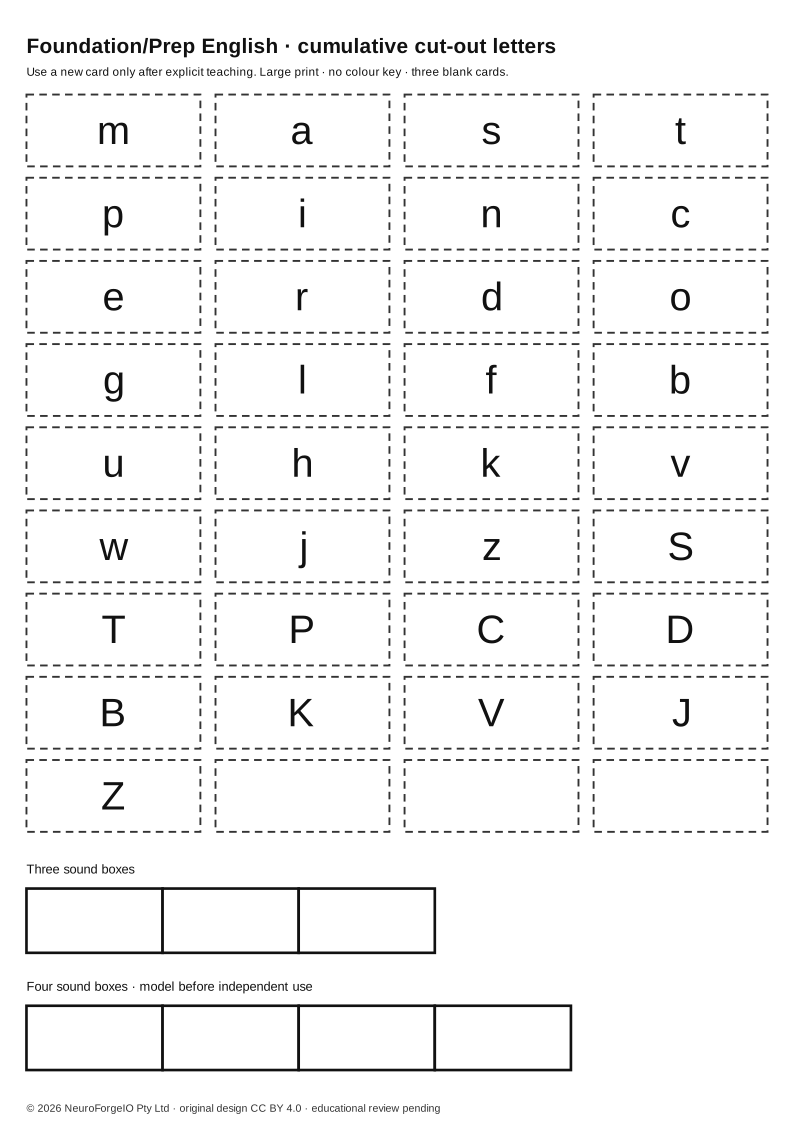
- Cumulative letter and sound-box cards: cut out letters; use one box per phoneme, three for CVC and four only after modelling a four-sound word.
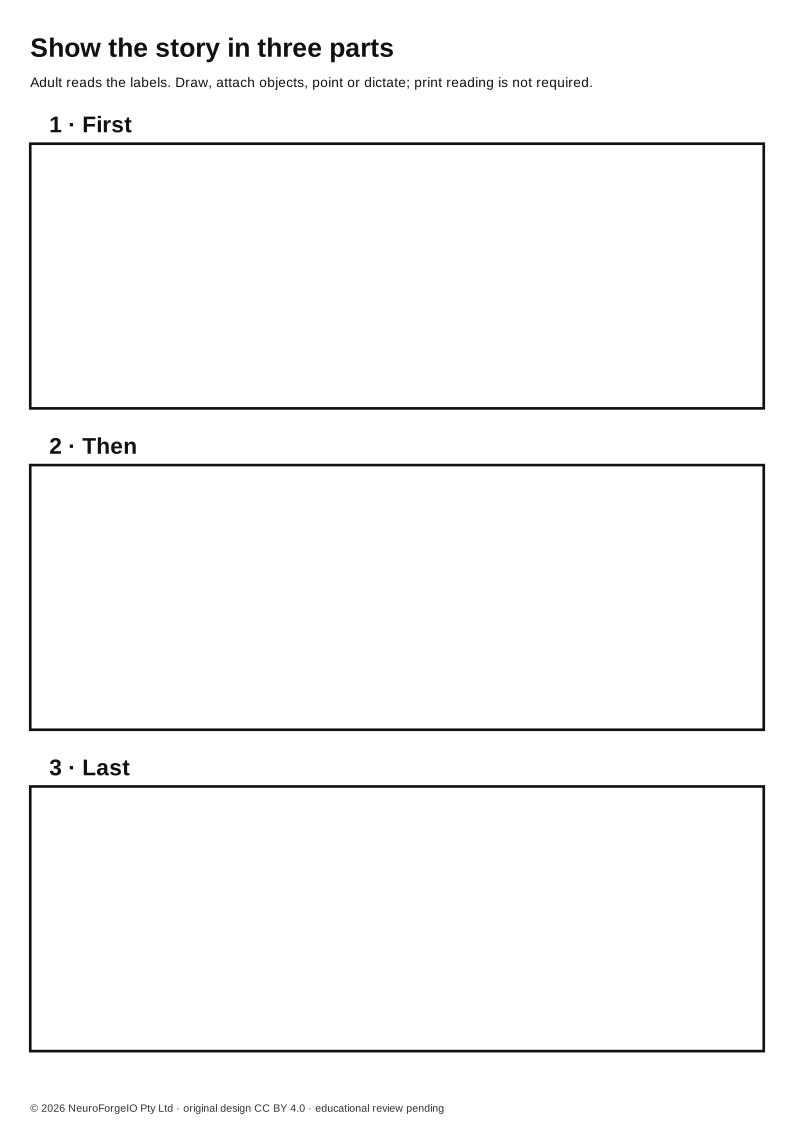
- Blank three-event strip: learner draws, points, places objects or dictates a first/then/last sequence. The printed labels are adult-read.
- Reusable evidence line:
Date / learner code / exact item and response / independent or prompted / route used / next teaching move. Keep identifiable records in the teacher's approved local system, not a public copy.