Status: original teaching draft; human educator, local curriculum, accessibility and accuracy review pending.
Scope: ten 25-minute lessons (Days 21–30), original adult-read stories and rhyme, two fully controlled child-read mini-texts, printable cards, and a formative two-week check. This block continues the first four weeks; it is not a complete Foundation English year.
Year label: Australian Curriculum Foundation Year; Prep is the Queensland label. This is not a pre-Prep kindergarten program.
Open, download and adapt
- Daily lesson scripts
- Original stories, rhyme and child-reading materials
- Assessment, rubric and next-teaching guide
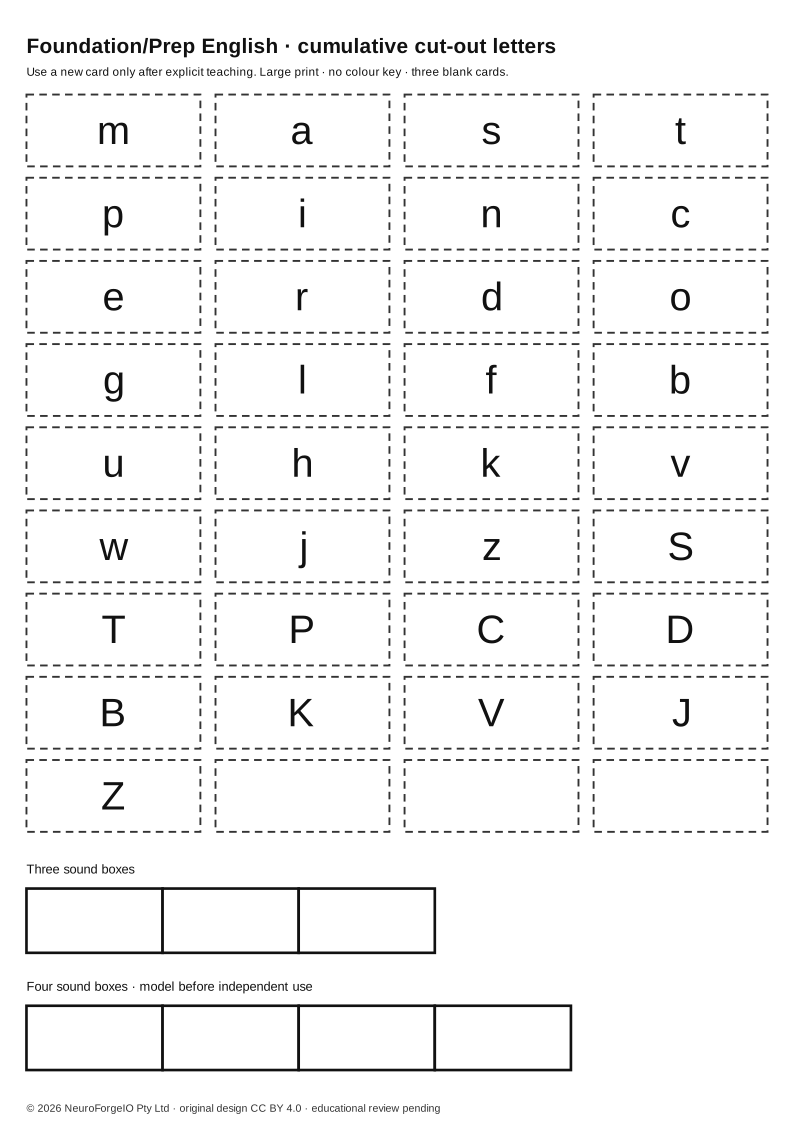
- Black-and-white printable letter and sound-box cards
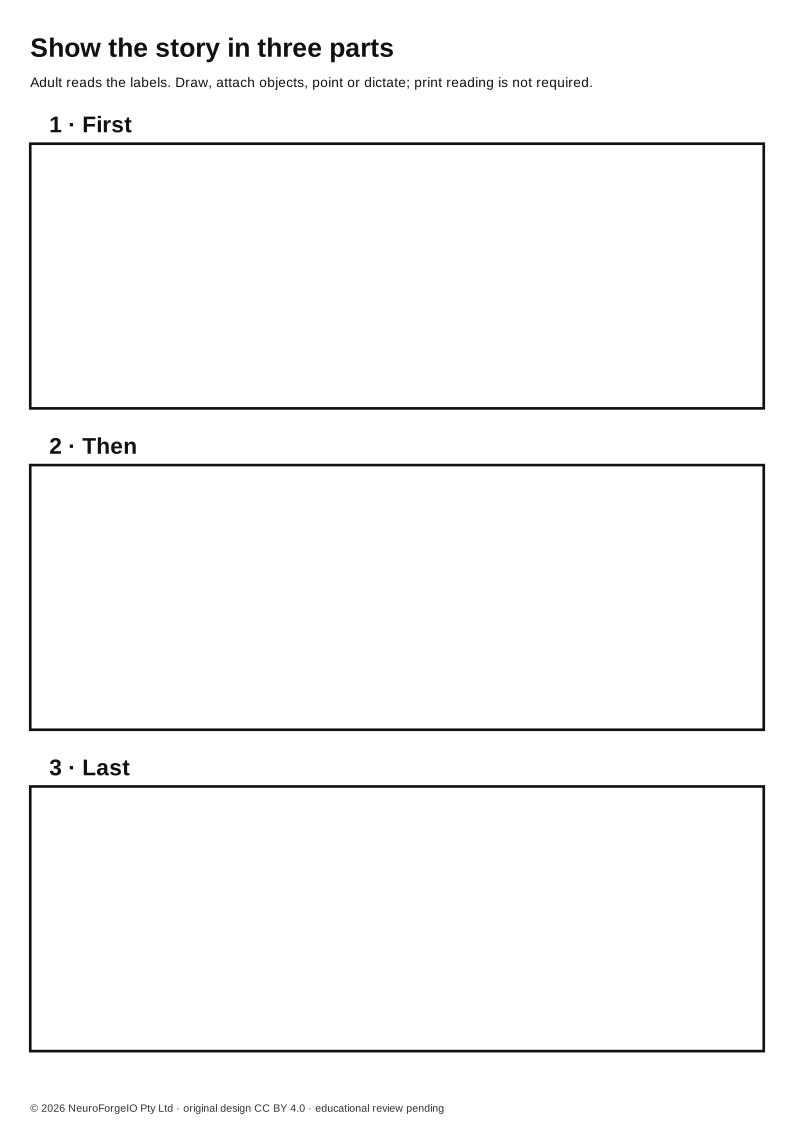
- Black-and-white printable three-event story strip
- Source, mapping and rights record
The original lesson text, stories, assessment and print design are © 2026 NeuroForgeIO Pty Ltd and licensed under Creative Commons Attribution 4.0 International (CC BY 4.0). You may share, print, edit and reuse them, including commercially, with attribution and an indication of changes. Suggested credit: “SubjectNest Foundation/Prep English Weeks 5–6, NeuroForgeIO Pty Ltd, CC BY 4.0.” Link to this pack and the licence when possible. The ACARA curriculum source and cited external research remain under their own terms and are not relicensed by this grant.
Start from what was taught
Weeks 1–4 introduced m, a, s, t, p, i, n, c, e, r, d, o, g, l, f in the specific sound values listed in those packs. Capital S, T, P, C, D were taught for names and sentence starts. This pack reviews those links cumulatively and adds one new grapheme–phoneme correspondence on each of Days 21–28. A child who needs more time can keep reading from the secure set while still participating in adult-read stories and meaning-making. Do not mistake teacher-read material for independent child decoding.
| Day | New correspondence | Controlled child-reading examples | Important boundary |
|---|---|---|---|
| 21 | b/B → /b/ | bat, bed, bin, bag; Bob sat. | B begins fictional name Bob. |
| 22 | u → /ʌ/ as in up | up, sun, mud, bug, run, fun; Bob dug. | No /uː/ value of u is taught. |
| 23 | h → /h/ | hat, hen, hid, hop, had; Bob hid. | Say /h/ without “huh”. |
| 24 | k/K → /k/ | kit, kid, kin; Kit hid. | k shares /k/ with taught c in this set; the full spelling choice is later learning. |
| 25 | v/V → /v/ | van, vet, vat; Val met Kit. | V begins fictional name Val. |
| 26 | w → /w/ | wet, win, wag, web, wig; Kit got wet. | was is excluded: its final s has an untaught /z/ value. |
| 27 | j/J → /dʒ/ | jam, jet, jog, jig; Jem sat. | juice and other untaught spellings are adult-only. |
| 28 | z/Z → /z/ | zip, zap, zest; Zak ran. | zest has four sounds and is modelled as an extension. |
| 29 | No new link | Choice of two original controlled mini-texts | Comprehension and a child-made variation. |
| 30 | No new link | Five unseen CVC words in the check | Use the evidence to choose next teaching. |
This is a pack-level instructional order, not an ACARA-prescribed sound sequence. In these Australian English examples, the short vowels are a /æ/, e /ɛ/, i /ɪ/, o /ɒ/ and u /ʌ/. Teach letter names alongside sounds, but check them separately. Keep stop sounds clean, without an added “uh”. Use the school's adopted handwriting formation model. Child-read cards use only the sound values already taught by their first-use day; adult-read stories use unrestricted age-suitable vocabulary and are never decoding tests.
Curriculum and evidence source
Lesson headers give exact, provisional links to Foundation English content descriptions in the ACARA Australian Curriculum v9 workbook. The preserved workbook was downloaded 29 September 2026; its SHA-256 is db446882d2c00cf7c085a03e250e2442fda6c44011fc114680c46c1dc7a822c3. The ACARA English learning-area page explains the Language, Literature and Literacy strands and integrated language modes. Check the version history and local implementation before using this with a later cohort.
Short, explicit model–guided practice–independent checks and responsive reteaching are informed by the Australian Education Research Organisation's Teach explicitly, Early literacy and Monitor progress guides. These sources inform this draft; they do not certify it or promise an outcome for an individual learner.
Offer real format and response choices: live adult reading or a locally made recording with transcript, large print, text-only view, tactile/movable letters, uncluttered sentence strips, a quiet space, speech, AAC, pointing, typing or handwriting. Record the goal shown and the route used. Do not require eye contact, speed or a public oral answer. If hearing or speech access changes what an English-sound task can show, co-plan a suitable route with the learner, family and relevant specialist rather than interpreting inaccessible evidence as a deficit.
No third-party story, picture, worksheet or recorded voice is included. Official ACARA material has separate copyright and reuse terms, including item-level exceptions. SubjectNest is not affiliated with or endorsed by ACARA. Human review of curriculum fit, content and accessibility remains pending even though the original pack materials have an approved CC BY 4.0 reuse licence.