Proposed codes: AC9EFLA07, AC9EFLA08, AC9EFLY01, AC9EFLY04, AC9EFLY05, AC9EFLY10, AC9EFLY14.
Goal: Read two controlled information lines and distinguish a pictured example from a wider source-supported claim.
Prepare: adult information text A, fish page and its text alternative, four sound boxes, pond, swim cards.
- Retrieve · 3 min. Read a box, is, fish in mixed order. Ask where the little a is a whole word and where is has /z/.
- Adult-read information · 4 min. Read A Fish in Water aloud; keep its print hidden. Ask “Are all fish exactly alike?” No. Show the Australian Museum source note to the adult/teacher, not as a child decoding page.
- Model adjacent sounds · 5 min. Say pond /p/ /ɒ/ /n/ /d/ into four counters and reveal p o n d. Then swim /s/ /w/ /ɪ/ /m/; both first consonants keep their sound. Do not add a new grapheme value.
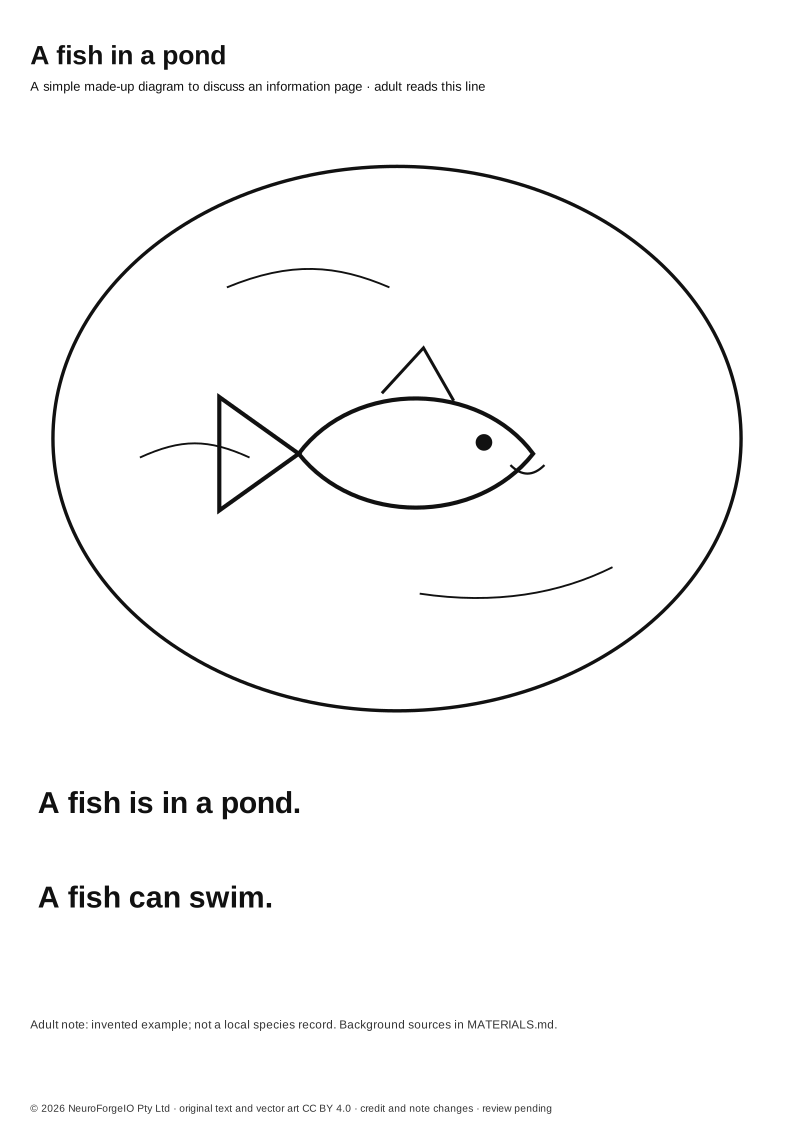
- Read the page · 7 min. Show the two child-read lines A fish is in a pond. A fish can swim. Blend them left to right. Use careful can /kæn/ for decoding, then natural rereading. Reveal the original outline drawing after the attempt. Ask which line tells what the drawing depicts.
- Fact and model · 4 min. “The drawing is an invented example, not a photo of a local fish. The museum background supports that fish are varied and many swim.” Ask what would be needed to claim a particular local fish had been seen. Accept an observation or trustworthy record. Do not infer species from the outline.
- Exit check · 2 min. Show swim without the picture. Ask for an independent blend, then ask which of the page's two lines says something a fish can do. Record word reading and comprehension separately.
Access routes: original SVG or exact text alternative, large/tactile swim cards, counters, teacher-read source with transcript, audio replay, quiet turn, speech/AAC/pointing/drawing. An image description supports meaning; it does not replace printed-word evidence.