Proposed codes: AC9EFLA07, AC9EFLA08, AC9EFLY04, AC9EFLY05, AC9EFLY06, AC9EFLY13.
Goal: Create a two-line information page whose words and picture match an observation or named source.
Prepare: page/portfolio mat, safe box/mat for optional test, fish page, controlled line bank in MATERIALS.
- Retrieve · 3 min. Reblend pond, swim, is. Ask which printed unit in is gives /z/ and which pair starts swim; give a brief model if needed.
- Check a box claim · 4 min. Read adult model B aloud while safely showing a box on a mat. If it tips with a gentle adult demonstration, note that; if not, do not select “It can tip.” Ask “What did we actually see?”
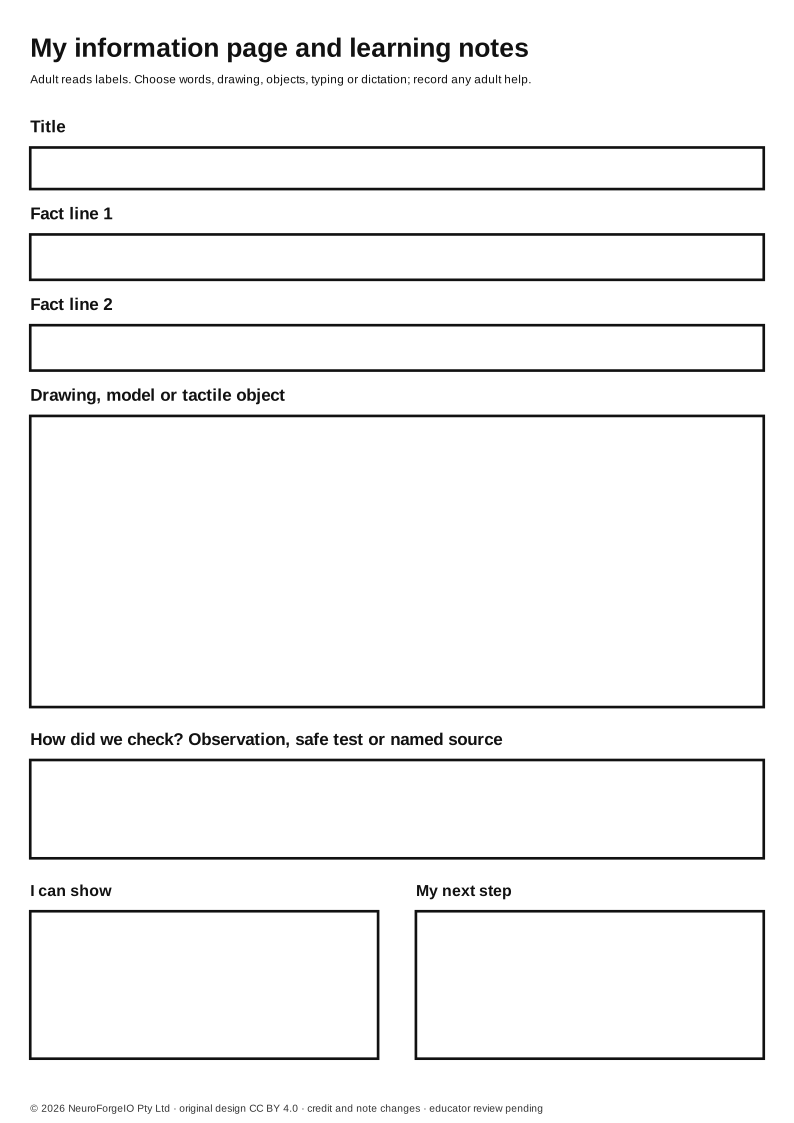
- Model the page · 5 min. On the blank mat point to title, two fact lines, image and “How did we check?” Model copying A box is on a mat. only if the setup matches, or one fish line from the reviewed source. Say “A picture can help show a fact, but a made-up picture alone is not proof of a real animal.”
- Create with choice · 7 min. Learners choose fish or box. For box, use verified A box is on a mat. and, only after a real safe test, It can tip. For fish, use the two controlled lines on the original fish page and mark the museum background as an adult-read source. Children select tiles, type or write, and add a drawing/tactile layout. Record the support.
- Partner question · 4 min. A partner asks “How did you check?” Learner points to object observation or the adult-read source and tells one fact. If the drawing and line disagree, guide a revision before keeping the page.
- Exit check · 2 min. Ask the learner to read one self-selected line and name/point to its check route: saw/tested or source read by adult. Record the exact line, independence and route.
Access routes: plain-text template, large/tactile box spaces, object/diagram, selectable word tiles, AAC, dictation with exact adult support logged, quiet partner or private teacher report. Do not require artistic skill or handwriting speed to show information-text understanding.