Keep this page and separate key away from the learner routes until the first independent response is recorded. These original invented sources have not been used in Days 181–184 or 186–189. Adult reads all rich words and describes each neutral visual in the same order. Offer point, sign, AAC, broad tactile counters, private speech, drawing or child-directed scribing; do not require speed, fine motor control, public performance or personal disclosure. Record the exact mode, reading/reread, prompt and first words before feedback. A pass is allowed. These short samples do not determine whole-standard attainment.
Day 185 · unseen fictional theatre-prop inventory
Fresh source to show/read once: “A pretend theatre drawer has paper cards for props. Each outlined symbol means one pretend card. MASK: five separate broad mask-outline symbols. FLAG: three separate broad flag-outline symbols. DRUM: one broad drum-outline symbol. This page says nothing about an audience or what children prefer.” The source is wholly fictional; its symbols are not photos, real props or a survey. For nonvisual/tactile use, read that exact order and put five/three/one large counters into separately named broad trays. Do not give a total before asking for it. Do not use colour as a category key.
Neutral visual layout: three plain labelled rows of five, three and one outlined symbols; no tick, largest arrow, smiling face or extra category. Read labels aloud; no printed word-decoding inference from the child looking at them.
Ask in order on a blank question/data mat:
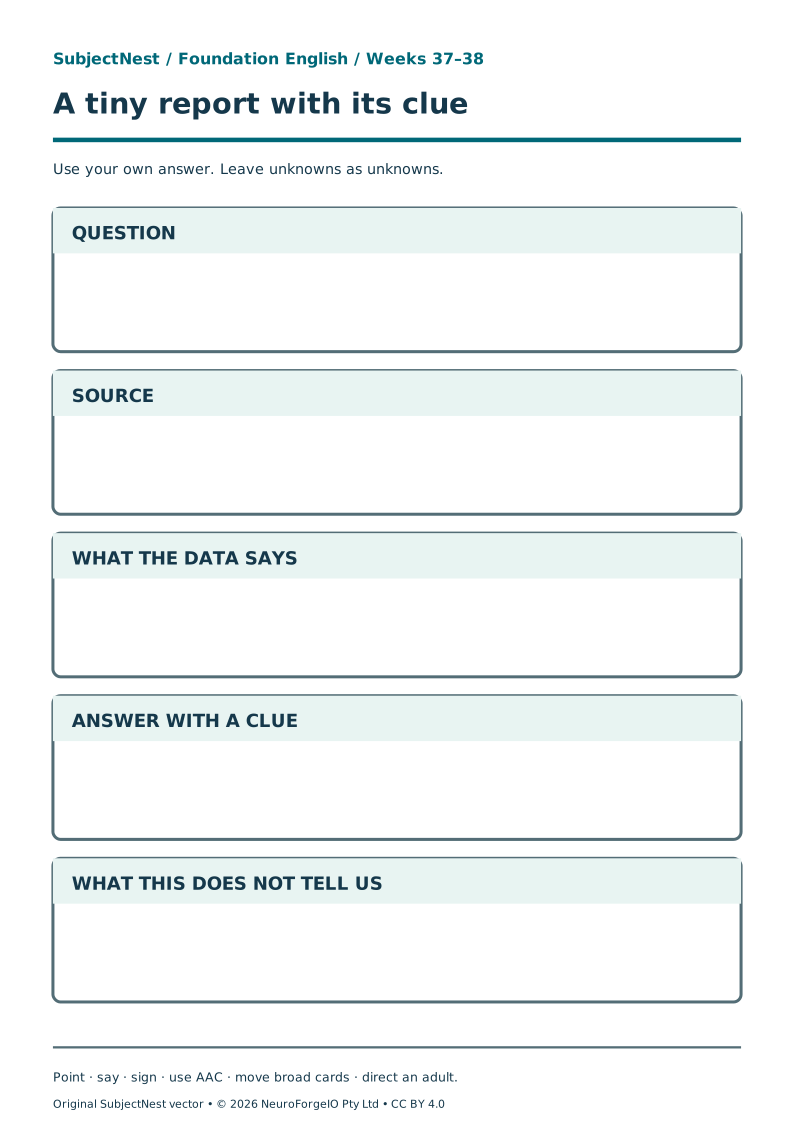
- “Which kind of pretend card is shown most? How do you know?”
- “How many DRUM cards does the page show? Point or tell me what one symbol stands for.”
- “Ask one different question this source could answer. Show where you would look.” Accept a neutral count/comparison question; if it repeats 1/2, ask for a different one and log the prompt.
- “Could this page tell us whether all children like the MASK cards? Why or why not?” Do not ask any child for their own preference.
Optional taught-point print only, separate from meaning: Plain black sub then gas without pictures. If all grapheme–sound links have been explicitly taught and neither is locally over-rehearsed, ask for one blend aloud/privately and, with print hidden, a child-selected sound-to-letter attempt. Record which item, whether all links were taught, exact child response and adult prompt. Otherwise mark NOT ADMINISTERED; substitute only a documented new taught-point item, not one from the practice pages. A wrong or absent print response does not erase correct source comprehension.
Day 190 · unseen pair of mock paper-position diagrams
Fresh source to show/read once: “Two MOCK DIAGRAMS use the same simple sloping line as a paper ramp outline. Diagram 1 draws one broad disk at the top of that line. Diagram 2 draws one broad disk at the bottom. Neither diagram has a date, clock, movement arrow, observed trial or measured time. They are invented pictures. They could be two unrelated poses.” This is a paper comparison only; no child handles or tests an actual ramp.
First draft caption to read: “The disk rolled from top to bottom in two seconds.” The page does not show that event or duration. Do not gesture a rolling motion while reading.
Neutral visual layout: two equal boxes marked MOCK DIAGRAM 1 / MOCK DIAGRAM 2. Each has the same line sloping down right, and a broad plain circle drawn at the described position. No motion arrow, time label, hands, child or real object. Nonvisual/tactile route uses two broad sloping-line cards and adult-placed large disk tokens at top and bottom; child can direct placement. The word MOCK must be said.
Ask in order on a blank fact/check/edit mat:
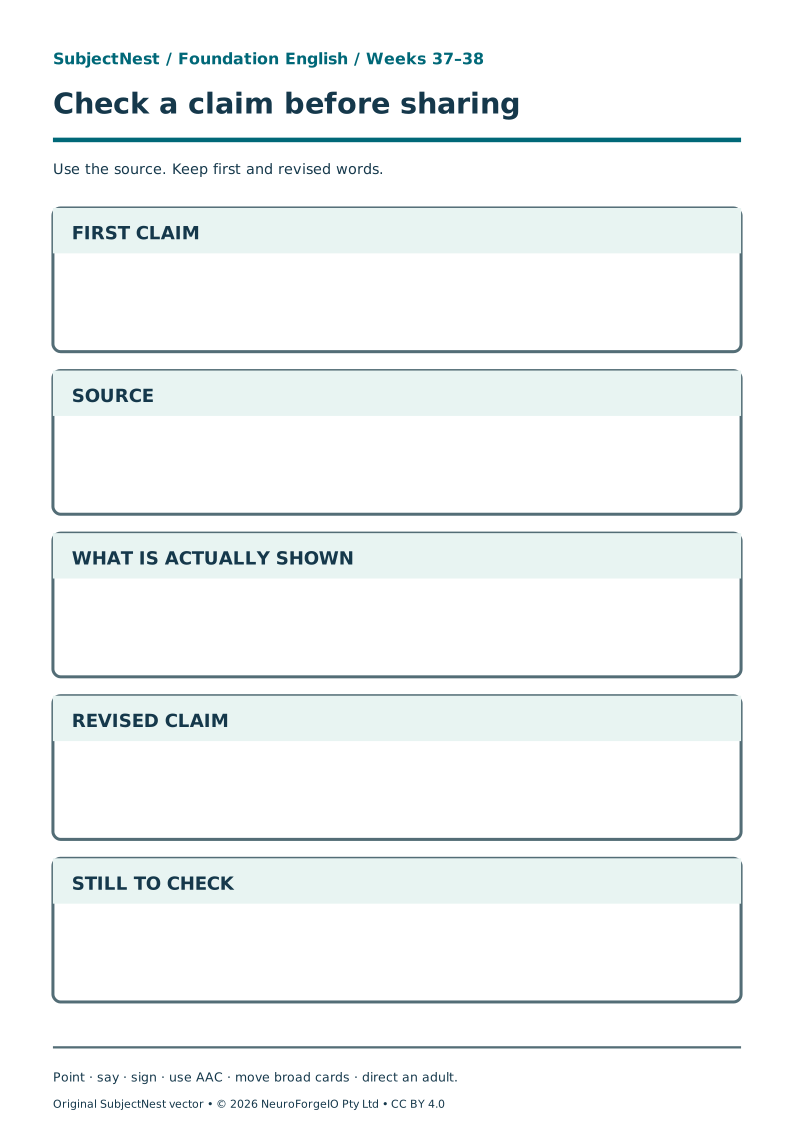
- “What does each drawing actually show about the disk's place?”
- “Which part of the first draft is not shown by these drawings?” Accept movement, sequence as real event, or two-second time; ask for a second unsupported part if the child volunteers one.
- “Make a revised caption that tells a reader these are drawings and names one exact place in each. What would you still need to know before saying a real disk rolled?”
- “Ask a safe question a future paper-only test could answer.” For example, “If an adult safely moves a broad paper disk, where does it end?” The child is planning, not reporting a test. No actual rolling, small object or timed trial is needed.
Optional taught-point print only, separate from meaning: Plain black hip then tug, no pictures. Apply the same taught-link/local-familiarity review, one blend and print-hidden sound-to-letter attempt; otherwise NOT ADMINISTERED. Adult reading of diagram text is not independent reading evidence.
After the first response: Use the key to select a short next move, then release Day 185/190 learner-card practice. Label every adult model, reread or clarification so the next teacher can tell what the child actually did. Original SubjectNest fresh checks © 2026 NeuroForgeIO Pty Ltd, CC BY 4.0.