Adult reads all rich text. Sources A–D are invented paper models, not records of a real class, plant, survey or experiment. Where a teacher later uses actual local observations, label the real source and date separately, do not overwrite the fictional model, and avoid inferring any unobserved behaviour or need.
A · Twelve paper shape cards · original data note
Ready-to-print A4 shape inventory SVG · PDF. This is a fictional tray drawn for practice. It has six broad circle cards, four broad square cards and two broad triangle cards. Total cards: twelve. In the picture table, each outlined symbol stands for one card; there are six/ four/ two symbols beside the corresponding label. A blank print/tactile alternative uses twelve broad paper tokens grouped into labelled trays: CIRCLE x6, SQUARE x4, TRIANGLE x2. The teacher counts and preflights against the source before the lesson.
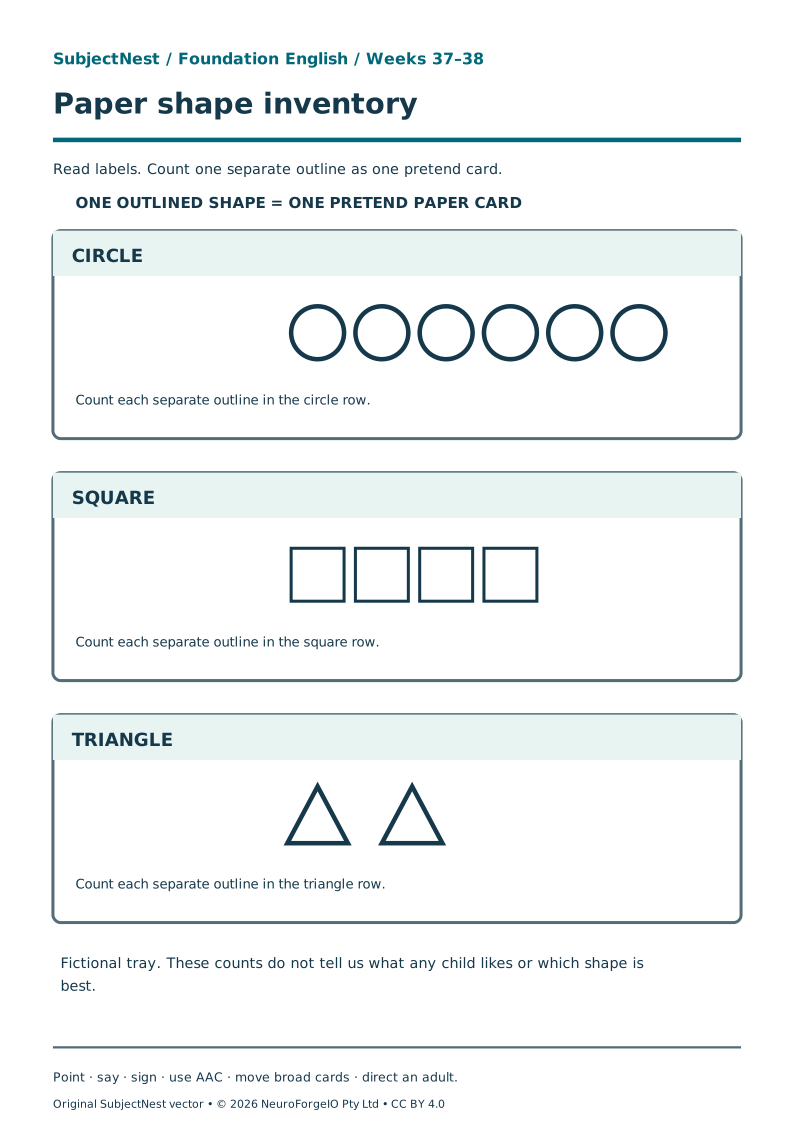
Adult-read note: “The pretend tray has six circle cards, four square cards and two triangle cards. Circle has the most cards. Triangle has the fewest. This inventory does not tell us what any child likes, which shape is best, what was made from the cards, or whether a real room owns them.” A child's data answer cites the exact row or group; a choice made only from colour or picture area is insufficient.
B · Which question can this source answer? · original cards
Printable A4 question cards SVG · PDF. Adult reads all four:
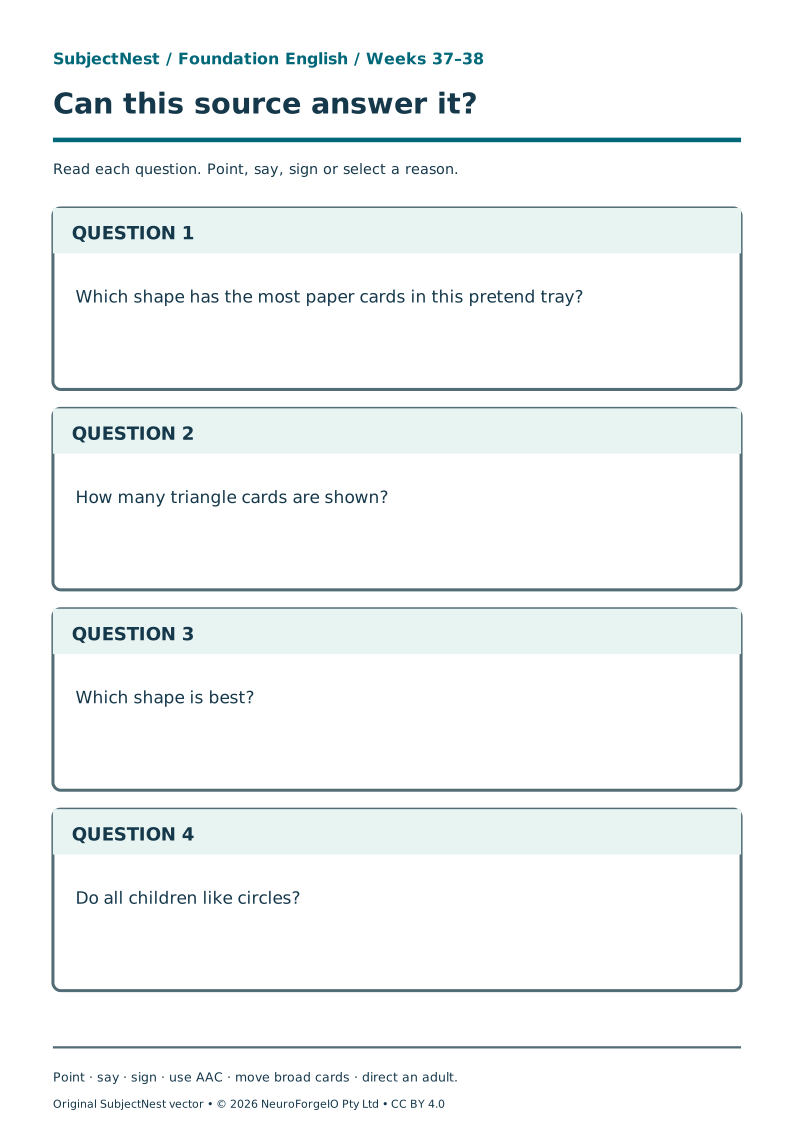
- Answerable from A: “Which shape has the most paper cards in this pretend tray?” Source answer: circles, six.
- Answerable from A: “How many triangle cards are shown?” Source answer: two.
- Needs a clearer purpose: “Which shape is best?” “Best” for what? The inventory has counts but no purpose or test.
- Needs new evidence: “Do all children like circles?” An inventory of paper shapes includes no children's choices or views.
A child may ask a different neutral, low-stakes question about the same source. Do not ask classmates to reveal preferences, family circumstances, disability or identity to create data. If a local class chooses an approved question, provide a no-response route and follow its consent/privacy rules; paper-shape inventory is enough here.
C · Two invented plant drawings · original source pair
Mock plant-pair SVG · A4 PDF. Drawing A shows one straight stem with two separate oval leaf outlines. Drawing B shows one straight stem with three separate oval leaf outlines. Both are labelled MOCK DRAWING, with no species, pot, real place, scale, dates, roots, flowers, water, insects, touch/texture or growth sequence. These could be two drawings of different imagined plants; the page does not establish that one real plant changed.
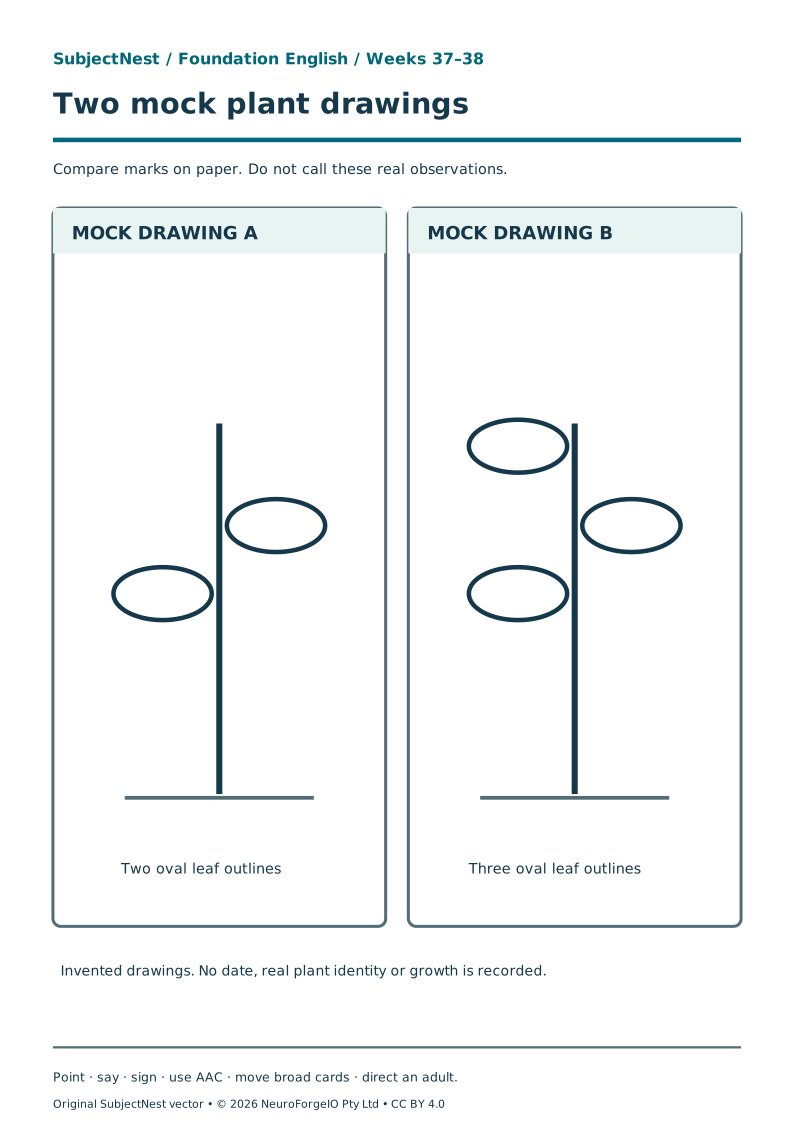
Adult linear description: “A has one stem and two oval leaf outlines. B has one stem and three oval leaf outlines. B shows one more leaf outline than A. We did not observe a real plant, and these drawings have no dates.” For a tactile route, use two broad oval tokens beside a raised stem card for A and three for B. The child can direct an adult to place them. A drawing cannot tell whether a leaf feels soft, a plant is healthy, how it grows, or what it needs.
D · First and revised poster sentences · original editing model
First draft: “Our school plant grew a new leaf overnight.” This sounds like a factual observation but source C has only two mock drawings, no real plant and no dates. It is an imagined story sentence here, not a safe fact to put on an information poster.
Revised report: “Drawing B shows three oval leaf outlines. Drawing A shows two. These are invented drawings. We have not observed a real plant grow.” This report keeps source and claim together without saying that real growth was measured.
Optional school-approved real investigation: If a teacher and child can safely observe a familiar living plant from an approved position on two occasions, record the actual date, plant/location description without a species guess, accessible observation route, visible feature and exact count/shape seen each time. Do not touch, pick, taste or move an unknown plant. Where a live observation is not available or suitable, stay with paper and ask “What would we need to observe before making a real-growth claim?” A fictional source cannot be relabelled as a local scientific result.
Narrow optional child print and oral routine
The small previously used printed pool is a, an, at, can, cap, cup, i, in, is, it, map, mat, on, red, see, sit, tap, ten, tin. It is not a national phonics sequence. Check the child's explicitly taught correspondences and familiar high-frequency words first; adult reads untaught strips. “See” requires taught ee. Adults read inventory, category, question, data, answer, source, drawing, observed, imagined, revise, test. Oral blending/segmenting can use spoken /m/ /a/ /t/ and /t/ /a/ /p/ without print; child-selected letters are logged separately from adult reading.
Exact nonvisual, quiet and tactile equivalents
- Shape inventory: Say in order “CIRCLE: six single-card symbols; SQUARE: four; TRIANGLE: two; total twelve”. Lay six, four and two large tactile tokens in three separate labelled trays, with one token meaning one card. The question is about the counts in this fictional source, not colour or chart area. A child may direct an adult rather than handle tokens.
- Question cards: Read all four B cards in order. Make two broad response areas ANSWERABLE FROM THIS SOURCE / NEEDS MORE INFORMATION. Adult reads question wording exactly before a child points, signs, AAC-selects or dictates. “Best” requires a purpose; children's likes require different, consented evidence.
- Data report mat: Five ordered areas QUESTION / SOURCE / WHAT THE DATA SAYS / ANSWER WITH A CLUE / WHAT THIS DOES NOT TELL US. Adult reads labels. A spoken or tactile report can show meaning; selected capitals, punctuation and spellings remain separate observations.
- Mock plant pair: Read C's exact linear description. Place two/three large oval leaf tokens as described; no colour or assumed tactile texture is needed. The mock label must remain visible or spoken.
- Fact/check/edit mat: Five ordered areas FIRST CLAIM / SOURCE / WHAT IS ACTUALLY SHOWN / REVISED CLAIM / STILL TO CHECK. For C/D the final area might ask for a real dated observation; it is not a claim that one happened. A teacher can scribe verbatim with the child's chosen source/detail.
No account, device, audio, small objects, photograph, personal response survey or real plant contact is needed. A child may choose quiet/private participation or pass on touch. Original SubjectNest sources, scripts and printables © 2026 NeuroForgeIO Pty Ltd, CC BY 4.0.