Safety, safeguarding and evidence gates
For Week 5, the adult prechecks a real route or station on the day: school approval, date, weather, sun and temperature, wet/uneven surfaces, supervision, exits, accessibility, available rest, and an individual stop cue. A school-approved indoor active area may offer activity but is not evidence for the natural/outdoor setting part of AC9HPFM03. An outdoor view from inside is a view, not outdoor physical participation. No child has to go outside, touch unknown plants or animals, collect natural materials, chase wildlife, or explain a body or feeling. The integrated Science feature record names its own actual source; do not copy an HPE movement report into Science as a feature observation. If actual outdoor activity is not safe or available, use a paper source, label it FICTIONAL MODEL, and record OUTDOOR PHYSICAL ACTIVITY NOT OBSERVED. If a child actually moves in a checked indoor setting, record that separately and do not call it outdoor.
For Week 6, adult-check a wide stable space, one large clean soft class-owned object with no loose small parts, optional broad fixed markers and a visible/aural stop cue suited to the individual. A child chooses whether and how to participate physically, with a seated, standing, mobile, stationary or other safe mode agreed locally. No throw, race, forced balance, forced touch, peer contact, unknown or allergenic material. Do not move a child's body or equipment without permission. Rest and withdrawal are available without explanation. A directed adult demonstration or paper token is PLAN / ADULT ACTION, not the child's actual movement or fair-play conduct. Record a dated actual child action only when observed in the approved setting; otherwise PHYSICAL ACTIVITY NOT OBSERVED. Any real help or safeguarding concern interrupts the activity and follows current school policy; no public roleplay asks a child to disclose an incident.
Complete original fictional teaching sources
Source A · drawn nature route. “On an invented paper map, a broad path starts at BASE, reaches a LOOK SPOT, and returns to BASE. A REST SPACE is drawn beside the path. The picture shows no real school grounds, plants, animals, weather or people moving. A real educator must check an actual route before offering outdoor activity.” This is a plan, not a local route inspection.
Source B · two different choices. “On the invented map, Elin says, ‘I would choose an easy-paced travel along a checked wide path.’ Kai says, ‘I would choose a stationary movement pattern at a checked outdoor viewing place.’ Both ask the adult to check their own access and stop options. The story gives no real child's movement or benefit.” Neither choice is prescribed for every body; a third locally suitable choice may be better.
Source C · a possible value, not a promised result. “A fictional puppet, Am, says, ‘I might enjoy doing a gentle outdoor activity with another person.’ A second fictional puppet says, ‘I might prefer a quiet activity on my own.’ They do not tell us what any real child feels, and neither sentence proves a health change.” Children may name an activity they value, say “not sure” or pass; never ask for a medical or emotional disclosure.
Source D · cooperative action sequence. “On a fictional activity board, a maker chooses one suitable travel or propulsion action to a broad MARK, a stable PAUSE, then a gentle placement of a large class-owned soft object onto a wide TARGET MAT. One participant at a time uses the clear lane. Others choose a safe waiting place. The board is not a report of real movement or equipment safety.” In actual play, adapt each action and marker to the individual and the school-approved space.
Source E · include a different action. “A fictional maker says, ‘Everyone must reach the same height to finish.’ Another says, ‘Each person can choose a safe way to place the large object on their own wide target; wait until the lane is clear.’ The second proposal changes an unfair rule. No real child tried either rule in this story.” A real consent or equipment decision must be asked in the moment, and actual fairness is observed only during real activity.
These texts are fully invented, original and available for read-aloud, large print, braille production, AAC, signing, private response or broad secured tactile fields. Do not use a child's own mobility, diagnosis, emotions, family or cultural background as a sample story. The fresh cases are different and teacher-held until first response.
Six A4 aids: exact ordered words and text/tactile routes
Read each list top to bottom. The same exact words appear in the SVG/PDF; a teacher can enlarge them, braille them or place them on six broad secured horizontal fields. No touch is required. A line or arrow is read aloud in its direction. Colour is never the only cue. Blank spaces invite a child's chosen answer, not a request for personal data.
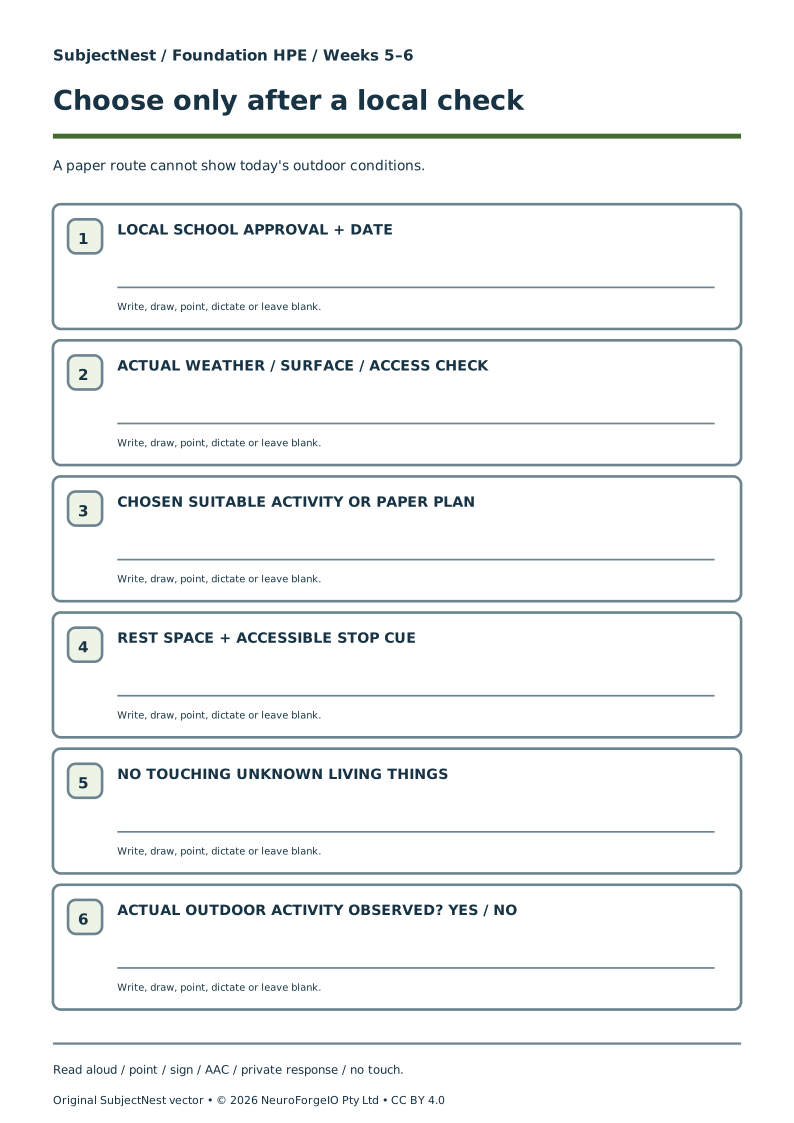
- Outdoor choice: LOCAL SCHOOL APPROVAL + DATE; ACTUAL WEATHER / SURFACE / ACCESS CHECK; CHOSEN SUITABLE ACTIVITY OR PAPER PLAN; REST SPACE + ACCESSIBLE STOP CUE; NO TOUCHING UNKNOWN LIVING THINGS; ACTUAL OUTDOOR ACTIVITY OBSERVED? YES / NO. Six fields. A teacher privately fills the real local check; the public sheet asserts none.
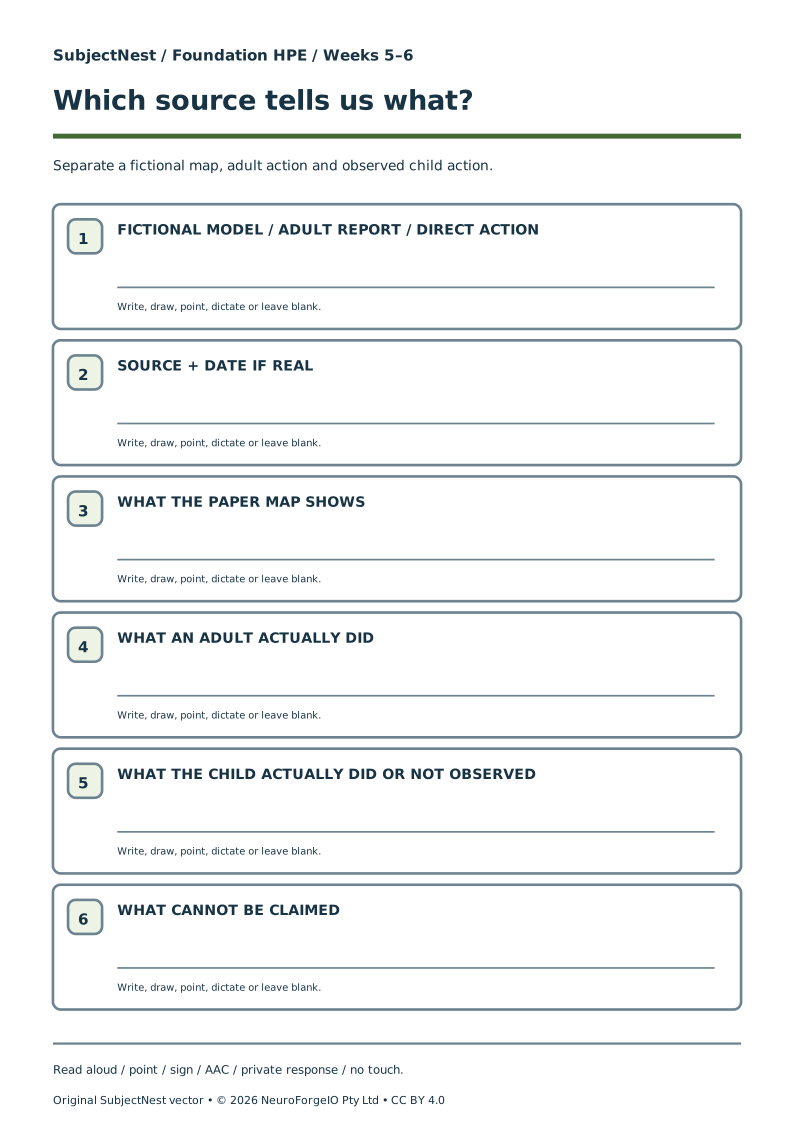
- Source gate: FICTIONAL MODEL / ADULT REPORT / DIRECT ACTION; SOURCE + DATE IF REAL; WHAT THE PAPER MAP SHOWS; WHAT AN ADULT ACTUALLY DID; WHAT THE CHILD ACTUALLY DID OR NOT OBSERVED; WHAT CANNOT BE CLAIMED. Six fields. Keep access information separate from activity evidence.
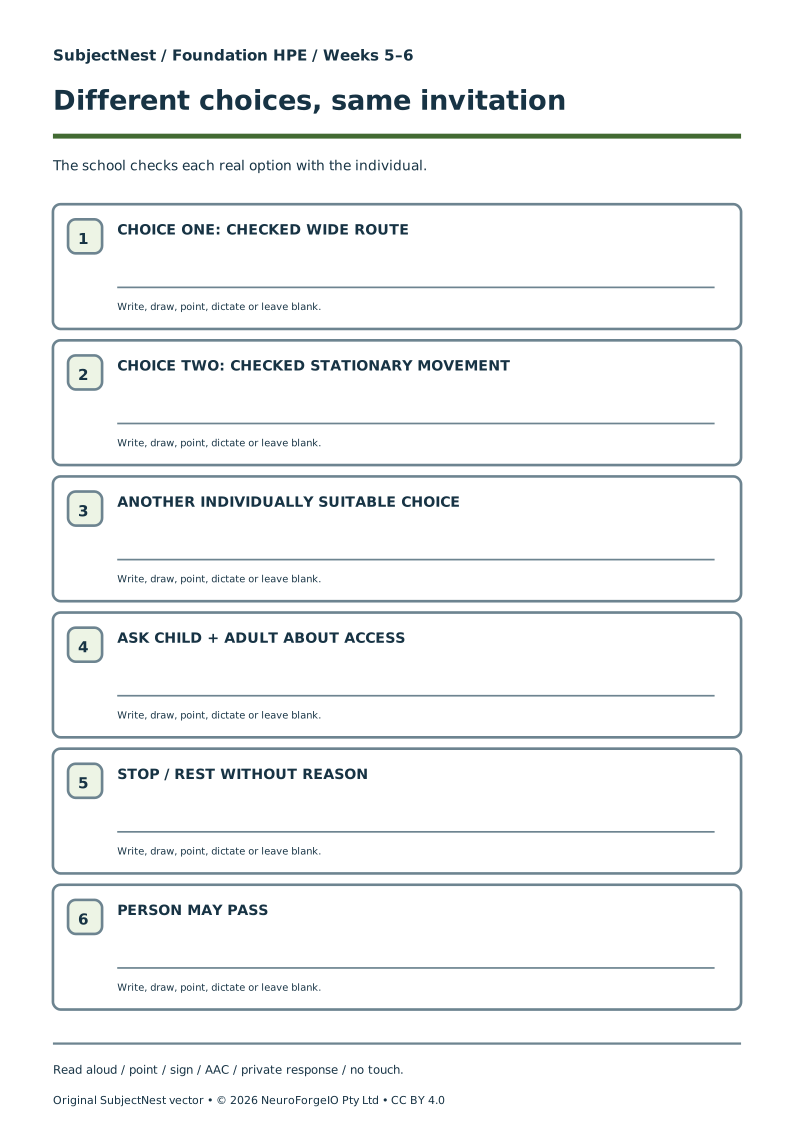
- Activity pair: CHOICE ONE: CHECKED WIDE ROUTE; CHOICE TWO: CHECKED STATIONARY MOVEMENT; ANOTHER INDIVIDUALLY SUITABLE CHOICE; ASK CHILD + ADULT ABOUT ACCESS; STOP / REST WITHOUT REASON; PERSON MAY PASS. Six fields. The pair is a comparison prompt, not a list of approved local activities.
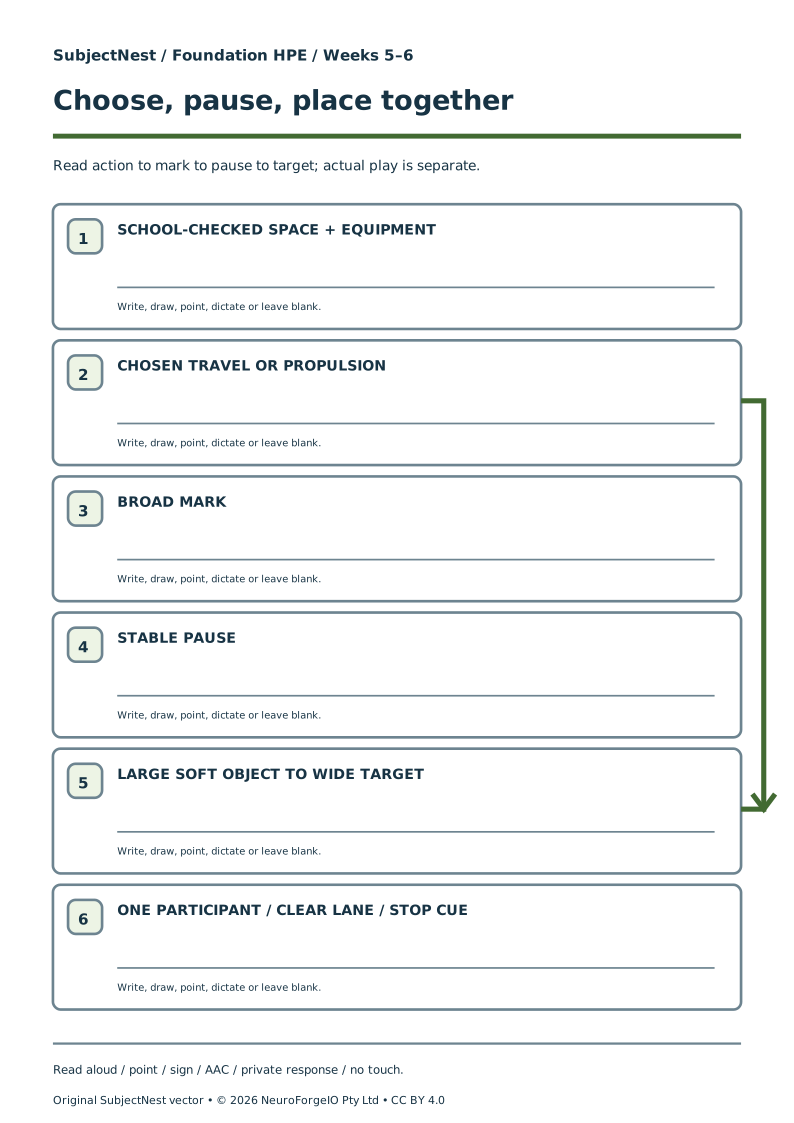
- Cooperative sequence: SCHOOL-CHECKED SPACE + EQUIPMENT; CHOSEN TRAVEL OR PROPULSION; BROAD MARK; STABLE PAUSE; LARGE SOFT OBJECT TO WIDE TARGET; ONE PARTICIPANT / CLEAR LANE / STOP CUE. Six fields. The large joined arrow reads from chosen action to mark to pause to target; it is a process cue, not proof of performance.
- Access rule: ASK BEFORE SHARED EQUIPMENT OR SPACE; ACCEPT YES / NO / NOT NOW; CHOOSE A SAFE ACTION THAT FITS; GIVE EACH TURN ROOM AND TIME; REVISE RULE WITHOUT SPEED RANKING; OBSERVE REAL PLAY OR MARK NOT OBSERVED. Six fields. “No” needs no explanation.
- Record split: DATE + LOCAL APPROVAL; FICTIONAL SOURCE REASONING; OPTIONAL CHILD-CHOSEN REFLECTION OR PASS; ACTUAL OUTDOOR ACTIVITY OR NOT OBSERVED; ACTUAL MOVEMENT COMPONENT + SUPPORT OR NOT OBSERVED; ACTUAL FAIR PLAY + CONTEXT OR NOT OBSERVED. Six fields. Private school record only; no child data in this public pack.
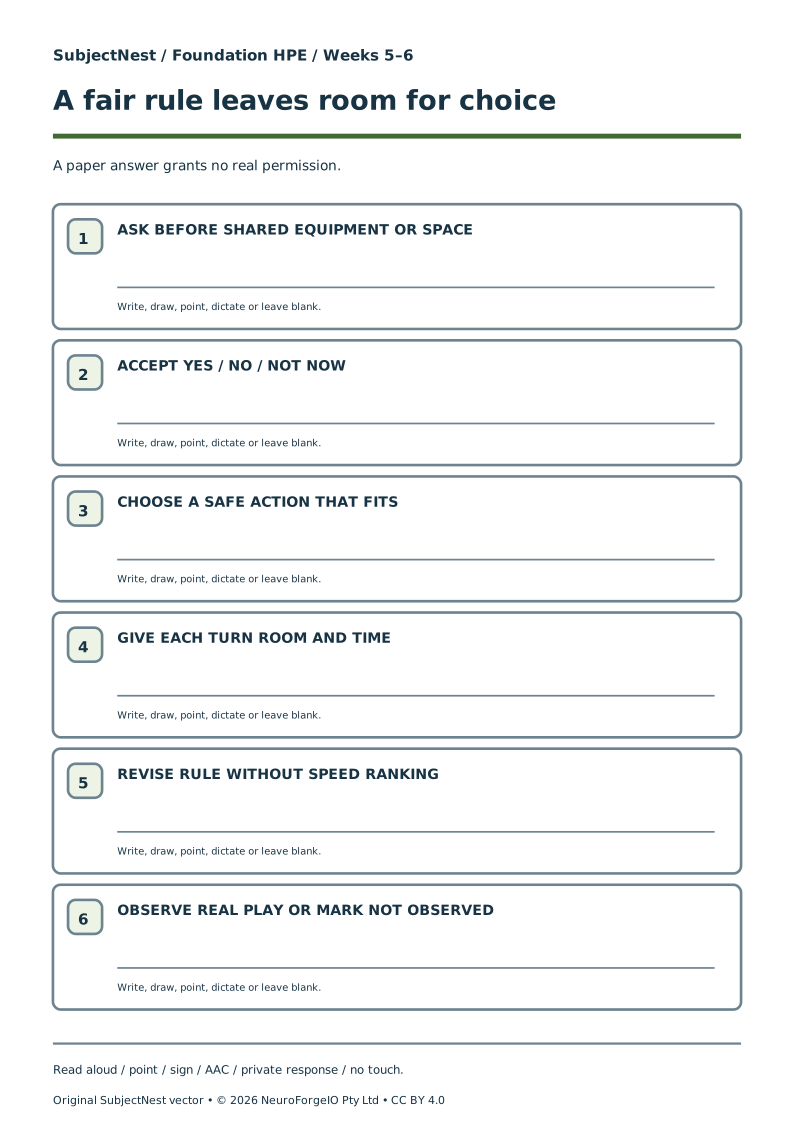
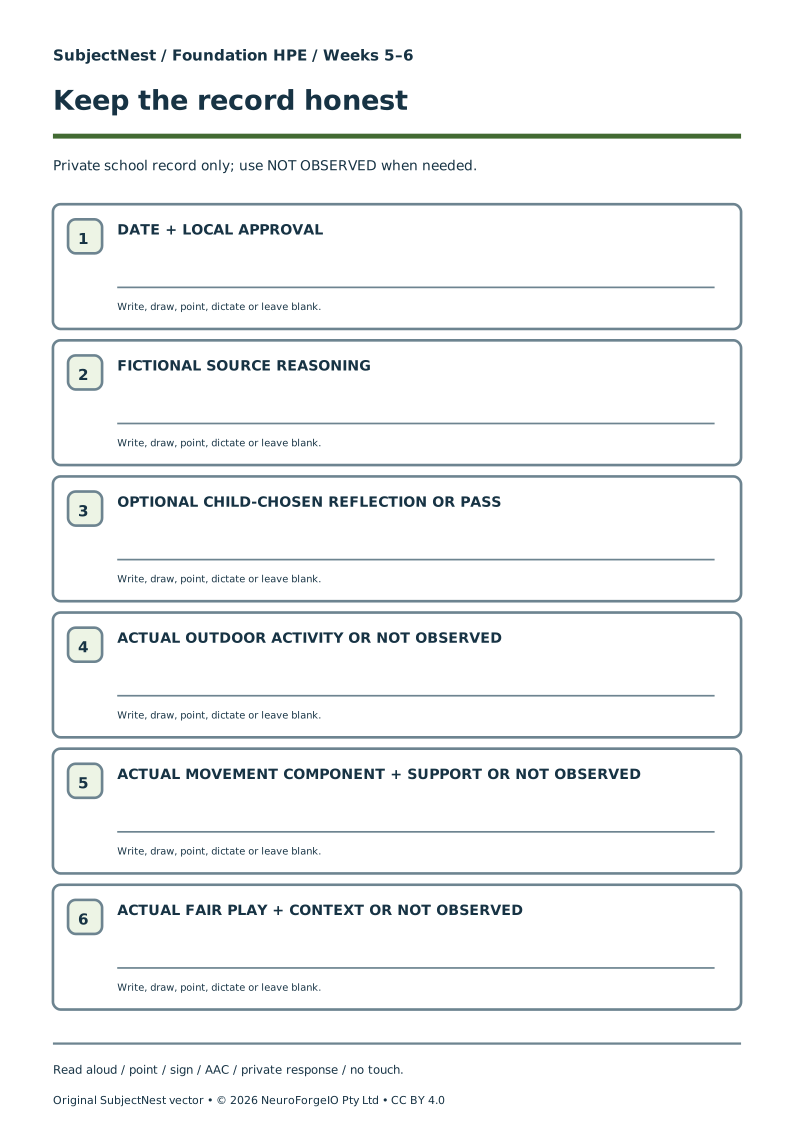
The six pages are aids for planning and communication. They cannot establish that a real route was safe, a child participated outside, an activity brought a benefit, or a cooperative rule was followed. The teacher records actual evidence only when the local gate and observation occurred.