25 minutes · AC9MFN01 and AC9MFN03 (0–20 representation, order and counting review); partial evidence · educator review pending
Success: The child matches a numeral, a collection and a place in the 0–20 order using a fresh example, then explains or demonstrates one check.
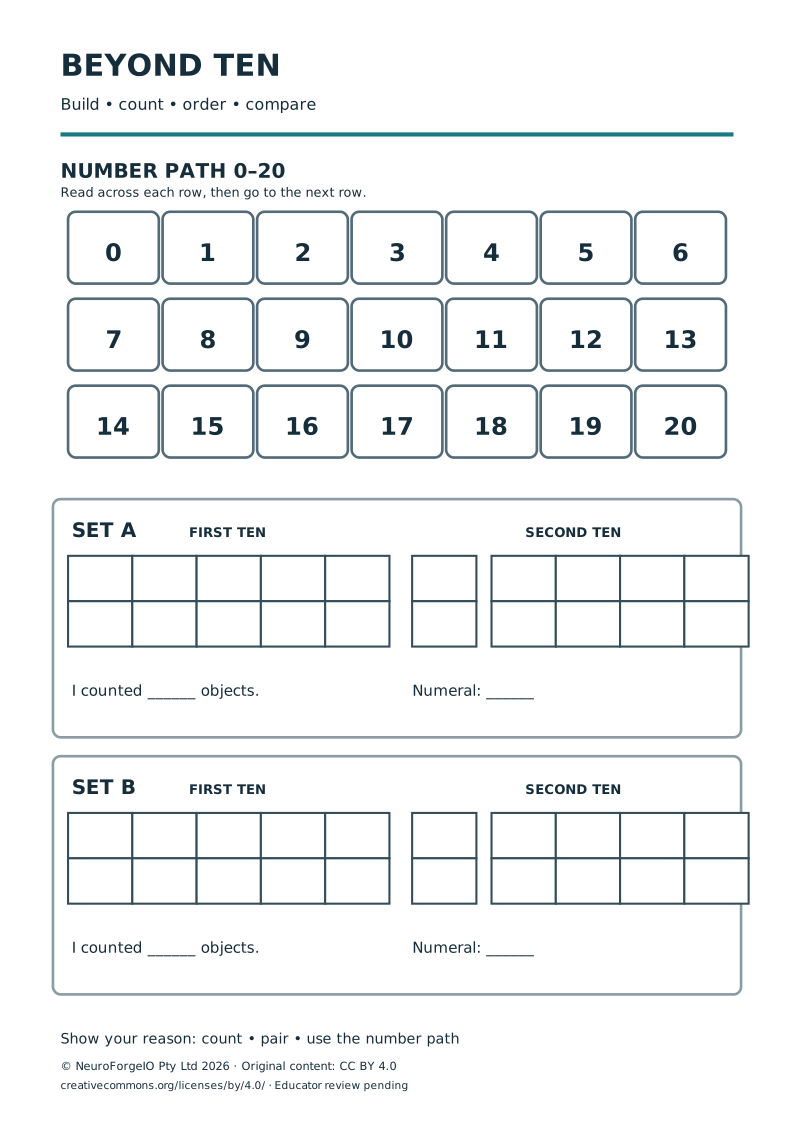
Prepare per pair: cards 0–20, 20 large counters, two ten-frames, number path and R1–R4. Use existing number tools.
- Retrieve, 3 min. Show an empty tray and one block. Ask for
0and1, then which has more. Treat “nothing in the tray” as a valid starting idea and connect it to zero. - Model, 6 min. Build 14 as a checked ten and four more. Show
14, count the whole once, and place it between13and15. Say, “The numeral, the objects and the place on the path agree.” - Guided choice, 9 min. Pairs choose R2 (order 13/15/14, then build 14), R3 (show 20 in two frames) or R4 (compare 16 and 18 despite spacing). One builds, the other verifies with a different method; swap. Keep each child's response separate in the evidence note.
- Fresh try, 4 min. Mix
13, 14, 15. Ask for order and 14 objects from an uncounted pile. If ready, show19, 20and ask which comes next after 19. - Check, 3 min. Ask which tool helped and why. Key:
13, 14, 15; 14 objects; 20 follows 19; 18 > 16 by two. Earlier R1: 1 > 0.
If a numeral is named but the collection is wrong: Move each object once and rebuild beside the card. If a frame answer is secure but loose counting is not, give the same total in a scattered layout before claiming transfer.
Access and record: Offer tactile/large cards, grippable objects, spoken/tangible path and directed partner placement. Record numeral, quantity, order, independent check and access route. Do not score English pronunciation or drawing neatness as number knowledge.