Target/codes: compare slow and quick versions of four steady beats while preserving event count; AC9AMUFD01, AC9AMUFC01. Prepare: C board, Practice C, two long/short gap bands.
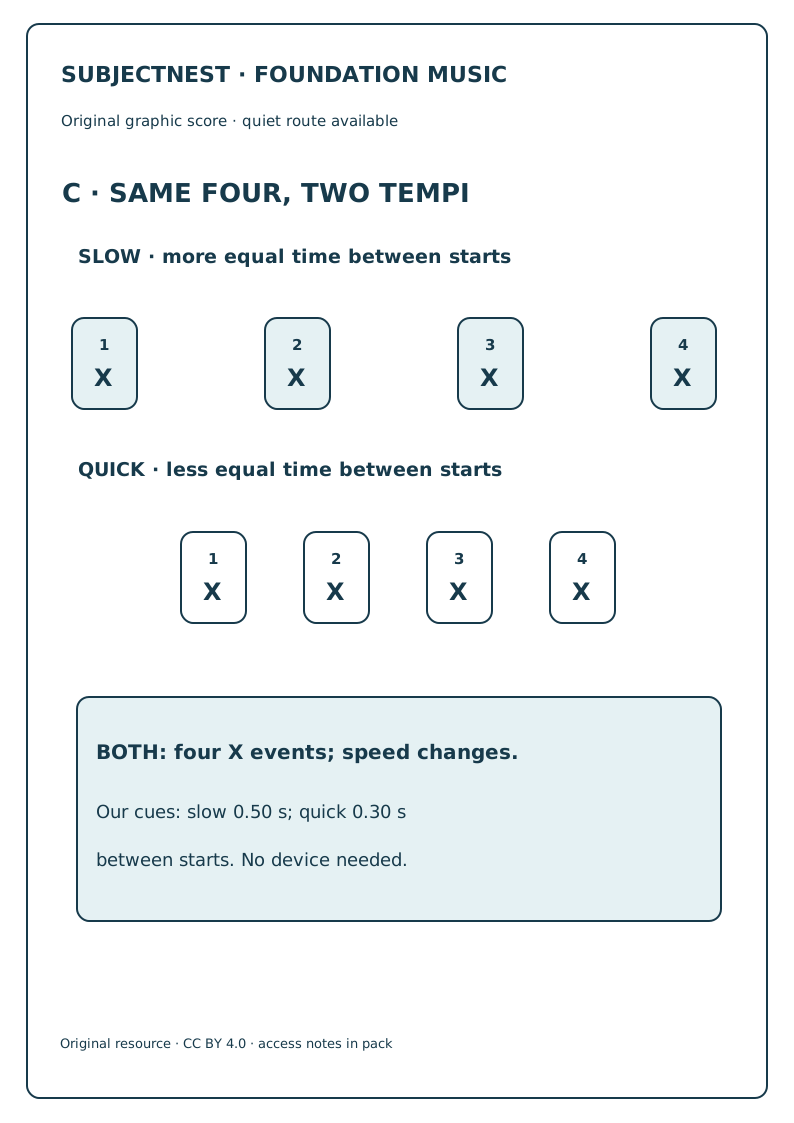
- Welcome · 3 min. Show two rows with four X marks each. Ask what is equal before naming speed: both have four beat places.
- Model · 4 min. Trace one row with wider time gaps and one with shorter time gaps. Use the slow and quick candidate cues only after listening review, or an adult's silent pointer at clearly different steady paces. Quick does not mean louder.
- Try together · 5 min. Child pairs SLOW/QUICK labels with wider/shorter interval bands and checks four X in each. A pulse cannot be proved in time from a static page.
- Child choice · 7 min. Choose a tempo for two fictional paper toy scenes, perhaps rolling slowly across four drawn spaces versus sliding briskly in an imaginary comic. Give a musical reason; no physical-science claim is assessed.
- Notice · 4 min. Ask “Did the number of beats change?” Record count and chosen tempo separately from any actual aural observation.
- Close · 2 min. Keep both rows; tomorrow the single emphasis can move without a tempo change.