Every lesson offers three switchable routes. Place broad number/X/rest/star cards, a pencil and the exact print alternatives within reach. Give the child control of participation; no reason for a route choice is needed. Sound and movement are optional, comfortable and locally approved. A neutral adult may scribe, read or place cards exactly as directed. A silent score demonstrates a musical plan, not hearing, temporal accuracy or performance. The six stages in each lesson total 3 + 4 + 5 + 7 + 4 + 2 = 25 minutes.
Week 3 · Day 11 · Four places make a pulse plan
Target/codes: extend the earlier three-place notation into four equally spaced beat places, giving an original fictional purpose; AC9AMUFD01, AC9AMUFC01. Prepare: A board, Practice A, broad cards.
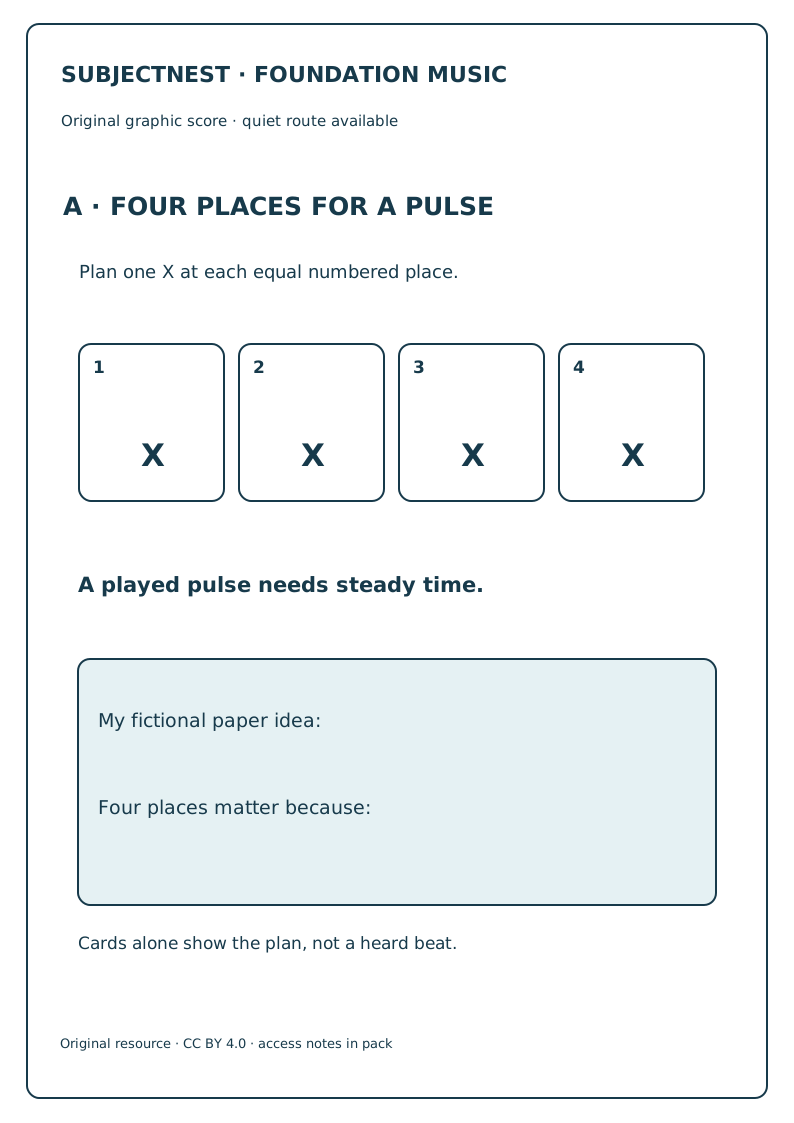
- Welcome · 3 min. Recall that earlier scores had three spaces; show a fourth blank space without treating the earlier score as wrong. Say “pulse” means a beat that returns steadily when realised in time.
- Model · 4 min. Put X in numbered places 1–4 at equal visual gaps. Point at a comfortable, regular pace; optional slow candidate cue (playback review held) only after local listening review. Explain that four marks are planned, while a played pulse needs time.
- Try together · 5 min. Child directs an adult or uses cards to fill four places. Count each place and ask whether the visual gaps look equal. Do not require simultaneous hand movements.
- Child choice · 7 min. Invite an original four-place idea for a fictional paper help desk, rolling toy drawing or another impersonal scene. Child marks or optionally sounds the pulse and names its intended role; this is not a real signal.
- Notice · 4 min. Ask “How many beat places stay?” Record four X places and the child's stated intention, and separately note any actually heard steady pulse.
- Close · 2 min. Save the child's score. Next time one place may be visually emphasised.
Week 3 · Day 12 · Mark one beat to stand out
Target/codes: keep four pulse events while planning one gentle accent at count 1; AC9AMUFD01, AC9AMUFC01. Prepare: B board, Practice B, one broad star.
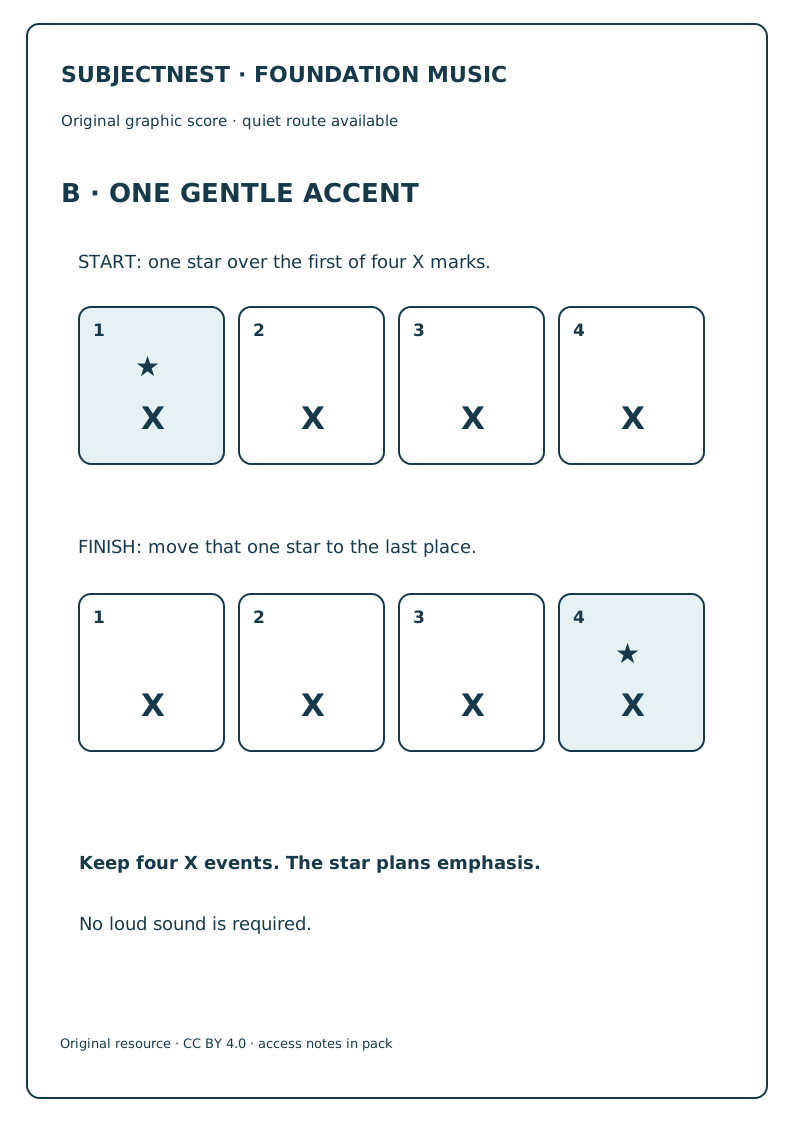
- Welcome · 3 min. Lay out yesterday's four X cards. Explain that an accent is a musical emphasis, not a demand to make a loud noise.
- Model · 4 min. Put one star over count 1 while leaving all X cards. Point to the chosen emphasis. If permitted and reviewed, play the first-accent candidate (playback review held) softly; otherwise trace one larger visual arc.
- Try together · 5 min. Child counts four X and one star, then tells or shows what changed from A. Adult may place star only where directed.
- Child choice · 7 min. Child designs a first-beat emphasis for a fictional display opening or a picture card. They may draw an outlined star, choose tactile star, AAC “first,” or use approved sound.
- Notice · 4 min. Check that four beat places remain and only one is accented. Do not infer audible emphasis from star placement.
- Close · 2 min. Store the score for a later accent move.
Week 3 · Day 13 · Four beats can travel at two speeds
Target/codes: compare slow and quick versions of four steady beats while preserving event count; AC9AMUFD01, AC9AMUFC01. Prepare: C board, Practice C, two long/short gap bands.
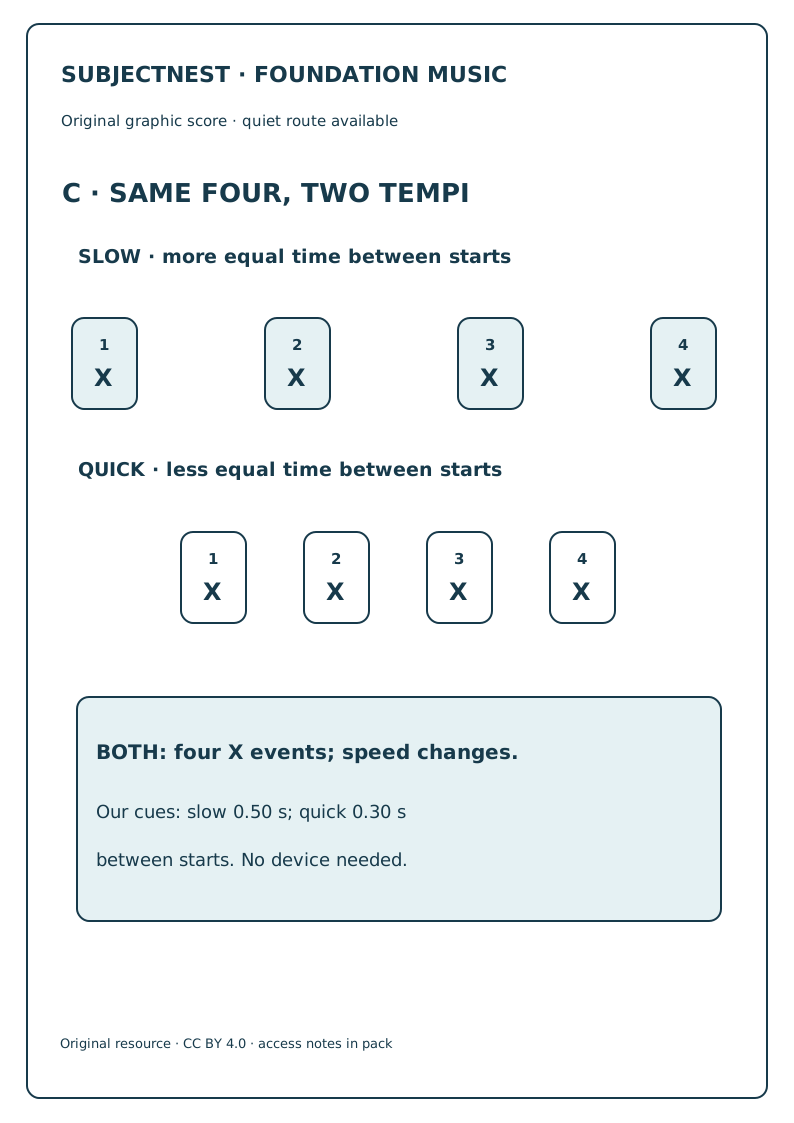
- Welcome · 3 min. Show two rows with four X marks each. Ask what is equal before naming speed: both have four beat places.
- Model · 4 min. Trace one row with wider time gaps and one with shorter time gaps. Use the slow (playback review held) and quick (playback review held) candidate cues only after listening review, or an adult's silent pointer at clearly different steady paces. Quick does not mean louder.
- Try together · 5 min. Child pairs SLOW/QUICK labels with wider/shorter interval bands and checks four X in each. A pulse cannot be proved in time from a static page.
- Child choice · 7 min. Choose a tempo for two fictional paper toy scenes, perhaps rolling slowly across four drawn spaces versus sliding briskly in an imaginary comic. Give a musical reason; no physical-science claim is assessed.
- Notice · 4 min. Ask “Did the number of beats change?” Record count and chosen tempo separately from any actual aural observation.
- Close · 2 min. Keep both rows; tomorrow the single emphasis can move without a tempo change.
Week 3 · Day 14 · Move a single accent, keep the pulse
Target/codes: move the planned accent from count 1 to count 4 while four X marks stay; AC9AMUFD01, AC9AMUFC01. Prepare: B board, Practice D, one star.
- Welcome · 3 min. Compare the first-beat star with a blank four-X row. Say the pulse marks can stay while the emphasis moves.
- Model · 4 min. Slide the one star from count 1 to count 4, leaving all four X cards and the comfortable pace alone. A visual emphasis is enough for this planning task.
- Try together · 5 min. Child points to the unchanged row and directs the star move. Count exactly one star before and after.
- Child choice · 7 min. Child selects start or finish emphasis for a fictional paper parcel arriving at a picture shelf or an invented rolling/slide comic. Ask what the chosen accent is meant to highlight.
- Notice · 4 min. Check four X, one star, and child's reason. If any sound is chosen, record what was actually audible, without calling a paper-only score a performance.
- Close · 2 min. Save both possibilities and hold the fresh I sheet for tomorrow.
Week 3 · Day 15 · Fresh Check I: the picture-map visitor
Target/codes: independently preserve four pulse places and relocate a single planned accent under a new constraint; AC9AMUFD01, AC9AMUFC01. Prepare: I public check, I A4, broad cards. Keep the separate key closed until first responses.
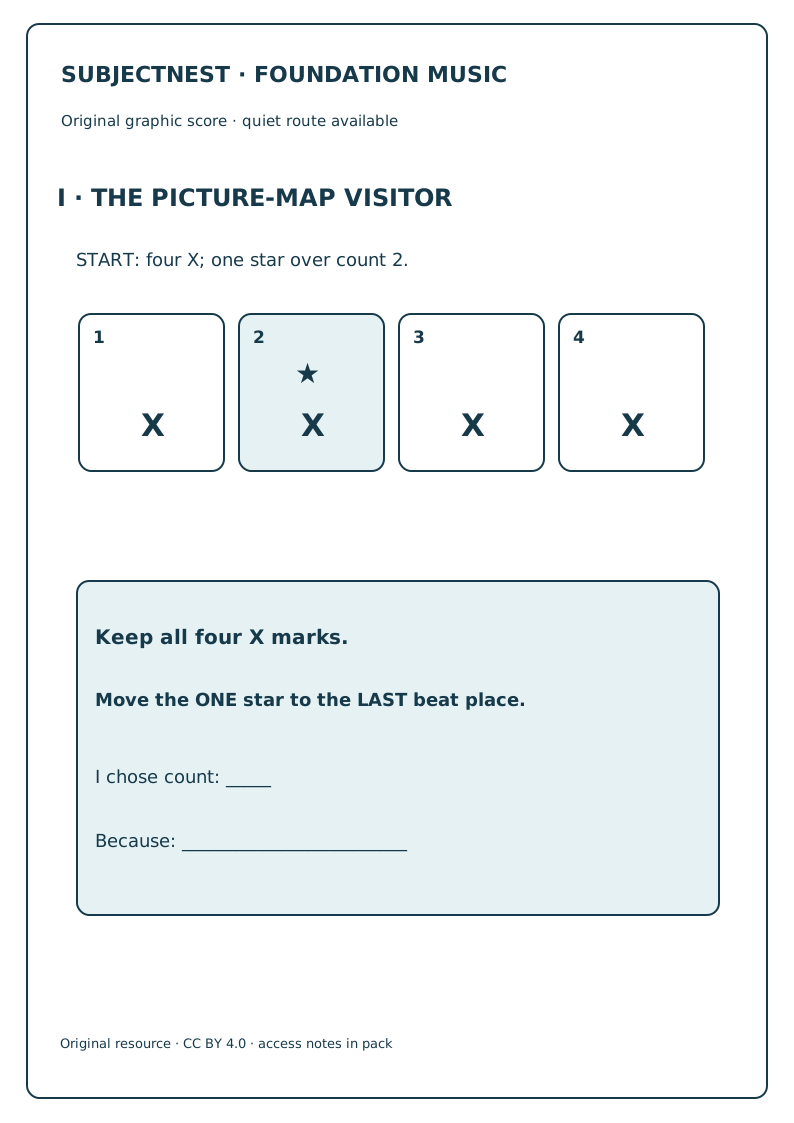
- Welcome · 3 min. Say this new paper puzzle helps choose later teaching. It does not test loudness, hearing or physical timing.
- Access · 4 min. Present the exact starting four-X score with its star at count 2 using print, raised marker or neutral read-aloud. Do not hint at the destination.
- Independent plan · 5 min. Child decides how to keep four X while placing the one star on the last count for the fictional picture-map visitor.
- Child response · 7 min. Child marks, points, uses AAC or directs a neutral adult; save the first placement and their reason. Optional sound comes after the independent plan.
- Self-check · 4 min. Ask child to count X marks and stars, then indicate which count is last. No corrective cue before first response is stored.
- Close · 2 min. Consult the teacher key afterward; check-day supplementary swaps use unrelated rows.
Week 4 · Day 16 · Add a second musical role
Target/codes: read two aligned four-place rows and identify the steady pulse versus one planned answer at count 3; AC9AMUFD01, AC9AMUFC01. Prepare: D two-role board, Practice E.
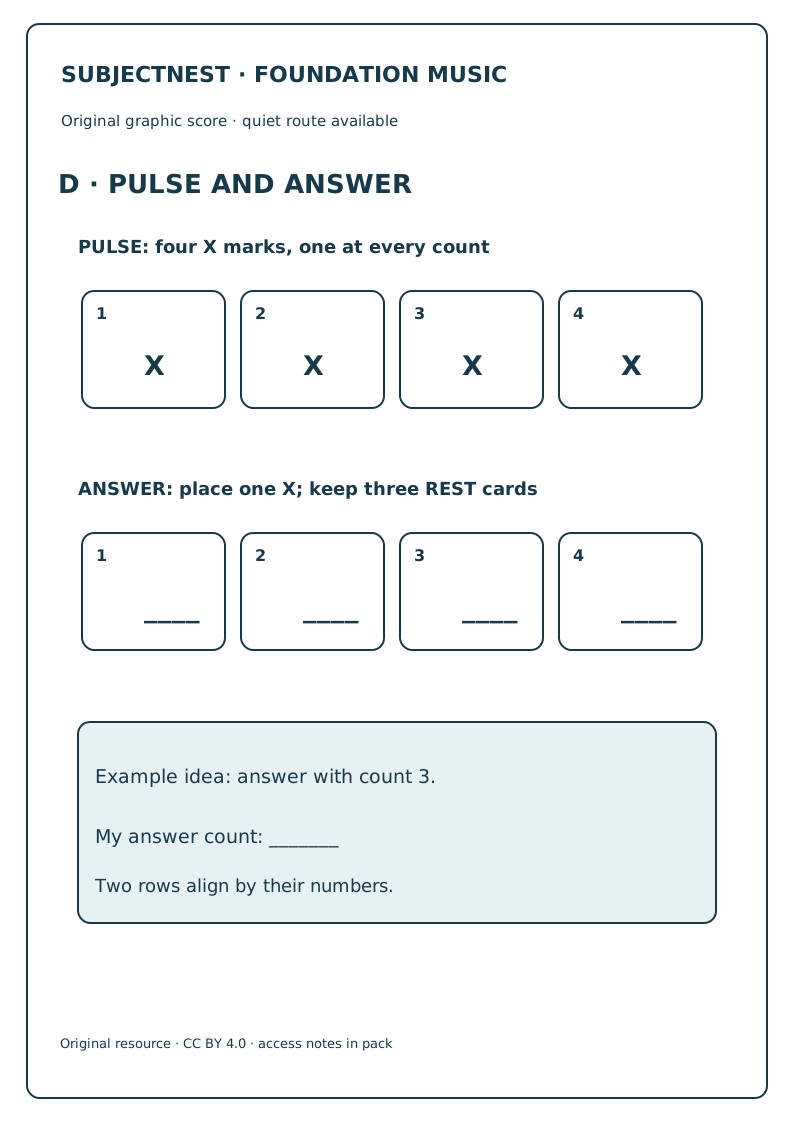
- Welcome · 3 min. Show one row of four X; underneath put a second row with three rests and one X. These are parts of one plan, not two children who must play together.
- Model · 4 min. Point down each column: pulse at 1–4, answer only at 3. Name “PULSE” and “ANSWER”; a quiet card tap can be performed by one adult only if comfortable.
- Try together · 5 min. Child identifies which row has four events and which has one. Adult slides a wide straightedge under columns so alignment stays clear.
- Child choice · 7 min. Child makes an original two-role plan for a fictional paper helper receiving one reply, or a drawn ball crossing four spaces. The X is a musical answer, not proof anyone helped or a real object's motion.
- Notice · 4 min. Check four X above and exactly one below at count 3. Record whether any actual two-part sound or interaction took place rather than inferring it.
- Close · 2 min. Keep the pulse row fixed for a new answer choice tomorrow.
Week 4 · Day 17 · Choose when the answer enters
Target/codes: hold four pulse marks and compare an answer at count 3 with one at count 4; AC9AMUFD01, AC9AMUFC01. Prepare: E choice board, Practice F.
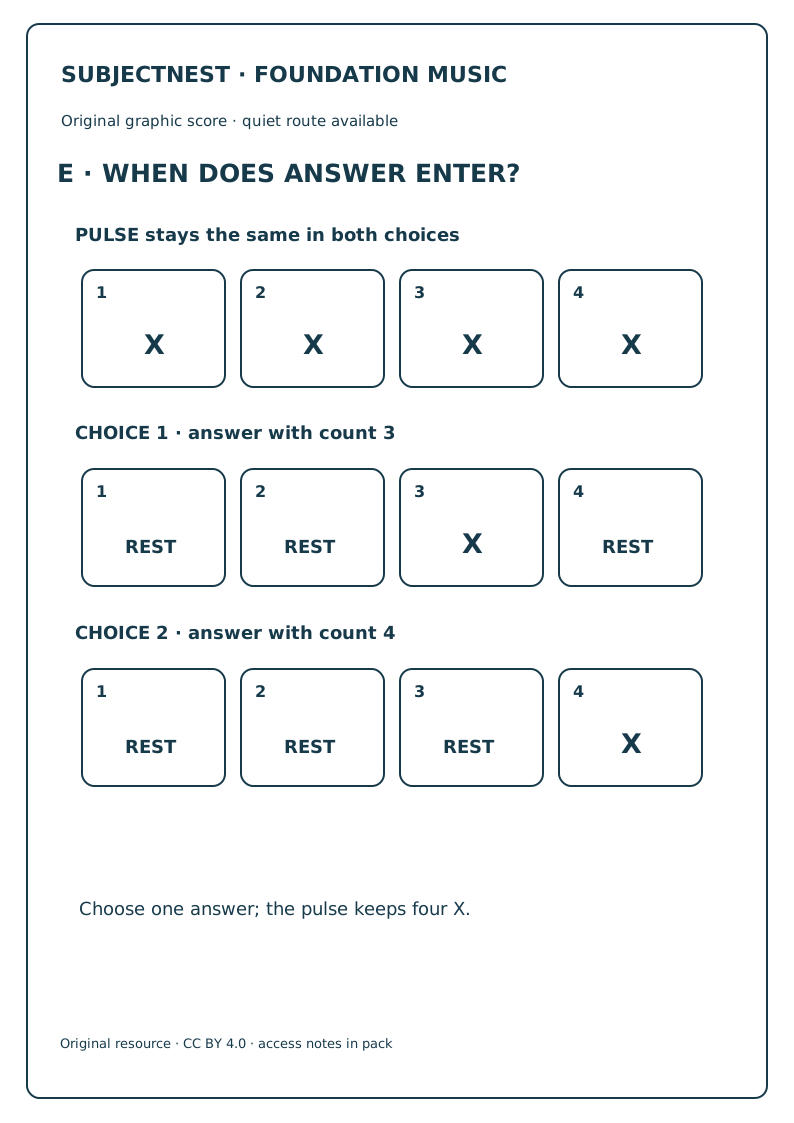
- Welcome · 3 min. Revisit the two rows from Day 16. Ask where one answer appears, without saying one timing is better.
- Model · 4 min. Show ANSWER
– – X –and– – – Xunder an unchanged PULSEX X X X. The X moves one place later; there is still exactly one answer. - Try together · 5 min. Child points down count 3 and count 4, comparing aligned rows. A tactile straightedge or AAC “three/four” can carry the same decision.
- Child choice · 7 min. Child picks which answer suits a fictional four-panel comic about offering a paper-tool tip, a toy sliding on a drawing, or their own impersonal scene; note why timing fits their story.
- Notice · 4 min. Count four pulse X marks and one answer X in either version. Do not call a silent page a real response from a partner.
- Close · 2 min. Save chosen answer timing; tomorrow the child can compose a new two-role variation.
Week 4 · Day 18 · Compose a new two-role idea
Target/codes: choose one original answer position against a fixed four-beat pulse and explain an intended musical effect; AC9AMUFD01, AC9AMUFC01. Prepare: D blank role board, Practice E/F, broad X/rest/star cards.
- Welcome · 3 min. Offer a blank ANSWER row under four fixed pulse X marks. Children may choose another non-personal scene or no story label.
- Model · 4 min. Adult invents a fresh example: answer at count 1 under pulse 1, with rests at 2–4, then says “I chose an early answer.” This is not the held J check.
- Try together · 5 min. Compare early answer 1 with later answer 3 using two board states; ask what the pulse row keeps.
- Child choice · 7 min. Child fills exactly one ANSWER X on any count and three rests, chooses a fictional help/roll/slide or self-chosen neutral purpose, and makes an original score. Optional approved sound or adult-directed sound is separate.
- Notice · 4 min. Ask child to identify where their two roles align and why the answer enters there. Record only observed sounding or timed coordination.
- Close · 2 min. Keep the child's authored score for optional sharing tomorrow.
Week 4 · Day 19 · Maker, permission, willing audience
Target/codes: ask a real maker/permission question about an educator-selected authorised work, and choose whether to share an original score/sound with a willing person; AC9AMUFE01 as an opening, AC9AMUFP01 only upon actual sharing. Prepare: F log, held source slot, child's Day 18 score.
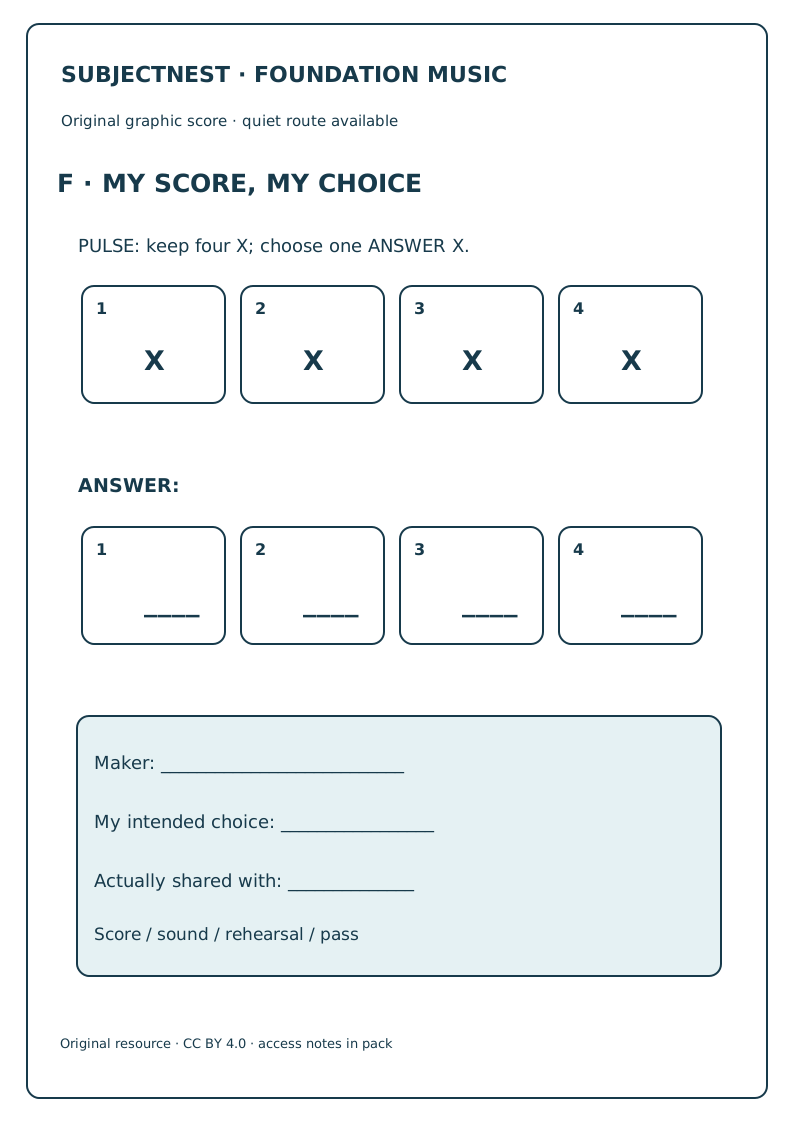
- Welcome · 3 min. Offer score sharing with one willing adult, optional quiet sound, paper-puppet rehearsal or pass. No public solo, filming or family story is expected.
- Model · 4 min. Adult shares their own invented two-role score with another willing adult. If the school has completed the source slot, introduce a real work with its verified maker, permission and source context; otherwise state that the real-work encounter is still to be arranged.
- Try together · 5 min. Ask “Who made this score?” and “Whose permission is needed to use that real work?” Leave unknown cultural context unanswered. The child may describe or ask a question.
- Child choice · 7 min. Child chooses whether and how to share their original score with an actually willing person. Log whether a score, optional sound, both, puppet rehearsal or pass occurred; child may withdraw at any time.
- Notice · 4 min. Record the child's intended musical choice and observed event. Do not record a guessed audience feeling or infer aural competence from a paper share.
- Close · 2 min. Save permission questions and what actually happened. Keep the fresh J sheet for the next day.
Week 4 · Day 20 · Fresh Check J: the paper reply board
Target/codes: independently preserve four steady pulse marks and put one answer after the third pulse on a new two-role score; AC9AMUFD01, AC9AMUFC01. Prepare: J public check, J A4, large X/rest cards; keep key closed.
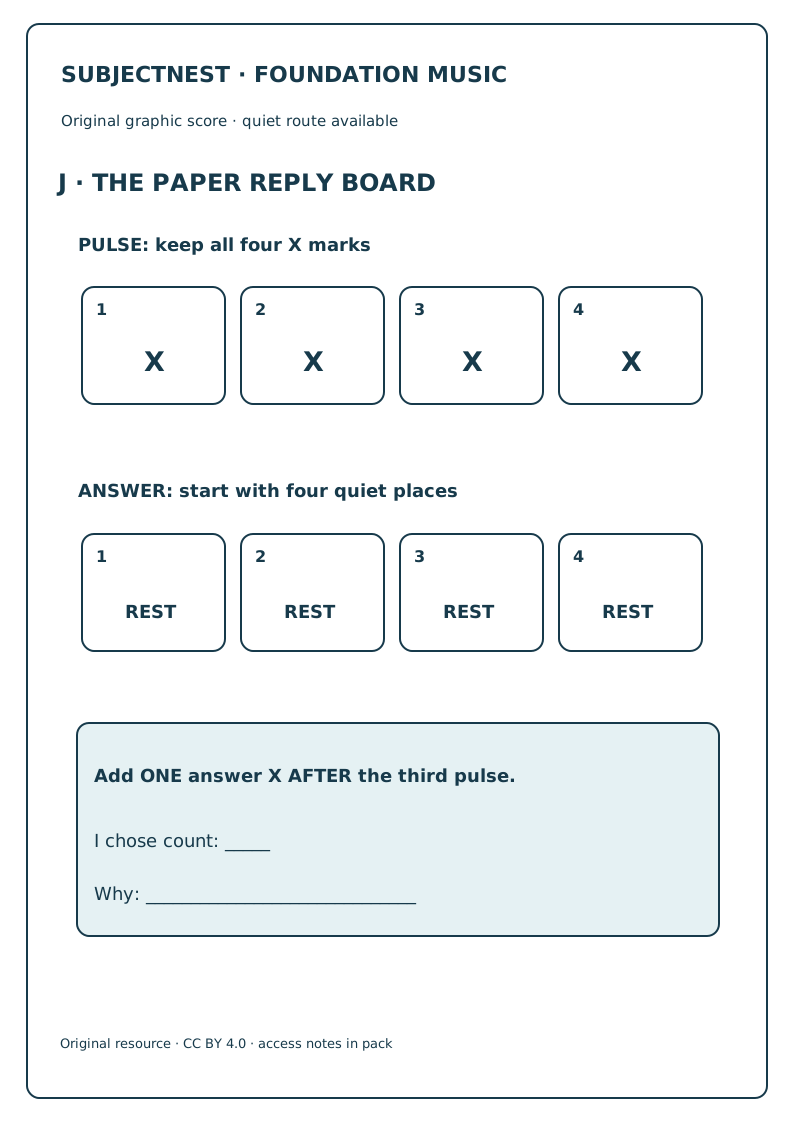
- Welcome · 3 min. Describe an original paper music puzzle that will guide the next lesson. No listener, device or actual duet is required.
- Access · 4 min. Present PULSE
X X X Xabove four empty answer places, neutrally by text, tactile rows or read-aloud. Explain “after the third pulse” without pointing to a place. - Independent plan · 5 min. Child chooses where one ANSWER X should go, with rests in the other three places, while all four pulse X stay.
- Child response · 7 min. Record first full two-row score, chosen answer count and child's reason via their route. Any optional sound comes after the first plan.
- Self-check · 4 min. Invite child to count pulse X and answer X. Do not supply the count answer before recording.
- Close · 2 min. Use the separate key to choose later teaching, including actual accessible listening/music-making and a real authorised work where still absent.