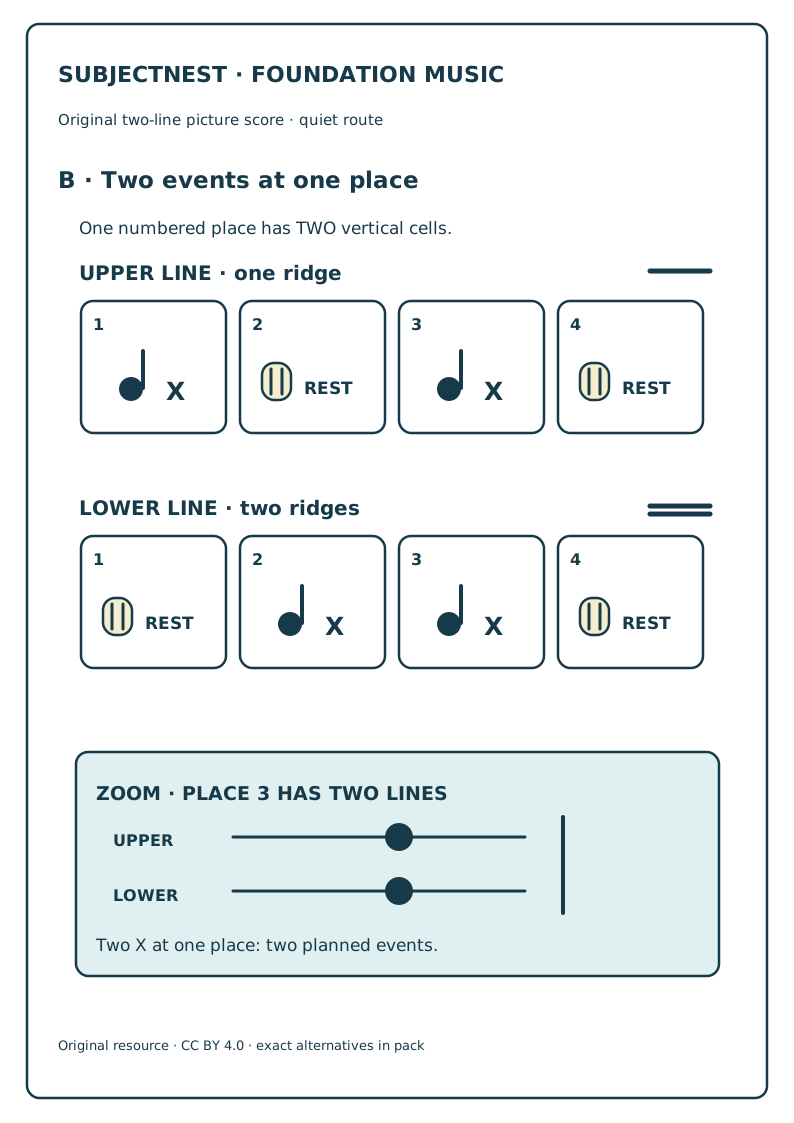
Two mono, 16-bit, 22,050 Hz PCM WAVs are generated from scratch. The upper line is a pure 330 Hz tone; lower is a pure 440 Hz tone. Simultaneous tones at one column are two events, not a recorded group, real instrument timbre, song or cultural motif. Each short event lasts 0.10 seconds. Beat-place starts are 0.10, 0.60, 1.10 and 1.60 seconds; all files have a quiet tail to 2.40 seconds. These are file timings only, not a pace a child must match.
The files are candidate, not cleared for classroom playback until a human educator listens, checks comfortable volume and speaker behaviour on intended equipment, and offers a complete no-sound route. No child voice or data is recorded. There is no automatic autoplay.
| Candidate | Exact event transcript and silence | Complete quiet route |
|---|---|---|
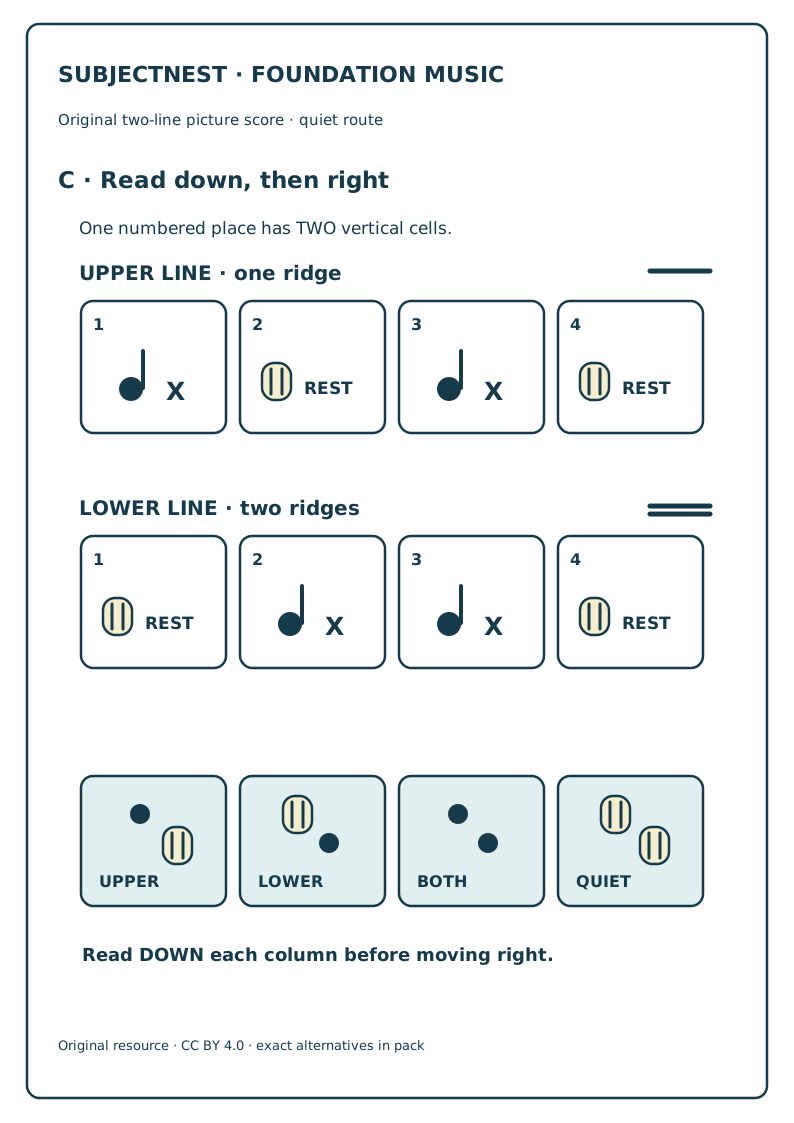
| cue-a-four-textures.wav (playback review held) | Count 1 at 0.10 s: upper 330 Hz X, lower REST. Count 2 at 0.60 s: upper REST, lower 440 Hz X. Count 3 at 1.10 s: both upper 330 Hz X and lower 440 Hz X simultaneously. Count 4 at 1.60 s: both REST. Silence follows each 0.10 s event through next count and after count 3 through file end. | B overlap and C reader with broad fixed raised lanes: UPPER, LOWER, BOTH, QUIET. Read the two cells in each column vertically. |
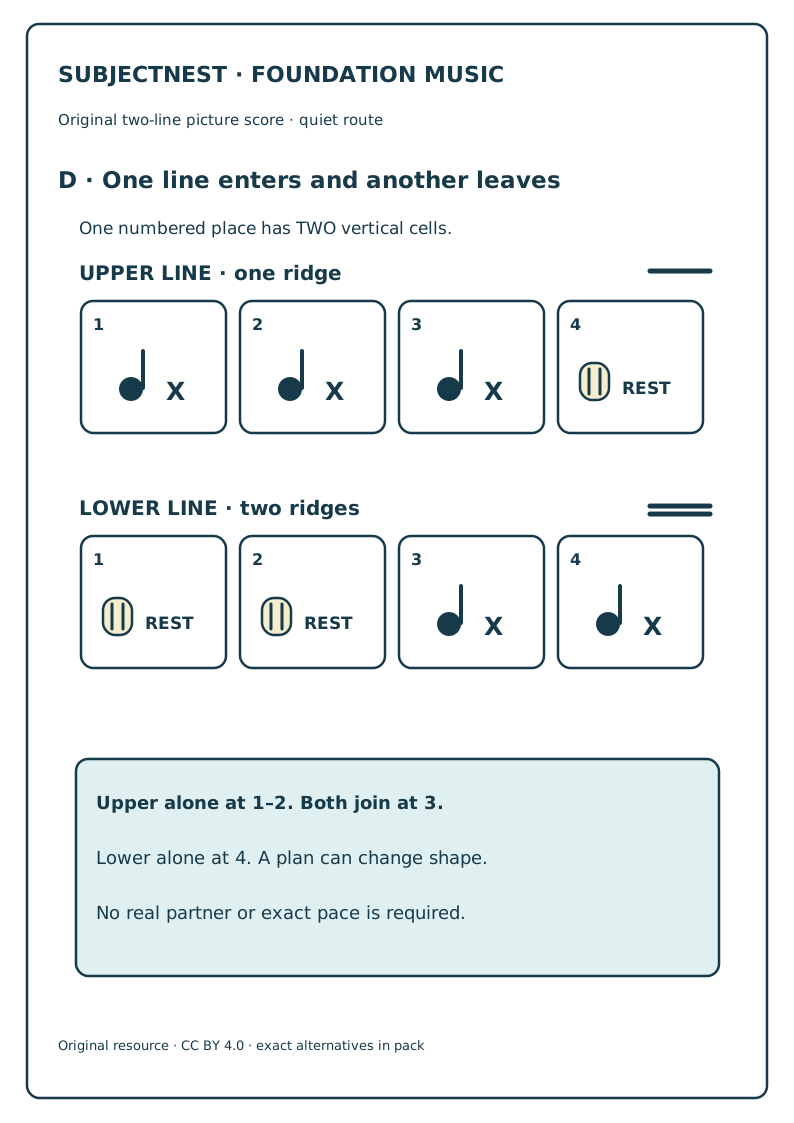
| cue-b-entry-exit.wav (playback review held) | Count 1 at 0.10 s: upper 330 Hz X only. Count 2 at 0.60 s: upper 330 Hz X only. Count 3 at 1.10 s: upper 330 Hz X plus lower 440 Hz X together. Count 4 at 1.60 s: lower 440 Hz X only. Silence follows each short event. | D entry/exit shows upper-only 1–2, both at 3, lower-only at 4; use its exact text/tactile route without playing audio. |
Human review on the actual system should check sharpness, clipping, level, speaker artefacts and whether the cues are comfortable for the particular class. Keep the silent route available even after approval. Hearing, pitch recognition and sound production are recorded only when directly observed in the child, never inferred from opening a file.