Goal: distinguish a diagram's lines/arrow from actual object movement and pose a testable, safe question. Proposed codes: AC9SFH01, AC9SFI01, AC9SFI05. Prepare: Model P, safe-passage, Card 51; optional approved real setup remains untouched.
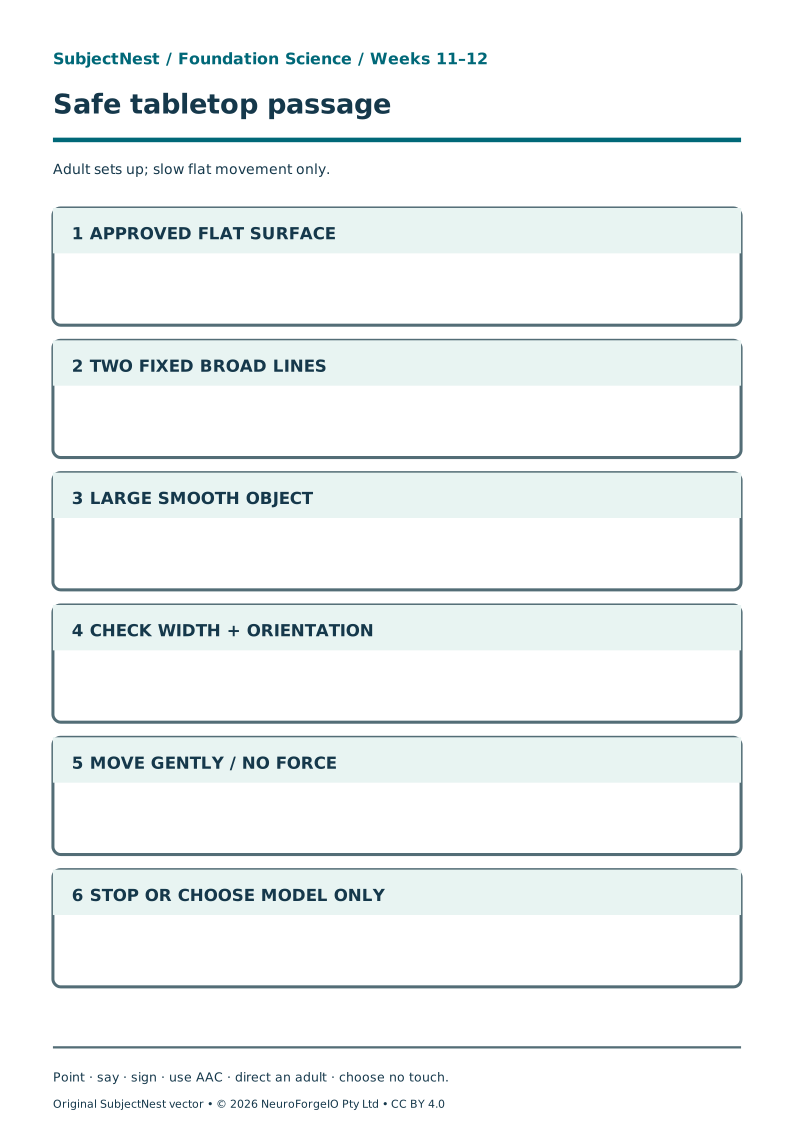
- Source · 3 min. Label P FICTIONAL MODEL. If a safe local tabletop has been approved, separately identify it and today's local date; otherwise mark REAL OBSERVATION NOT AVAILABLE.
- Read · 4 min. Read Model P completely; child locates the two lines, 9 cm label, outline, arrow and NOT TESTED label through sight, speech or fixed broad tactile shapes.
- Model · 5 min. Teacher says, “The author drew an arrow. I can say where it points. I cannot say a card moved.” Name the object-only, slow, no-force safety rule.
- Child try · 7 min. Card 51 asks: “What is in the drawing? What question could a real approved try answer?” Accept one bounded paper statement and a question such as “Would orientation change the passage?”
- Check · 4 min. Offer “The blue card passed through in our class.” Child corrects MODEL versus ACTUAL and names one missing real source/action.
- Exit · 2 min. Save the child's question and chosen access route, not a fabricated result.