Gate for actual local observation
An adult checks school rules, access, known materials and cleanup before any wet activity. Use one clean large plain uncoated paper sheet and one clean unprinted washable plastic mat of confirmed material, laid flat inside a broad catch tray on a low stable table. Use only a tiny adult-controlled drop of clean water on each surface, the same approved drop method, starting condition, viewpoint and short wait. The adult pretests containment and handles the water, timing and cleanup. Keep away from electrical items, food, floors/walkways, unknown/allergenic residues and loose small parts. No child pours, tastes, rubs, handles an unknown material or must touch/see/hear the setup. If a drop runs off, spreads outside the catch, a surface is changed, or the adult cannot keep the wait comparable, write INTERRUPTED and stop/repeat only if safe. Never hurry for a timetable. A quiet fully paper route is always available.
Before a genuine test, record school approval, local date, exact two materials/surfaces, adult action, child question and prior prediction if actually made before results, who directly observed and any attributed neutral ADULT REPORT. Record appearance: rounded drop, dark patch, spread mark, still visible, unclear, interrupted. These words do not prove where water went, absorption rate, waterproofing, hygiene or safety of an accidental spill. A child may describe an actual visual observation if genuinely seen. A tactile diagram of a wet mark is a paper representation, not a direct touch of water; no wet touching is required. If no approved genuine event, write REAL OBSERVATION NOT AVAILABLE. A drawing or adult-read fictional record remains FICTIONAL MODEL, even when the learner reasons well from it.
Complete original fictional source D · two large surfaces
FICTIONAL MODEL D. On an invented low table, an imaginary adult places an imagined large plain paper sheet and an imagined large clean washable plastic mat inside a catch tray. Both start visibly dry. The adult plans one small water drop on each, from the same method, with the same short wait and view. An invented learner writes before the pretend drops: “I think the paper mark might spread wider.” This is not a real child's prediction or a real test.
The invented sequence is: BEFORE: both surfaces have no visible wet mark. DURING: one drop is pictured on the paper and one on the plastic mat. AFTER the same pretend wait: paper try 1 shows a DARK PATCH; plastic try 1 shows a ROUNDED DROP. A second pair of invented entries says paper try 2 DARK PATCH and plastic try 2 FLAT VISIBLE DROP. A fifth note says plastic try 3 ran into the catch edge: INTERRUPTED; no comparable after mark. These are four valid pretend after appearances and one interrupted note. The two pretend paper entries match each other; the two plastic entries differ in shape but remain visibly wet. A cautious paper-only sentence is, “In this invented record, the paper entries are both dark patches, and the plastic entries still show visible drops.” It does not show that all paper absorbs water, all plastic repels it, where water went, or what a genuine classroom surface would do. Do not substitute D for an actual mixed result.
Complete original fictional source E · an explanation needing evidence
FICTIONAL MODEL E. An invented display card says: “The pretend paper looked darker after the drop. The pretend plastic still showed a drop.” Below it a second caption says: “That means the water vanished inside paper and every plastic mat keeps all water on top.” The first sentence refers accurately to D's drawn marks; the second asserts an unseen mechanism and a universal rule that D cannot establish. The card has no real date, real material provenance, child witness or actual viewer response. A careful speaker can use D's exact drawn marks, label MODEL, say “I don't know where the water went,” and propose a safe approved actual source. If an accidental real spill arises, the public lesson stops and the school-approved adult procedure takes over; children are not asked to investigate it.
Six A4 aids: ordered exact words and tactile/linear equivalents
Each SVG/PDF is a blank record. For the same accessible content, read each label in order, enlarge or braille the words, or secure six broad horizontal bordered fields. Use fixed broad choice strips; no loose counters or compulsory touch. Write FICTIONAL MODEL across a practice copy, or record a real local source/date only after the actual gate. Never prefill D/E as class results.
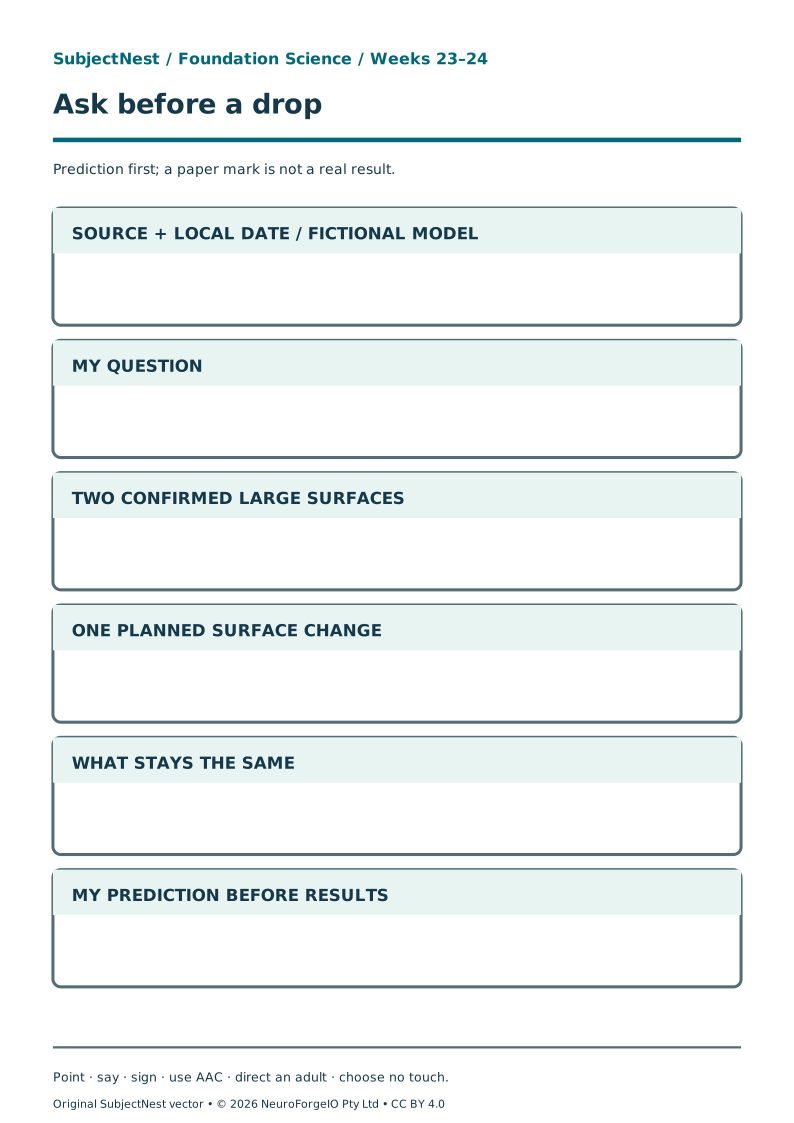
- Drop question: SOURCE + LOCAL DATE / FICTIONAL MODEL; MY QUESTION; TWO CONFIRMED LARGE SURFACES; ONE PLANNED SURFACE CHANGE; WHAT STAYS THE SAME; MY PREDICTION BEFORE RESULTS. Six top-to-bottom fields.
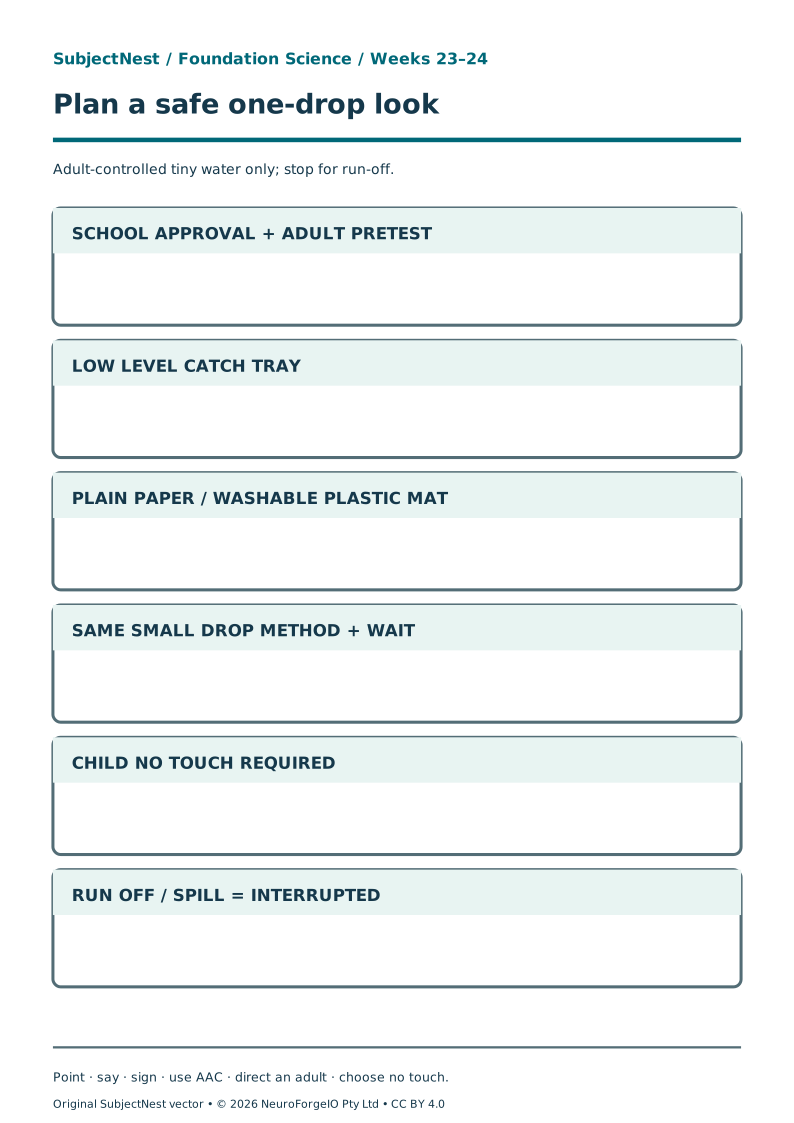
- Surface plan: SCHOOL APPROVAL + ADULT PRETEST; LOW LEVEL CATCH TRAY; PLAIN PAPER / WASHABLE PLASTIC MAT; SAME SMALL DROP METHOD + WAIT; CHILD NO TOUCH REQUIRED; RUN OFF / SPILL = INTERRUPTED. Six fields. Read the slash-separated choices explicitly; do not use a real spill as teaching material.
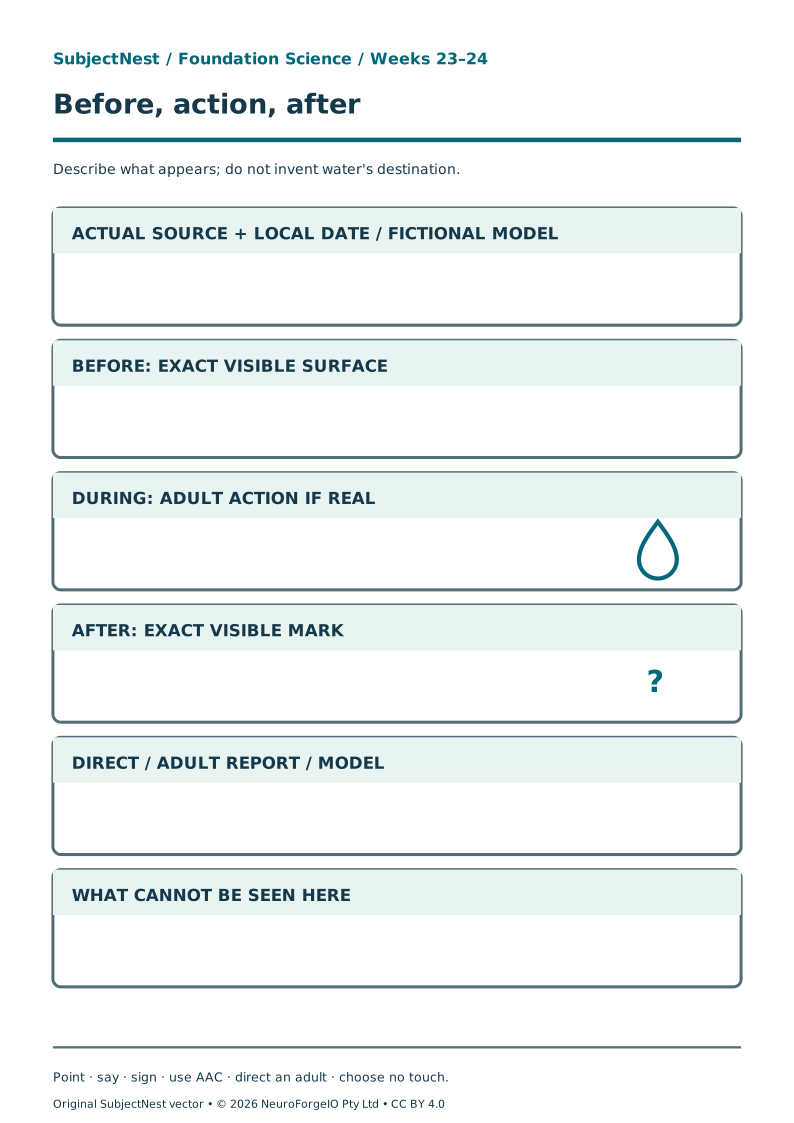
- Three moment: ACTUAL SOURCE + LOCAL DATE / FICTIONAL MODEL; BEFORE: EXACT VISIBLE SURFACE; DURING: ADULT ACTION IF REAL; AFTER: EXACT VISIBLE MARK; DIRECT / ADULT REPORT / MODEL; WHAT CANNOT BE SEEN HERE. Six fields. The DURING field has one outlined schematic drop icon; AFTER has a question-mark cue. Neither icon depicts a result. For tactile use broad fixed BEFORE/DURING/AFTER position labels and an optional raised drop symbol, not wet marks; read the question mark as “outcome unknown until sourced.”
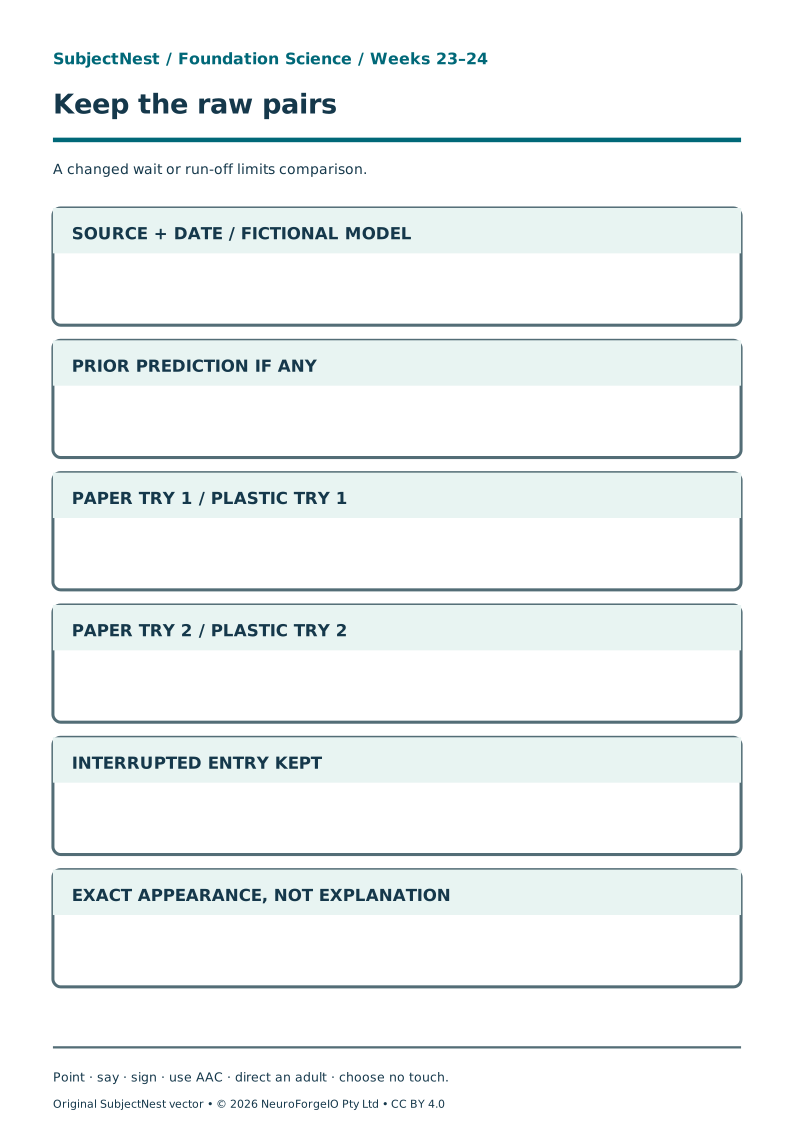
- Paired record: SOURCE + DATE / FICTIONAL MODEL; PRIOR PREDICTION IF ANY; PAPER TRY 1 / PLASTIC TRY 1; PAPER TRY 2 / PLASTIC TRY 2; INTERRUPTED ENTRY KEPT; EXACT APPEARANCE, NOT EXPLANATION. Six fields. Preserve raw pair and order.
- Claim/unknown: SOURCE TYPE + ACCESS; VALID / INTERRUPTED ENTRIES; OBSERVED OR MODELLED MARKS; CLAIM ABOUT THESE TRIES ONLY; MECHANISM UNKNOWN; NEXT SAFE SOURCE QUESTION. Six fields. A dark patch does not itself reveal where water went.
- Source handover: SOURCE + DATE OR MODEL; QUESTION + PRIOR PREDICTION IF REAL; EXACT MARKS + SUPPORT USED; CLAIM + WHAT REMAINS UNKNOWN; ACTUAL LISTENER RESPONSE OR NONE; NEXT SAFE ADULT-APPROVED CHECK. Six fields. A private teacher listener suffices; feedback is recorded only if it occurred.
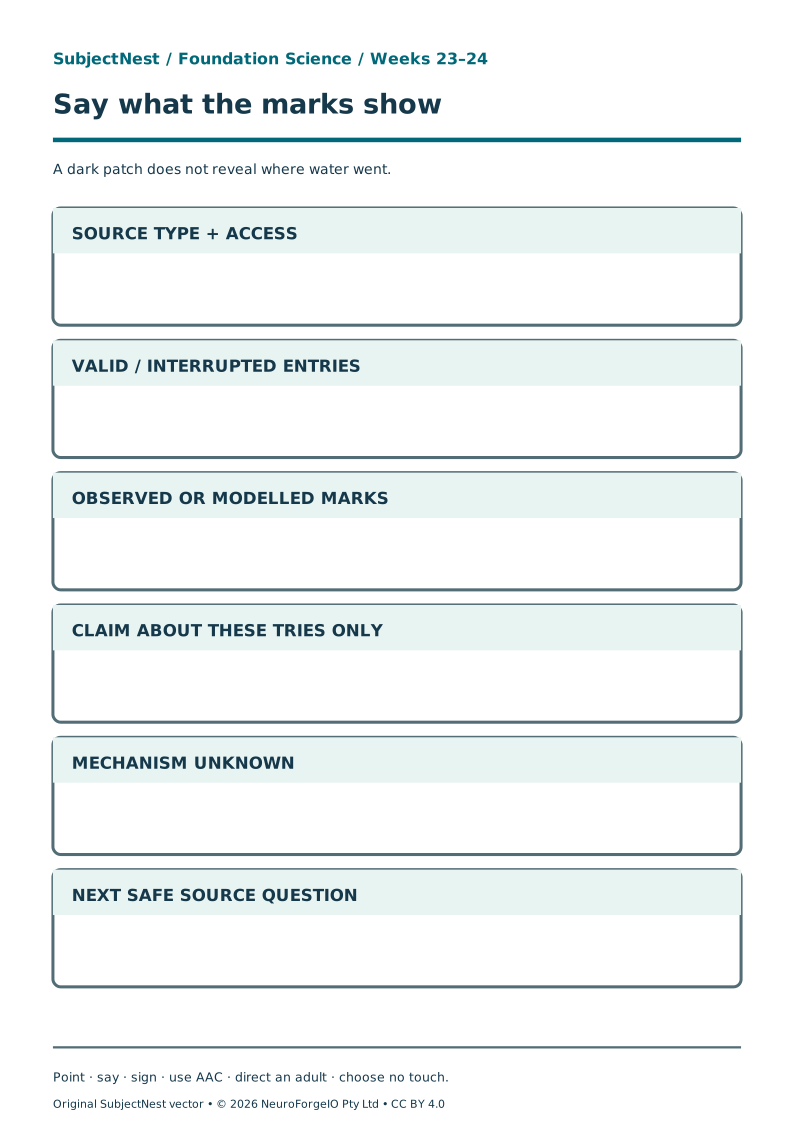
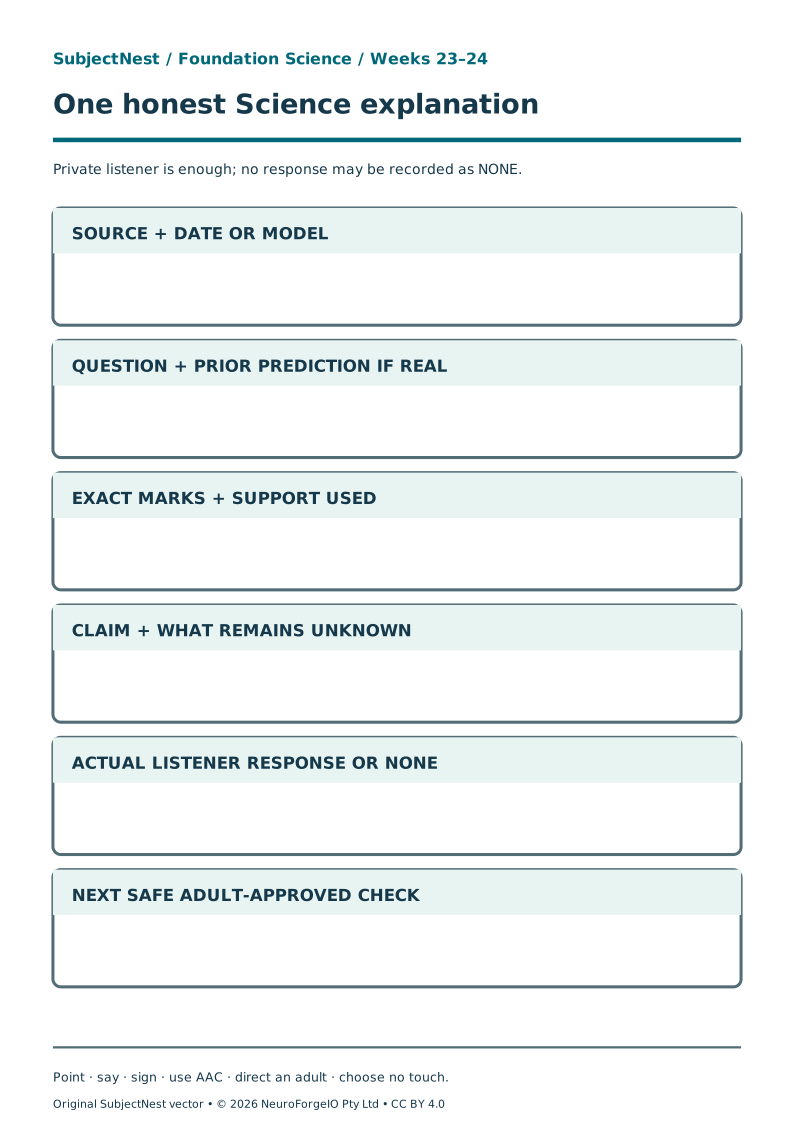
The PDFs use readable selectable text, blank writing areas and no colour-only meaning. Text/tactile alternatives represent the same reasoning task, but paper cannot become a genuine wet-surface observation. An ADULT REPORT about an actual event stays attributed rather than being mislabelled as the child's direct sense.