Read complete fictional D/E and local adult safety gate before teaching. Each day totals 3 + 4 + 5 + 7 + 4 + 2 = 25 minutes. Choose three same-target access routes flexibly, not by fixed learning style; twenty worked swaps are optional. No child must touch water or discuss feelings, family events or a spill. If no approved, actually performed, dated one-drop comparison exists, write REAL OBSERVATION NOT AVAILABLE and keep paper D/E FICTIONAL MODEL. A neutral ADULT REPORT stays attributed. Do not infer absorption or a water destination from a dark patch. Keep fresh Days 115/120 checks teacher-held until first independent responses; keys are separate.
Week 23 · Day 111 — What could we ask before a drop?
Goal: pose one observable surface question and record a prediction before any genuine result. Proposed codes: AC9SFU03, AC9SFH01, AC9SFI01. Prepare: D setup paragraph only, question mat, Card 111.
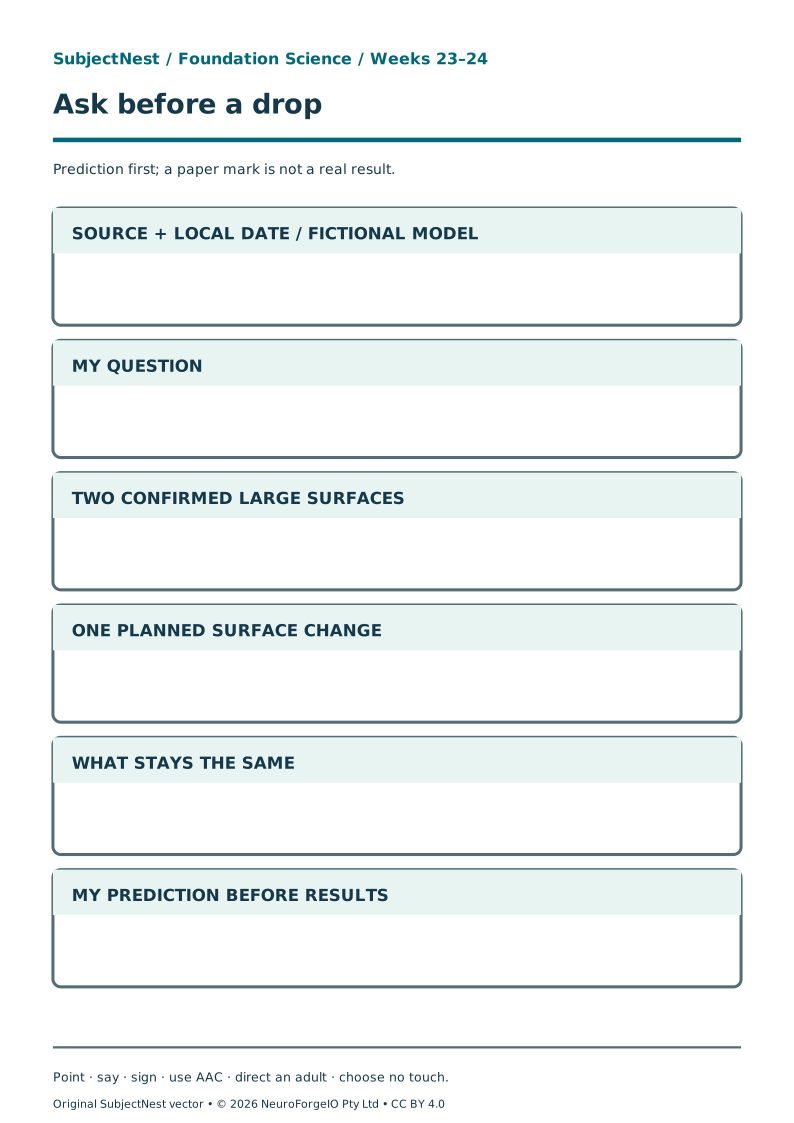
- Source label · 3 min. Mark D FICTIONAL MODEL. Record whether a locally approved actual source could be offered; otherwise REAL OBSERVATION NOT AVAILABLE.
- Read setup · 4 min. Read D only through the two dry surfaces and planned one-drop action, not its after entries.
- Model question · 5 min. Adult asks “What visible mark might appear after the same short wait on each surface?” and models a possible prior prediction, not a fact.
- Child try · 7 min. Card 111 routes ask/select a question and prediction before the result is shown; adult records exact words/order and model/actual plan.
- Check · 4 min. Ask whether “paper absorbs it” is already observed before any drop. Child changes it to a prediction or unknown.
- Exit · 2 min. Preserve question/prediction separate from later evidence.
Week 23 · Day 112 — What must stay steady?
Goal: plan one surface change and steady drop method, wait and viewpoint in a safe comparison. Proposed codes: AC9SFU03, AC9SFI01, AC9SFI05. Prepare: surface plan, D setup, broad fixed labels, Card 112.
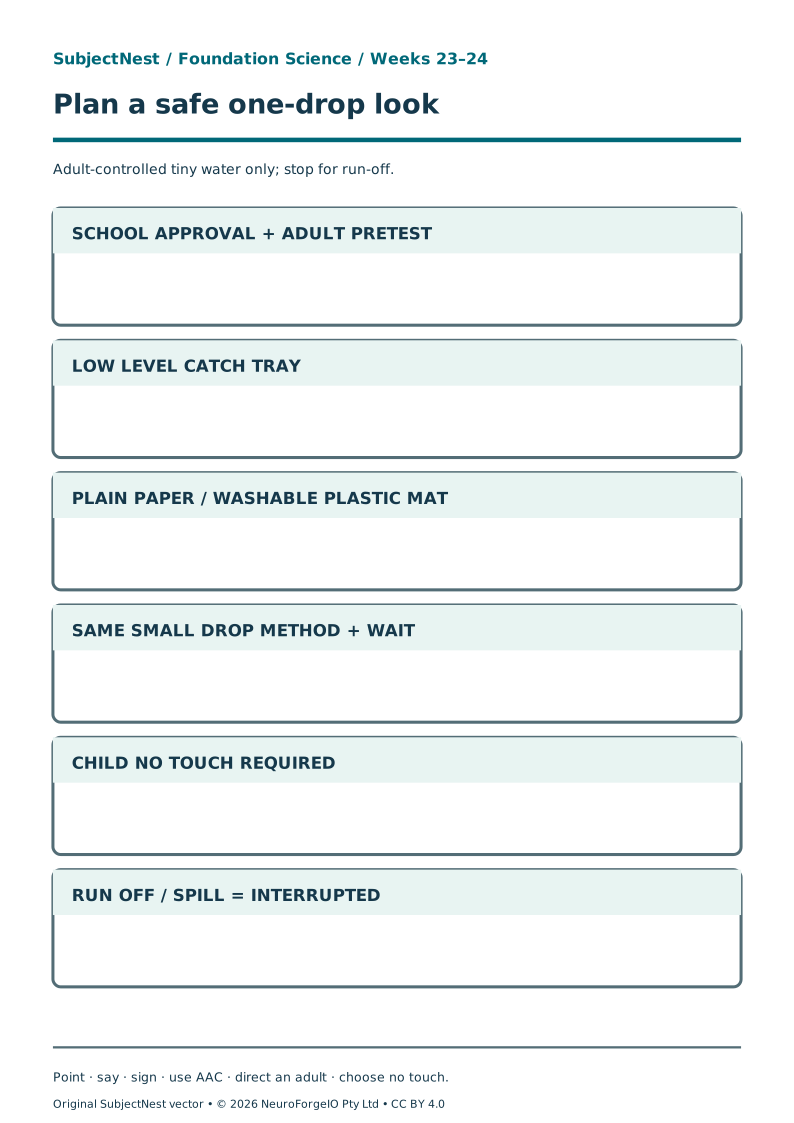
- Safety gate · 3 min. Adult confirms or declines local approval, known large materials, catch tray and cleanup; no child handles water.
- Read · 4 min. Name plain paper and plastic mat as the planned surface difference; keep drop method/wait/view the same in the plan.
- Model confound · 5 min. Adult changes a paper WAIT card for one imagined surface and shows why that adds a second difference.
- Child try · 7 min. Card 112 routes select same/change labels and an interruption rule for run-off or spill; no paper diagram becomes a real test.
- Check · 4 min. Ask whether a large drop on one sheet and a tiny drop on the other isolates surface. Child identifies drop amount as another change.
- Exit · 2 min. Save child-controlled plan and adult safety decision.
Week 23 · Day 113 — Before, during and after are different evidence
Goal: sequence exact visible states and adult action without asserting an unseen mechanism. Proposed codes: AC9SFU03, AC9SFI02 (actual only), AC9SFI03. Prepare: three-moment mat, school-approved actual setup if genuinely available or D, Card 113.
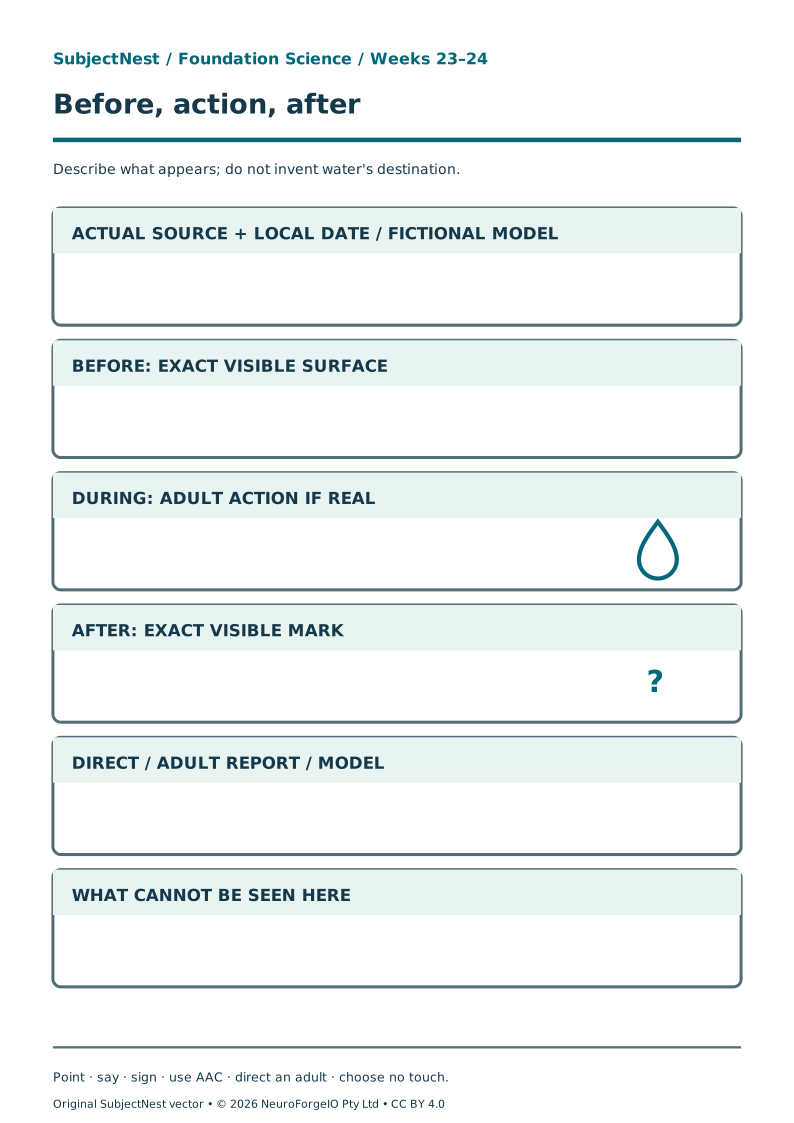
- Choose source · 3 min. Mark ACTUAL/local date/approval/materials if the adult truly runs the event, or D MODEL with REAL OBSERVATION NOT AVAILABLE.
- Before · 4 min. Record only what the actual observer can see before action, or D's “no visible wet mark” as model text.
- During · 5 min. Adult places safe tiny drops under approved conditions, or reads D's imagined action; record who did it and any interruption.
- After · 7 min. Following the same real wait or D's described pretend wait, Card 113 routes record exact visible mark/drop on each surface, plus source/access.
- Check · 4 min. Ask “Did you see water move inside the paper?” Child says only the visible mark was recorded; destination unknown.
- Exit · 2 min. Keep before/action/after separate and any spill in adult procedure, not classroom inquiry.
Week 23 · Day 114 — Are two pairs enough for a careful claim?
Goal: preserve raw paired observations, classify interruptions and compare a genuinely prior prediction when available. Proposed codes: AC9SFU03, AC9SFI02 (actual only), AC9SFI03, AC9SFI04 (prior prediction only). Prepare: paired record, approved setup if still safe or full D, Card 114.
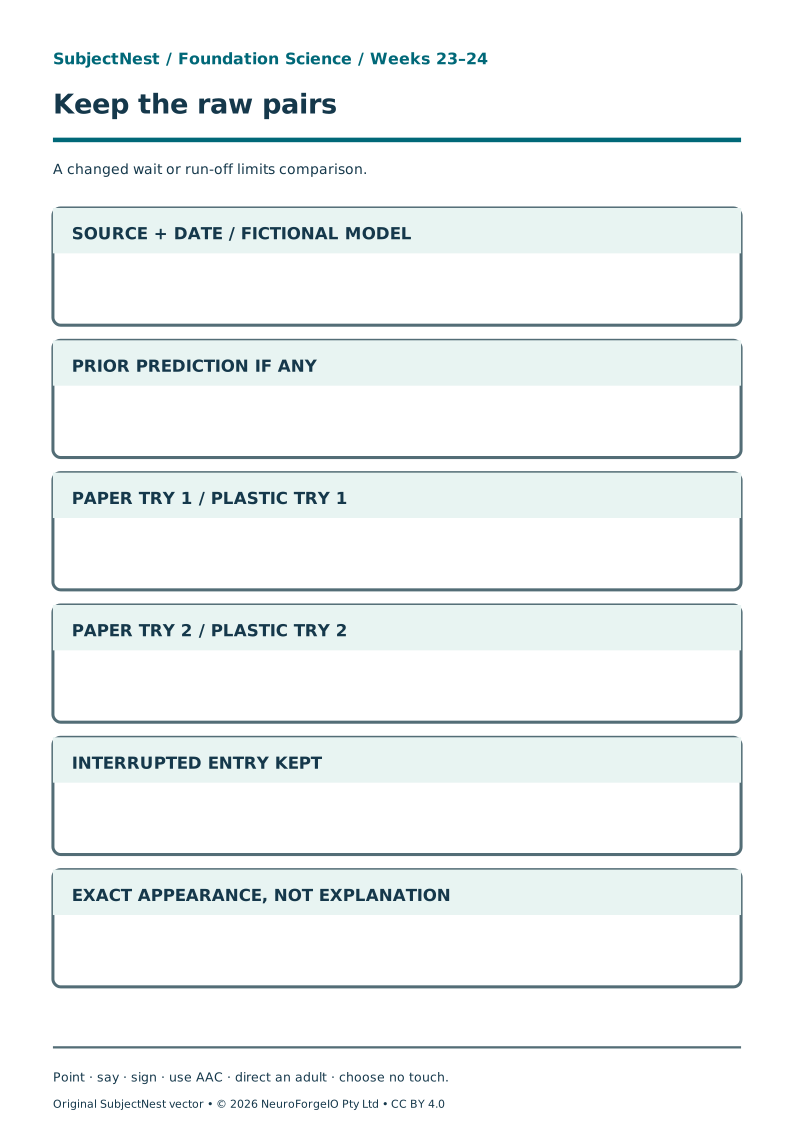
- Source/date · 3 min. Use the true local record if obtained; otherwise D MODEL. Do not “complete” missing real entries from D.
- Prior status · 4 min. Retrieve a prediction only if recorded before actual results; else NO PRIOR PREDICTION.
- Model raw · 5 min. Read first pair exactly, preserving surface and appearance. Explain that run-off is INTERRUPTED, not a hidden mark.
- Child try · 7 min. Adult safely performs another real pair if approved and feasible, or reads D's second pair and fifth entry. Card 114 routes record raw order/validity.
- Check · 4 min. Compare the exact valid appearances with prior prediction if it exists; mixed or too few actual tries gives a limited/unclear conclusion.
- Exit · 2 min. Save unchanged raw source and one cautious first statement.
Week 23 · Day 115 — Fresh fair-drop check
Goal: independently identify a second changed condition in a novel paper case and bound what it can show. Proposed codes: AC9SFU03, AC9SFI01, AC9SFI03. Prepare: teacher-held Case Z, blank surface plan, Card 115 after response.
- Preflight · 3 min. Confirm case unseen; prepare exact read-aloud, large print or broad secured tactile equivalent and private first-response capture.
- Present · 4 min. Read the full FICTIONAL case once without cueing the extra change.
- Think · 5 min. Independent quiet time; neutral reread is logged.
- First independent response · 7 min. Child names planned surface change, another changed condition, what the paper can/cannot prove and a safer actual comparison; record first words/access before feedback.
- Bound · 4 min. Ask for genuine approved source/date/raw appearances needed for a real property claim. Paper-only stays REAL OBSERVATION NOT AVAILABLE.
- Close · 2 min. Use separate key for the next teaching move; Card 115 follows later.
Week 24 · Day 116 — What can a dark mark actually tell us?
Goal: name exact source-backed appearance and separate it from a mechanism guess. Proposed codes: AC9SFU03, AC9SFH01, AC9SFI03. Prepare: actual dated source if any or D, claim/unknown, Card 116.
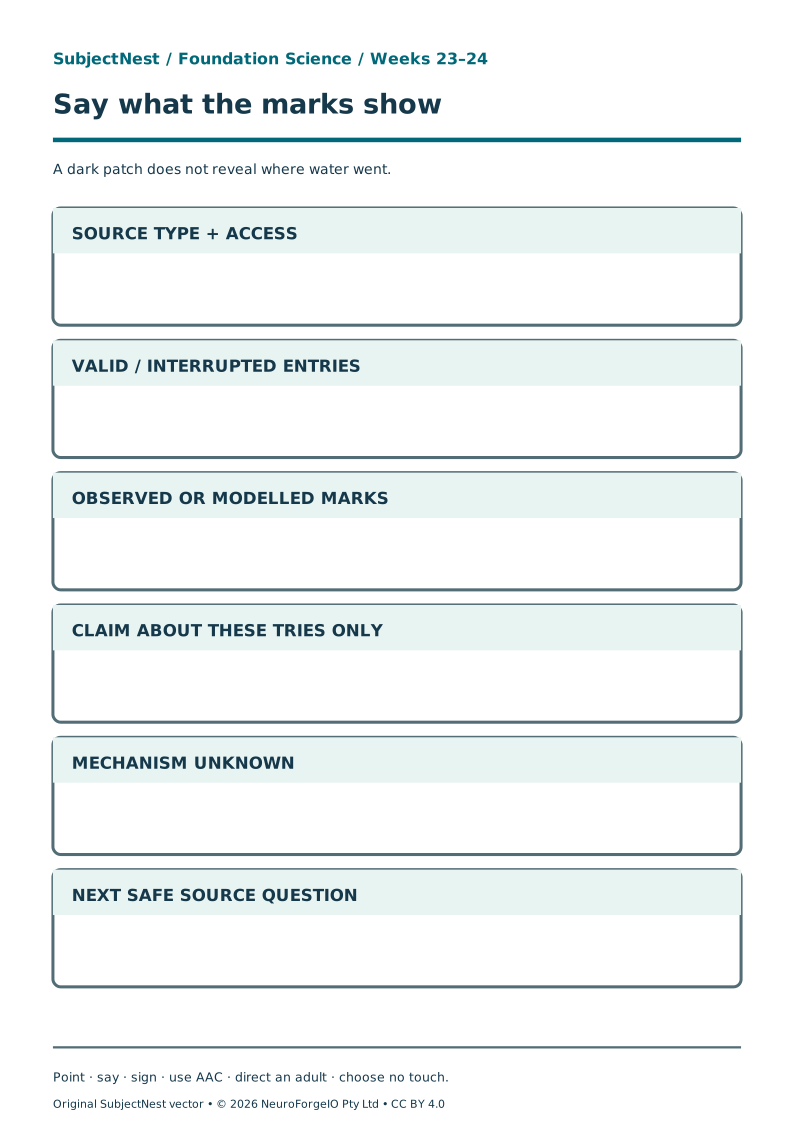
- Source label · 3 min. Mark ACTUAL/date or D MODEL on the record; adult report remains attributed.
- Re-read · 4 min. Read the exact appearance entries, including different plastic shapes, without “soaked” or “waterproof” claims.
- Model · 5 min. Adult says of D: “This invented paper entry is a DARK PATCH. I cannot see where the water went.”
- Child try · 7 min. Card 116 routes give one appearance sentence with source and one unknown; a real result may be different or unclear.
- Check · 4 min. Ask whether the dark patch proves water vanished inside. Child identifies that as a possible explanation needing more evidence.
- Exit · 2 min. Save bounded description, not a fixed material rule.
Week 24 · Day 117 — Which sentence reaches beyond the record?
Goal: distinguish D-supported description from E's untested mechanism and universal claim. Proposed codes: AC9SFH01, AC9SFI03, AC9SFI05. Prepare: full E, claim/unknown, Card 117.
- Label source · 3 min. E is FICTIONAL MODEL text, not a real witness or listener.
- Read · 4 min. Read both E captions fully; one repeats drawn marks, the other asserts a mechanism and every-plastic rule.
- Model · 5 min. Adult underlines exact D entries that support only the first caption and says the second needs new evidence.
- Child try · 7 min. Card 117 routes sort SUPPORTED HERE / NOT SHOWN HERE and restate one cautious sentence without using “always.”
- Check · 4 min. Ask if two invented pairs can establish what every real paper/plastic does. Child says no and names source limit.
- Exit · 2 min. Keep exact child correction; never turn E's fake caption into actual feedback.
Week 24 · Day 118 — What safe question comes next?
Goal: propose a new observable question and an adult-approved source while leaving unseen mechanisms unknown. Proposed codes: AC9SFH01, AC9SFI01, AC9SFI05. Prepare: claim/unknown, D/E, current local safety decision, Card 118.
- Safety reminder · 3 min. A real accidental spill goes to the school-approved adult procedure, not a child test.
- Revisit · 4 min. Identify one D appearance and one E leap beyond the source.
- Model question · 5 min. Adult asks “After another equal short wait, what visible mark would be present?” rather than “Where did water disappear?”
- Child try · 7 min. Card 118 routes choose a safe next observable question, one condition to hold steady and an adult to approve it; no home experiment.
- Check · 4 min. If question requires touching an unknown wet material, child switches to a no-contact adult observation route or leaves it unanswered.
- Exit · 2 min. Save next question/approval status, not an invented result.
Week 24 · Day 119 — Explain source, evidence and uncertainty
Goal: privately share an honest material observation or labelled model reading and one next question. Proposed codes: AC9SFU03, AC9SFI03, AC9SFI05. Prepare: source handover, actual consented dated record if any or D/E, Card 119.
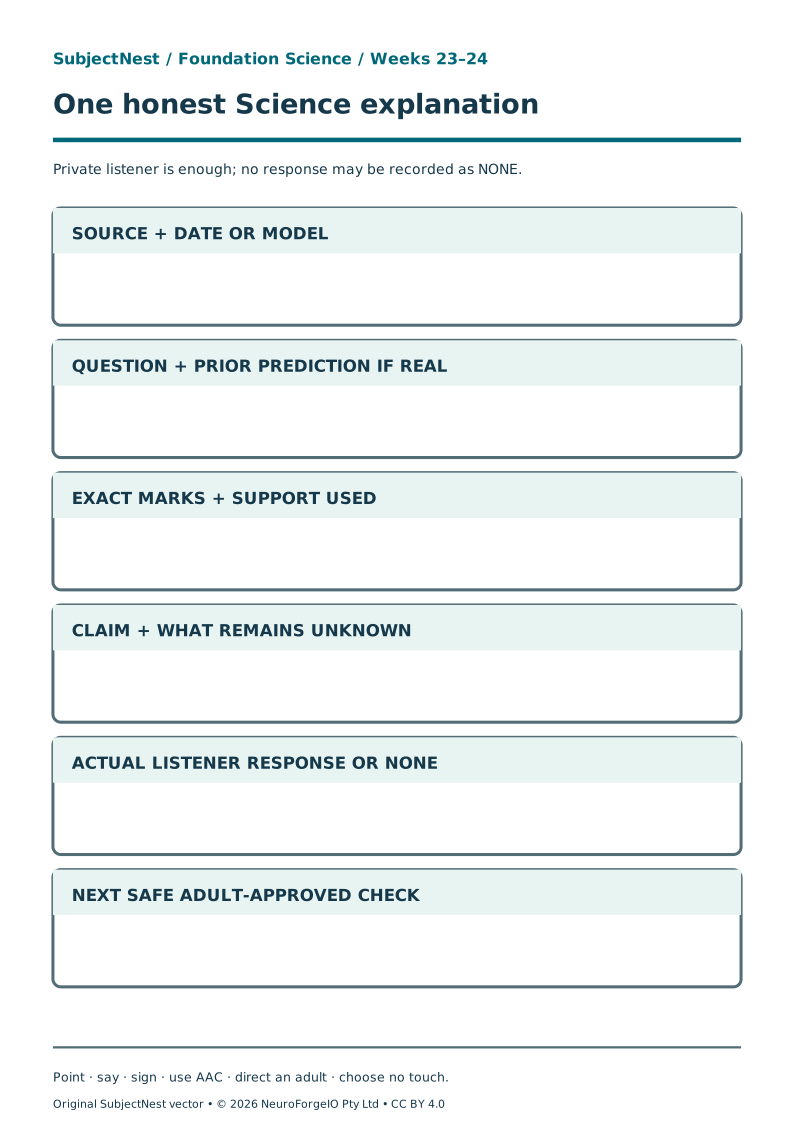
- Source/privacy · 3 min. Choose genuine class record with consent or FICTIONAL MODEL. Teacher listener is enough; no child image/location shared.
- Order · 4 min. Lay SOURCE, PRIOR PREDICTION IF REAL, EXACT MARKS, CLAIM, UNKNOWN in sequence.
- Model · 5 min. Adult gives D-only example: invented dark paper patch, plastic visible drops, water destination unknown, safe next check needed.
- Child share · 7 min. Card 119 routes communicate exact evidence/limit by speech, AAC, sign, pointing, drawing or adult-directed scribe; record actual independence/prompt.
- Feedback · 4 min. Log actual listener response only if it occurred; otherwise NO ACTUAL LISTENER RESPONSE. A rehearsal line is not feedback.
- Exit · 2 min. Keep private handover and next safe question, not a child-growth score.
Week 24 · Day 120 — Fresh source-and-claim check
Goal: independently interpret a new paper surface record, interruption and overbroad conclusion. Proposed codes: AC9SFU03, AC9SFH01, AC9SFI01, AC9SFI03, AC9SFI05. Prepare: teacher-held Case AA, blank source handover, Card 120 after first response.
- Preflight · 3 min. Ensure unseen case and exact full oral/large print/broad secured tactile equivalent; prepare private record.
- Present · 4 min. Read complete FICTIONAL paper case with all raw entries and caption.
- Think · 5 min. Independent time; log neutral reread, never cue the answer.
- First independent response · 7 min. Child names source, valid and interrupted entries, a supported sentence, unsupported universal mechanism and a safe next actual source; record first words/access.
- Bound · 4 min. Ask what approved actual materials/date/wait/raw observations are missing. If absent, REAL OBSERVATION NOT AVAILABLE.
- Close · 2 min. Use separate key. This check cannot certify a term/year or child improvement.