These are scripts and transcripts, not recorded audio. A later recording needs human listening for clarity, pace, pronunciation and accurate source labels before release. Read aloud, pause, replay, lower volume or switch to print/AAC/tactile by child choice. The complete facts and limits are in MATERIALS.md. Do not use a shortened track as the sole source for a held check.
Track 1 · What the picture shows (about 30 seconds)
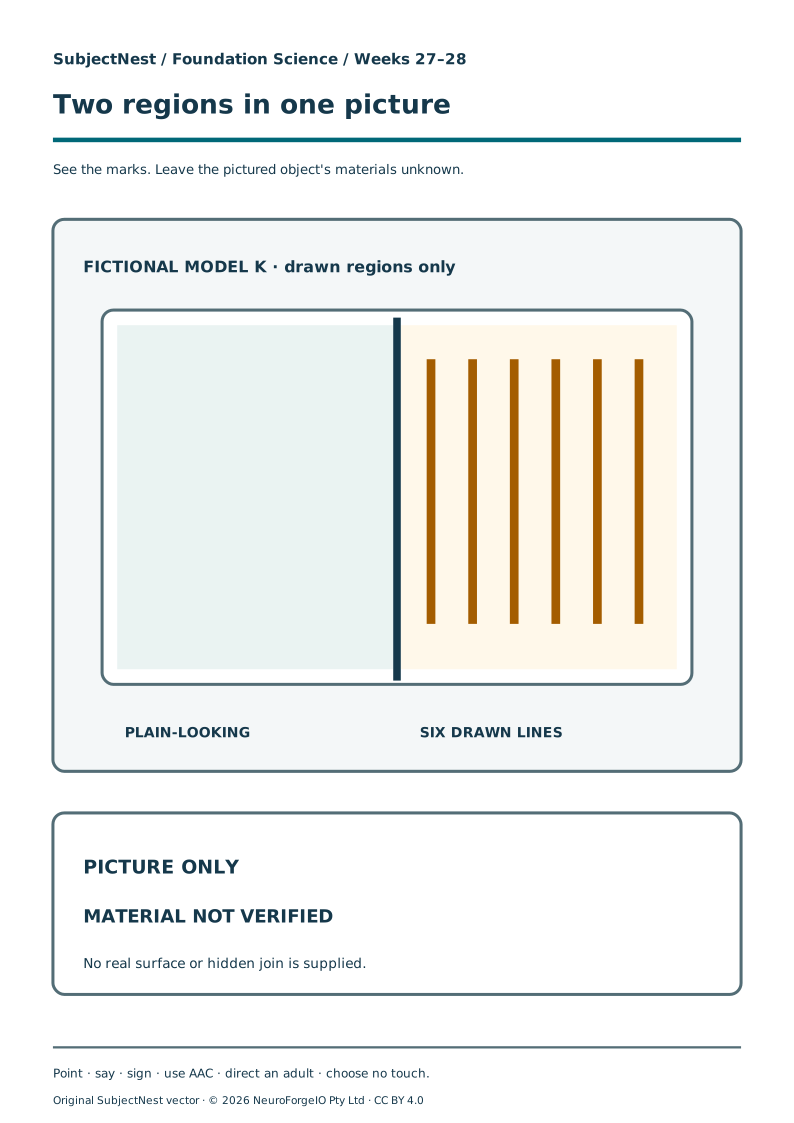
“This is a fictional paper picture. One big rectangle has a plain-looking part on the left. Six lines are drawn on the right. I can see the two drawn regions. I cannot tell what a real sign would be made from just by looking at this drawing. The lines do not let me feel a surface. Tell me one thing the picture shows, and one thing we still need a source for.”
Pause for response. Visual partner: split sign. Exact read order: left plain-looking, right six drawn lines, picture only, material not verified.
Track 2 · Same feature, different reported materials (about 35 seconds)
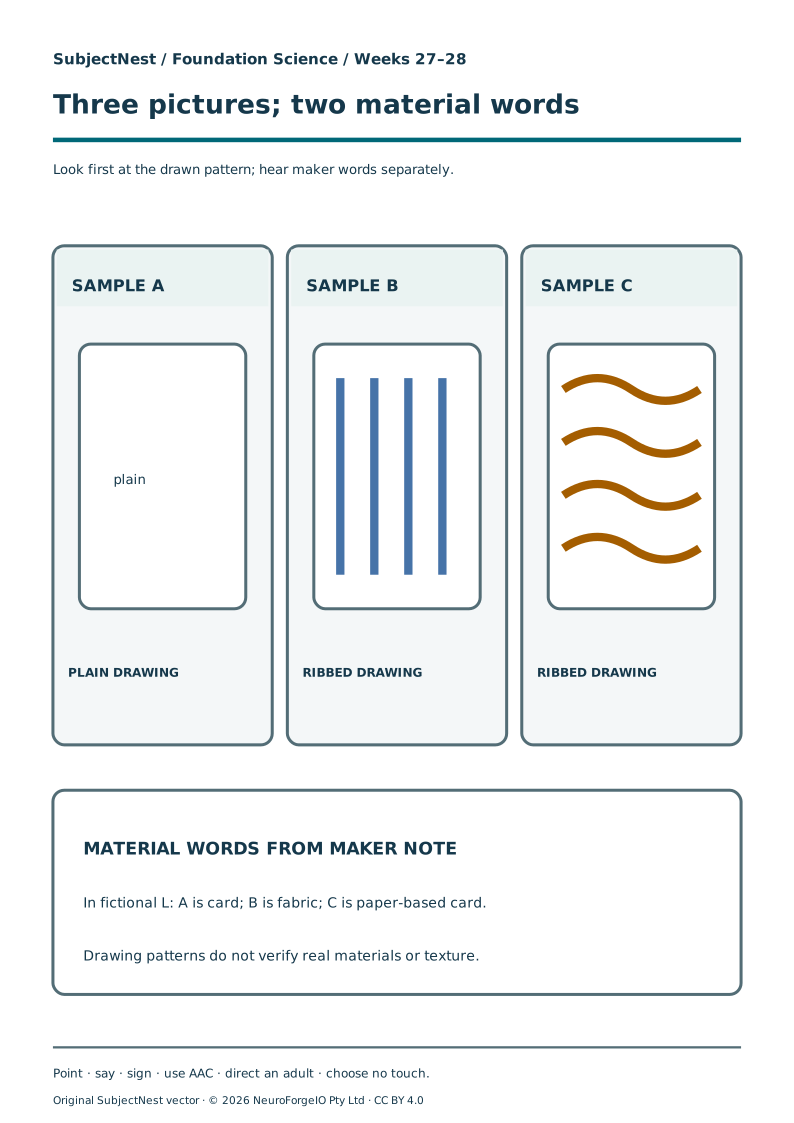
“This is an invented maker note, not a real class result. The pretend maker says sample A is plain card. Sample B is woven fabric with broad ribs. Sample C is paper-based craft card with broad ribs too. B and C share the reported ribbed look, but the maker reports different materials. So the rule ‘ribs always mean fabric’ does not work in this made-up set. Which two samples have ribs in the story? What is still unknown about real samples?”
Pause for response. Visual partner: three swatches. The drawing shows marks; material words come from the explicitly fictional note.
Track 3 · Ask without guessing (about 30 seconds)
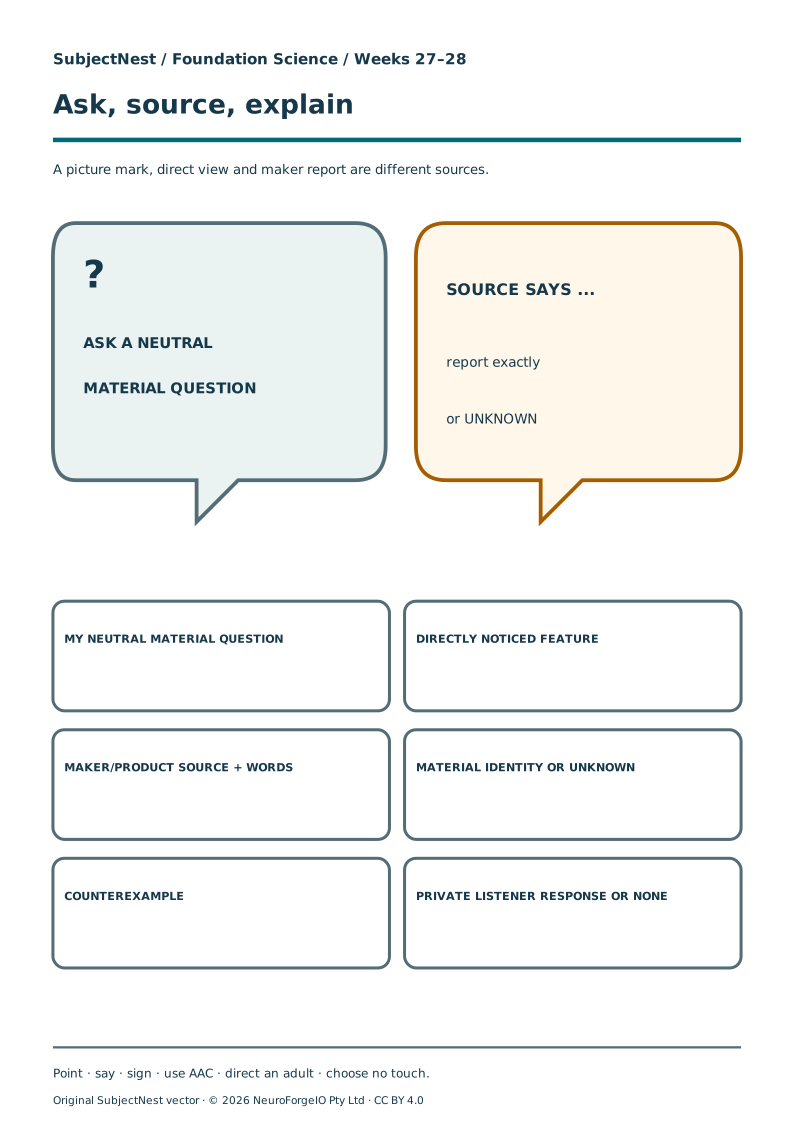
“I can ask a maker a neutral question: ‘What did you use, and how do you know?’ If a real approved sample is here, our teacher records its date, safe view and material source. I can say what I directly notice. If someone else tells me, I can say ‘the adult reported’. If we only have a picture or made-up story, we say real observation not available. What one question would you ask next?”
Pause for response. Visual partner: ask/source/explain. No real maker answer, listener response or classroom outcome is supplied.
Original narration text © 2026 NeuroForgeIO Pty Ltd, SubjectNest, CC BY 4.0.