Teacher opening sentence: “These options and voices are made up. We are practising how to check a claim, not shopping or evaluating anyone's family.” Use school-chosen real texts separately with appropriate permissions. Do not call the fictional cards eyewitness accounts or live prices. The original SVG advert has a PNG preview; its exact words and layout are also described below for screen readers and plain print.
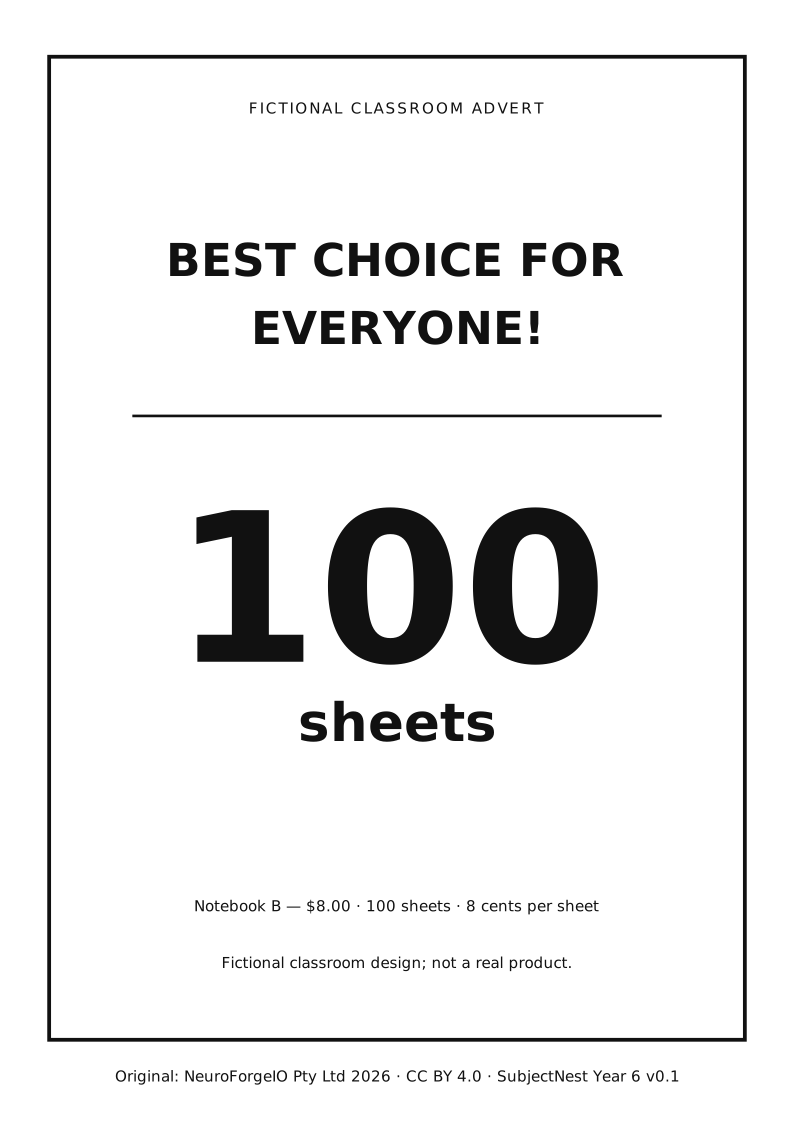
Card A — fictional advert for Notebook B
LARGE HEADLINE: BEST CHOICE FOR EVERYONE!
LARGE NUMBER: 100 sheets
SMALL LINE: Notebook B — $8.00, 100 sheets, 8 cents per sheet.
SMALL LINE: Fictional classroom design; not a real product.
Visual key: The headline and “100” are made salient by size/placement. “100 sheets” and $8 are stipulated details in this invented source. “Best choice for everyone!” is subjective and unsupported for differing budgets, needs, paper quality or durability. The 8 cents per sheet arithmetic is correct: $8/100 = $0.08. The large type does not establish superiority.
Card B — fictional neutral comparison table
| Option | Upfront price | Sheets | Price per sheet | Other information supplied |
|---|---|---|---|---|
| Notebook A | $6.00 | 60 | $0.10 | No quality, durability or shipping data |
| Notebook B | $8.00 | 100 | $0.08 | No quality, durability or shipping data |
Worked key: B costs $2 more upfront; B's listed price per sheet is 2 cents lower. For a fictional $7 budget, A is affordable and B is not. If all sheets were comparable and used, B has lower price per sheet; the table does not establish that every learner needs 100 sheets or that B lasts longer. The comparison is classroom arithmetic, not current retail pricing.
Card C — fictional personal viewpoint
“I prefer the smaller notebook because it fits the fictional bag in my story. I would check the paper before choosing.” — a made-up character, Sam.
Key: This is a clearly marked preference and a proposed check. It is not product-quality evidence or a real review. Do not infer Sam's family circumstances.
Card D — reserved unseen transfer: fictional activity passes
A model advert says: “Choose Pass Y. Everyone saves!” Pass X costs $14 for seven entries. Pass Y costs $18 for ten entries. The advert gives no travel cost, expiry date, opening times or evidence about who will use every entry. All prices/options are invented.
Worked key: X = $2.00 per included entry; Y = $1.80 per included entry if all are used. Y costs $4 more upfront. Under a fictional $15 immediate budget, only X is affordable. “Everyone saves” is unsupported because needs, usage and other costs vary. An informed recommendation states a criterion and a condition. Keep D unseen until the final check.
Claim/source/audience record
SOURCE TITLE AND CREATOR: ______________________________
PURPOSE / INTENDED AUDIENCE: ___________________________
CLAIM, EXACT WORDS: ____________________________________
SOURCE-SUPPORTED DETAIL: _______________________________
OPINION / INFERENCE / MISSING INFORMATION: _____________
WHAT THE FONT, TABLE OR IMAGE DRAWS MY EYE TO: __________
MY CAUTIOUS CONCLUSION AND CONDITION: __________________
Balanced paragraph frame
Question/criterion: ____________________________________
Claim in source (label it): ____________________________
Two checked details: 1) _____________ 2) ______________
What is missing or uncertain: __________________________
Conditional recommendation: If __________, then _______
Revision: source accurate? audience clear? comparison fair?
Accessibility: All advert information appears as text, not colour alone. The SVG includes a title and description; the exact wording and visual emphasis are stated above. A child may identify visual salience by saying/pointing “headline is largest” or using a prewritten choice. Record if a teacher read the source aloud before a reading-comprehension judgment.
Original texts and cards © NeuroForgeIO Pty Ltd 2026, CC BY 4.0. National source/ACARA rights in README. Educator/language review pending.