Codes: AC9E7LA08, AC9E7LY04, AC9E7LY05. Goal: infer factor and power in technical versus everyday contexts, then explain how an example and counterexample organise a mathematical explanation. Prepare: Text D, number-and-meaning aid. Calculator is a check tool, not a reading substitute.
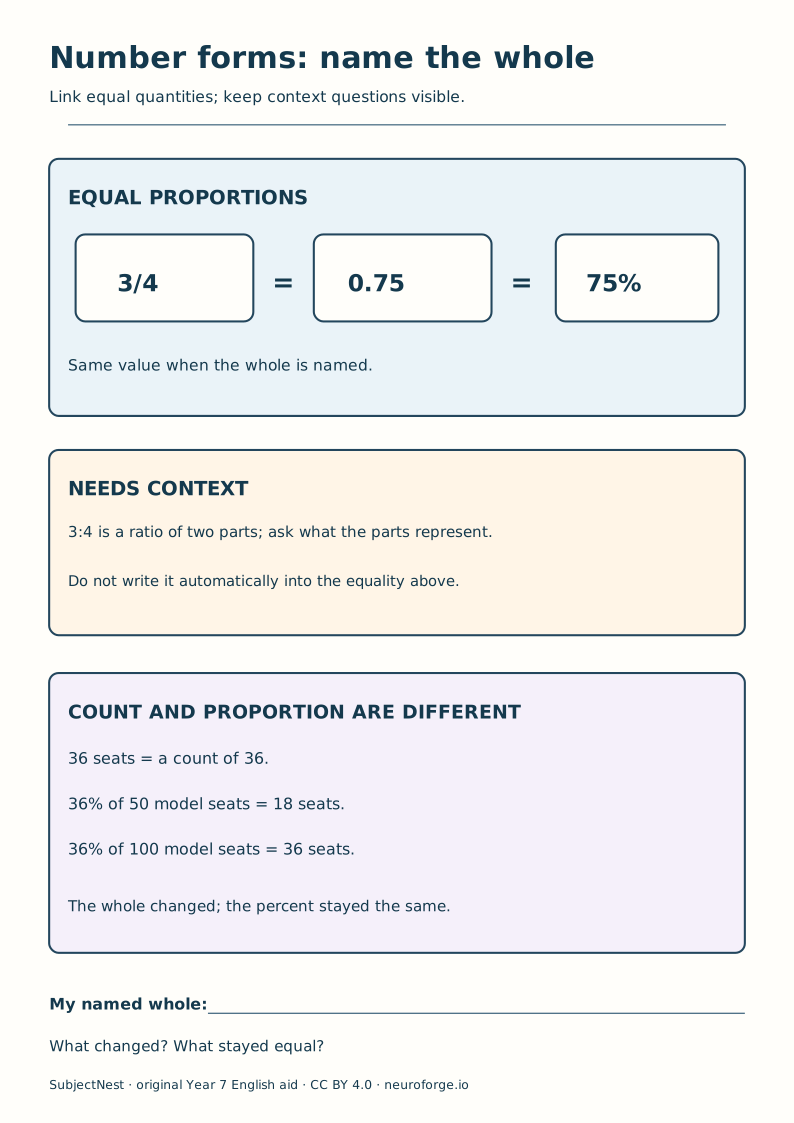
- Contrast · 2 min. Say “Travel time was a factor” and “4 is a factor of 36.” Ask what changed besides topic.
- Read · 5 min. Students read the first two paragraphs of Text D, then the 36% paragraph. Read aloud exactly where access requires. Pause at
36%and ask whether the sign changes the quantity. - Model · 5 min. Locate the technical definition beside factor. Point to
4 × 9 = 36as its check. Then show the ordinary influence sense. Trace cause/effect in the paragraph: if the whole is 50 model seats, 36% gives 18, so “36 seats” would mislead. - Use · 7 min. Choose one of three learner routes: contextual word pair, number representation, or a caption repair. Require a technical meaning, an everyday meaning, and a quoted or computed context clue.
- Probe · 4 min. “Why does
36% of 100happen to give 36 while36% of 50gives 18?” Say the whole aloud. Keep this as explaining the text's reasoning, not a claim that students have mastered the mathematics strand. - Exit · 2 min. Complete: “Here power/factor means ___ because ; in another context it could mean .” Note any arithmetic prompt separately.