Codes: AC9E7LA03, AC9E7LA04, AC9E7LA08, AC9E7LY06. Goal: create an accessible, mathematically accurate explanation of one representation pair and a boundary case for a younger reader. Prepare: Text D; blank number-and-meaning aid; check 3/4 = 0.75 = 75% and 36% of 50 = 18 locally.
- Audience · 2 min. “A Year 5 reader sees
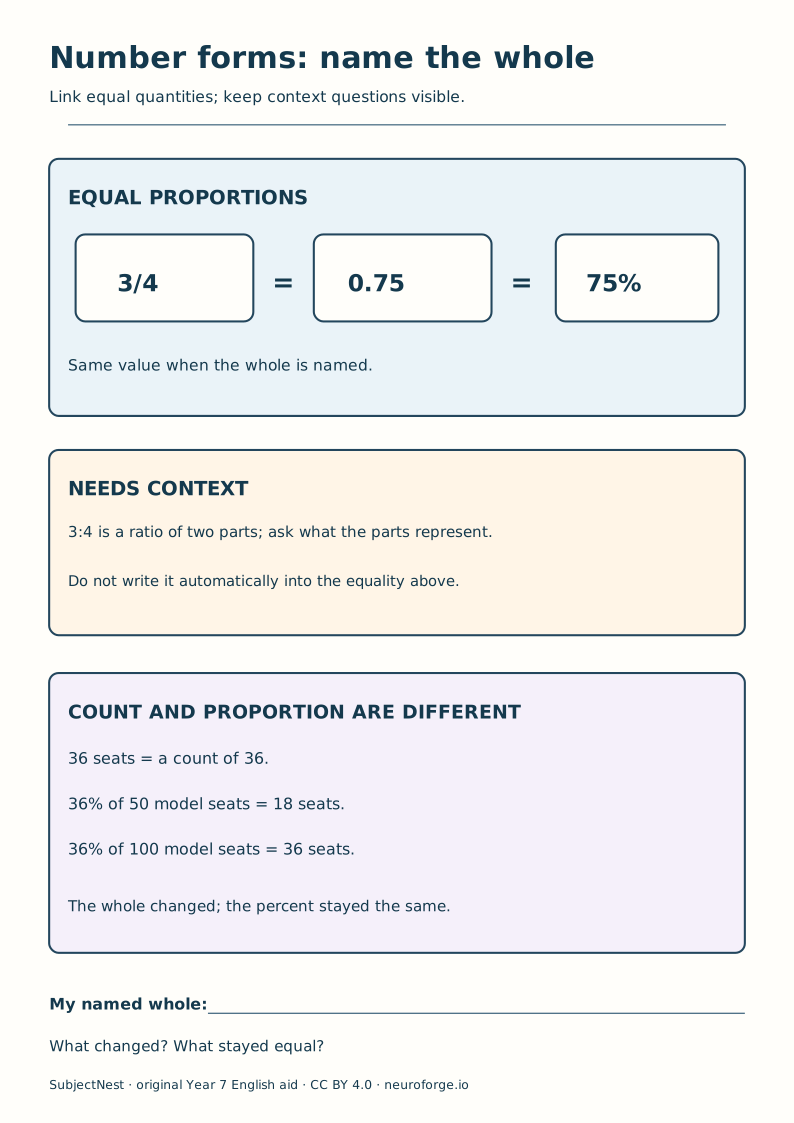
36and36%. What should the first sentence tell them?” Do not say “they are the same”. - Compare · 5 min. Revisit Text D's overview, definition, worked example and exception. On the aid, show how labelled arrows connect equal values but keep
3:4outside the equality. A non-visual reader gets the full ordered text version. - Model · 5 min. Draft: “The percent sign changes a count into a proportion of a named whole.” Follow with one model whole and a checked result. Explain that
36% of 100 seatsgiving 36 seats is a special case, not permission to erase%. - Create · 7 min. Students choose one learner route: precise two-column explanation, accessible diagram-plus-captions or short audio/AAC script with transcript. Require overview, worked example, and an “only if/depends on” limit. No learner must publish work or reveal their own number skills publicly.
- Peer test · 4 min. Partner or teacher follows the explanation and asks, “What is the whole?” and “Which forms are equal?” Author fixes one ambiguity and keeps the earlier wording to show revision.
- Exit · 2 min. Say/write one line preventing a misleading equality. Record clarity of English explanation and source use separately from mathematical skill.