Prepare a safe, child-chosen making space
Read all source text aloud. Offer speech, sign, AAC, drawing, broad fixed cards, braille production, an adult scribe, a paper mover or optional safe movement. A child can make a Dance idea without using their body for the first response; mark the evidence type precisely. Before any actual physical exploration, a locally responsible educator checks floor, width, personal equipment boundary, individual access/range, stop cue, rest, supervision and warm-up/cool-down. No touch, peer contact, enforced copy, jump, floor roll, spin, balance trick, fast travel, loud sound or public solo. A child can stop or choose a smaller action without explaining. Never infer a diagnosis or feeling from the chosen route. Do not record or share child image/voice in this public pack.
No external dance, song, cultural gesture or motif is supplied. The educator may perform the original demo score below if locally safe and willing; that becomes an actual first-party school encounter only when it happens and is dated. A paper score or our generated cue is not a human performance. AUTHENTIC-SOURCE-SLOT.md explains the separate authorised real-work and community-context gate. Do not make claims about a community or maker from a fictional card.
Optional locally approved Dance enactment
Where the school approves physical activity and the individual chooses it, the educator offers a comfortable stationary starting place, a short warm-up within the child's chosen range, the paper score, a clear stop cue and rest. Demonstrate one small opening action → a comfortable still or slow wait → a changed answer action → stop; the child may invent a different movement phrase. For Week 4, offer one continuous small path → a direction or quality change → a comfortable pause. A chosen hand, arm, finger, head, gaze or whole-body action can be considered without prescribing a posture, body part, direction, speed or unsupported mobility task. Provide seated/standing/stationary or assisted access only as locally suitable; never move the child's body for them. The child can instead direct an adult or paper mover and still develop an original composition. Record which action was actually observed, support used, date and adaptation only in the school's private record; if none occurred, write PHYSICAL DANCE MOVEMENT NOT OBSERVED. A paper-only response should never be marked as failed simply because optional physical movement was declined.
Complete original teaching sources
Source A · an invitation on paper. “In an invented Paper Room, maker Ada places a broad OPEN shape in the first box, a WAIT space in the second, and a small TURN shape in the third. Ada says, ‘This is my invitation for another maker to answer in their own way.’ The boxes are a paper score. Nobody has moved or watched it yet.” OPEN, WAIT and TURN are choices about an idea, not prescribed body positions.
Source B · an answer may differ. “In the same fictional room, maker Bo sees Ada's paper invitation. Bo chooses a curved paper line as an answer instead of copying Ada's TURN. Ada's line and Bo's line can sit side by side. The story says nothing about a real person's permission, body, feelings or response.” An answer can be a changed quality, direction or pause, not an exact copy.
Source C · consent to share. “A puppet asks, ‘May I show my paper movement idea to you?’ Another puppet says, ‘Not now.’ The first puppet says, ‘Okay. I can keep it private or ask a different willing audience later.’ No one has to explain a no. A paper puppet is only rehearsal, not a real audience.” A child's own sharing choice controls any real audience invitation.
Source D · a new flow phrase. “An invented score has three large marks: SMOOTH LINE → CHANGE DIRECTION → PAUSE. The paper mover traces a gentle line, turns onto another broad line and stops. A maker says, ‘I want someone to notice the change.’ There is no instruction to roll or slide a body, and the score cannot tell how anyone moved.” The flow idea can be communicated through a safe chosen gesture, object direction or explanation.
Source E · two possible meanings. “Maker Imani puts a PAUSE after a smooth line and says, ‘I meant the pause to give space for the next idea.’ A different invented maker puts the pause first and says, ‘I wanted to begin quietly.’ These are their stated intentions, not proof that every audience member noticed the same thing.” A child's own stated intention may differ.
Source F · an audience is real only if present. “A puppet card says, ‘I noticed the pause.’ The card is a fictional sample of possible feedback. If a child shows a work to a willing real person, ask what that person actually said or did; if no reply occurred, write NO ACTUAL AUDIENCE RESPONSE. Do not invent praise, understanding or impact.”
Original SubjectNest teacher-demo score
Work title: Open, Answer, Pause. Maker: SubjectNest by NeuroForgeIO Pty Ltd (original score, 30 September 2026). Intended purpose: show that one small invitation can receive a different answer and leave room for another person. Score: at a comfortable place, the adult chooses a small OPEN gesture or paper marker for count 1; leaves a visible WAIT on count 2; chooses a changed answer shape on count 3; ends with a PAUSE on count 4. The adult says, “I chose a different answer instead of an exact copy.” An optional quiet original two-note cue marks count 1 and count 3; the same four numbered cards are the no-audio route. The educator may change or omit any physical motion for safe access while retaining invitation, answer and pause. This is a complete original score and maker statement, not a claim that a teacher or child performed it. If actually performed, record the performer, date, adaptation, audience and what was observed, then ask children what they noticed without telling them a required emotional effect. No recorded child performance is needed.
Six A4 aids: exact ordered text, tactile and linear routes
Each printed page has six broad numbered fields. Read them top to bottom. For a tactile route, secure six broad strips or braille labels in this same order; no loose small piece is required. A child may decline touch. Read arrow directions aloud and never rely on colour alone. Empty space is for a fictional score or private school record, not personal disclosure.
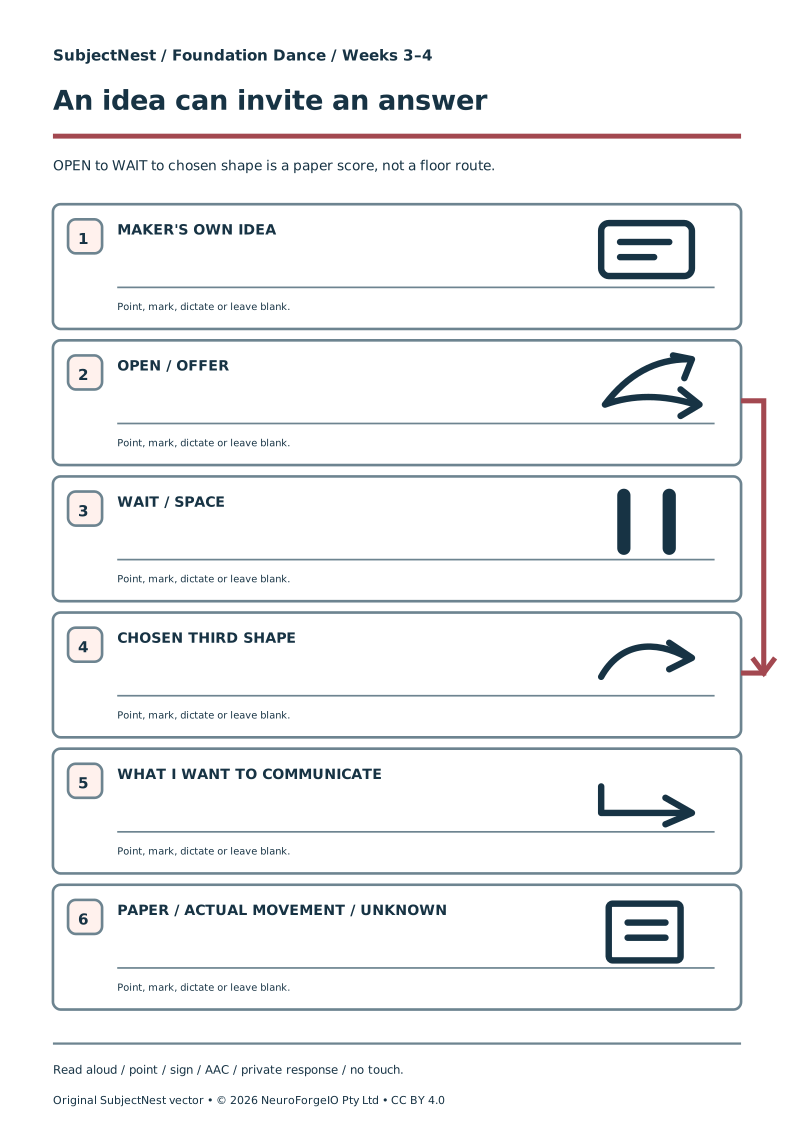
- Invitation score: MAKER'S OWN IDEA; OPEN / OFFER; WAIT / SPACE; CHOSEN THIRD SHAPE; WHAT I WANT TO COMMUNICATE; PAPER / ACTUAL MOVEMENT / UNKNOWN. Six fields. The large drawings at right show a source card, two lines opening from one point, two thick upright wait bars, a curved answer arrow, a line continuing right and a paper card. A thick connector outside the boxes runs from OPEN past WAIT to the CHOSEN shape. Read or trace idea → open → wait → chosen answer → meaning → evidence type. This paper score is not a floor route or a body position.
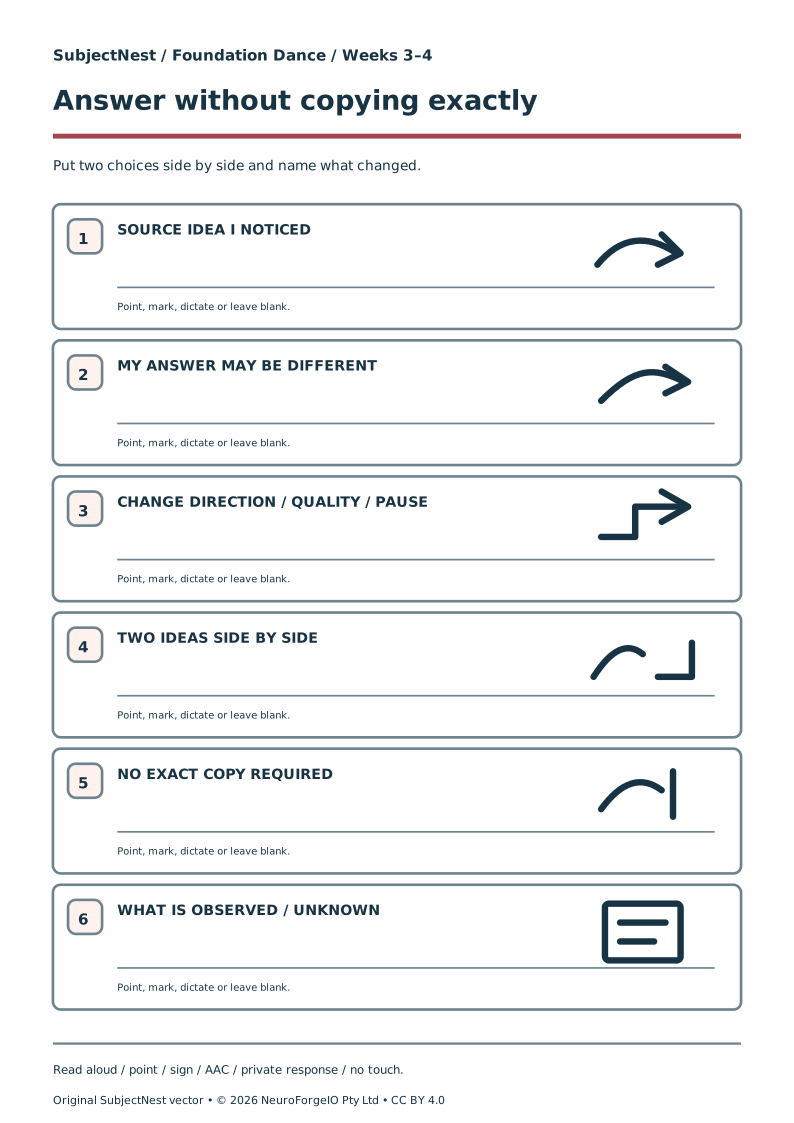
- Answer choice: SOURCE IDEA I NOTICED; MY ANSWER MAY BE DIFFERENT; CHANGE DIRECTION / QUALITY / PAUSE; TWO IDEAS SIDE BY SIDE; NO EXACT COPY REQUIRED; WHAT IS OBSERVED / UNKNOWN. Six fields. The large drawings show an initial curved arrow, a second differently curved arrow, an arrow that turns a broad corner, a curve and corner side by side, two unlike marks, and a paper card. Read or trace source → changed answer → what changed → compare → choose rather than copy → record what actually happened. The two marks do not imply physical synchrony.
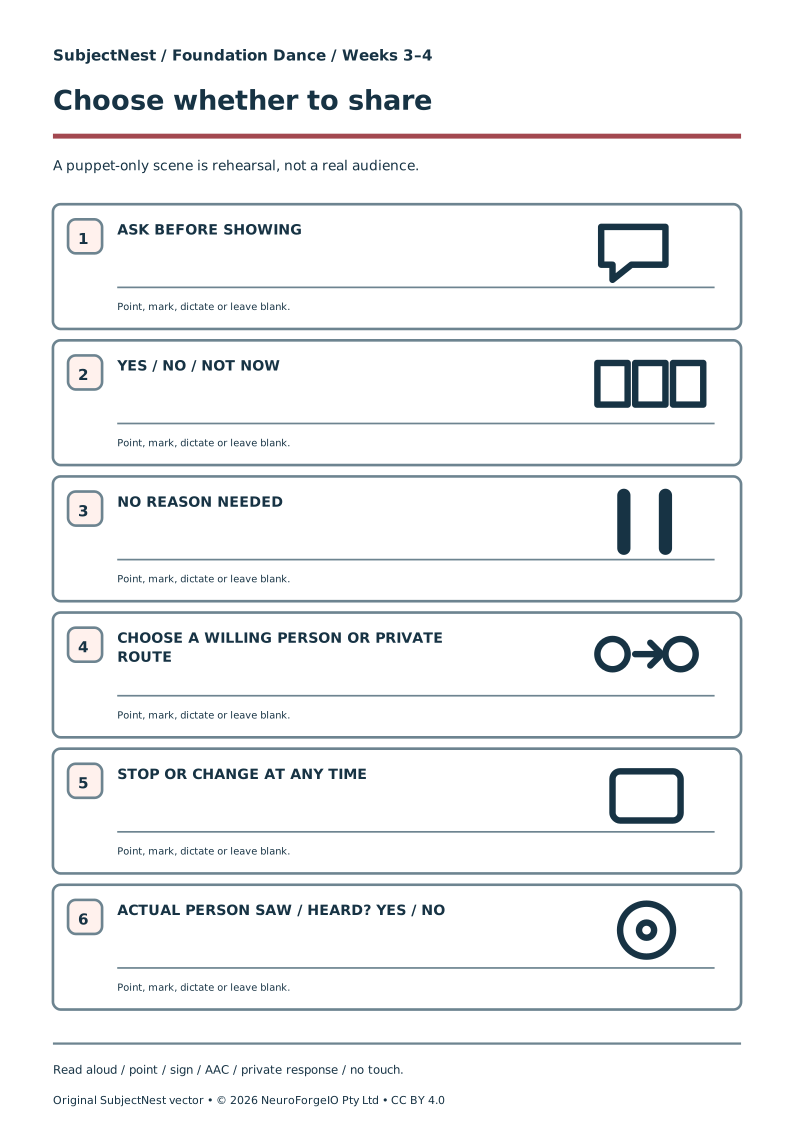
- Choice to share: ASK BEFORE SHOWING; YES / NO / NOT NOW; NO REASON NEEDED; CHOOSE A WILLING PERSON OR PRIVATE ROUTE; STOP OR CHANGE AT ANY TIME; ACTUAL PERSON SAW / HEARD? YES / NO. Six fields. Large drawings show a speech bubble, three separate choice boxes, thick wait bars, two separated circles with a connecting arrow, a stop box, and a circle used only as an event marker. Read or trace ask → choice → respect pause → willing audience or privacy → stop/change → record actual event. No child must perform or supply an audience name publicly; the circles are abstract markers, not required bodies.
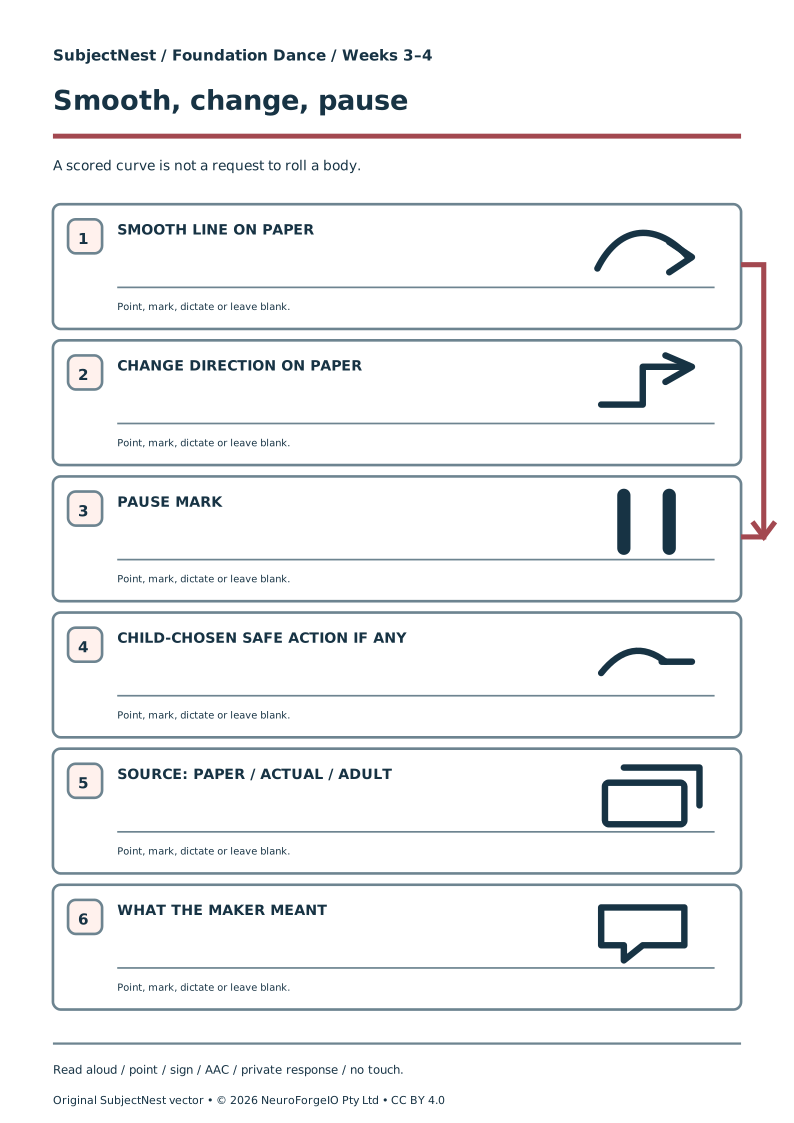
- Flow phrase: SMOOTH LINE ON PAPER; CHANGE DIRECTION ON PAPER; PAUSE MARK; CHILD-CHOSEN SAFE ACTION IF ANY; SOURCE: PAPER / ACTUAL / ADULT; WHAT THE MAKER MEANT. Six fields. Large drawings show a broad smooth curved arrow, a right-angle arrow, two thick pause bars, a small optional curved line, two overlapping source cards, and a speech bubble. A thick connector outside the boxes links the first three steps. Read or trace smooth → change → pause → optional safe action → source type → maker meaning. These are paper score cues, not instructions to roll a body.
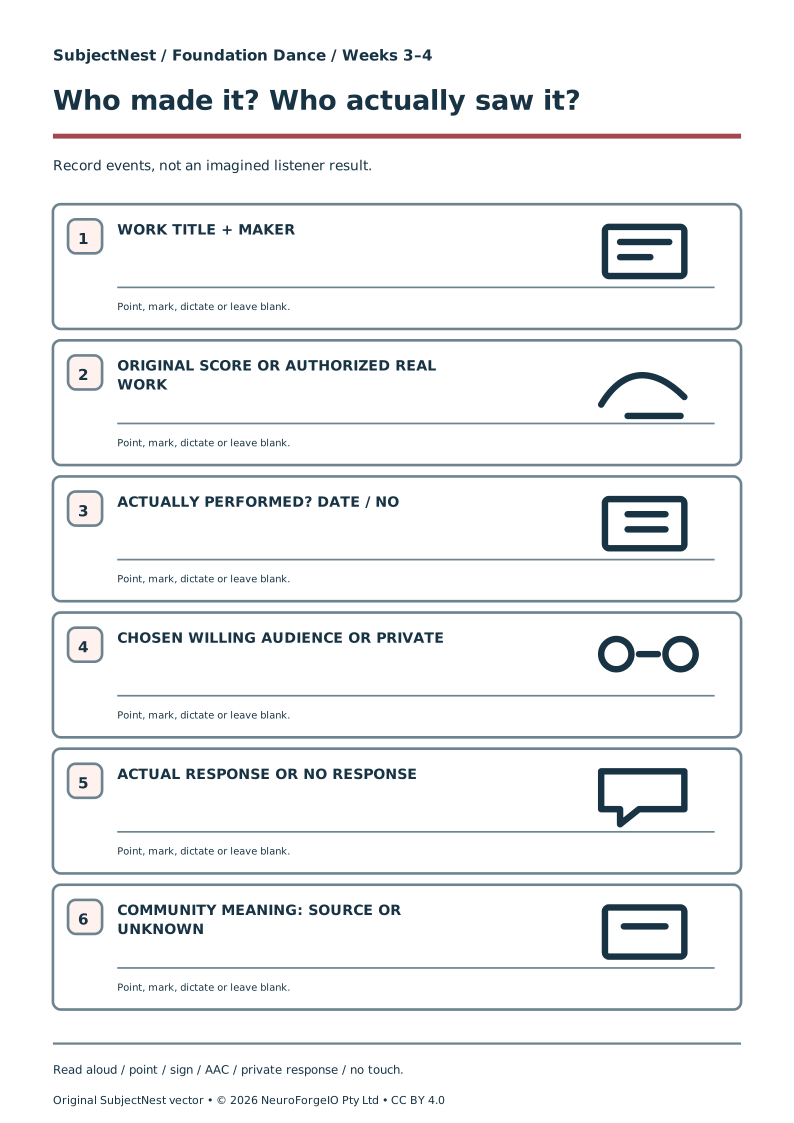
- Maker and audience: WORK TITLE + MAKER; ORIGINAL SCORE OR AUTHORIZED REAL WORK; ACTUALLY PERFORMED? DATE / NO; CHOSEN WILLING AUDIENCE OR PRIVATE; ACTUAL RESPONSE OR NO RESPONSE; COMMUNITY MEANING: SOURCE OR UNKNOWN. Six fields. Do not invent a community claim from the maker's fictional story.
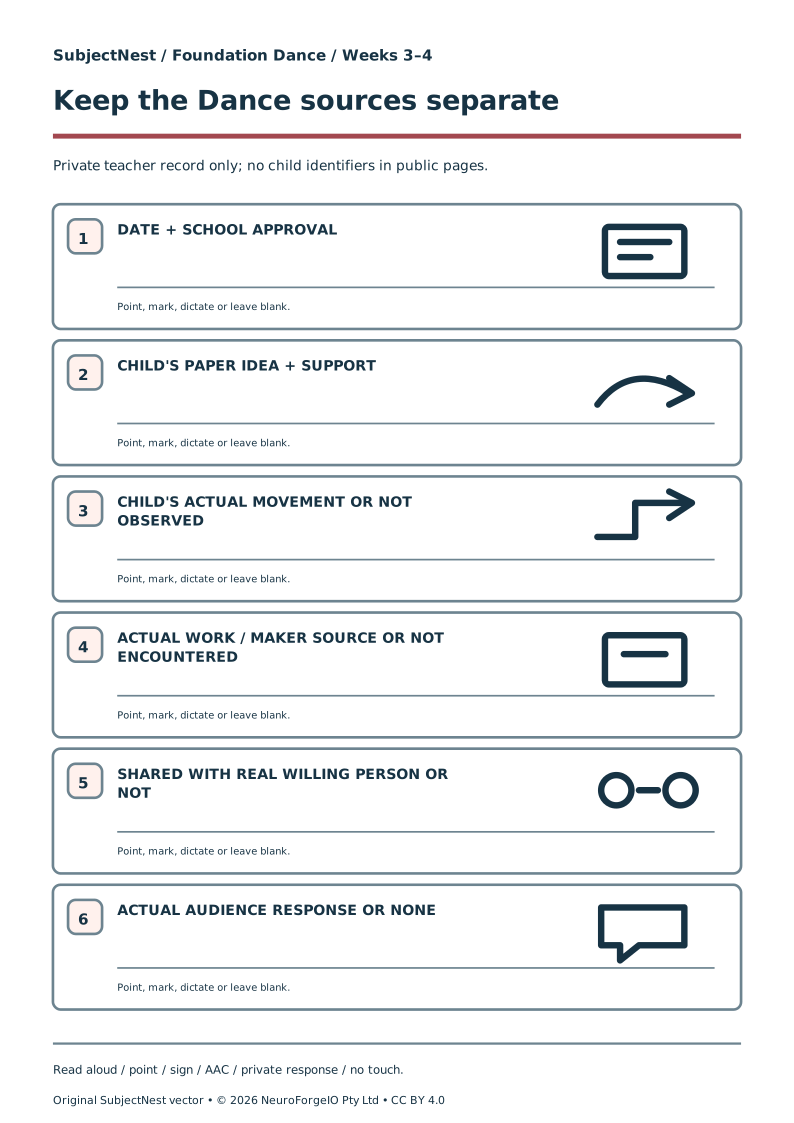
- Evidence split: DATE + SCHOOL APPROVAL; CHILD'S PAPER IDEA + SUPPORT; CHILD'S ACTUAL MOVEMENT OR NOT OBSERVED; ACTUAL WORK / MAKER SOURCE OR NOT ENCOUNTERED; SHARED WITH REAL WILLING PERSON OR NOT; ACTUAL AUDIENCE RESPONSE OR NONE. Six fields. Private teacher record; no public child identifiers.
The print pages and optional audio are original access supports. They do not certify a physical movement, a completed Dance work, a real performance, a willing audience or community importance without the corresponding event/source. Keep paper composition, actual physical action, maker intention and audience response as separate records.