Proposed codes: AC9EFLA05, AC9EFLA09, AC9EFLY04, AC9EFLY06, AC9EFLY13.
Goal: Read a short rhythm-action sentence, repair its missing name capital and explain that punctuation helps a new user.
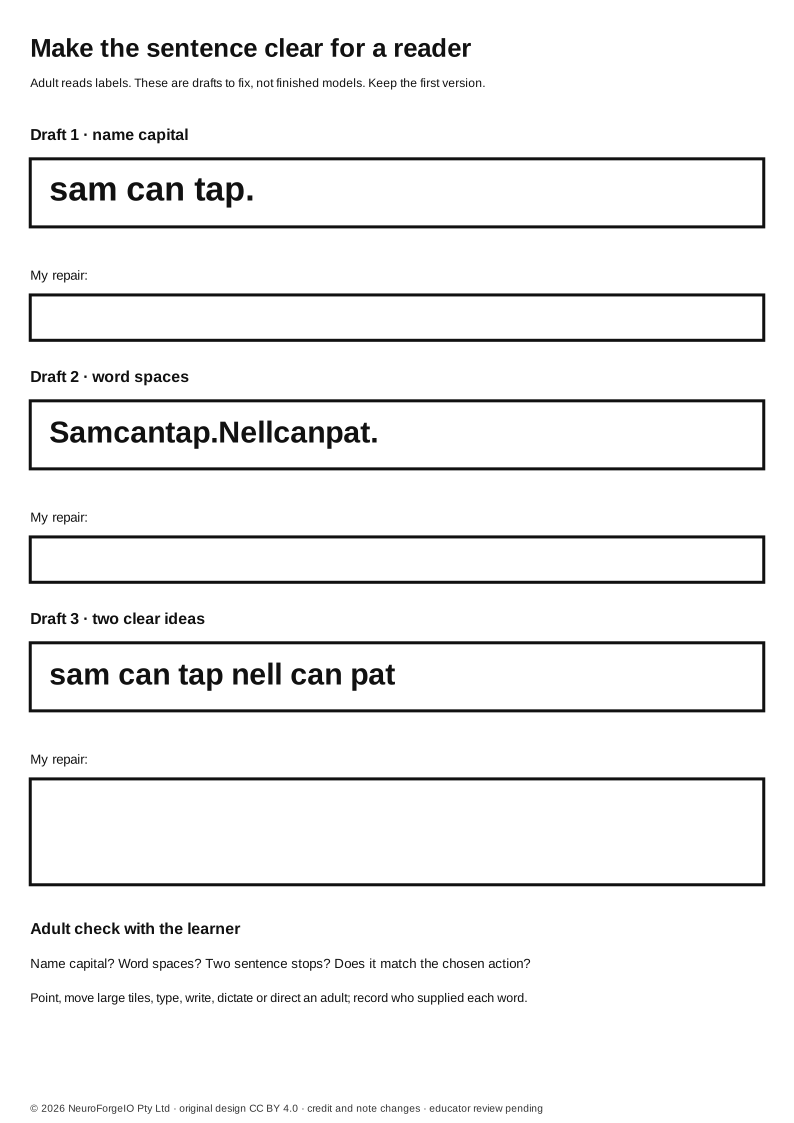
Prepare: sentence editor first row or exact text alternative, sam can tap. draft, S/s tiles, blank repair strip, adult story A.
- Retrieve · 3 min. Read cuff, off, cliff once. Ask why the final two letters take one sound box. Record one link that needs another model.
- Adult reason to edit · 4 min. Recall adult story A. Say “Nell changed a cue so Sam knew when to answer. A written sentence also needs a cue for where it starts.” Show the draft, not a finished answer, and read it aloud once if access requires.
- Model the question · 5 min. Point to sam can tap. Ask “Is sam a person's name in our fictional line? What usually marks a name?” Display capital S beside lower s, same /s/ sound. Model changing just the first letter to S on a separate practice word, not on the learner's draft yet.
- Independent repair · 7 min. Learners read each taught word sam can tap and choose a capital S for Sam; place or write Sam can tap. on a new strip. Then check the full stop already present. Ask “Who can tap, according to this line?” The adult does not supply the replacement before the first attempt.
- Read to a user · 4 min. A willing chosen listener follows the repaired sentence by pointing to Sam's fictional marker and a silent tap mark. Ask whether name and stop are clear. An actual pulse count is recorded only in the music/maths guide, not here.
- Exit check · 2 min. Show the original sam can tap. and ask what one print change is needed. Record independent capital recognition and a reread of Sam.
Access routes: large/tactile S/s tiles, one-line strip, accessible typing, child-directed adult placement, quiet listener, AAC/sign/pointing for who/what meaning. A learner may show sentence knowledge without handwriting or sounding a tap.