Each lesson lasts 25 minutes. The exact adult oral texts and child print are in MATERIALS.md. Hide unrestricted adult print in child-decoding checks. Codes are proposed ACARA v9 Foundation English links, not official approval or proof of a completed description. Keep a dated roster of exact exit prompt/response, independent versus after-model or not observed, meaning response and access route. Record the first independent try before giving a brief model and retry.
Week 15 · Day 71 — Final ff is one /f/
Proposed codes: AC9EFLE02, AC9EFLE04, AC9EFLY09, AC9EFLY10, AC9EFLY11, AC9EFLY13.
Goal: Hear /f/ at the end of selected spoken words, use final ff in one sound box and blend off/puff/cuff/cliff/sniff.
Prepare: adult sound-play B and story A, ff tile, two- to four-phoneme boxes, five word cards. No actual sniffing, puffing or cliff prop is needed.
- Retrieve · 3 min. Reblend ring, bell, hiss, has from Weeks 13–14. Ask how many sounds ng, ll, ss write in those words. Record one exact prior link needing review.
- Oral pairs · 4 min. Read adult sound-play B twice with all print hidden. Ask “Which two spoken words rhyme: puff/cuff or puff/sniff?” Accept a chosen AAC or pointing route. Say this is sound play, not an instruction to sniff or blow.
- Model ff · 5 min. Hide puff; say /p/ /ʌ/ /f/ into three counters. Reveal p u ff, placing ff in one final box. “Two letters at this ending write one /f/ sound here. We are checking this selected short-vowel set, not every /f/ ending.”
- Guide and try · 7 min. Guide cuff /k/ /ʌ/ /f/ and off /ɒ/ /f/; invite independent cliff /k/ /l/ /ɪ/ /f/ and sniff /s/ /n/ /ɪ/ /f/. Touch adjacent starting consonants separately. Explain cuff and cliff after blending, without a picture-first guess.
- Meaning from adult story · 4 min. Read Nell's Turn Cue aloud. Ask “What changed after Sam started early? What is still just an invented story?” The raised cue and gap changed; this is fiction, not the class's actual score. Keep the four/six pulse count in the separate music/maths work.
- Exit check · 2 min. Show sniff in a new position. Ask for its four sounds and independent blend; expect final ff as one /f/. Record exact response and whether adjacent /s/ /n/ were separated.
Access routes: joined large/tactile ff tile, raised counters, quiet/private blend, adult live read or locally made recording with transcript, AAC/sign/pointing/typing for sound choice and meaning. No loud sound, singing, breath action or real cliff experience is required.
Week 15 · Day 72 — Rhyme, sort and spell ff
Proposed codes: AC9EFLA08, AC9EFLE04, AC9EFLY04, AC9EFLY09, AC9EFLY10, AC9EFLY13.
Goal: Reread final ff words, recognise oral rhyme without relying on a printed match, and spell one selected word.
Prepare: adult sound-play B, the five ff cards, joined ff and single f tiles, sound boxes, two blank rhyme-mat spaces.
- Retrieve · 3 min. Shuffle off, puff, cuff, cliff, sniff. Hear two independent blends; ask what ff does at the end. Re-model only an actually missed sound path.
- Hear before print · 4 min. With cards hidden, say puff/cuff/sniff/cliff in mixed order. Ask children to group words that rhyme; accept puff/cuff and sniff/cliff. Then show the cards and ask how sound and ending print agree in this set. A visual match alone is not scored as rhyme awareness.
- Contrast and model · 5 min. Segment cuff /k/ /ʌ/ /f/ into three counters and match c u ff. Beside it show earlier single-f word fun /f/ /ʌ/ /n/. Say “Both can use /f/; we are learning this final ff in our selected short-vowel words, not replacing the single letter everywhere.”
- Guide and try · 7 min. Children blend cliff and sniff without a picture, then place each under the correct oral-rhyme pair. Ask which word begins with two adjacent consonants /s/ /n/. Offer a model only after first independent try. Explain puff as a small burst of air after the read, without asking a child to produce one.
- Encode · 4 min. Hide print and dictate cuff in a neutral sentence: “The end of a sleeve can have a cuff. Write cuff.” Learners segment /k/ /ʌ/ /f/, select/write c u ff and reread. Record exact spelling and adult letter help.
- Exit check · 2 min. Show off alone. Ask for a blend and its two phonemes; then ask for one rhyme from the heard pairs. Record print and oral rhyme separately.
Access routes: tactile/flexible letter tiles, two/three/four sound boxes, text-only high contrast cards, quiet private response, AAC/pointing/signed rhyme selection, typing or child-directed adult tile placement. Do not judge a learner's phonological knowledge by speech clarity alone.
Week 15 · Day 73 — A name capital repairs meaning
Proposed codes: AC9EFLA05, AC9EFLA09, AC9EFLY04, AC9EFLY06, AC9EFLY13.
Goal: Read a short rhythm-action sentence, repair its missing name capital and explain that punctuation helps a new user.
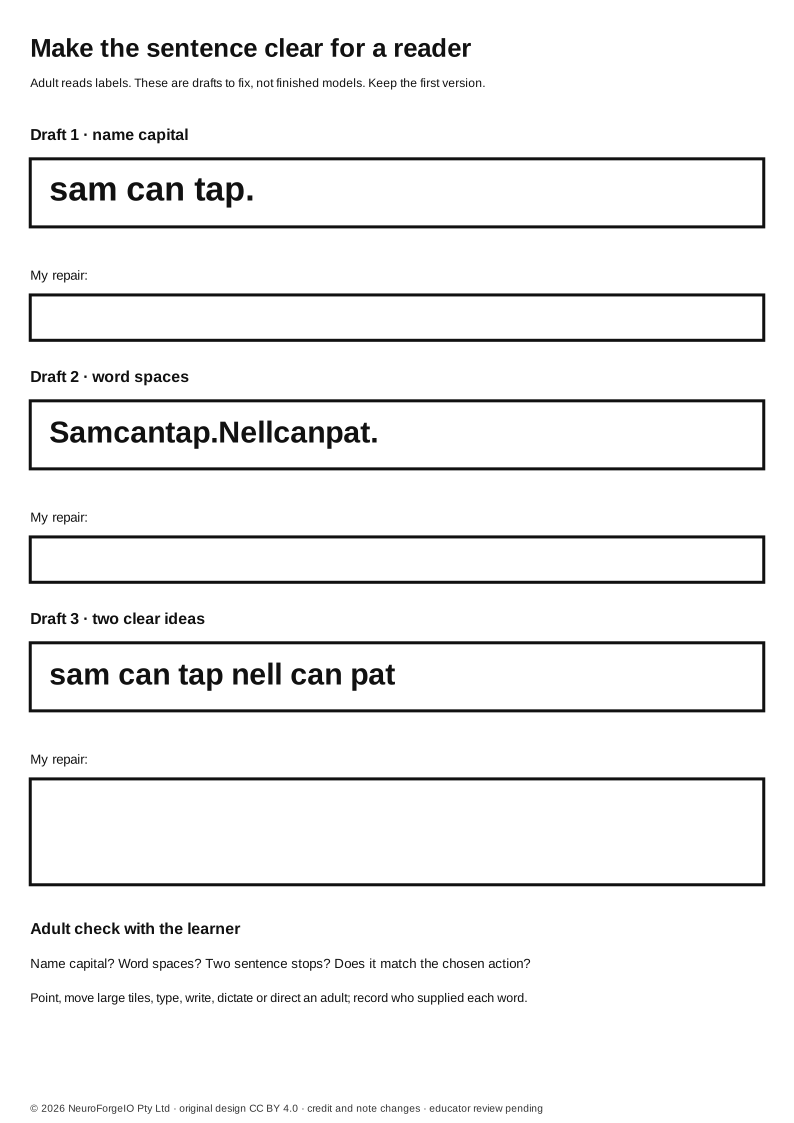
Prepare: sentence editor first row or exact text alternative, sam can tap. draft, S/s tiles, blank repair strip, adult story A.
- Retrieve · 3 min. Read cuff, off, cliff once. Ask why the final two letters take one sound box. Record one link that needs another model.
- Adult reason to edit · 4 min. Recall adult story A. Say “Nell changed a cue so Sam knew when to answer. A written sentence also needs a cue for where it starts.” Show the draft, not a finished answer, and read it aloud once if access requires.
- Model the question · 5 min. Point to sam can tap. Ask “Is sam a person's name in our fictional line? What usually marks a name?” Display capital S beside lower s, same /s/ sound. Model changing just the first letter to S on a separate practice word, not on the learner's draft yet.
- Independent repair · 7 min. Learners read each taught word sam can tap and choose a capital S for Sam; place or write Sam can tap. on a new strip. Then check the full stop already present. Ask “Who can tap, according to this line?” The adult does not supply the replacement before the first attempt.
- Read to a user · 4 min. A willing chosen listener follows the repaired sentence by pointing to Sam's fictional marker and a silent tap mark. Ask whether name and stop are clear. An actual pulse count is recorded only in the music/maths guide, not here.
- Exit check · 2 min. Show the original sam can tap. and ask what one print change is needed. Record independent capital recognition and a reread of Sam.
Access routes: large/tactile S/s tiles, one-line strip, accessible typing, child-directed adult placement, quiet listener, AAC/sign/pointing for who/what meaning. A learner may show sentence knowledge without handwriting or sounding a tap.
Week 15 · Day 74 — Find the words, then the two sentences
Proposed codes: AC9EFLA05, AC9EFLA06, AC9EFLA09, AC9EFLY04, AC9EFLY06, AC9EFLY10.
Goal: Repair missing spaces in a deliberately unedited two-sentence draft and show where each idea stops.
Prepare: sentence editor second row or text alternative, Samcantap.Nellcanpat. draft, movable Sam | can | tap. | Nell | can | pat. tiles, blank repair line.
- Retrieve · 3 min. Reread Sam can tap. and Nell. Ask where capital and full stop are. Review one uncertain ff word quickly if needed.
- Show the problem · 4 min. Present Samcantap.Nellcanpat. as a draft to fix, not a reading model. Adult reads “Sam can tap. Nell can pat.” without pointing to hidden boundaries. Say “The user cannot easily see where each known word begins. Let's test where the spaces belong.”
- Model one boundary · 5 min. Reveal Sam and can tiles. Touch the printed Samcan stretch and place one visible space between Sam | can on a separate practice strip. Say “A space separates word units. We still read the letters of each word.” Do not finish the child draft for the learner.
- Guide and try · 7 min. Learners place all six taught word tiles with spaces and two full stops to make Sam can tap. Nell can pat. Record the first independent boundaries before help. Ask how the capital N and first stop mark the start of the second idea. Have the child reread each sentence and name who does which action.
- Check meaning · 4 min. Swap tap/pat tiles temporarily; ask how the roles change while spacing and two sentence boundaries stay clear. Restore the version that matches the chosen fictional rhythm or child-chosen score; no actual music performance is needed.
- Exit check · 2 min. Show the draft again and ask for one missing word space in each sentence by pointing, then ask where the first sentence stops. This samples two of the four missing spaces; record exact boundaries and support separately.
Access routes: large separated tiles, tactile gap markers, digital drag-and-drop or text strip, adult reading of the intentionally joined draft, quiet/private read, AAC/sign/pointing for roles. A copied final model is marked copied rather than independent editing.
Week 15 · Day 75 — Edit two ideas for a real reader
Proposed codes: AC9EFLA05, AC9EFLA09, AC9EFLE02, AC9EFLY04, AC9EFLY06, AC9EFLY07.
Goal: Repair a two-idea draft, choose meaningful roles for a call-and-response score, and tell a user what changed.
Prepare: sentence editor third row, sam can tap nell can pat draft, separate taught word tiles, blank two-line card, optional actual child-made Week 15 score and willing user.
- Retrieve · 3 min. Read Sam can tap. Nell can pat. one sentence at a time. Ask what capital, space and stop tell a new reader. Note exact uncertainty.
- Purpose and adult story · 4 min. Reread the adult story A ending. Say “Nell kept two versions so a user could see the change. We will keep our first draft and repair it; then a reader can tell who does each action.”
- Model a two-idea boundary · 5 min. On a separate practice strip, show Sam can tap Nell can pat with correct capitals but no stop. Read the two ideas aloud and add one full stop after tap. Ask where the second sentence begins. Do not repair the assessment draft yet.
- Create and edit · 7 min. Learners inspect sam can tap nell can pat, choose capitals Sam/Nell, retain all word spaces and add two stops. They may choose Sam can tap. Nell can pat. or swap roles to Sam can pat. Nell can tap. if that better matches an actual chosen score. Record whether words, capitals, spaces, stops and meaning were independent or adult-supplied.
- User read and revision · 4 min. A chosen peer, adult or puppet reads/follows the two sentences with silent pulse marks. Ask “What did our reader understand? Do our printed roles match the score we chose?” Keep the first draft and any revision; a pleasant rhythm is not the English editing score.
- Exit check · 2 min. On a fresh strip nell can pat, ask for one needed capital, the stop and a read. Record each separately and one precise next edit to practise.
Access routes: large/tactile separate words, digital tile composition, thick marker or typing, quiet private user, silent/tactile pulse route, speech/AAC/sign/pointing or child-directed adult scribe. The chosen user may be an adult if public or peer performance is inaccessible.
Week 16 · Day 76 — ee says one /iː/
Proposed codes: AC9EFLA08, AC9EFLY05, AC9EFLY09, AC9EFLY10, AC9EFLY11, AC9EFLY13.
Goal: Hear /iː/, put ee in one sound box and read see/feel/bee/seed/feet/keep; distinguish adult-spoken test steps from a child word card.
Prepare: ee tile, two- to four-phoneme boxes, the six word cards, adult explanation C, two empty safe class containers or a paper dry model.
- Retrieve · 3 min. Blend off, cliff, sing, bell in mixed order; ask what final ff, ng, ll each write in this selected set. Note one exact missed link.
- Adult test explanation · 4 min. Read oral explanation C with print hidden. Ask “What must an adult offer first? What can a dry board show? Does it tell which container holds more?” It can show layout use, not capacity. Do not ask children to handle water.
- Model ee · 5 min. Say see /s/ /iː/ with print hidden; place two counters. Reveal s ee and put ee in one box. “These two letters together write one long /iː/ sound here. We will use this selected word set, not claim every long /iː/ has ee.”
- Guide and try · 7 min. Guide bee /b/ /iː/ and seed /s/ /iː/ /d/; invite independent feet /f/ /iː/ /t/, keep /k/ /iː/ /p/ and feel /f/ /iː/ /l/. Explain seed only after reading, without claiming a real seed is present. Ask which word changes just the starting consonant from see to bee; note that feel can name a safe tactile check.
- Encode and meaning · 4 min. Hide print, dictate see in “I can see a card. Write see.” Learners choose/write s ee, reread and say its two sounds. Ask whether seeing a large cup proves it holds more; no, an actual direct test is separate.
- Exit check · 2 min. Show keep without a picture. Ask for an independent blend and phoneme count; expect /k/ /iː/ /p/, three sounds. Record exact first response.
Access routes: large/tactile joined ee, raised counters, digital letters, quiet/private word read, live adult explanation with transcript, AAC/sign/pointing/typing for meaning. No child needs to hear a sharp sound, touch water or see a distant board to show the print link.
Week 16 · Day 77 — Read an imagined bee-and-seed text
Proposed codes: AC9EFLE03, AC9EFLY01, AC9EFLY04, AC9EFLY05, AC9EFLY10, AC9EFLY13.
Goal: Read mini-text S with ee, answer literal questions and label it imagined rather than an observation of this class.
Prepare: see, bee, seed cards, child mini-text S as two strips, blank event/claim markers, adult procedure C for a brief contrast.
- Retrieve · 3 min. Reblend see, bee, seed, keep. Ask which two letters write one /iː/. Re-model an exact missed item after recording it.
- Name the text type · 4 min. Say “This is an invented tiny scene. We have not seen a live bee or seed in this lesson.” Ask whether the adult dry-container explanation is also an imagined bee story; no, it explains a possible safe setup. Keep both long adult and short child texts distinct.
- Model line one · 5 min. Show Ben can see a bee. Blend Ben /b/ /ɛ/ /n/, see /s/ /iː/ and bee /b/ /iː/. Track spaces, capital B and full stop. Ask what Ben can see in the print.
- Guide and try · 7 min. Show A seed is in a pot. Listen to an independent attempt before one model. Guide seed /s/ /iː/ /d/ if needed. Ask where the seed is in this invented text. Do not reveal a picture first; a learner can make one after reading.
- Meaning and source boundary · 4 min. Ask “Does this print prove a bee is in our room? Does it say what a real cup holds?” Both no. Ask children to place one claim marker under imagined scene and one under adult test explanation; label the source of each.
- Exit check · 2 min. Show A seed is in a pot. on a fresh strip. Ask for an independent read and where the seed is in the story. Record decoded words and meaning separately.
Access routes: one large/tactile/text-only line at a time, quiet listener, digital tiles, AAC/sign/pointing/drawing after print for meaning. No live insect, seed handling or public read is required; adult-supplied words are marked supported.
Week 16 · Day 78 — Read safe dry steps in order
Proposed codes: AC9EFLA03, AC9EFLA09, AC9EFLY01, AC9EFLY04, AC9EFLY05, AC9EFLY06.
Goal: Read the three child-controlled dry steps with a visual or tactile last-step choice, resolve it to the offered cup and explain orally why the card is not a capacity result.
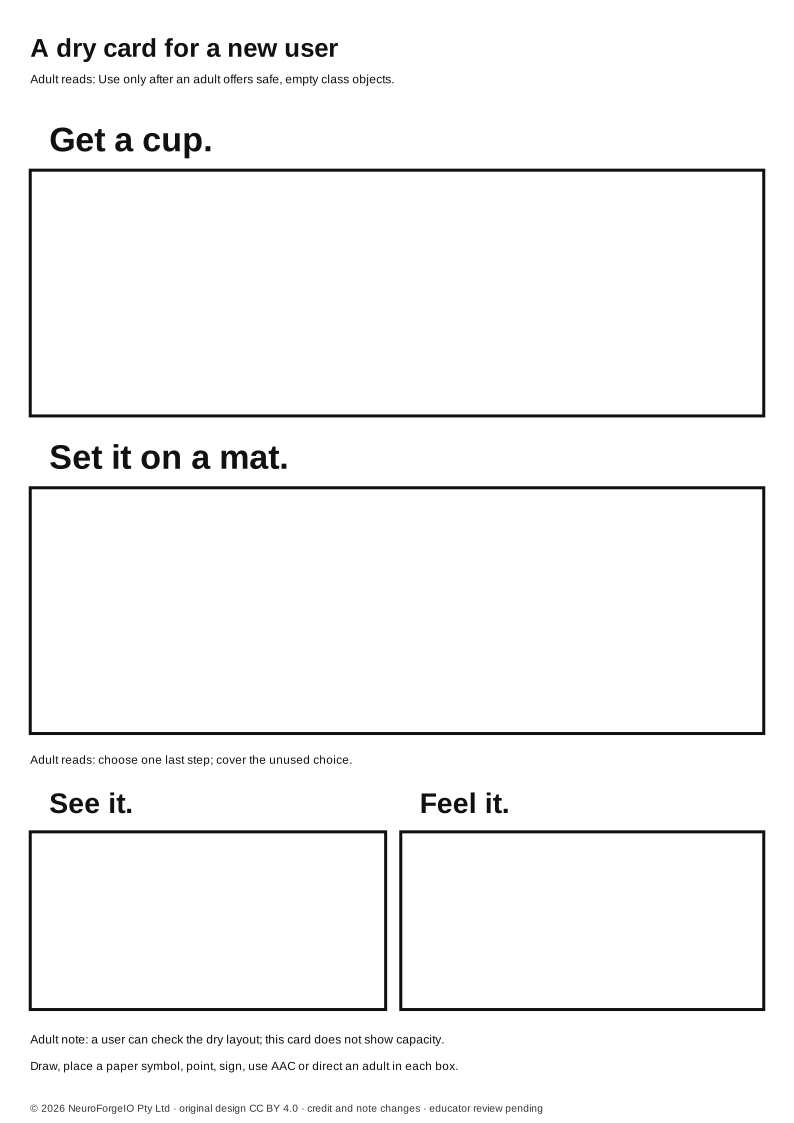
Prepare: dry-step user card or exact text alternative, class-owned empty unbreakable cup and dry mat or paper model, adult explanation C, three separate line strips.
- Retrieve · 3 min. Blend see, seed, keep and reread Get a box. from earlier sequence. Ask what two letters write /iː/ in see.
- Adult offer and oral plan · 4 min. An adult offers the empty safe class cup and dry mat or paper symbols. Read explanation C's first/next/then sequence aloud, then ask “What will our English card help a user do?” Locate an object on a dry mat; it will not measure holding more.
- Model line one · 5 min. Show Get a cup. Blend Get, article a /ə/ and cup /k/ /ʌ/ /p/. Say “The adult has offered this cup. The printed command does not itself give permission to take somebody else's item.” Track capital and stop.
- Guide full card · 7 min. Present Set it on a mat. then offer a final child-readable choice, See it. or Feel it. Cover the unused line. Record first independent reading, guide a missed link, and ask what it names in each line: the empty cup. Invite a willing user to check the offered cup visually or through an adult-approved safe tactile object/representation. No water or vessel-size claim.
- Oral explanation · 4 min. Child tells a chosen listener first/next/last using speech, AAC, sign, objects or drawing. Ask what a real capacity answer would still need; expect a separate adult-run direct comparison. Adult scribes any unrestricted oral wording separately from child-read lines.
- Exit check · 2 min. Shuffle the three chosen line strips. Ask for the first and last, then an independent read of See it. or Feel it. Record the chosen route, sequence, decoding and referent separately.
Access routes: large/tactile/text alternative, digital line sorting, class-owned empty cup or raised paper symbol, child-directed adult placement, visual See it. or safe tactile Feel it., private listener, AAC/sign/pointing/typing/drawing. No child handles water, glass, a personal item or a wet tray.
Week 16 · Day 79 — Make a new dry card and ask a user
Proposed codes: AC9EFLA05, AC9EFLA09, AC9EFLY04, AC9EFLY05, AC9EFLY06, AC9EFLY07.
Goal: Compose a controlled pot variation, test whether a real user can follow it, and report what the trial did and did not show.
Prepare: original dry card, separate word tiles Get | a | cup | pot | Set | it | on | a | mat | See | it, a safe class-owned empty pot or paper symbol if available, blank three-step strip, willing adult/peer user.
- Retrieve · 3 min. Reread Get a cup. Set it on a mat. with the learner's chosen last step, See it. or Feel it., without object cues; check ee /iː/ and one earlier ff word. Record independent versus supported words.
- Oral source check · 4 min. Ask what the adult-managed comparison would need beyond this dry card. Say “A dry user trial can tell us whether the directions are clear. We cannot decide which container holds more from its shape or our words.” Offer the safe class pot or paper symbol; if unavailable, compose a fictional paper version only.
- Model one change · 5 min. Replace cup with pot in the first line and read Get a pot. Ask what it means in the other two lines now. It means the offered pot or paper symbol, not the cup. Keep capital/stop boundaries.
- Child creates and reads · 7 min. Learner selects words to make Get a pot. Set it on a mat. See it. or an accessible Feel it. ending; restore the cup version if no pot is safely available. Listen to each line's first independent reading; record word, punctuation, route and order choices. A richer oral safety or test plan can be adult-scribed beside the controlled card.
- Real user trial and revision · 4 min. A willing user follows the dry card without extra placement hints. Ask “Which step was clear? What would you keep or change?” Record the user's actual words/action and any child revision. If there is no real user/object, mark trial not observed; never invent a successful test.
- Exit check · 2 min. Show Get a pot. and the learner's chosen See it. or Feel it. without an object. Ask for independent reading and what it refers to in the variation. Record decoding, reference and trial evidence separately.
Access routes: large/tactile words, digital arrangement, paper symbol rather than a physical pot, child-directed adult user, quiet/private audience, AAC/sign/pointing/typing. Do not require public performance or water use.
Week 16 · Day 80 — Two-week evidence check
Proposed codes: AC9EFLA05, AC9EFLA09, AC9EFLE02, AC9EFLY01, AC9EFLY04, AC9EFLY05, AC9EFLY06, AC9EFLY07, AC9EFLY09, AC9EFLY10, AC9EFLY11, AC9EFLY13.
Goal: Show new ff/ee links, transfer to unseen controlled print, edit sentence boundaries and explain a dry user test without claiming an unperformed capacity result.
Prepare: ASSESSMENT.md, adult fiction D, shuffled print links, fresh word and sentence cards, an unedited sentence strip, child dry card and real user-trial note if available.
- Set purpose · 2 min. Say “Show what is ready and what we should practise next. There is no race. I can repeat a direction.” Offer the learner's valid private response route.
- Fresh adult story · 5 min. Read The Covered Label twice with print hidden. Ask what the first user could not find and what changed on the second try. Mark it clearly as fictional.
- Meaning and oral sounds · 5 min. Ask the assessment's exact oral sound and story/test-boundary prompts. Record first independent responses; schedule individual quiet items separately where a group setting cannot show them.
- Print sample · 5 min. Show stiff, free, jeep, weep, fluff, shuffled ff/ee plus selected older links, and a fresh controlled sentence. Hear individual blends in private rotations, not from a chorus.
- Encode, edit and explain · 6 min. Dictate off, cliff, see, seed with print hidden; present a new two-idea draft for repair. Invite a brief adult-spoken first/next/then account of the dry steps and ask what remains unknown about capacity. Record first work before feedback.
- Exit and next step · 2 min. Ask the learner to read one ff and one ee word they now know and choose one exact next skill. Give a specific observed strength; finish the rubric after the lesson.
Feasible administration: The 25-minute class block gathers common oral, spelling and editing samples. Use private approximately seven-minute print and source checks per learner during Days 76–80 independent-work rotations; extend if class size requires. An absent or inaccessible check stays not observed, not zero. The English check does not measure part-whole maths, capacity or music achievement.
Access routes: live adult read or local recording with transcript, large/tactile/plain-text cards, sound boxes, movable/digital letters, quiet private check, speech/AAC/sign/pointing/typing/drawing, extra response time and child-directed adult placement. Record exact support, source and real versus imagined user trial.