Adult texts A–D are for listening, meaning and shared source talk. Hide their print during independent child decoding. An adult may make a local recording of these original words with a transcript; sharing a recording needs a separate voice/recording rights record. Child-reading cards and repair drafts appear below. The dry-step print is used only after an adult offers class-owned empty objects and checks a safe route. Neither a dry design nor a child's sentence establishes a capacity result.
Adult oral fiction A — Nell's Turn Cue (Days 71–75)
Nell wanted another maker to know when to answer a rhythm. Nell put four soft taps in a call and six quiet marks in the response. Sam tried it but started answering while the call was still going. Nell added a raised card at the end of the call and left a clear space before the response. Sam tried again and entered at the space. Nell kept both paper versions so they could show what changed. Nobody had to sing or make a loud sound.
Teacher questions: What went wrong on the first try? What did Nell change? How did Sam's second turn show whether the cue helped? This is a fictional user trial, not a claim about this class's real rhythm or an assessment of ten as 4+6. The separate Week 15 integrated music guide supports a real, original call-and-response design. A learner may use silent pulse marks, tactile cues, movement, AAC or a child-directed adult performer; do not require singing, tapping or fixed tempo.
Adult oral sound-play B — Pairs at the end (Days 71–72)
Puff and cuff sound alike at the end.
Sniff and cliff sound alike at the end.
Read aloud without showing print first. Ask for the two rhyming pairs by ear, then use the short child cards puff/cuff and sniff/cliff for phonics. The full printed lines are adult-only because sound, alike and the use values outside the controlled child cards. This is playful language, not a request to sniff an object, puff air or visit a cliff.
Adult oral explanation C — Before a real container test (Days 76–79)
First, an adult offers two empty, unbreakable class containers and a dry model board. The user puts one empty container on space A and one on space B. Next, the user checks that the labels and both fill lines can be found. Then the user traces the planned route between the two spaces. This dry board can show whether a person understands the layout. It does not tell which container holds more. To find that out, a separate adult-controlled direct comparison with approved water equipment is needed. In our English lesson, we read and explain the dry steps; we do not use water.
Teacher questions: What does the adult offer before action? What happens first, next and then? What can the dry user trial show? What can it not show? This is an original age-appropriate explanation coordinated with the separate Week 16 integrated dry-design guide and the daily maths direct-comparison work. Adult-only words such as container, capacity, transfer, fill line enrich oral meaning but are not child-decoding targets. If the local setup differs, change the spoken description to match actual safe equipment rather than implying an unperformed result.
Adult oral fiction D — The Covered Label (Day 80)
On a pretend dry board, a paper edge covered the B label. Ari put an empty cup on A and looked for B. Dev noticed the edge, moved the loose paper away and asked Ari to try again. Ari found B this time. They wrote down what changed. They still did not know which cup could hold more, because nobody had done a direct capacity test.
Read twice with print hidden. This is a fictional design vignette for a fresh listening check, not a report of the class's actual board or a capacity result. The assessment asks for first problem, revision, observed dry outcome and the still-unknown quantity result. Do not ask children to handle wet materials for this English check.
Child-reading cards by first-use day
Present one card or line at a time, no picture-first guessing. Explain any less familiar word after the blend. In the selected words, final ff occupies one phoneme box; ee occupies one box for /iː/. Other letters and bounded small words were taught in Weeks 1–14 and earlier packs.
| Day | Child-facing print | Sound/meaning boundary |
|---|---|---|
| 71 | ff, off, puff, cuff, cliff, sniff | off /ɒ/ /f/; cliff /k/ /l/ /ɪ/ /f/. Final ff is one /f/ in this set. A cuff can be the end of a sleeve; a cliff is a steep rock edge. No real action is required. |
| 72 | off, puff, cuff, cliff, sniff | Reread and sort by changed first sound or blend; puff/cuff and sniff/cliff rhyme orally. |
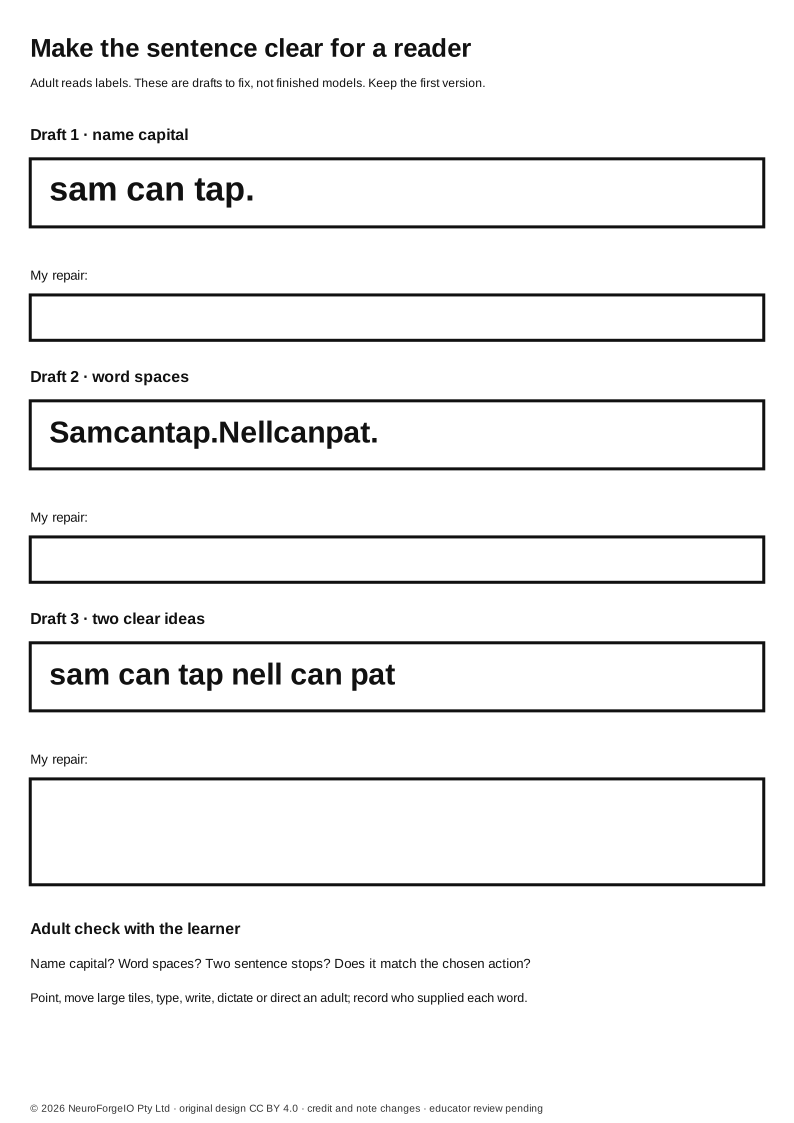
| 73 | unedited draft sam can tap. → edited Sam can tap. | All words use taught links; the first version is deliberately missing the name capital. A changed capital is an edit, not a new sound. |
| 74 | unedited draft Samcantap.Nellcanpat. → edited Sam can tap. Nell can pat. | The unedited draft intentionally has missing word spaces. An adult may read it first; child inserts spaces after finding taught word units. The edited model is shown after an independent attempt. |
| 75 | unedited sam can tap nell can pat → choose Sam can tap. Nell can pat. or Sam can pat. Nell can tap. | Capital names, word spaces and two full stops show two ideas. The chosen roles are fictional or match an explicitly chosen class score; do not infer who performed from the draft alone. |
| 76 | ee, see, feel, bee, seed, feet, keep | ee is one /iː/ in this selected set. feel /f/ /iː/ /l/ provides a tactile check; a seed is not assumed present in class. |
| 77 | Ben can see a bee. A seed is in a pot. | Child mini-text S is imagined, not a live insect or real plant observation. Capital B/A and article a were previously taught. |
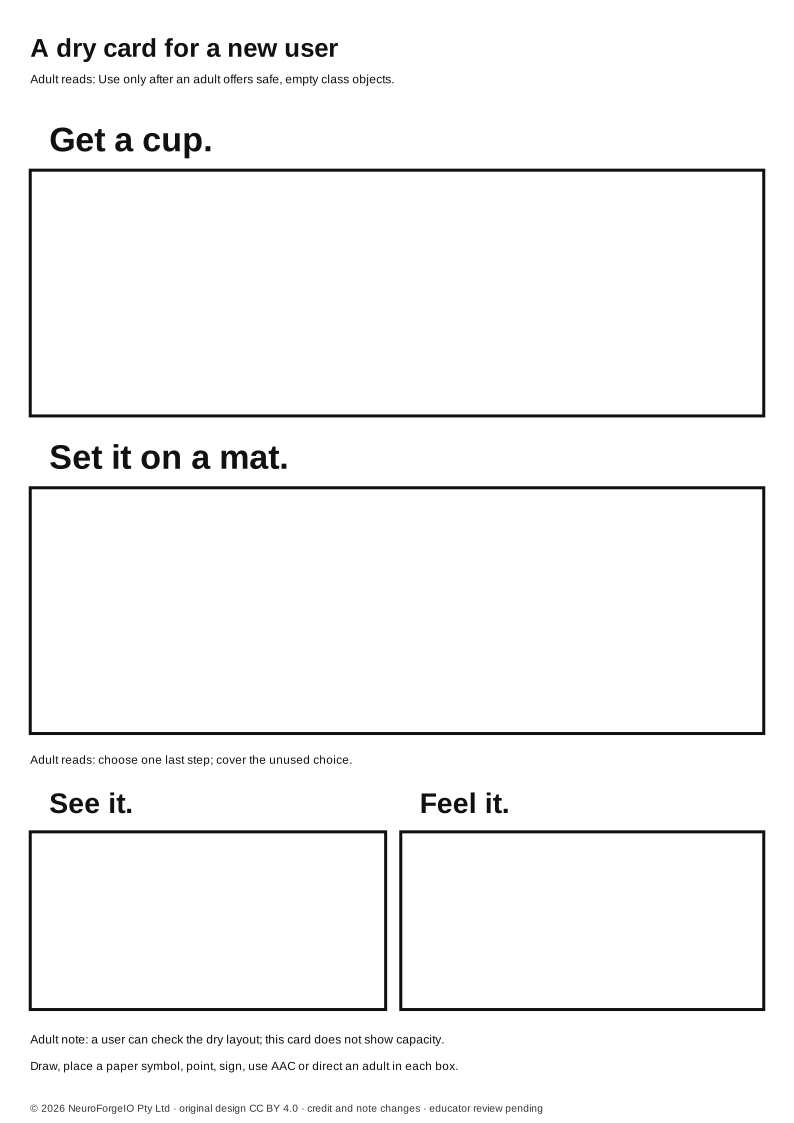
| 78 | Get a cup. Set it on a mat. See it. or Feel it. | Child dry-step text P uses see /s/ /iː/ or feel /f/ /iː/ /l/ as an accessible last-step choice; it refers to the adult-offered empty cup. No capacity result follows. |
| 79 | Get a pot. Set it on a mat. See it. or Feel it. | Controlled variation only if a safe class-owned pot or tactile/paper symbol is offered. A child reads the words and checks a real user's route. |
Teacher-only spoken words response, first, next, last, container, capacity, transfer, equal, water, the can appear in adult talk. Do not print them as child-decoding targets in this pack. The exact assessment transfer words are reserved for Day 80.
Child mini-text S — imagined bee and seed (Day 77)
Ben can see a bee.
A seed is in a pot.
This tiny imagined scene contains two statements. It does not assert a bee or seed is in the class. Ask what Ben can see and where the seed is in the print. Explain what a seed is after reading. A drawing may be made after print attempt, not used to guess words. A richer oral ending can be adult-scribed separately.
Child dry-step text P — after an adult offers the empty class cup (Days 78–79)
Get a cup.
Set it on a mat.
Choose one final child line; cover the unused choice:
See it.
Feel it.
The teacher offers the class-owned empty, unbreakable cup and a dry mat first. In both later lines it means the cup. The third step checks that the offered cup can be found: See it. for a visual route, or Feel it. for a safe tactile route with an object or raised paper representation. The word or in the layout is adult-read only, not part of the controlled child line. The child reads one chosen last step; cover the unused one if it distracts. A controlled variation swaps cup for pot throughout while preserving the referent, only if a safe class-owned pot or paper symbol is available. If the real setup lacks these objects, use a clearly labelled fictional paper model for decoding and mark actual user-trial evidence not observed. The separate mathematics comparison uses its own adult-controlled water routine.
Printable exact text alternatives
The sentence editor is an original A4 black-and-white page. It has an adult-read instruction line; three deliberately unedited child-readable drafts: sam can tap., Samcantap.Nellcanpat., and sam can tap nell can pat. Each draft has a blank repair line beneath it. Adult-read check labels are name capital, word spaces, sentence stops, meaning. The edited answers above are not printed on the aid. A learner may move large word tiles, mark a boundary, type, dictate the repair, use AAC or point. Record which part the adult supplied. The music score's pulse count is a separate record.
The dry-step user card is an original A4 black-and-white page. An adult-only heading says to use it after an adult offers safe empty class objects. The first two large child-reading lines are Get a cup. and Set it on a mat., each above a blank action box. The last step has two side-by-side child-readable choices, See it. and Feel it., each above a blank box; an adult reads choose one and may cover the unused choice. A small adult note says the card checks a dry layout, not capacity. Plain-text alternative is the procedure above. Record whether a child read, copied, rearranged or composed the words, and whether a real willing user followed an accessible route.
Reusable evidence line: date / learner code / exact prompt and first response / independent, prompted or not observed / real source and access route / next teaching move. Identifiable child work stays in the school's approved private system.