Status: original teaching draft; human educator, local curriculum, accessibility, safety and accuracy review pending.
Scope: ten 25-minute English lessons (Days 71–80), original adult oral texts, controlled child-reading/editing, two print aids with exact text alternatives, and a two-week formative check. These are two weeks of a continuing Foundation sequence, not a full-year program.
Year label: Australian Curriculum Foundation Year; Prep in Queensland. This is not pre-Prep kindergarten.
Open, download and adapt
- Ten daily teacher scripts
- Original adult and child-reading materials and aid alternatives
- Assessment, rubric and next-teaching decisions
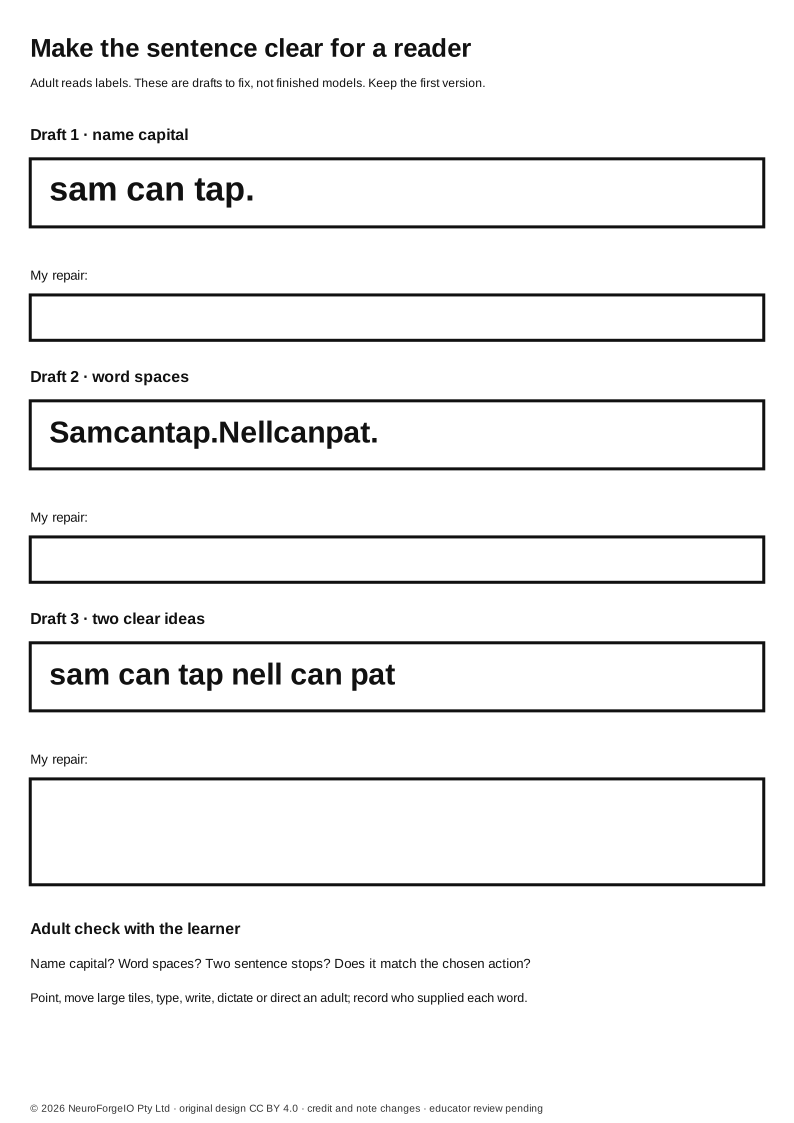
- Printable sentence editor
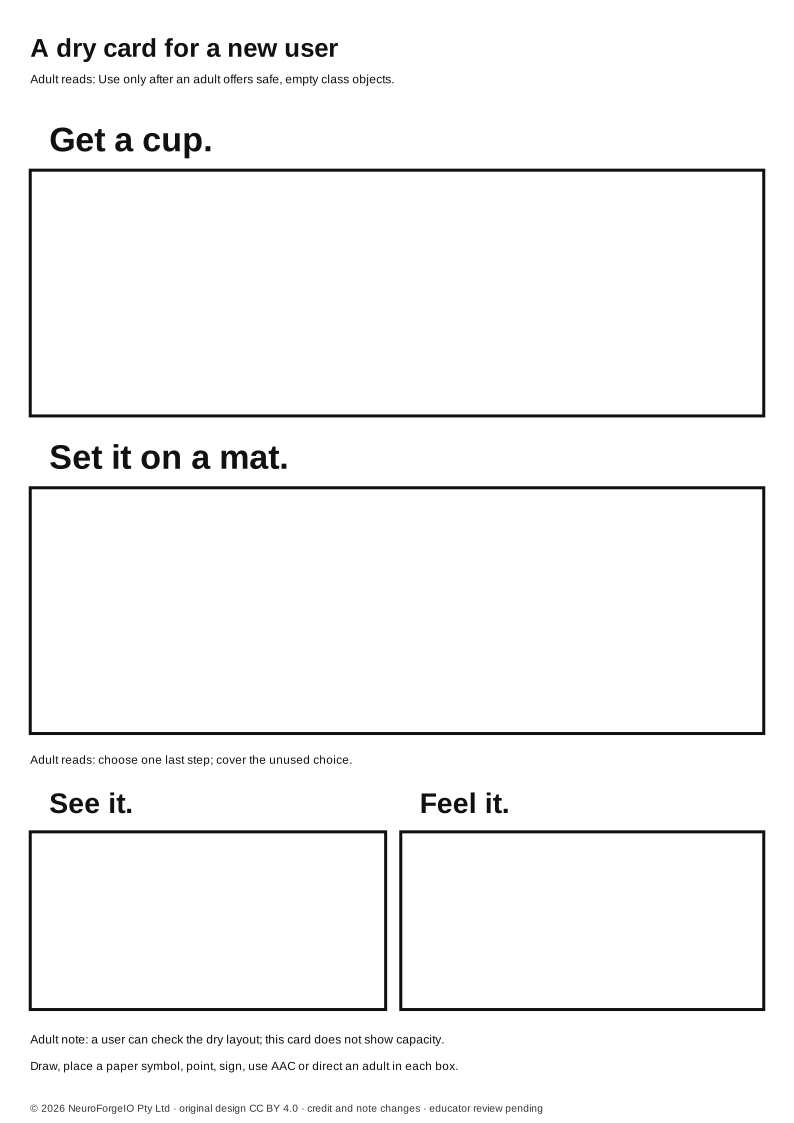
- Printable dry-step user card
- Curriculum mapping, rights and asset hashes
The original text, assessment and vector print designs are © 2026 NeuroForgeIO Pty Ltd and licensed CC BY 4.0. Print, share, adapt and reuse them, including commercially, with attribution and an indication of changes. Suggested credit: “SubjectNest Foundation/Prep English Weeks 15–16, NeuroForgeIO Pty Ltd, CC BY 4.0.” Link the pack and licence where possible. ACARA and AERO material remain under their own terms and are not included in this original-material licence. No third-party story, song, worksheet, image or recorded voice is embedded.
Fit with the class week and exact print boundary
The 40-week planning map sets Week 15 for a shared edit of meaning, word spaces and sentence boundaries, and Week 16 for explaining a test orally before writing. Pair these daily English lessons with the separate Week 15 original call-and-response music guide and Week 16 dry comparison-station design guide. The daily mathematics lessons make the actual part-whole and capacity decisions. An English sentence about where an empty cup is placed is not evidence of how much it holds. The dry English card stays out of the wet tray; an adult manages any separate water test under school rules.
Days 1–70 established single-letter sound links and the bounded teams/words sh, ch, th, ck, ng, ll, ss, q-u, is, has, a/A; q-u cues two phonemes /k/ then /w/ in selected words and x cues /k/ then /s/ in taught final position. This fortnight adds only:
| First day | New print link | Child-readable examples | Boundary |
|---|---|---|---|
| 71 | final ff → /f/ | off, puff, cuff, cliff, sniff | Two final letters represent one /f/ in the selected short-vowel words. Do not claim every ending /f/ is written ff. |
| 76 | ee → /iː/ | see, feel, bee, seed, feet, keep | Two letters represent one long /iː/ sound in these words. Do not claim all /iː/ spellings are ee or that every e is long. |
Week 15's edited child lines use previously taught Sam, Nell, can, tap, pat. A deliberately unedited draft is a repair task, not a model for spelling or punctuation. Children check whether the revised sentence matches the chosen fictional performers and their original rhythm; the ten-pulse count stays in the maths/music records. Week 16's child-readable procedure begins Get a cup. Set it on a mat. and offers a meaningful last-step choice: See it. or Feel it. The cup is dry, class-owned and adult-offered; the check can be visual or tactile with a safe object or representation. The longer spoken procedure explains an adult-managed comparison, including what a real result would require. Adult-only words such as capacity, equal, container, transfer, first/next/last are not child-decoding tasks here.
Sources, access and review
Lesson codes are exact proposed Foundation English links in the ACARA Australian Curriculum v9 workbook, retrieved 29 September 2026; original workbook SHA-256 db446882d2c00cf7c085a03e250e2442fda6c44011fc114680c46c1dc7a822c3. Consult ACARA English, version history and rights terms before local use. ACARA does not endorse SubjectNest. The exact letter-link order is our instructional choice, not an ACARA mandate.
The short model–guide–try cycle, cumulative practice and next-step checks are informed by AERO Teach explicitly and Monitor progress. These links are paraphrased only and do not certify this pack. Offer teacher live reading or a locally made recording with transcript, large/tactile/plain print, movable/digital tiles, quiet private response, and speech, AAC, sign, pointing, drawing, typing or handwriting for meaning. Record exact independence and access route. No fixed “learning style” label, public performance, loud sound, touching a shared instrument, wet test or personal object is required. If hearing/speech access changes a phoneme task, co-plan valid evidence with the learner, family and relevant specialist. Child records stay in the school's approved private system; no translation or audio recording is claimed.