Adult oral texts A–D are for listening, viewing and making meaning. Keep their unrestricted print hidden during child-decoding checks. An adult may make a local recording of this original text with a transcript; any shared voice recording needs its own permission and rights record. Child cards are below. Display the print before its matching image when measuring independent decoding; later use image and caption together to discuss meaning. All characters and scenes here are invented. No claim about a real school site or child is intended.
Adult oral fiction A — The edge of the frame (Days 81–85)
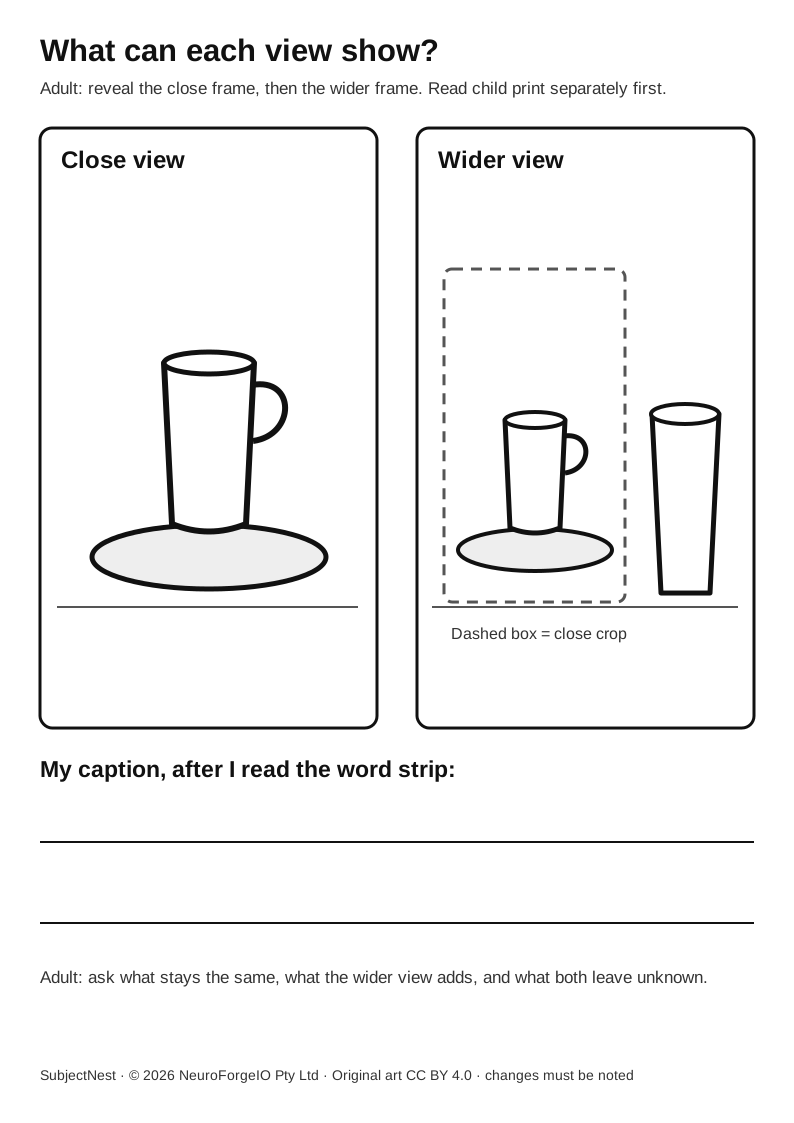
Jo drew a cup standing on a tray. At first, Jo showed Pip only the middle of the drawing. Pip could see the cup and tray but not the rest of the paper. “Is that everything?” Pip asked. Jo opened the larger drawing. The same cup and tray were there, and a bin stood farther away. Pip said, “Now I know there is a bin in your drawing. I still do not know who put the cup on the tray or whether there is anything inside it.” Jo wrote one short caption about what both views showed. They left the other questions open.
Ask: What stayed the same across views? What new detail appeared? What did neither picture show? What does a drawn picture prove about a real room? It proves nothing about a real room. It represents this invented scene. This is an original story, not a photo or observation. The two-view drawing is a visual aid for the same fictional scene; its full alternative follows below.
Adult oral sound play B — End that stays (Days 81–82)
Day and play make a pair by ear.
Tray joins in; the end is clear.
A word can change at the start; the rhyme can stay.
Read aloud with print hidden. Ask the learner to choose the rhyming pair from spoken day/play/tray and non-rhyming day/dig. The words make, pair, joins, word, change, rhyme are adult print only here. Rhyme is heard before the printed ay comparison. This rhyme does not require voice projection or singing.
Adult oral fiction and explanation C — A map before a move (Days 86–89)
In a made-up class garden, a teacher had a clean scrap of class paper to put away. The teacher did not ask a child to pick up an unknown object. Ari wanted to help, but the nearby bin was not visible from the safe class path. Ari asked, “May I see a map? I need a bin.” The teacher checked a current school-approved map and the actual path. The teacher found the approved bin, then decided which adult or child action was safe under the school rules. Ari's question helped start a plan; it did not make the map current or the bin safe by itself.
Ask: What did Ari request? Why? What would the adult check before anyone moved? What was an actual result in this story, and what has our class really checked? The entire story is fiction. The explanation may be adapted only to a locally approved map and actual observation; never state that the fictional bin exists at school. Use a classroom paper model if no approved site information is available. Local Country/Place knowledge is introduced only through school-approved knowledge-holder guidance; no cultural information is invented here. A child may discuss a shared place without giving a home address, route or personal experience.
Adult oral fiction D — The missing edge (Day 90 fresh assessment)
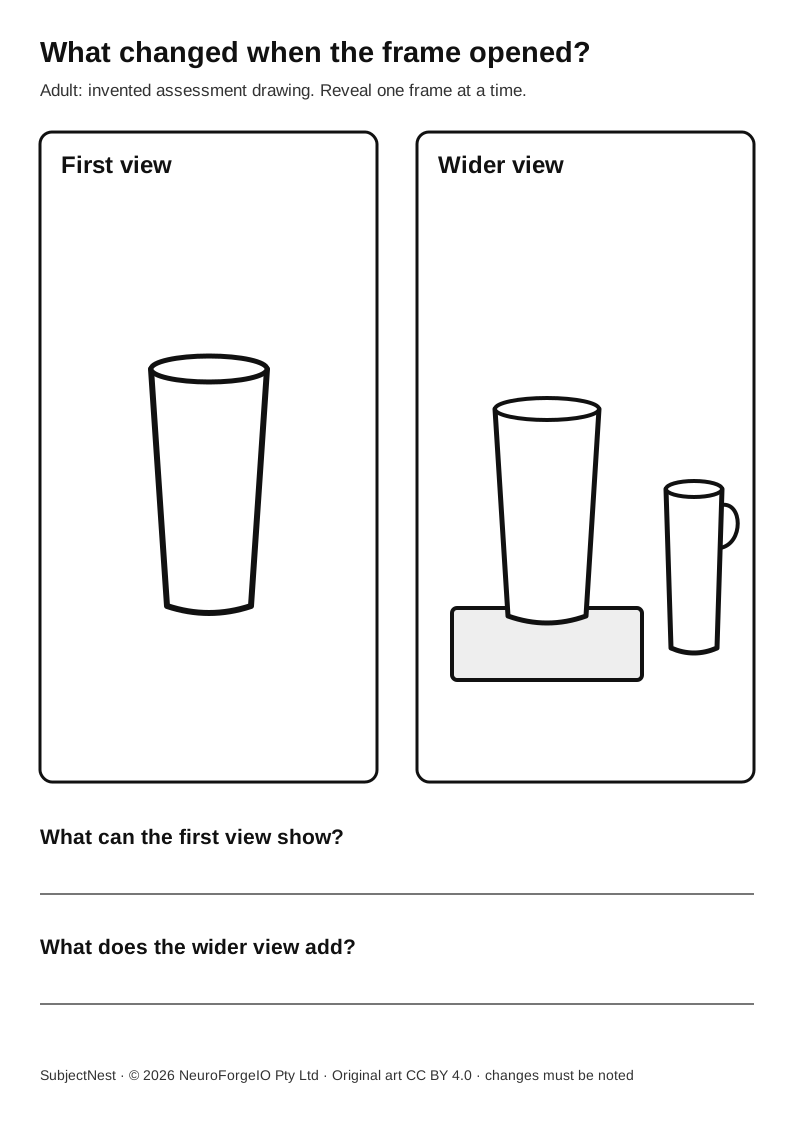
Tali made a drawing of a small pot on a mat. She first showed only the pot. Miro guessed that it was on a shelf. Then Tali showed the whole drawing. The pot was on a mat, and a cup was nearby. Miro changed the guess: “The wider drawing shows a mat and a cup. I still cannot tell who placed the pot there or whether it has a plant inside.” Tali kept both versions so a reader could check what the first frame left out.
Read twice with child print hidden. This is a fresh invented drawing, not a report of a plant observation. Use the fresh assessment view or its exact text alternative below. The unsupported shelf guess is deliberately wrong when the wider drawing is revealed. Do not treat a plausible guess as a fact.
Child-reading cards by first-use day
Show one card or one line at a time, without a matching picture first. All child print below uses the previously taught correspondences plus the bounded new links in README.md. For /eɪ/, treat word-final ay as one unit. The exact Day 90 fresh transfer words and sentence are held back in ASSESSMENT.md, not rehearsed here.
| Day | Child-facing print | Teacher sound/meaning boundary |
|---|---|---|
| 81 | ay, day, play, tray, clay, stay | day /d/ /eɪ/; tray /t/ /r/ /eɪ/; play /p/ /l/ /eɪ/. Adjacent consonants stay separate; ay is one phoneme in this selected set. |
| 82 | day, play, tray, clay, stay | Shuffle and blend before showing scene. Orally rhyme day/play/tray; decoding and hearing rhyme are recorded separately. |
| 83 | A cup is on a tray. | Read before viewing. A is the previously taught sentence-initial article /ə/ here; is is the taught bounded /ɪz/ word; tray ends /eɪ/. This caption fits both invented views. |
| 84 | A cup is on a tray. / A bin is on a tray. | Use these as two candidate captions, not two factual claims. The second does not fit either drawing: the bin is farther away, not on the tray. Reveal images after the print read. |
| 85 | A cup is on a tray. / A cup is on a mat. | Create or select one caption for the supplied invented scene. The second candidate does not match the cup's position. A child may dictate a richer oral observation separately. |
| 86 | I, May, May I see a map? | I is a standalone /aɪ/ word, not the /ɪ/ of It/in. May is /m/ /eɪ/; capital M begins the question. This is a polite permission request in the fictional scenario. |
| 87 | May I see a map? / May I help? | The ? ends a question/request and is not spoken as a phoneme. help uses prior single-letter links. Adult checks permission; print alone does not authorise an action. |
| 88 | I need a bin. | need /n/ /iː/ /d/; bin /b/ /ɪ/ /n/. This short sentence states what the speaker needs. Ask for the fuller reason orally: they need to locate an approved bin for a clean class paper prop, subject to adult check. |
| 89 | May I see a map? I need a bin. / May I help? I need a map. | Choose a coherent request and reason for a fictional paper scenario; add a child-chosen oral because-clause. Do not score the word because as child decoding. |
Adult-only words such as picture, caption, frame, reason, permission, current, approved, because, safe, Country/Place enrich conversation but are not child-reading targets. The Day 90 fresh word list is intentionally absent from these cards. Upper/lower-case forms preserve their usual taught sound in ordinary words; only standalone I has the bounded /aɪ/ value here.
Mini-text W — two views, one shared fact (Days 83–85)
A cup is on a tray.
Read before opening the drawing. In the close view, cup and tray are visible. The wide view keeps the same cup and tray and additionally shows a bin away from the tray. The sentence says nothing about who moved anything, what is inside the cup, or a real room. A child can select, revise or dictate a caption for a self-made drawing; the teacher records which facts the actual child drawing supports. A speculative sentence stays a question, not an observation.
Mini-text R — a request and reason (Days 86–89)
May I see a map?
I need a bin.
The first line asks permission to see a map. The second gives a short stated need. The fuller reason is made orally, signed, AAC composed or child-directed adult-scribed: for example, “I need to find the approved bin for the clean class paper.” This longer sentence is not a child-decoding line. “May I help?” is a controlled option, but the adult still decides whether and how help is safe. If a real care action is unavailable or inappropriate, keep the task fictional and mark real action not observed.
Exact alternatives for the printable aids
Two views of one invented scene
This original black-and-white A4 page has two outlined frames. Left, close view: a single plain cup stands on an oval tray; no other objects are visible. Right, wider view: the same-looking cup stands on the same oval tray; a separate open-top bin stands to the right and away from the tray. The bin is not on the tray. A dashed crop box in the wide view marks the close frame's area; the drawings are constructed views of one invented scene, not two separate observations. Adult-only labels read “close view” and “wider view”. A large blank line under the frames is for a child-chosen caption. The child caption A cup is on a tray. is supplied separately, not printed below the picture, so print can be read first. Nonvisual route: read the exact descriptions aloud, offer raised shapes or toy/paper models if safe, and ask what information the wide description adds and what both leave unknown. Record whether the response used visual or text/tactile evidence.
Request and reason card
This original black-and-white A4 card has an adult-only heading “Fictional paper practice: ask, then give a reason.” It prints large child lines May I see a map? and I need a bin., each with a blank space below. It also has a separate child option May I help?, which an adult may cover until taught. Adult-only footer: “A real action needs an approved map/site, adult check and safe class plan. No unknown litter.” Plain-text alternative is the same three child lines above, in order, with a blank after each. Learners can point, rearrange tactile/digital word tiles, dictate their own fuller reason to an adult, type or draw a fictional route. The page is not evidence that a map or bin exists locally.
Fresh assessment view
An original black-and-white A4 page for Day 90 only. First frame: only a small plain pot is visible; no support surface is visible. Second frame: the same-looking pot is on a rectangular mat, with a cup nearby and not on the mat. Adult-only labels identify the first and wider view. No child caption is printed. Nonvisual route: read those two exact descriptions separately in the same reveal order, or offer large raised paper pot/mat/cup shapes. Ask what changed, what remained and what neither version tells. This is an invented drawing, not a science observation. Preserve the unshown view until the assessment prompt calls for it.
Reusable record line: date / learner code / exact prompt and first response / independent, prompted or not observed / source and access route / next teaching move. Identifiable child work remains in the school's approved private system.