Status: original teaching draft; human educator, local curriculum, accessibility, safety and accuracy review pending.
Scope: ten 25-minute English lessons (Days 81–90), original adult oral texts and controlled child print, two printable vector aids with exact text alternatives, and a two-week formative assessment. These are two weeks of a continuing sequence, not a full-year program.
Year label: Australian Curriculum Foundation Year; Prep in Queensland. This is not pre-Prep kindergarten.
Open, print and adapt
- Ten daily teacher scripts
- Original oral texts, controlled print and exact aid alternatives
- Assessment, rubric and next teaching moves
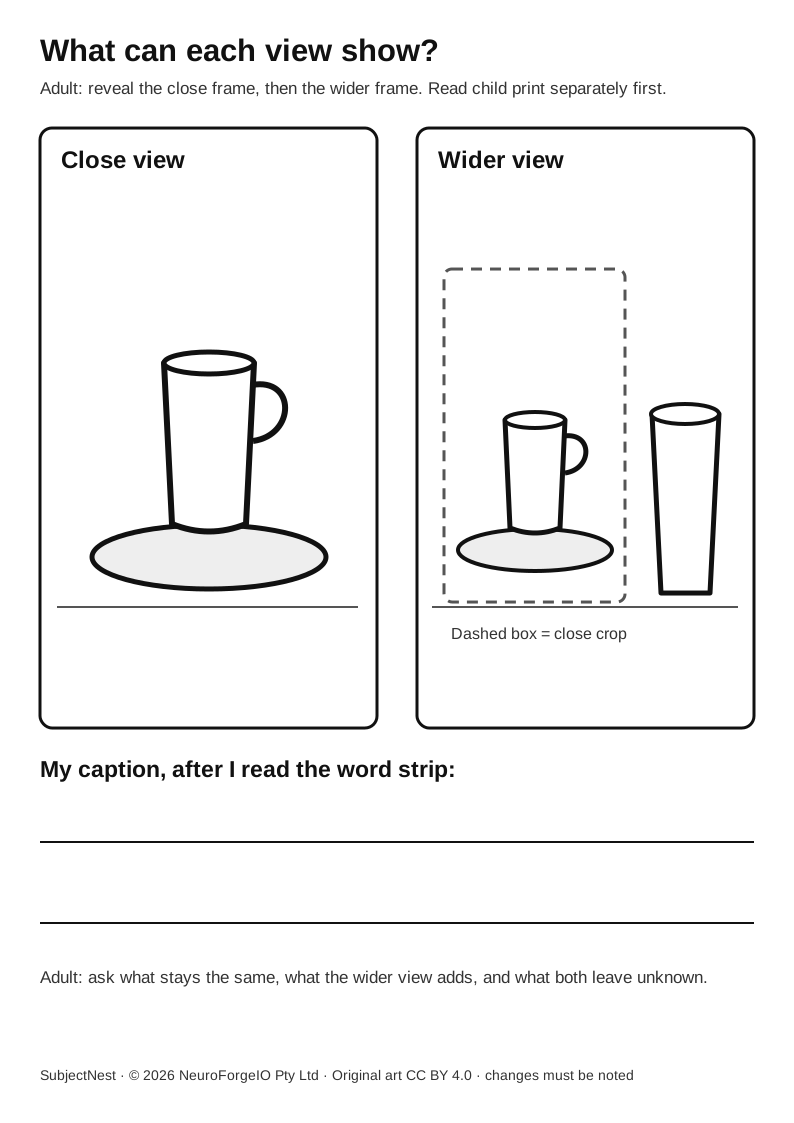
- Two views of one invented scene
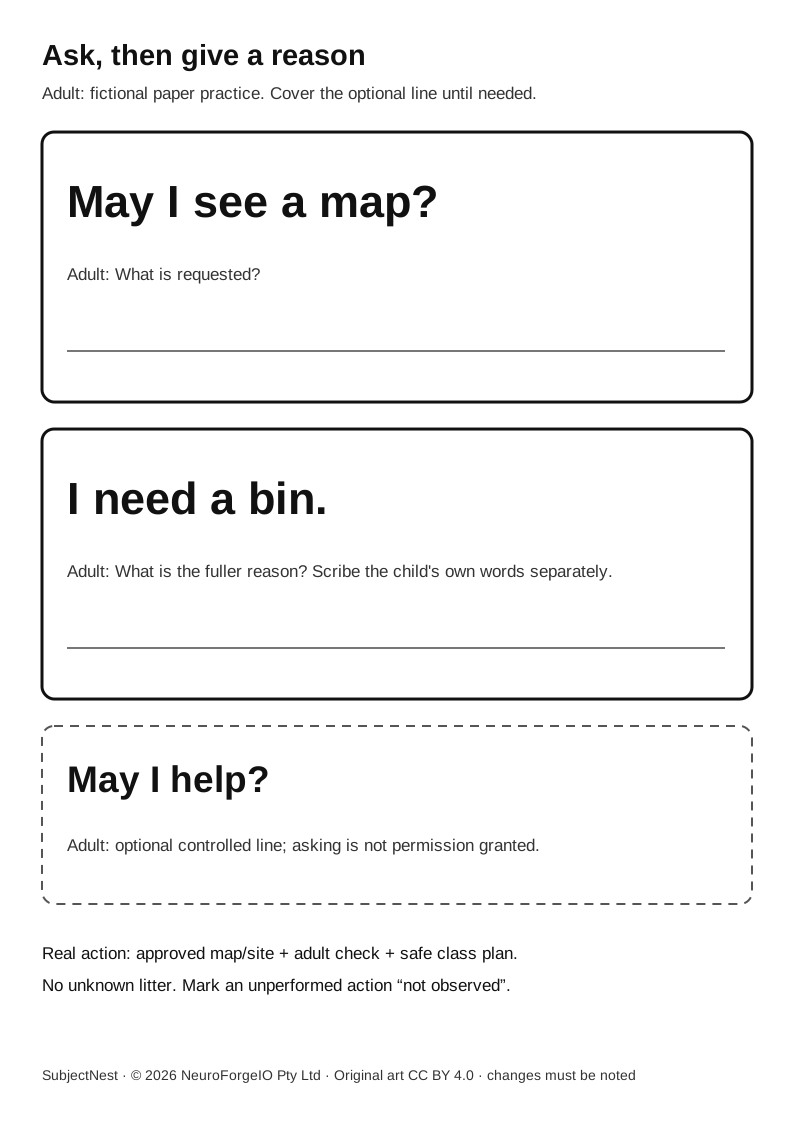
- Request and reason card
- Curriculum mapping, rights and file hashes
The original text, assessment and vector print designs are © 2026 NeuroForgeIO Pty Ltd and licensed CC BY 4.0. Print, share, adapt and reuse them, including commercially, with attribution and an indication of changes. Suggested credit: “SubjectNest Foundation/Prep English Weeks 17–18, NeuroForgeIO Pty Ltd, CC BY 4.0.” Link the pack and licence where possible. ACARA and AERO content retains its own terms and is not included in this original-material licence. No third-party story, song, worksheet, photograph, image or recorded voice is embedded.
What this fortnight actually teaches
The 40-week planning map sets Week 17 for asking what words and pictures each show or leave out, and Week 18 for making a request with a reason about caring for a shared outdoor place. The image task uses two views of one invented paper scene. The place task is a fictional rehearsal unless a locally approved map, site, willing user and real care action are available. Do not turn the pretend map/bin outcome into an observation about school grounds. Any local Country/Place knowledge must come through approved knowledge holders and school protocols; this pack does not supply it.
Days 1–80 established the prior single-letter links and selected sh, ch, th, ck, ng, ll, ss, ff, ee, q-u, plus bounded a/A, is, has, It. In the selected q-u words, q and u cue two phonemes /k/ then /w/; x cues /k/ then /s/ in the earlier taught final position. This pack adds only:
| First day | New print link | Child examples | Boundary |
|---|---|---|---|
| 81 | word-final ay → /eɪ/ | day, play, tray, clay, stay | One sound in the selected words; a and y are not sounded separately here. This does not teach all /eɪ/ spellings or all uses of ay. |
| 86 | standalone capital I → /aɪ/ | I in May I see a map? | Teach as one high-frequency word. Earlier It starts /ɪ/, and earlier lower-case i in in remains /ɪ/. The capital shape alone does not change every i to /aɪ/. |
| 87 | ? ends a written question | May I see a map? | Punctuation carries a question/request boundary; it adds no phoneme. May starts with a capital because it starts this sentence. |
Child-facing text is shown without pictures first for independent word reading. A teacher can then reveal the image and ask what it adds, what it does not show and whether the caption fits. Week 17 controlled caption: A cup is on a tray. Week 18 controlled request and reason: May I see a map? I need a bin. The adult can explain richer reasons aloud or scribe the child's own words separately; neither task asks a child to decode untaught adult vocabulary. The fictional outdoor-care scenario uses only clean paper props. Learners never handle unknown litter; an adult follows local safety procedures.
Sources, access and review
Codes are exact proposed Foundation English links in the ACARA Australian Curriculum v9 workbook, retrieved 29 September 2026; pinned workbook SHA-256 db446882d2c00cf7c085a03e250e2442fda6c44011fc114680c46c1dc7a822c3. See ACARA English, version history, ACARA rights terms and First Nations protocols for local use. ACARA does not endorse SubjectNest. The exact letter-link order is our instructional choice, not an ACARA mandate.
The model–guide–try cycle and response-driven checks are informed by AERO Teach explicitly and Monitor progress; these are paraphrased only and do not certify the pack. Offer live adult reading or a locally made recording with transcript, large/high-contrast/tactile or plain print, movable/digital tiles, and speech, AAC, sign, pointing, drawing, typing or handwriting for meaning. Provide a quiet private route. Record exact independence and access route. If hearing or speech access changes a phoneme task, co-plan valid evidence with the learner, family and relevant specialist. No fixed “learning style” label, public performance, touch of unknown waste, child location disclosure, translated version or recorded audio is claimed. Child records stay in the school's approved private system.