Each lesson lasts 25 minutes. Use the exact adult oral texts, child cards and printable alternatives in MATERIALS.md. Keep adult print and Day 90 unseen words hidden in independent child-decoding checks. Codes are proposed ACARA v9 Foundation English links, not authority approval or proof that a full content description is achieved. Record each learner's first independent response before a model, exact prompt, access route and one next move. A group answer is not an individual reading check.
Week 17 · Day 81 — Word-final ay is one sound
Proposed codes: AC9EFLA08, AC9EFLY09, AC9EFLY10, AC9EFLY11, AC9EFLY13.
Goal: Hear /eɪ/ in spoken rhyme and blend selected word-final ay words with one sound box for the team.
Prepare: adult sound play B, joined ay tile, 2–4 sound boxes, day/play/tray/clay/stay cards, blank counters. Hide drawings.
- Retrieve · 3 min. Reread see, feet, off, sniff from Days 71–80. Ask “Which two letters together write one /iː/ in feet, and which two at the end write one /f/ in sniff?” Note a missed link for tomorrow's review.
- Hear rhyme · 4 min. With all print hidden, read sound play B twice. Say day/play, then day/dig. Ask “Which pair sounds alike at the end?” Accept a spoken, signed, AAC or pointing choice; record a heard-rhyme response apart from print reading.
- Model ay · 5 min. Say day /d/ /eɪ/, slide two counters, then reveal d | ay. “At the end of this word, these two letters work together for one /eɪ/ sound. I will not sound the a and y separately.” Contrast spoken dig without claiming all /eɪ/ spellings use ay.
- Guide and try · 7 min. Guide play /p/ /l/ /eɪ/ and tray /t/ /r/ /eɪ/, one counter for each adjacent starting consonant. Shuffle cards; invite first independent blends of clay /k/ /l/ /eɪ/ and stay /s/ /t/ /eɪ/. Give meaning or an oral sentence after reading, not a picture clue first.
- Adult story and limit · 4 min. Read fiction A with print hidden. Ask “What did Pip learn when the frame opened? What was still unknown?” Say this is an invented drawing, not proof of a real cup. Keep the SVG covered until the later picture lesson.
- Exit check · 2 min. Show tray alone in a new position. Ask for its sounds and blended word; expect /t/ /r/ /eɪ/, three sounds. Log ay as one team and /t/ /r/ as separate, or record the exact error.
Access routes: large or tactile joined ay tile, raised counters, digital moveable tiles, quiet private blend, adult live reading or local recording with transcript, AAC/sign/pointing for heard rhyme and story meaning. An agreed non-speech sound-selection route can show phonological knowledge.
Week 17 · Day 82 — Say, blend and spell a new word
Proposed codes: AC9EFLA08, AC9EFLY04, AC9EFLY09, AC9EFLY10, AC9EFLY13.
Goal: Keep ay as one phoneme in reading and encoding, then separate what a spoken rhyme proves from what a picture shows.
Prepare: shuffled Day 81 cards, joined ay and earlier ee tiles, boxes, adult sound play B, covered two-view drawing.
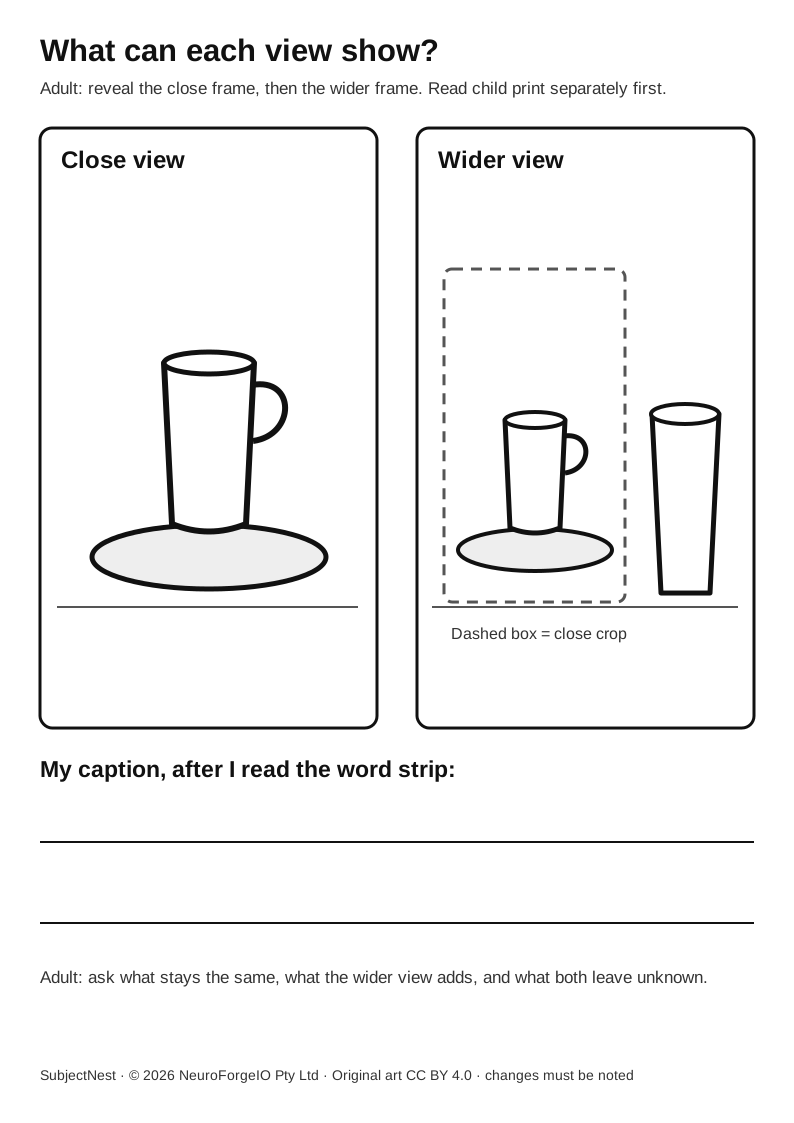
- Retrieve · 3 min. Show clay/stay/play in a changed order. Hear a first blend and ask how many sounds clay has; expect /k/ /l/ /eɪ/. Briefly reteach only yesterday's exact missed link.
- Oral before print · 4 min. Hide cards. Say day, tray, dig, play once each. Learners mark the three rhyming words by sound, then hear the set again. Record whether the rhyme decision was independent; matching ay print alone does not earn oral-rhyme evidence.
- Model change · 5 min. Place d | ay then replace d with tr tiles, touching /t/ and /r/ separately to form tray. Ask what stayed /eɪ/ and what changed. Show ee beside ay only to contrast /iː/ and /eɪ/ in these selected words.
- Guide and try · 7 min. Dictate day with print hidden; learners choose/write d ay and reread. Guide play, then dictate stay for an independent first spelling; record every tile/letter actually chosen before feedback. Do not treat handwriting difficulty as a sound error if a correct child-directed tile route is available.
- Small reveal · 4 min. Show only the close frame of the drawing or read its first exact alternative. Ask “What can this view show?” Expect cup and tray in the invented picture. Ask what it cannot show; do not accept a guess about a full cup or a person as observed fact. The picture is not used to identify the printed word tray.
- Exit check · 2 min. Hide cards, say play, ask for three sound counters; then show play and ask for a blend. Log oral segmentation and print separately.
Access routes: tactile/large tiles and counters, one word at a time, explicit verbal first-frame description or raised model, silent/private oral-choice route, typing/pointing/AAC/sign. Drawing a rhyming word is optional and is not substituted for a print read.
Week 17 · Day 83 — Read a caption before the image
Proposed codes: AC9EFLA05, AC9EFLA07, AC9EFLE02, AC9EFLY04, AC9EFLY05.
Goal: Independently read a controlled caption, then check what both invented image views add or leave unknown.
Prepare: mini-text W on a separate plain strip, two-view drawing face down, adult fiction A, word tiles A | cup | is | on | a | tray.
- Retrieve · 3 min. Read day/tray/see without pictures. Ask which team writes /eɪ/ and which writes /iː/ in those words.
- Listen for a question · 4 min. Reread adult fiction A. Ask “What question did Pip ask when only the middle was shown?” Accept “Is that everything?” or equivalent. Say a viewer can ask about what is outside a frame.
- Model start of caption · 5 min. Keep SVG hidden. Show A cup is on a tray. Point to capital A and the sentence stop. Model A cup with the earlier article /ə/ and /k/ /ʌ/ /p/; identify is as the previously taught /ɪz/ word. Let learner track each space rather than guessing from an image.
- Guide and independent read · 7 min. Child reads the full strip first; guide tray /t/ /r/ /eɪ/ after the first attempt if needed. Ask “Where is the cup according to these words?” Reveal close then wide drawing, or exact descriptions. Ask whether the sentence fits each and what the wide view adds. It adds a bin, not a new cup position.
- Check what is missing · 4 min. Ask “Does either view tell who placed the cup or what is inside it?” No. Ask if the caption says there is a bin. It does not. A child may add an oral question, adult-scribed separately; do not smuggle an untaught printed question into decoding.
- Exit check · 2 min. Show the caption alone again. Ask for an independent read of tray and one thing the wide image, but not the caption, showed. Record decoding and image contribution separately.
Access routes: plain large/tactile strip, high-contrast SVG, exact text descriptions revealed in two stages, raised cup/tray/bin paper shapes, quiet private read, AAC/sign/pointing/drawing for image difference. Do not score visual acuity as comprehension where the described route is used.
Week 17 · Day 84 — Test two captions against evidence
Proposed codes: AC9EFLA07, AC9EFLA09, AC9EFLY04, AC9EFLY05, AC9EFLY06.
Goal: Decode two candidate captions, choose the one supported by an invented image and explain the mismatch without inventing a real-world fact.
Prepare: separate child strips A cup is on a tray. and A bin is on a tray., covered two-view aid, two blank evidence markers.
- Retrieve · 3 min. Reblend tray/play/clay and reread yesterday's caption with SVG hidden. Ask for ay's one sound in this set.
- Adult model of checking · 4 min. Show a teacher-only sentence “The drawing does not tell us who moved the cup.” Read it aloud without presenting it as child print. Say “I will ask what I can point to in the invented drawing and what is still a question.”
- Model first comparison · 5 min. Show first controlled strip, A cup is on a tray., before the image. Read it together by word. Reveal close view; point to cup and tray. Place a marker for supported in the picture, not for a real classroom claim.
- Guide and try · 7 min. Child first reads A bin is on a tray. without picture help, then sees wide view. Ask “Does the bin stand on the tray?” No. Invite the learner to move a marker to does not fit and explain by pointing, signed phrase, AAC or oral words. Record word-reading and evidence choice separately; the bin is nearby, not on the tray.
- Repair meaning · 4 min. Offer the same word tiles to rebuild the supported caption. Ask whether changing bin to cup fixes the sentence or whether any claim about what is inside the cup could be proven. Ask one child-generated question about what the frames leave out; adult may scribe unrestricted words on a separate sheet.
- Exit check · 2 min. With the image visible, show both captions in a swapped order. Ask which one fits and for a specific drawn detail supporting it. Record response and whether the learner needed a location cue.
Access routes: large/tactile captions, exact staged description, raised shapes, child-directed marker placement, private response, AAC/sign/typing. The learner may process the picture by text alternative without being forced to inspect fine visual details.
Week 17 · Day 85 — Make a caption a reader can check
Proposed codes: AC9EFLA05, AC9EFLA07, AC9EFLY04, AC9EFLY05, AC9EFLY06, AC9EFLY07.
Goal: Compose a caption with taught print, let a user test it against an image/description and state one thing the caption leaves unknown.
Prepare: two-view aid, blank caption line, controlled word tiles A | cup | bin | is | on | a | tray | mat, full-stop tile, one willing chosen reader. The word mat is earlier taught; no real objects are implied.
- Retrieve · 3 min. Read A cup is on a tray. with the image hidden. Ask for its end mark and where word gaps go.
- Purpose · 4 min. Show both invented views or exact alternatives. Say “A new reader should be able to use our short caption with either view. Which detail is in both?” Expect the cup on tray. Ask what only the wider view adds.
- Model a test · 5 min. Put A cup is on a mat. on a teacher strip. Sound through mat and compare with the drawing; the cup is on the tray, so this candidate fails. Cross the claim out on the teacher strip. Do not compose the learner's final caption for them.
- Child composes · 7 min. Learner chooses/writes/arranges a supported caption, ideally A cup is on a tray. They may make a different controlled caption only if every word has been taught and the chosen image supports it. Record first independent print choice, capital, spaces, stop and reread before assistance. A richer dictated caption is kept separately as adult-scribed print.
- Real reader check · 4 min. Chosen willing reader hears/sees the caption and finds the evidence in the drawing or alternative. Ask “What did the reader actually find? What is still outside our evidence?” If no user attends, mark user feedback not observed and do not invent it.
- Exit check · 2 min. Ask the learner to read the final caption and name one thing it does not establish, such as who moved the cup. Keep first/revised versions and the exact reader response.
Access routes: large/tactile tiles, raised two-view model or exact description, digital caption line, child-directed adult placement, quiet adult audience, AAC/sign/pointing/typing/drawing for explanation. A correct oral caption without a child print attempt is recorded as oral meaning, not independent decoding.
Week 18 · Day 86 — The word I and a request
Proposed codes: AC9EFLA08, AC9EFLY04, AC9EFLY10, AC9EFLY11, AC9EFLY14.
Goal: Read standalone I as /aɪ/, distinguish it from /ɪ/ in It/in, and blend May using final ay before hearing a fictional place-care reason.
Prepare: separate I, It, in, May, may, see, map cards; joined ay tile; adult fiction C; covered request card.
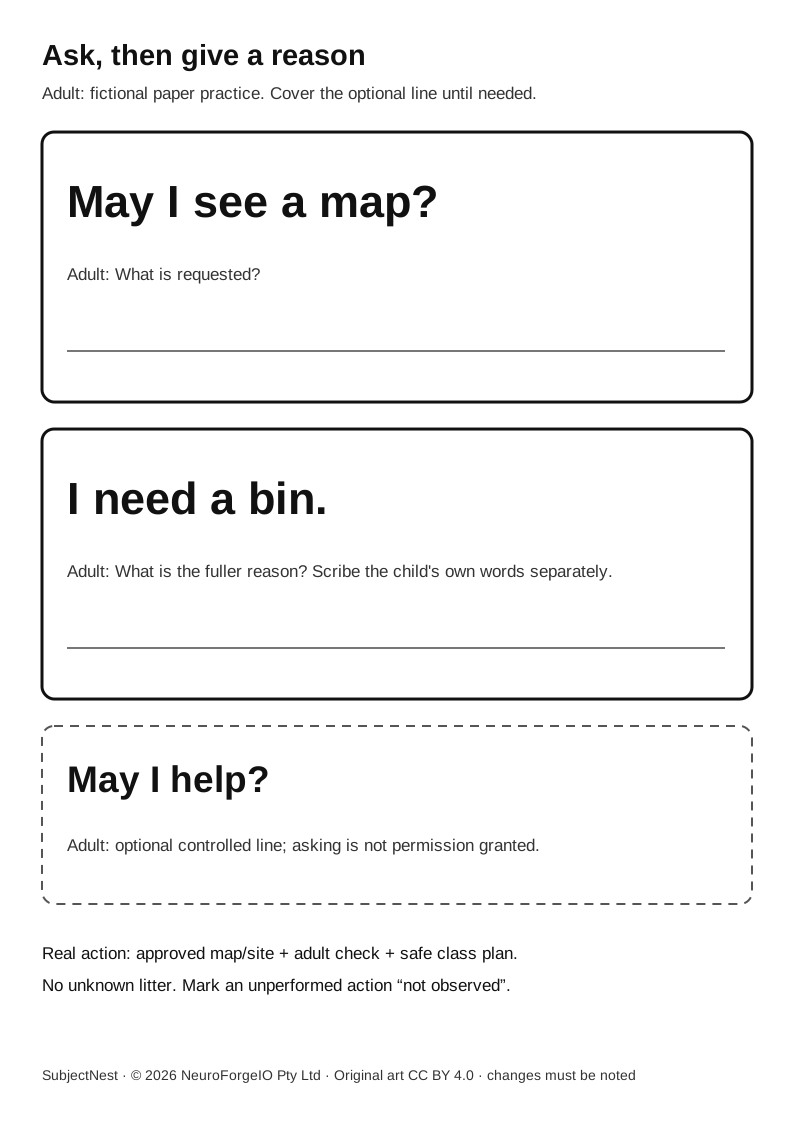
- Retrieve · 3 min. Blend day/play/tray and see/need from taught parts; ask for ay /eɪ/ and ee /iː/. If need is not yet fluent, model its /n/ /iː/ /d/ path rather than assuming sight memory.
- Listen to the reason · 4 min. Read fiction C with child print hidden. Ask what Ari asked for and why. State that the teacher checks the actual map/path and safety; nothing in this invented story says a real school has that bin.
- Model I · 5 min. Show I alone: “This one-letter word says /aɪ/ when it names the speaker. In It and in, the i sound in our taught words is /ɪ/.” Contrast the complete words, not isolated capital shapes. Ask for /aɪ/ versus /ɪ/ with counters or choice cards.
- Guide and try · 7 min. Blend May /m/ /eɪ/, pointing to capital M as the beginning-of-sentence form of /m/. Then show May I see a map? as a teacher-read question first. Child independently finds/reads May, I, see, map on separate shuffled cards; guide the entire line only after first word attempts. Do not claim may always means permission in every context.
- Meaning · 4 min. Ask “Who is I in Ari's pretend request?” The speaker, Ari. A child may use the same line to role-play asking for a paper map, but the actual adult must grant access. Ask what a real map would still need: current local approval and an adult check.
- Exit check · 2 min. Mix I, It, in. Ask for the standalone /aɪ/ word and an independent blend of May. Record distinct word responses and whether capital M was recognised.
Access routes: large/tactile I/It/in contrast, raised or digital ay tile, private word read, adult live story/transcript, AAC/sign/pointing for speaker and request. No learner gives a home route, goes outdoors or handles a discarded object.
Week 18 · Day 87 — A question mark helps the reader
Proposed codes: AC9EFLA05, AC9EFLA09, AC9EFLY04, AC9EFLY05, AC9EFLY06.
Goal: Decode a short permission request, use the question mark as an end cue and explain that asking is distinct from permission granted.
Prepare: separate strips May I see a map? and May I help?, period and question-mark tiles, request card face down, fictional paper map symbol.
- Retrieve · 3 min. Reread I, May, see, map separately; contrast I with in. Record one exact uncertain sound link.
- Oral request · 4 min. Repeat Ari's request from adult fiction C aloud. Ask “Is Ari telling the teacher what to do, or asking?” Expect asking. Say a real teacher may say yes, no or another safe plan.
- Model end mark · 5 min. Display May I see a map? without SVG. Blend words in order, tracking gaps. Point to ?: “This mark closes a question. It is not another sound in map.” Compare with I need a map. as adult-read spoken contrast only unless child has read the full controlled sentence. Keep the question strip visible.
- Guide and try · 7 min. Learners first read May I help? independently, then May I see a map?. Offer a question-mark tile and full-stop tile to choose the matching end. Ask what is being requested in each. Reveal the request card only after word reading; the pictures/boxes are for user response, not guessing.
- Ask a real user safely · 4 min. A willing adult or puppet answers a fictional paper-map request. Learner explains by speech/AAC/sign which answer was given; mark it as a role play, not permission for a real outdoor trip. A genuine locally approved map can be offered separately under school rules.
- Exit check · 2 min. Show May I help? without model. Ask for a read, the question-ending mark and one reason why asking does not authorise action. Record word read and meaning separately.
Access routes: high-contrast/tactile punctuation, movable/digital words, exact text alternative, private user, AAC/sign/pointing/typing. Do not require an audible rising intonation or a public exchange to prove the written mark's role.
Week 18 · Day 88 — Add a reason the user can understand
Proposed codes: AC9EFLA05, AC9EFLA06, AC9EFLA08, AC9EFLY04, AC9EFLY05, AC9EFLY06.
Goal: Read a short need sentence, link it to a prior request and give a fuller evidence-grounded reason orally.
Prepare: separate child strips May I see a map? and I need a bin., joined ee tile, adult fiction C, clean paper symbol, optional approved class map and bin location only if verified.
- Retrieve · 3 min. Read May I see a map? from a plain strip. Ask what ay, standalone I and ? each do; record one uncertain feature.
- Adult story check · 4 min. Reread fiction C's final two sentences. Ask “Why did the adult check the map and path?” Because the map could be old and a real action needs a safe route. Distinguish the imagined story from anything observed locally.
- Model need · 5 min. Show I need a bin. Point to I /aɪ/, then sound need /n/ /iː/ /d/ with ee in one box, and bin /b/ /ɪ/ /n/. Say “These words state a need. We can tell a listener why.” Do not place adult-only because on the decoding strip.
- Guide and try · 7 min. Child reads I need a bin. and arranges it after the request. Ask “How do the two ideas connect?” Accept a fuller oral/sign/AAC reason such as needing an approved place for the teacher's clean paper prop. Adult writes the exact child wording separately, without pretending the child decoded it. A learner may choose a different safe fictional purpose and justify it.
- Check reality · 4 min. Show clean paper symbol and say “An adult would first check where the approved bin is. Unknown litter stays for the adult's safety routine.” If a locally approved map/bin has actually been checked, record the real location evidence separately and invite a safe adult-led care action. Otherwise use the paper model only and mark real action not observed.
- Exit check · 2 min. Show I need a bin. alone. Ask for an independent read and an oral answer to “Why might this speaker ask for a map?” Record print, connection and source status separately.
Access routes: tactile/large ee and I cards, one line at a time, AAC/sign/pointing/drawing for fuller reason, adult scribe clearly labelled, private response, optional paper model. No touch of unknown litter or disclosure of personal outdoor routes.
Week 18 · Day 89 — Choose, edit and test the message
Proposed codes: AC9EFLA05, AC9EFLA09, AC9EFLY04, AC9EFLY05, AC9EFLY06, AC9EFLY07.
Goal: Compose a controlled request plus reason, ask a real willing user whether it makes sense and distinguish a fictional paper plan from a verified care action.
Prepare: request card, word tiles for mini-text R and May I help? I need a map., blank two-line strip, willing adult user, paper map/bin symbols or locally approved actual site information.
- Retrieve · 3 min. Read both mini-text R lines without the aid. Ask for question mark, full stop and the speaker named by I. Re-model the exact link missed yesterday.
- Pick a purpose · 4 min. Recount Ari's pretend clean-paper case. Say “Today our message should let a user know what we ask and why.” If local map/bin information was verified, name only the approved shared site; otherwise explicitly choose a fictional tabletop version.
- Model one edit · 5 min. On a teacher strip, show May I see a map. Ask what mark belongs at its end; replace the stop with ?. Read it as a question. Do not assemble the child's final message.
- Child creates · 7 min. Learner selects/arranges/writes May I see a map? I need a bin. or May I help? I need a map. They reread; ask them to explain how their two lines connect in their chosen paper scenario. Record first independent word order, ay/I/ee reading, capital, gaps and end marks before support. Richer reason is exact adult-scribed oral language on a separate page.
- User test and possible care · 4 min. A willing adult reads or listens and says what they understood; child may revise one ambiguous choice. Record the user's actual response. If a safe, approved local shared-place action exists, an adult may carry out or supervise a simple action with a clean class prop and record what actually happened. If not, mark real place-care action not observed; a fictional rehearsal alone is not a care result.
- Exit check · 2 min. Child independently reads their chosen first line and identifies where the request ends and the reason begins. Ask what is known about the real site today. “We did not check” is a valid answer.
Access routes: tactile/digital word and punctuation tiles, text-only or large-print card, chosen private adult user, AAC/sign/pointing/typing/drawing, child-directed scribe. Never require a walk, contact with unknown waste or public disclosure to complete the English goal.
Week 18 · Day 90 — Two-week evidence check
Proposed codes: AC9EFLA05, AC9EFLA07, AC9EFLA09, AC9EFLE02, AC9EFLY04, AC9EFLY05, AC9EFLY06, AC9EFLY07, AC9EFLY09, AC9EFLY10, AC9EFLY11, AC9EFLY13, AC9EFLY14.
Goal: Sample ay and standalone I transfer, a fresh word/image inference, a child-readable request and reason, and honest evidence about any real care action.
Prepare: ASSESSMENT.md, adult fiction D, covered fresh assessment view, held-out cards and blank response strip, private check roster.
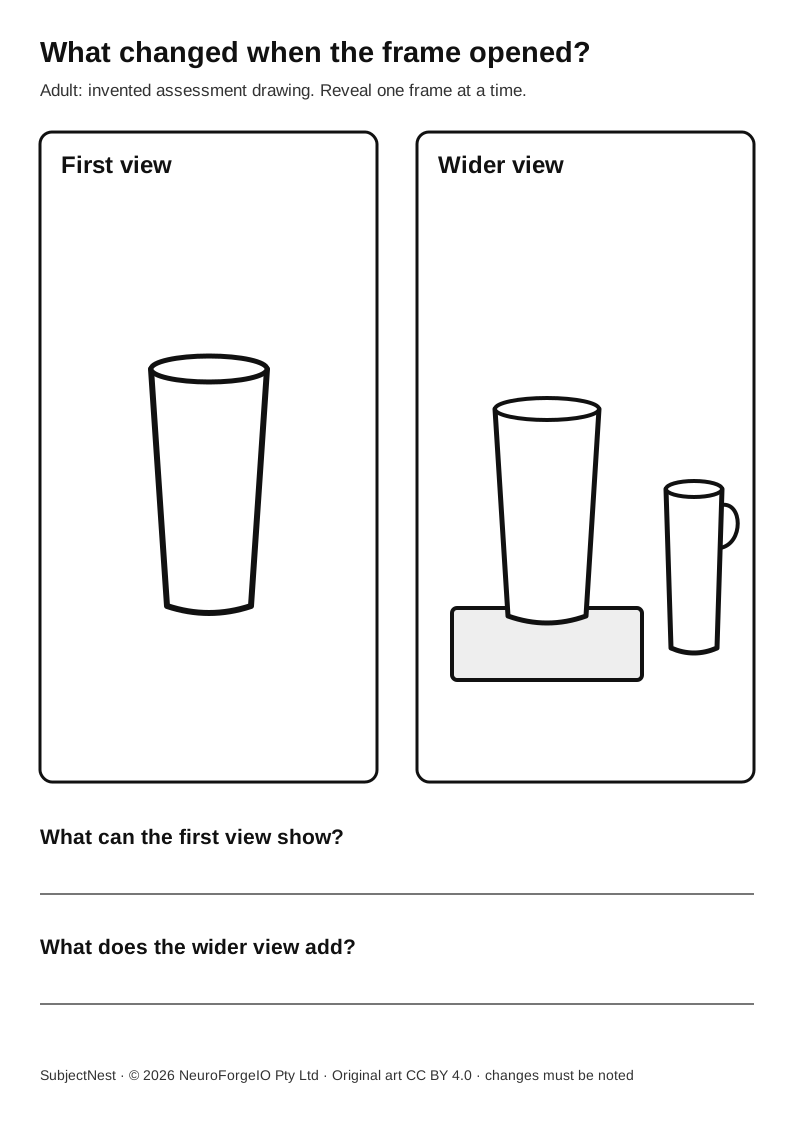
- Set purpose · 2 min. Say “Show me what you can read and what we should practise next. You may use your usual response tools. I can repeat a direction.” Tell children fiction D is made up.
- Fresh listening and reveal · 5 min. Read fiction D twice with print hidden. Show its first frame/description, then wider frame/description. Ask what changed and what remains unknown. Save independent answers before a model.
- Oral sound and word boundary · 5 min. Give the exact spoken sound/rhyme items and the I/It/in contrast in assessment B. Record whether a child's response came from ear, print, AAC or a prompted choice.
- Fresh print · 5 min. Show the five reserved unseen words, fresh controlled caption and fresh question one at a time without pictures. Hear individual reading in private rotations; the class may do quiet independent drawing while the teacher samples. Record the first sound path, then compare the caption with the wider view.
- Encode and communicate · 6 min. Hide print and dictate two target words; then present the question/need strips and ask a learner to arrange and explain a request with reason. Invite a brief adult-spoken reason, source check and any true real care-action note. Record child writing separately from an adult scribe.
- Exit and next step · 2 min. Ask the learner to reread one ay word and standalone I, then name one next practice target. Give one specific observed strength. Complete the rubric after the block.
Feasible administration: This 25-minute class block gathers shared oral, viewing, spelling and composition evidence. Hear every learner's approximately seven-minute private print and meaning sample during Days 86–90 independent-work rotations or extend the window. A chorus, copied card or answer after a content hint is marked accordingly. A missing accessible check remains not observed, not zero. The English assessment does not certify mathematics map paths, HASS place care, media arts or a full Foundation year.
Access routes: live adult text or locally made recording with transcript, plain/large/tactile cards, exact staged image descriptions/raised shapes, quiet private check, AAC/sign/pointing/typing/drawing and child-directed adult placement. Agree any modified phoneme evidence route with learner/family/specialist where necessary. Keep child evidence private.