Proposed codes: AC9EFLA05, AC9EFLA07, AC9EFLE02, AC9EFLY04, AC9EFLY05.
Goal: Independently read a controlled caption, then check what both invented image views add or leave unknown.
Prepare: mini-text W on a separate plain strip, two-view drawing face down, adult fiction A, word tiles A | cup | is | on | a | tray.
- Retrieve · 3 min. Read day/tray/see without pictures. Ask which team writes /eɪ/ and which writes /iː/ in those words.
- Listen for a question · 4 min. Reread adult fiction A. Ask “What question did Pip ask when only the middle was shown?” Accept “Is that everything?” or equivalent. Say a viewer can ask about what is outside a frame.
- Model start of caption · 5 min. Keep SVG hidden. Show A cup is on a tray. Point to capital A and the sentence stop. Model A cup with the earlier article /ə/ and /k/ /ʌ/ /p/; identify is as the previously taught /ɪz/ word. Let learner track each space rather than guessing from an image.
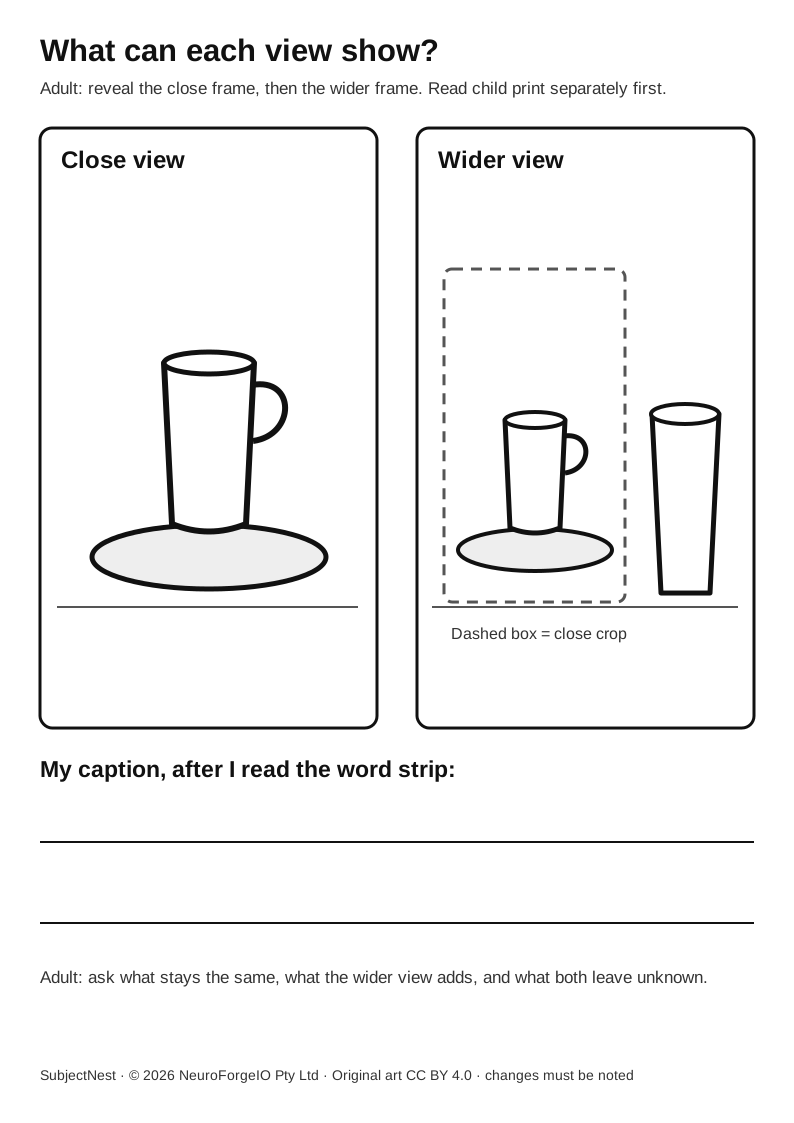
- Guide and independent read · 7 min. Child reads the full strip first; guide tray /t/ /r/ /eɪ/ after the first attempt if needed. Ask “Where is the cup according to these words?” Reveal close then wide drawing, or exact descriptions. Ask whether the sentence fits each and what the wide view adds. It adds a bin, not a new cup position.
- Check what is missing · 4 min. Ask “Does either view tell who placed the cup or what is inside it?” No. Ask if the caption says there is a bin. It does not. A child may add an oral question, adult-scribed separately; do not smuggle an untaught printed question into decoding.
- Exit check · 2 min. Show the caption alone again. Ask for an independent read of tray and one thing the wide image, but not the caption, showed. Record decoding and image contribution separately.
Access routes: plain large/tactile strip, high-contrast SVG, exact text descriptions revealed in two stages, raised cup/tray/bin paper shapes, quiet private read, AAC/sign/pointing/drawing for image difference. Do not score visual acuity as comprehension where the described route is used.