Proposed codes: AC9EFLA08, AC9EFLY04, AC9EFLY10, AC9EFLY11, AC9EFLY14.
Goal: Read standalone I as /aɪ/, distinguish it from /ɪ/ in It/in, and blend May using final ay before hearing a fictional place-care reason.
Prepare: separate I, It, in, May, may, see, map cards; joined ay tile; adult fiction C; covered request card.
- Retrieve · 3 min. Blend day/play/tray and see/need from taught parts; ask for ay /eɪ/ and ee /iː/. If need is not yet fluent, model its /n/ /iː/ /d/ path rather than assuming sight memory.
- Listen to the reason · 4 min. Read fiction C with child print hidden. Ask what Ari asked for and why. State that the teacher checks the actual map/path and safety; nothing in this invented story says a real school has that bin.
- Model I · 5 min. Show I alone: “This one-letter word says /aɪ/ when it names the speaker. In It and in, the i sound in our taught words is /ɪ/.” Contrast the complete words, not isolated capital shapes. Ask for /aɪ/ versus /ɪ/ with counters or choice cards.
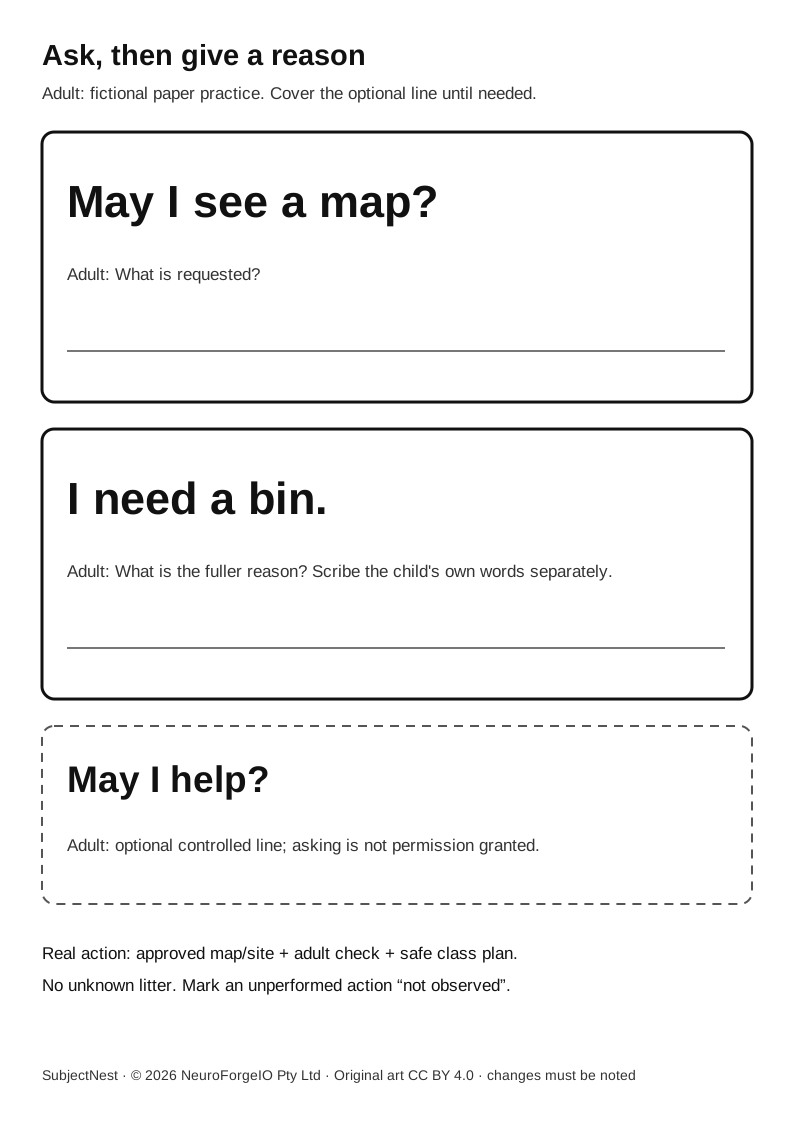
- Guide and try · 7 min. Blend May /m/ /eɪ/, pointing to capital M as the beginning-of-sentence form of /m/. Then show May I see a map? as a teacher-read question first. Child independently finds/reads May, I, see, map on separate shuffled cards; guide the entire line only after first word attempts. Do not claim may always means permission in every context.
- Meaning · 4 min. Ask “Who is I in Ari's pretend request?” The speaker, Ari. A child may use the same line to role-play asking for a paper map, but the actual adult must grant access. Ask what a real map would still need: current local approval and an adult check.
- Exit check · 2 min. Mix I, It, in. Ask for the standalone /aɪ/ word and an independent blend of May. Record distinct word responses and whether capital M was recognised.
Access routes: large/tactile I/It/in contrast, raised or digital ay tile, private word read, adult live story/transcript, AAC/sign/pointing for speaker and request. No learner gives a home route, goes outdoors or handles a discarded object.