Proposed codes: AC9EFLA05, AC9EFLA09, AC9EFLY04, AC9EFLY05, AC9EFLY06.
Goal: Decode a short permission request, use the question mark as an end cue and explain that asking is distinct from permission granted.
Prepare: separate strips May I see a map? and May I help?, period and question-mark tiles, request card face down, fictional paper map symbol.
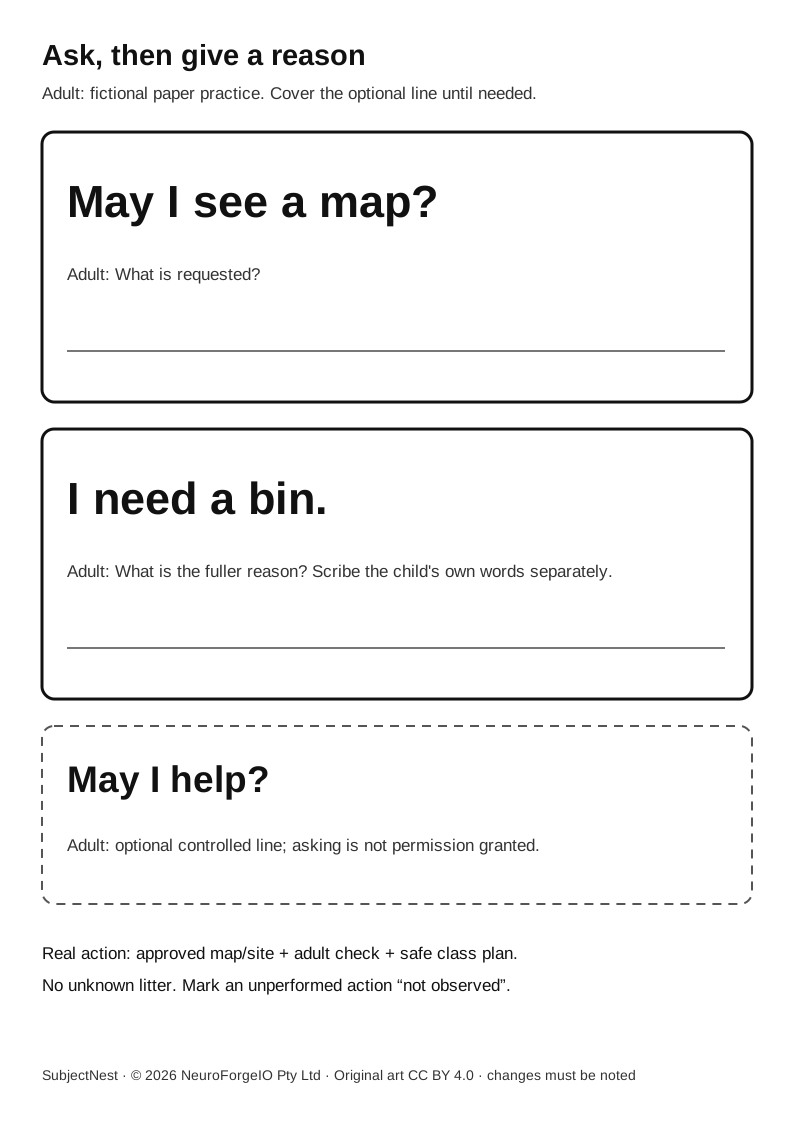
- Retrieve · 3 min. Reread I, May, see, map separately; contrast I with in. Record one exact uncertain sound link.
- Oral request · 4 min. Repeat Ari's request from adult fiction C aloud. Ask “Is Ari telling the teacher what to do, or asking?” Expect asking. Say a real teacher may say yes, no or another safe plan.
- Model end mark · 5 min. Display May I see a map? without SVG. Blend words in order, tracking gaps. Point to ?: “This mark closes a question. It is not another sound in map.” Compare with I need a map. as adult-read spoken contrast only unless child has read the full controlled sentence. Keep the question strip visible.
- Guide and try · 7 min. Learners first read May I help? independently, then May I see a map?. Offer a question-mark tile and full-stop tile to choose the matching end. Ask what is being requested in each. Reveal the request card only after word reading; the pictures/boxes are for user response, not guessing.
- Ask a real user safely · 4 min. A willing adult or puppet answers a fictional paper-map request. Learner explains by speech/AAC/sign which answer was given; mark it as a role play, not permission for a real outdoor trip. A genuine locally approved map can be offered separately under school rules.
- Exit check · 2 min. Show May I help? without model. Ask for a read, the question-ending mark and one reason why asking does not authorise action. Record word read and meaning separately.
Access routes: high-contrast/tactile punctuation, movable/digital words, exact text alternative, private user, AAC/sign/pointing/typing. Do not require an audible rising intonation or a public exchange to prove the written mark's role.