Keep these exact stories/items out of child view until the named day. A child can listen with transcript, tactile frames or image description, then answer privately by pointing, speech, sign, AAC, drawing or child-directed scribing. Read the adult prose aloud. Preserve the child's first independent order, words, source clue and any prompt before feedback. Record reading and spelling separately from adult-read comprehension. These samples do not diagnose a learner, certify full code attainment or establish a cultural/digital/physical performance.
Day 125 · fresh three-frame picture story
Adult-read, twice: “Noor made a paper night-sky story for an invented class. In the first frame, a small paper star sat on a dark paper sky. In the middle frame, a large paper cloud partly hid a new moon picture. A character said, ‘I see it!’ In the last frame, the cloud moved aside and the whole moon picture showed. Noor shared the paper frames with one chosen school adult. This is an invented picture story, not a real report about the sky.”
Print and cut the teacher-only original three-card sheet, then mix cards before child view: star on dark sky, moon partly behind paper cloud with bubble “I see it!”, cloud aside, whole moon picture visible. The intact A4 sheet shows correct order; never show it uncut as the first task. An adult may describe the images before the child orders them if that is the accessible route; log description/support. Ask the child to order beginning/change/ending; retell what changed; point out one thing the middle image shows that the speech bubble alone does not; and name the chosen audience from the source. Ask whether the story says the moon is hidden every real night.
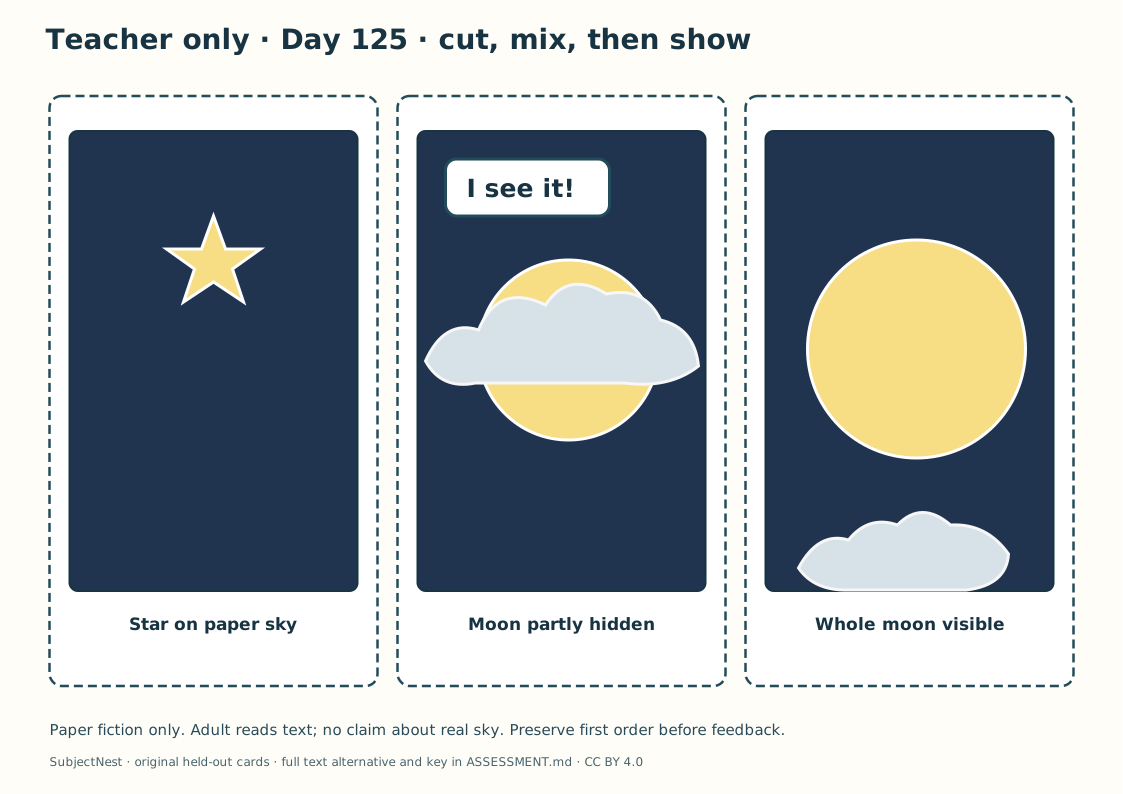
Key: first star, middle cloud partly covering moon, last cloud aside and whole moon visible. The cloud/moon visibility changes. The middle image shows a moon partly hidden by a paper cloud; “I see it!” alone does not identify what “it” is or how much is visible. Noor shares with one chosen school adult. No claim about all real nights follows from paper fiction. A child may give another accurate image detail as long as it comes from that described frame, not an invented fact. Credit a coherent voice/AAC/sign/tactile retell; do not score spelling from a scribe.
Diagnostic next move: order reversed → two-frame before/after with a different invented object, then three; event clear but ending absent → ask what changed after the middle and recheck another story; image/word conflated → hide image, say “I see it!”, then show new image and ask what extra it tells; audience invented as online/public → reread the chosen-adult clause and discuss local consent, then a new audience choice; unsupported sky claim → distinguish pretend picture from observed world. If access to the image description was insufficient, change mode and mark original item not observed.
Day 130 · fresh rule, reason and taught-print check
Adult-read, twice: “In a made-up paper game, a visitor marker starts at a square and goes to a circle. Each player gets a turn giving a direction. Before a turn, a player points to the page top so the listener knows which way the map faces. Any player can ask to hear or see the instruction again. A learner said, ‘That lets me check where to go without rushing.’ The group used these rules for the paper game. The story does not tell us a safe route through a real room.”
Ask the child to (1) report one stated rule exactly enough that a new listener could try it; (2) give the stated reason for pointing to page top or allowing a repeat; (3) suggest one clear, fair rule for a new paper-marker game with a start and turn; and (4) say what the source does not establish. Record source rule separately from child's new proposal. For a peer voice feature under AC9EFLY07, only score if it was actually delivered to a peer by voice; the private/AAC route is valid participation but different evidence.
Key: stated rules include start at square → circle, take turns, point to page top before a turn, and permit a repeat. A source-grounded reason is helping a listener orient/check and join without rushing. A new rule is acceptable if it identifies who can act, what action/route is allowed and a reason that improves safety, clarity or access; it need not match one adult-preferred phrasing. The story cannot establish a real-room safe route or that every group should use identical movement. “Be fair” alone is too vague for a usable rule; ask “What can each player do?”
Held-out print: show pin, tap, nod one at a time, no pictures/sentence, in a new order. The short-vowel/single-letter links must be at the child's taught point. With print hidden, dictate tap for child-controlled letters/tiles or handwriting. Expected blending/segmentation: /p/ /ɪ/ /n/, /t/ /a/ /p/, /n/ /ɒ/ /d/ in the selected classroom pronunciation; check local accent and never score motor difficulty as sound–letter knowledge. Record independent first sounds, blend, grapheme selection, support and correction. An untaught item is not observed, not wrong.
| Evidence seen | Next teaching and fresh recheck |
|---|---|
| Repeats a rule but gives no actionable step | Model start/action/turn on a new two-symbol paper game; ask a listener to try the revised rule. |
| Calls a rule fair without a reason | Contrast a rule that excludes a response mode with one allowing it; ask who can now join, then recheck with a new scenario. |
| Omits a source boundary | Practise “this paper story says …; it does not tell us …” using a different made-up map. |
| CVC sound or spelling relation missed | Reteach one sound–letter link explicitly with familiar words, then use a new unseen CVC; retain first and revised attempts. |
| Account, reason and print are independently secure | Ask child to compare two possible fair rules for a new paper game and explain tradeoffs; keep routine sound review. |
Private record: learner code/date ; chosen access route ; Day 125 first frame order/detail/audience/source limit ; Day 130 first stated rule/reason/new rule/source limit ; first print blend and child spelling ; prompt/replay ; revision ; next action/recheck date . Follow school storage, consent and safeguarding procedures. Do not photograph a child or post work publicly for this check.
Original stories and keys © 2026 NeuroForgeIO Pty Ltd, SubjectNest, CC BY 4.0. Credit, link and indicate changes. Source and use limits in README.md.