Teacher draft. Ten distinct 25-minute lessons continue Days 111–120. Week 25 plans a three-part original picture story and checks what images and words each tell an audience. Week 26 gives a clear rule and reason for an accessible fictional movement game, then listens to a different view. Adult-read prose carries the rich ideas; child print stays at individually taught links. This is one fortnight, not a full English program or a validated classroom result.
| Open | Use |
|---|---|
| Daily scripts | Timed model, guide, independent attempt, check and next action. |
| Adult texts and print inventory | Three original situations and exact visual text alternative. |
| Learner cards | Clean child prompts; no teacher key. |
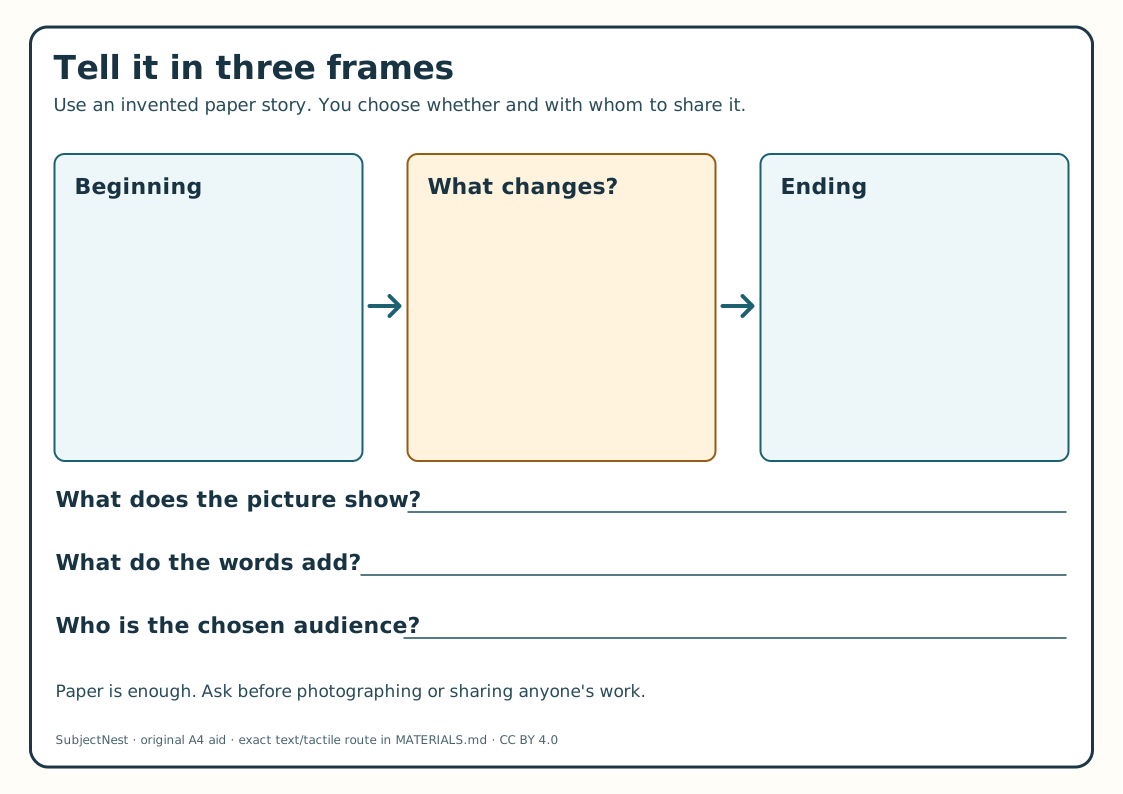
| Story-to-audience A4 mat | Original blank three-frame storyboard and audience/source questions. |
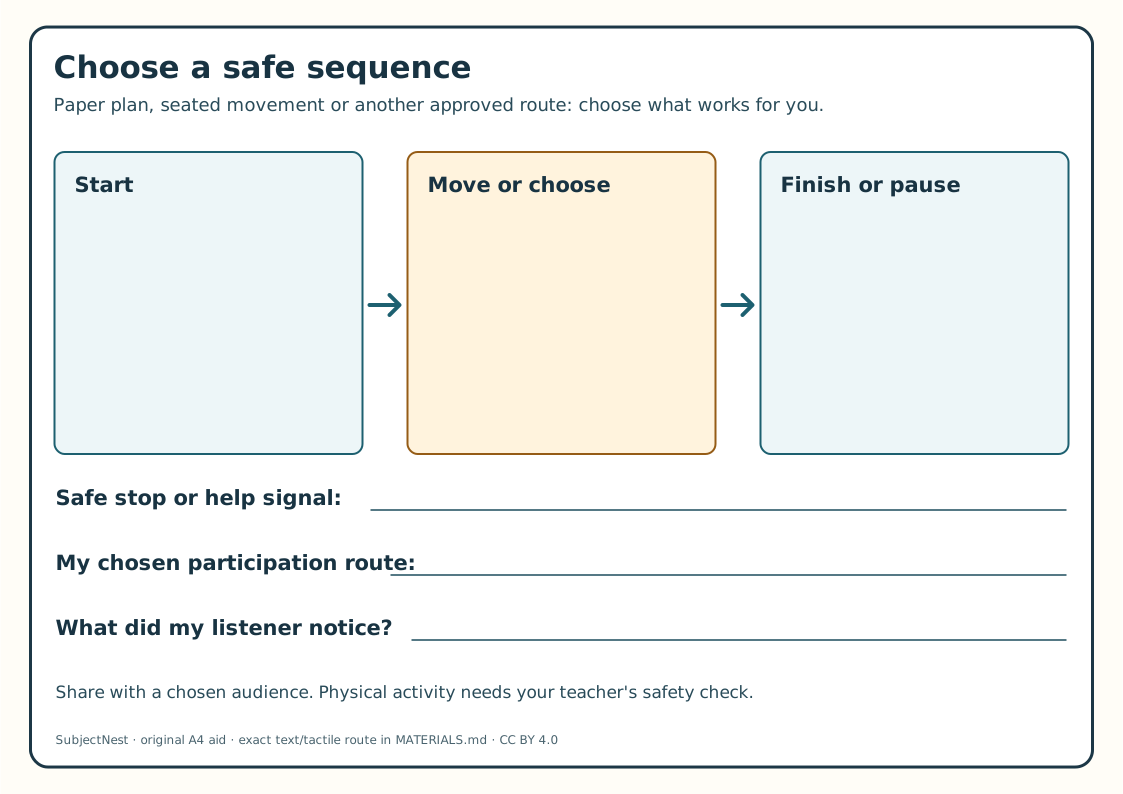
| Movement sequence A4 mat | Original blank choice/safety sequence for Week 26, with a text/tactile equivalent. |
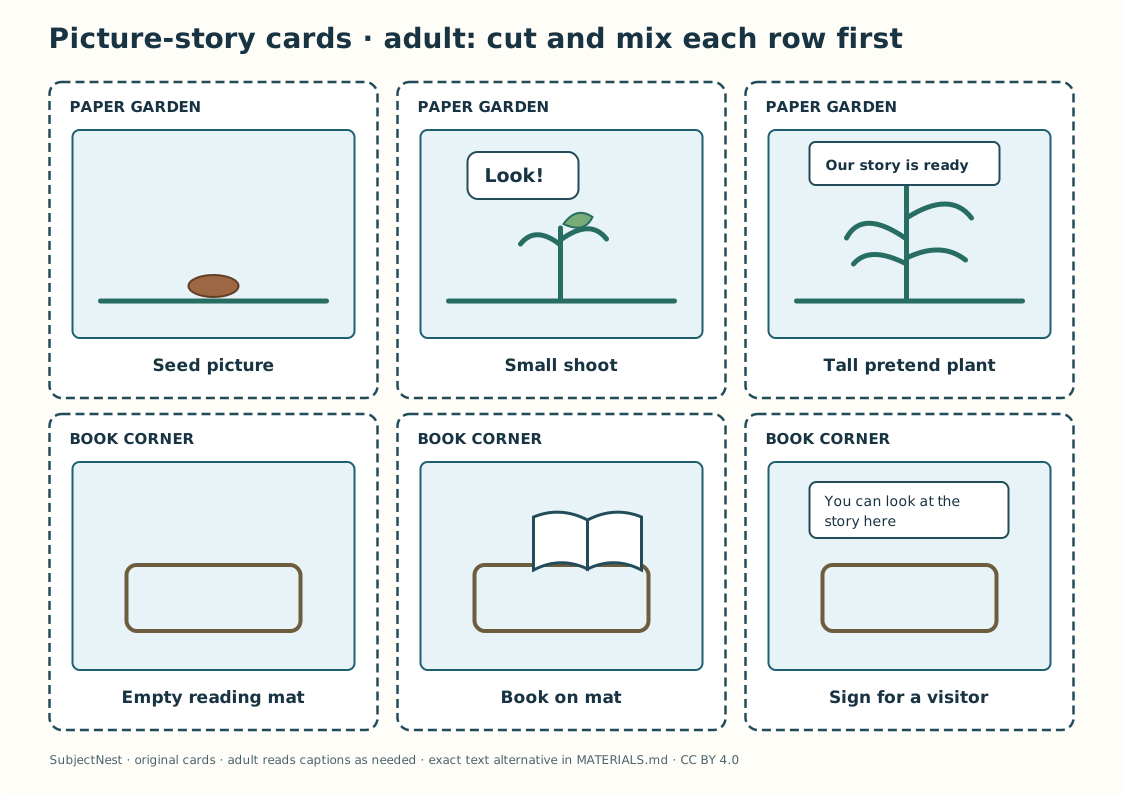
| Cut-out practice story cards | Six original frames for paper garden and book corner; cut/mix each trio before showing. |
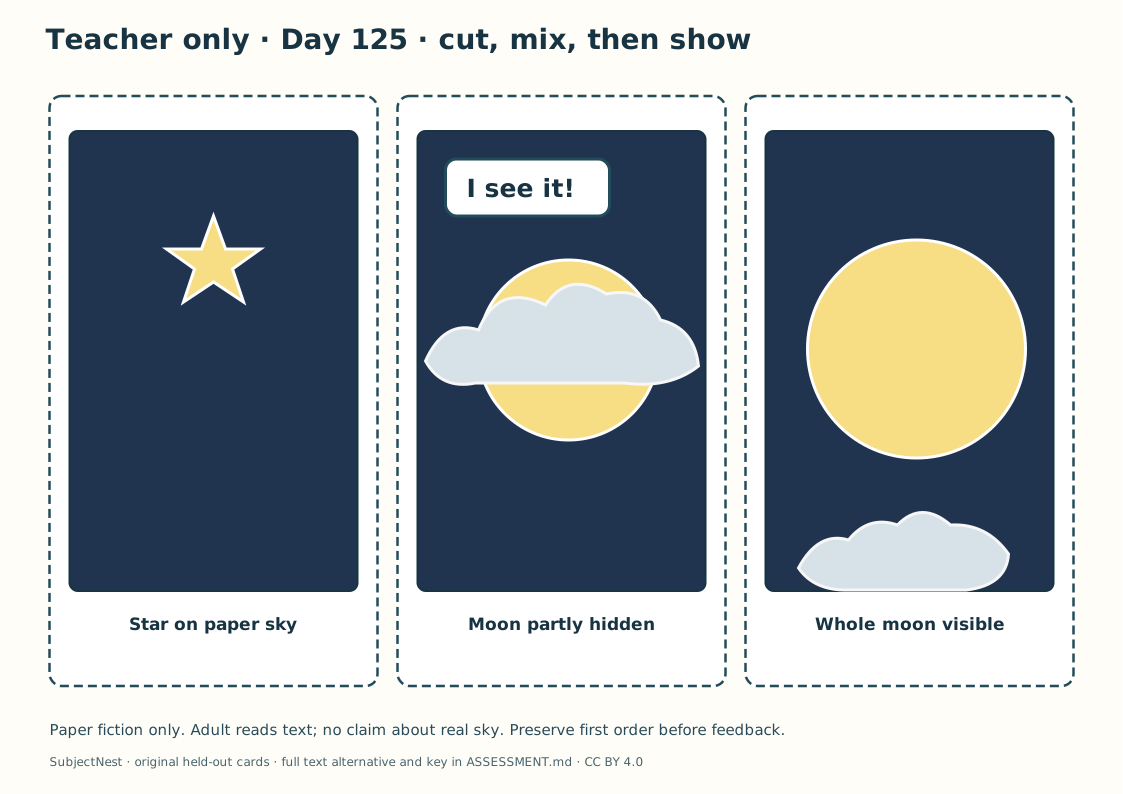
| Teacher-only Day 125 image cards | Unseen assessment visuals; keep behind the assessment page until use. |
| Assessment | Unseen Days 125/130, exact keys and diagnostic next moves. |
| Source, rights and role walkthrough | Pinned code review and honest use limits for both subjects. |
| Week 25 picture-story guide and Week 26 fair-play guide | Five 35-minute blocks each; separate technologies/media-arts and dance/HPE records. |
Print boundary: Revisit previously introduced single-letter CVC links, selected ee in see, final ay in day/play, and known A/a, I, is, on, in, can. Use actual taught-point evidence before offering map, mat, cap, cup, red, ten, see, day, play, am, sad, sit, nap, stop. No new sound–letter spelling is assumed for every school or child. Adults read storyboard, software, audience, rule, fair, movement aloud. In a child-composed sentence, adult scribing is not evidence that the child decoded or spelled it.
National curriculum proposal: partial Foundation links AC9EFLE03 (story events and beginnings/endings), AC9EFLA07 (words and images), AC9EFLY02 (listen and interact), AC9EFLY04 (read taught print and check meaning), AC9EFLY05 (understand heard/viewed text), AC9EFLY06 (shared short-text edit), AC9EFLY07 (short communicated account), AC9EFLY10 (oral sound work where observed), AC9EFLY12 (CVC print where observed), and AC9EFLY13 (child-controlled spelling). Exact Foundation code/year and description checked in the official ACARA v9 curriculum workbook, retrieved 29 September 2026, SHA-256 db446882d2c00cf7c085a03e250e2442fda6c44011fc114680c46c1dc7a822c3. These are partial proposals, not attainment or ACARA/state approval. AERO early literacy guidance informs the oral/explicit-print mix; AERO has not tested this pack.
Access and privacy: every story and game is invented. A child can create with paper, large images, tactile frames, AAC/sign/voice, drawing or child-directed adult placement. Digital capture is optional only under school consent/storage policy, with no public upload. No child must reveal a family event, location, image, identity, disability, movement ability or cultural practice. Do not treat a quiet or assisted communication route as lesser participation. Record what the child independently controlled and which specific curriculum feature was actually observed.
Original prose, checks, cards and vector aid © 2026 NeuroForgeIO Pty Ltd, SubjectNest, CC BY 4.0. Credit, link the licence and indicate changes. ACARA, AERO and QCAA linked materials retain their own terms. Human educator, access, local syllabus, safeguarding and classroom trial review pending.