Five 35-minute integrated blocks, Foundation / Queensland Prep · teacher draft. Pair with English Days 121–125 and mathematics Days 121–125. The original paper-garden and book-corner texts, cut-out story frames, storyboard, cut-out picture choices and data mat make a complete unplugged route. A locally approved school device can add digital-system exploration; paper planning alone does not evidence the digital systems code.
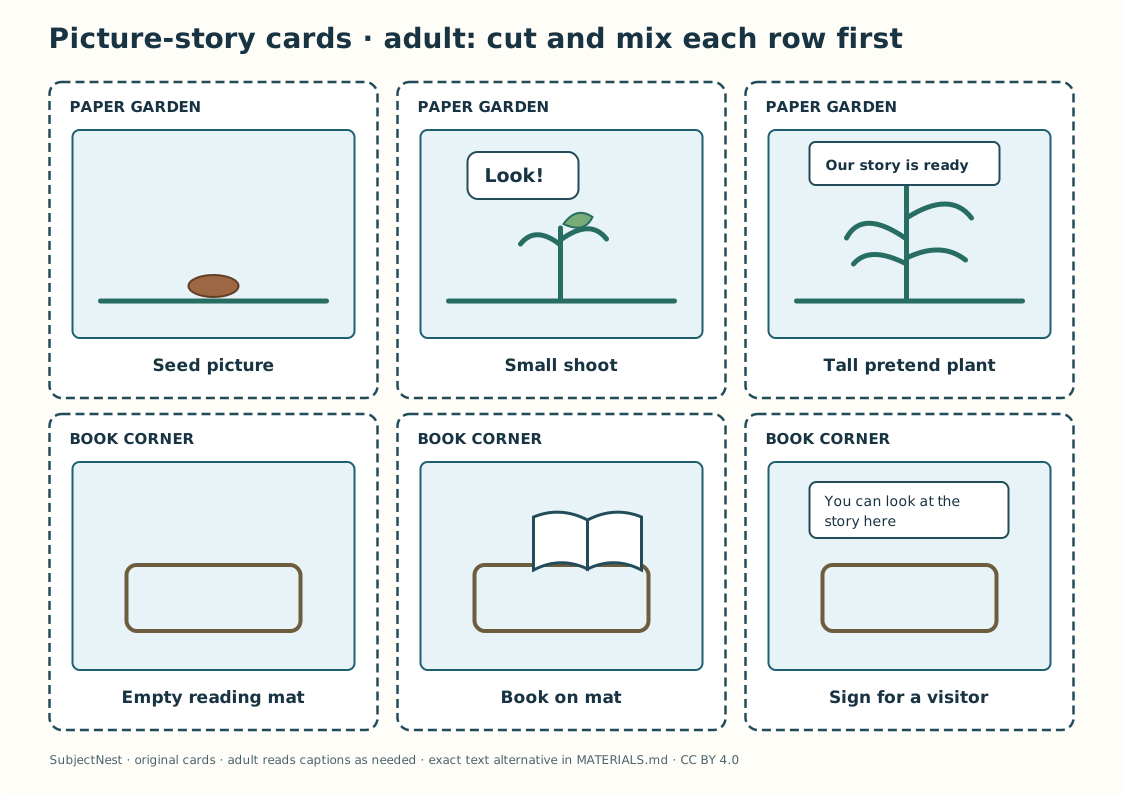
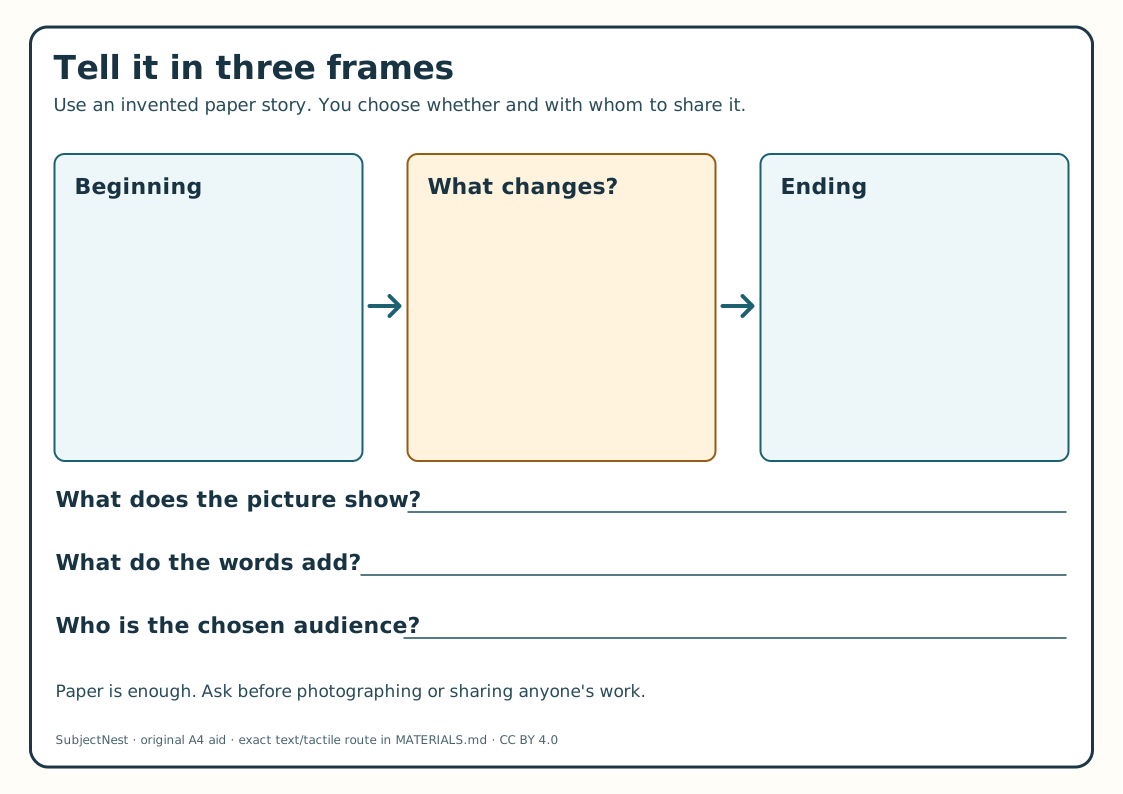
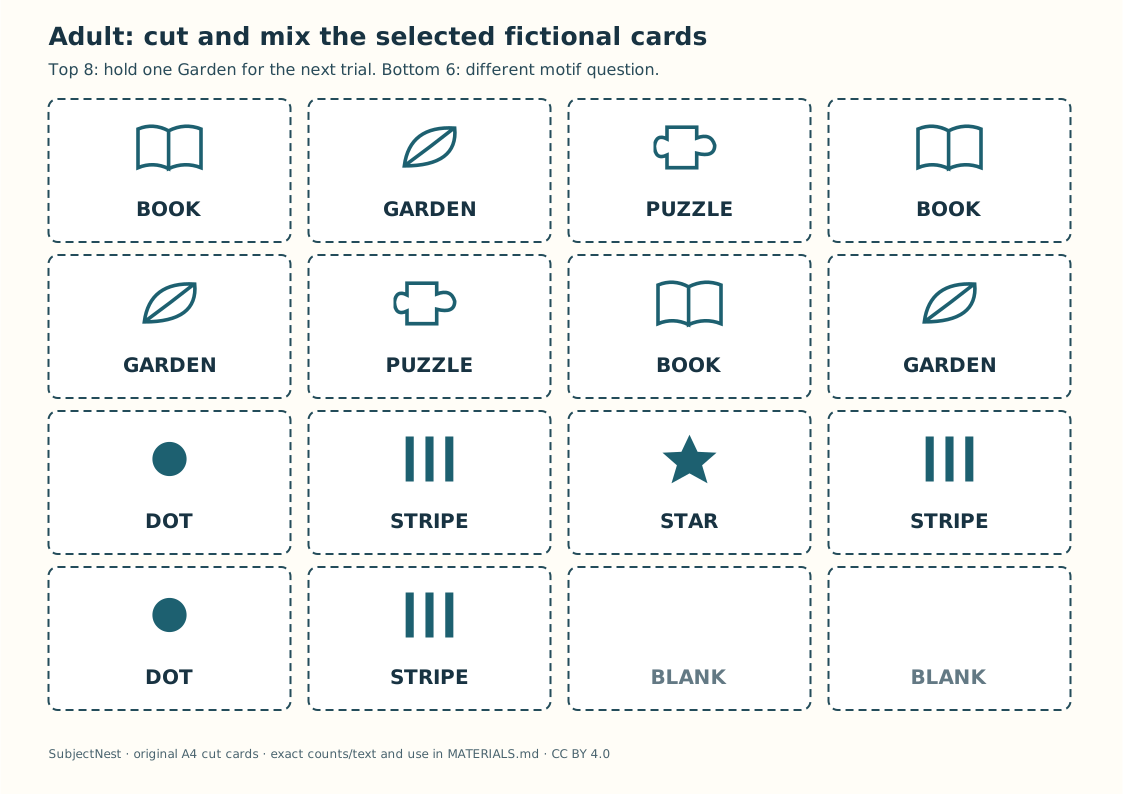
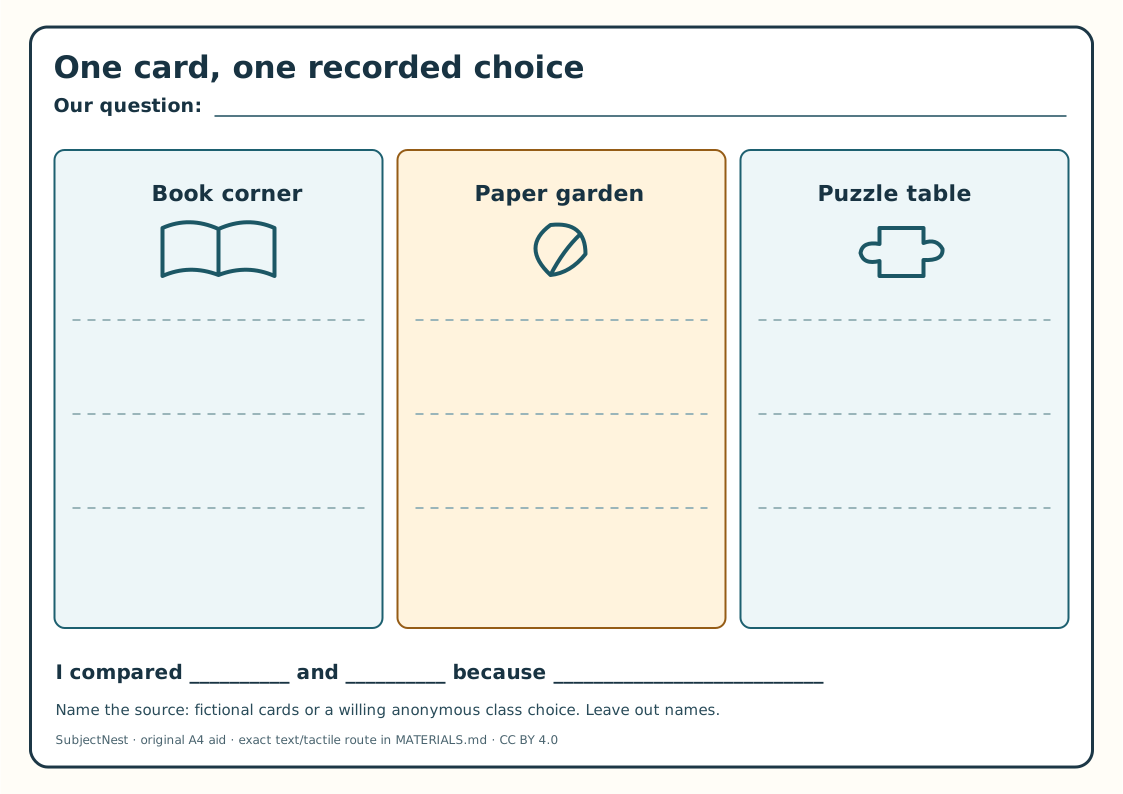
Prepare: three large blank frames; original neutral paper icons; large category cards; agreed small audience; a school-approved offline device only if staff have checked child access, consent, storage and how to keep all images free of faces/names. Example digital system: a school tablet or camera with a local story/camera program. Point to physical hardware (screen/lens/button) and distinct software (the program that captures/arranges a frame); using a paper frame is not the same as exploring either. No logins, public upload, tracking or personal media are required. If the suitable device is unavailable, record AC9TDIFK01 not observed while all children complete the original paper work.
| Day | Thirty-five-minute route | Distinct evidence and next teaching action |
|---|---|---|
| 121 · Paper first | 5 min ask what a beginning/change/ending story needs; 7 min adult reads the paper-garden fiction; 8 min model three large blank frames with original paper icons; 10 min child orders, changes or invents a three-frame paper story in chosen mode; 5 min listener says what changed and what is still unclear. | Keep the child's first frame order and one child-directed revision. This is English/media-arts planning, not digital-system exploration. If the middle has no change, compare first and last and ask what could happen between. |
| 122 · Which part of the tool does what? | 5 min name why the story may need a chosen audience; 7 min show approved offline device hardware, or describe only as rehearsal if unavailable; 8 min adult distinguishes physical screen/lens/button from local software program and models a paper-card-only capture; 10 min willing child chooses paper or approved device to sequence original frames, naming one part/function where explored; 5 min ask which purpose the chosen tool served and where the image stays. | Save device actually explored, hardware/software part named and child purpose; no photo of a learner. A device picture or adult demonstration alone is weaker evidence than child exploration. If no approved access, record AC9TDIFK01 not observed; paper work remains fully available. |
| 123 · A question about story choices | 5 min state the familiar investigative question; 7 min collect the original fictional setting cards or a new consented anonymous class set, with source named; 8 min sort one image/object per response; 10 min child compares two groups and chooses one setting for a new paper story, without claiming the data dictate everyone's taste; 5 min ask what the display cannot tell. | Keep maths sort/count/reason separate from art choice. Fiction is labelled fiction; a child may pass on real voting. If an icon is double counted, recheck one-card-per-response with a new display. |
| 124 · Make for a chosen listener | 5 min compare two original picture-story purposes; 7 min child selects paper garden, book corner or their own neutral fiction; 8 min child plans image/word parts and checks that each frame adds meaning; 10 min child creates or revises a paper three-frame work, optionally capturing only the paper with approved offline device; 5 min child shares with a chosen adult/willing peer or uses private showing. | Record what the child made, image/word choice, audience and feedback. Ask what idea it helped this actual small classroom audience understand; preserve the child's bounded response. Adult-scribed words are not child spelling. No public posting is needed. |
| 125 · Compare two ways to tell it | 5 min choose an earlier practice fiction, separate from held-out English/maths checks; 7 min child shows paper frames to a chosen listener; 8 min if an approved device was explored, compare its specific function with paper, otherwise compare two paper layouts; 10 min child revises one frame/caption after listener feedback and compares a new five-card practice subset: two book, one garden, two puzzle; 5 min record one thing the tool or image made clearer and one limit. | Run after the separate Day 125 subject checks. In the new practice subset, book and puzzle are equal, garden fewer; label it fictional. Do not reveal held-out stories/cards beforehand. Store only permitted work; confirm device retention rule. Mark arts/audience/digital and maths separately. |
Curriculum and evidence boundary: AC9TDIFK01 is recognise and explore digital systems (hardware and software) for a purpose. A paper storyboard is a strong plan but alone does not evidence this code; only record actual approved exploration of both aspects and purpose. Media Arts AC9AMAFD01 (develop ideas), AC9AMAFC01 (create to communicate), and AC9AMAFP01 (share with an audience) are sampled by child-controlled picture work. AC9AMAFE01 concerns why arts are important for people and communities; a fictional class audience prompts discussion, while the child's actual shared work and bounded account of what it helped this small group understand may sample the code. Neither establishes another community's value or cultural authority. Optional locally sourced, permitted community art and a child's bounded response require separate review. Mathematics AC9MFST01 requires a stated familiar question plus collection, sorting and comparison of image/object data; a decorative chart alone is insufficient. English AC9EFLE03/AC9EFLA07 sample event order and image-word meaning. Exact Foundation code/year checked in the official ACARA v9 workbook, retrieved 29 September 2026, pinned SHA-256 db446882d2c00cf7c085a03e250e2442fda6c44011fc114680c46c1dc7a822c3. Partial proposal only; check local syllabus and device policy.
Access, culture and rights: large/tactile frames, image description, adult reading, child-directed placement, speech/AAC/sign/drawing and quiet private audience. Do not require taking a child's photo, uploading work, a home device or public performance. Do not copy a cultural story, art form, symbol or First Nations language without authority and permission; these scenarios are original invented classroom work. Original guide and linked authored aids © 2026 NeuroForgeIO Pty Ltd, SubjectNest, CC BY 4.0; credit, link and indicate changes. ACARA retains its terms. Human educator, access, technology governance, cultural and classroom review pending.