Teacher copy. Read the rich texts aloud; offer the learner cards separately for print. Keep the held-out checks unseen until Days 125/130. Every named person, class, picture, game and device example here is invented. No personal photograph, online account or cultural performance is needed.
Adult story A · Three frames for a paper garden
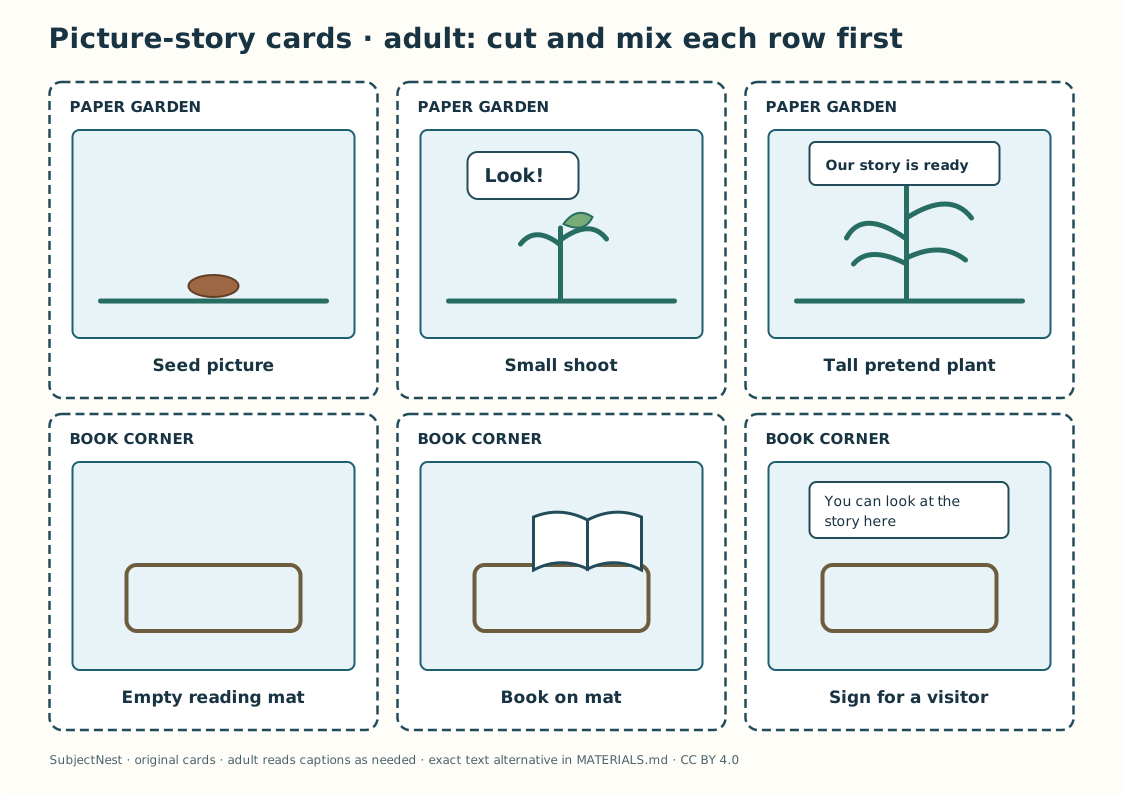
A made-up class wanted to show how its paper garden story changed. In the first frame, Kai drew a bare page with one seed picture. In the middle frame, Kai added a little paper shoot and a speech bubble saying, “Look!” In the last frame, Kai drew a tall pretend plant and a sign reading “Our story is ready.” A visitor saw only the last frame and thought the plant appeared at once. Kai showed the earlier frames so the visitor could see the change. The pictures gave a sequence; the short words made Kai's character notice it. The story does not claim a real seed grows that fast.
Check: Which frame begins the story, what changes, and how does the ending differ? Compare what the images show with what the speech bubble says. The printed speech bubble is adult read unless its words are at the child's taught point. “Garden” is a drawn story setting, not a science growth timetable.
Adult story B · The book-corner sign
In another invented class, Ada made three paper frames. First the reading mat was empty. Next a book picture was placed on it. At the end, a card said, “You can look at the story here.” Ada made one version with a bright book image and another with words only. A friend said the image helped them find the place; another said the words helped them know what to do. Ada kept both. The class could display a paper copy to a chosen school audience, but no learner had to appear in a photograph or upload anything.
Compare: Both stories use pictures and words to give meaning, yet their purposes differ: one shows a change; one helps a visitor use a space. These are original fictional school examples, not evidence of how every community makes or values media art. Ask what a willing audience might need and what the text actually says.
Ready-to-print practice cards: six original cut-out frames show story A's seed picture → small shoot and “Look!” bubble → tall pretend plant and “Our story is ready” sign, plus story B's empty reading mat → book on mat → visitor sign “You can look at the story here.” Cut and mix each three-card set before child view; the intact A4 sheet shows their correct order. Adult reads captions and bubble as needed. For a nonvisual route, give three numbered tactile positions and mix three separate large object-description cards from the chosen story; describe each without naming its ordinal place. The cut-out sheet is practice; the Day 125 image cards are separate and held back.
Adult story C · The paper-path game rule
Tali's imaginary class set out a star, a book and a cup on a paper path. One child suggested a race to the cup. Tali noticed that children could join in different ways and said, “Let's take turns giving a path. A person can move the paper visitor, point, sign or tell another person where to put it. We start at the star, pause at the book and finish at the cup. No one has to rush.” A child asked, “What if I miss the first direction?” Tali added, “You may ask to hear it again.” They tried the revised rule with a paper visitor before any optional real movement. The story does not say every group must use this one rule.
Rule/reason: The rule has a start, two stops, turn-taking and a repeat route. The reason is access and shared participation, not “faster wins.” A listener can ask for a repeat. A physical movement game needs a locally approved safe layout and individually suitable movement options; the paper route alone does not prove physical movement or Dance outcomes.
Oral scenarios for varied practice
- Picture change: a paper moon card is missing from frame two. Does the source establish where it went? Ask before inventing an explanation.
- Useful sign: an imaginary puzzle-finish display needs a beginning frame so a visitor can tell what changed. Compare image, caption and audience need.
- Fair route: a group wants one person's favourite movement to be the only way to participate. Invite a rule that keeps the goal while allowing more than one safe movement or communication mode.
These are three different domains: story creation, communication to an audience and access to a game. Do not copy or label a cultural dance. Child-created movement ideas require local safety checks and consent to sharing.
Controlled child print
Read the adult stories aloud. Before showing a relevant picture, hear a child's first attempt with printed words only if the constituent links were taught; otherwise use adult reading without a decoding score. A child may convey the richer story orally/AAC while still practising simple print.
| Day | Child line or words | Boundary |
|---|---|---|
| 121 | map, mat, cap, cup | CVC review; show a picture after first blend. |
| 122 | I can see a map. | Match to a paper picture only after reading. |
| 123 | day, play, see, ten | Hear the selected ay/ee links; do not infer all spellings of these sounds. |
| 124 | A red cup is on a mat. | Child checks image/word fit and suggests one meaningful edit. |
| 125 | map, cup, see | Warm-up; separate unseen oral/picture check. |
| 126 | I can stop. | Fictional paper visitor's line; no child must physically stop on command for a reading score. |
| 127 | A cap is on a mat. | Check the pictured relation after first read. |
| 128 | I can see ten. | Only claim if a ten-object display is actually present; otherwise discuss mismatch. |
| 129 | stop, sit, nap, play | Shuffle; adult explains game rules orally. |
| 130 | held-out CVC items in Assessment | Never rehearse the assessment set as learner-card print. |
Print/meaning note: stop contains adjacent consonants; only offer it as independently decodable if those links/blending have been taught. Otherwise adult reads it, and child blends CVC alternatives. I can see ten includes a known high-frequency I/can and taught ee; check actual inventory. Do not advance a child solely because a memorised line is fluent.
Exact SVG text/tactile equivalent
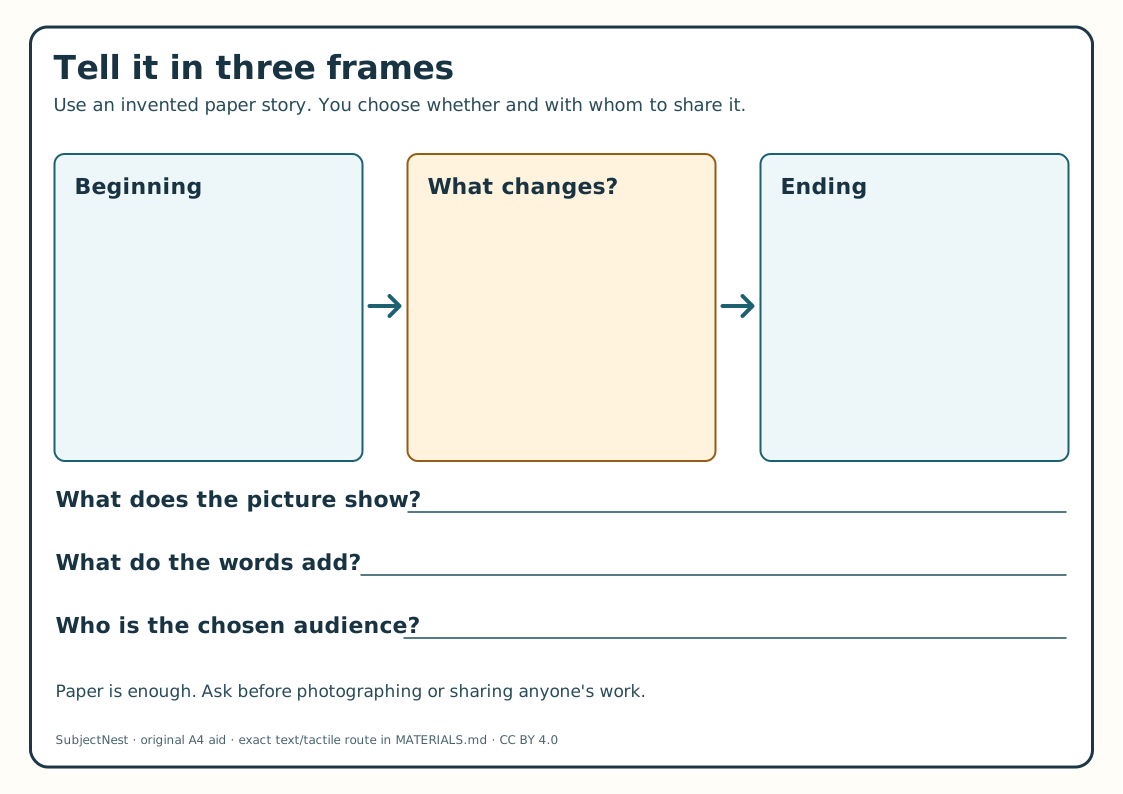
The A4 landscape storyboard has three large blank frames labelled Beginning, What changes?, Ending, connected by arrows. A lower panel has three blank prompts: What does the picture show?, What do the words add?, Who is the chosen audience? No story answer, face, community symbol or device brand is printed. Nonvisual route: three raised/card positions read in order; give moveable object cards and three spoken prompt cards. A child can direct an adult to place a card. Colour is decorative; labels and order carry the meaning. Use an original child-created paper story; photograph only when consent, school storage rules and purpose are clear. Nothing here requires public posting.
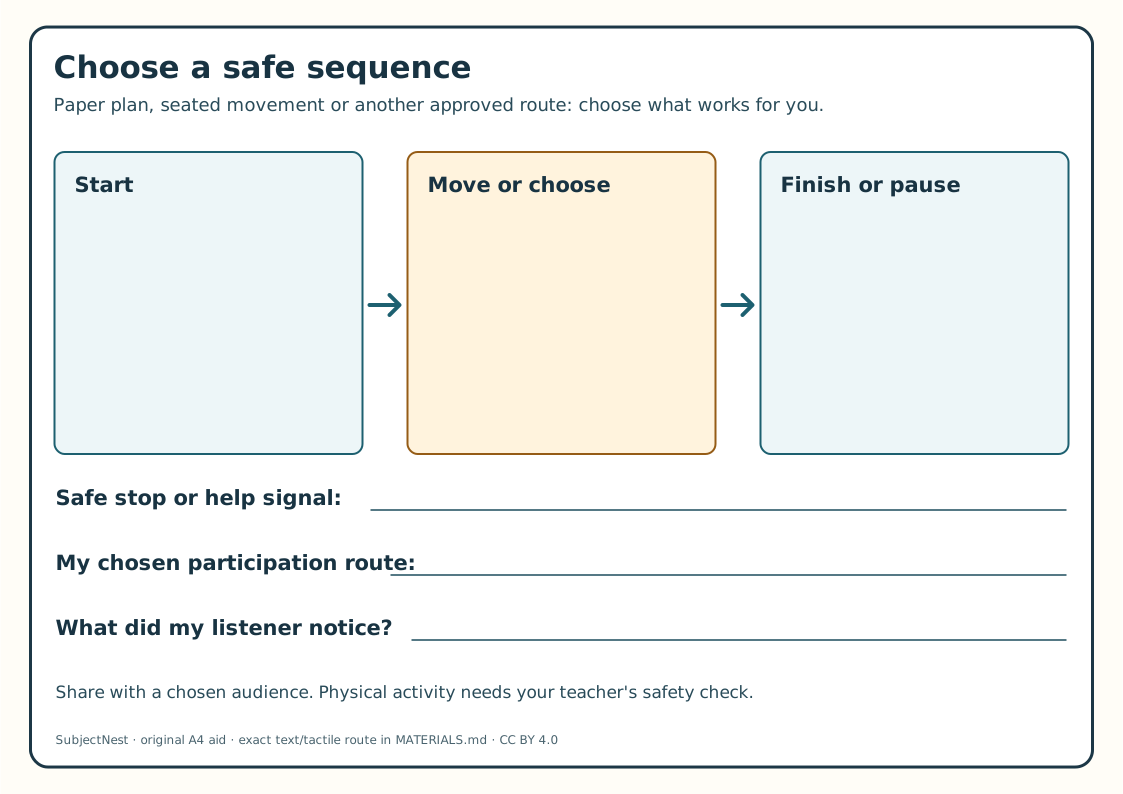
The separate A4 movement sequence mat has three large blank boxes labelled Start, Move or choose, Finish or pause, in that order. Below are blank prompts Safe stop or help signal, My chosen participation route, What did my listener notice? There is no drawn body, required motion or cultural image. Nonvisual route: three raised positions and three spoken prompt cards. A learner may make a paper plan, direct an adult, or physically try a locally safe movement; the teacher records which actually occurred rather than equating them. An adult checks the stop signal and physical access before any movement.
Original teacher texts and print inventory © 2026 NeuroForgeIO Pty Ltd, SubjectNest, CC BY 4.0. Credit, link and indicate changes.