Each lesson is 25 minutes. Use the original adult-read texts and print inventory, clean learner cards and storyboard mat. Keep teacher-only fresh checks unseen until Days 125 and 130. The child controls first story/print responses before correction; log exact prompt and mode. Spoken/AAC story vocabulary is not a claim that the child independently read its spelling.
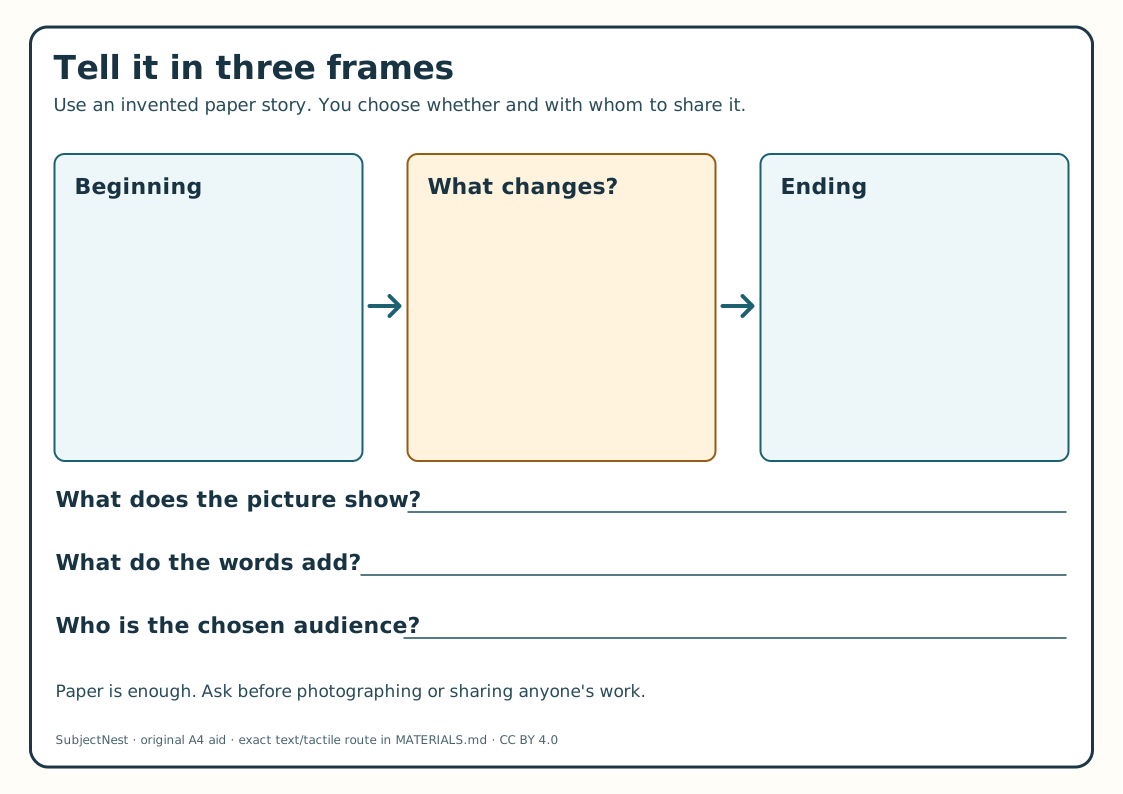
Week 25 · Day 121 — A story has a first, change and last
Goal: identify beginning, changed event and ending in an adult-read original picture story. Proposed codes: AC9EFLE03, AC9EFLY05, AC9EFLY10, AC9EFLY12. Prepare: Card 121, adult story A, three large blank frames.
- Sound then print · 3 min. With print hidden, say /m/ /a/ /p/ and hear one oral blend; then shuffle map, mat, cap, cup without picture and hear a first print blend at the child's taught point. Log oral and print evidence separately.
- Listen · 4 min. Read paper-garden story A. Say “paper garden” is an invented picture, not a real plant's growth clock.
- Model · 5 min. Place bare page/seed, added shoot, tall pretend plant as beginning/change/ending. Name what the source actually says at each point.
- Child try · 7 min. Mix adult-read event cards. Child orders and retells by voice, AAC, sign, tactile cards or child-directed scribe; record first arrangement and one source clue.
- Check · 4 min. Ask whether the last frame alone tells a visitor how the drawing changed. Expect no; earlier frames show the sequence.
- Exit · 2 min. Child names one thing that changed. If first/last are swapped, teach two-frame contrast tomorrow before three.
Week 25 · Day 122 — Image and words each add something
Goal: distinguish what a story image depicts from what its adult-read words add. Proposed codes: AC9EFLA07, AC9EFLY04, AC9EFLY05. Prepare: Card 122, story A first/middle images and caption/speech cards.
- Print retrieve · 3 min. Show I can see a map. before any map image; hear map/see separately if line is memorised.
- Model · 4 min. Show story A middle frame without speech bubble. Say the image shows a paper shoot; then read “Look!” and explain a character calls attention to it.
- Guide · 5 min. Hide image and say “Look!” alone. Ask what the words do not identify; reveal a different original paper object image to show why the picture matters.
- Child try · 7 min. Give two new teacher-described frame/caption pairings from story A. Child says one visible detail and one thing the words add or fail to tell, preserving source versus guess.
- Check · 4 min. Ask if an image can show the paper plant's real growth time. Expect no; this is an invented sequence without measurements.
- Exit · 2 min. Child completes “The picture shows ; the words tell .” Use a single labelled frame next time if both roles are blurred.
Week 25 · Day 123 — Two stories can serve different audiences
Goal: compare purpose and selected audience of two original picture stories without inventing a community claim. Proposed codes: AC9EFLA07, AC9EFLE03, AC9EFLY02. Prepare: Card 123, adult stories A/B and two purpose cards.
- Print retrieve · 3 min. Shuffle day, play, see, ten. Hear a blend for ay and ee at the taught point, with pictures covered.
- Listen · 4 min. Read Ada's book-corner sign story B; ask what the first/last frames show.
- Model · 5 min. Compare A “show a paper change” with B “help a visitor use a book corner.” Both combine image/words; neither stands for every community's art.
- Child try · 7 min. Child picks one original story, gives a beginning or ending clue, names its stated/possible chosen audience and says how image or words help that listener. Record exact wording.
- Listen to difference · 4 min. Adult offers another supported answer; child asks or answers a respectful clarifying question without being required to agree.
- Exit · 2 min. Child says one way the stories' purposes differ. If purpose is guessed from colour alone, revisit a stated source clause.
Week 25 · Day 124 — Plan your own paper story
Goal: plan beginning/event/ending for a fictional three-frame work and direct one meaningful shared edit. Proposed codes: AC9EFLE03, AC9EFLY06, AC9EFLY07. Prepare: Card 124, blank mat, large neutral picture pieces.
- Print retrieve · 3 min. Child reads a taught word from A red cup is on a mat. before seeing the paper scene.
- Model · 4 min. Place a cup picture on a mat in frame one, move it beside a book in frame two, put it back in frame three. The final frame must show an ending, not merely repeat a label.
- Guide · 5 min. Ask what could change in a made-up book, garden drawing or paper puzzle story; offer a blank/no-theme route too.
- Child create · 7 min. Child selects/arranges three frames and communicates beginning/change/ending to a chosen listener; adult scribes child words exactly if requested.
- Shared edit · 4 min. Listener points to one missing or unclear event. Child directs one edit to order, caption or image, with first and revised versions kept. Do not score adult punctuation/spelling as child work.
- Exit · 2 min. Child names who may see the work and whether a paper-only copy suffices. Keep the Day 125 story unseen.
Week 25 · Day 125 — Fresh picture-story check
Goal: retell an unseen three-frame story and explain one image/word contribution. Proposed codes: AC9EFLE03, AC9EFLA07, AC9EFLY05, AC9EFLY12. Prepare: held-out Noor story, Card 125 and private record.
- Welcome · 3 min. Say the new paper story helps the teacher choose practice; no drawing, photograph or personal account is required.
- Warm print · 4 min. Shuffle map, cup, see, hear two first blends without image. This is separate from the oral assessment.
- Fresh listen · 5 min. Read the unseen story twice; describe images through the agreed access route without suggesting the order.
- Independent order · 7 min. Child orders the three image cards, retells change/ending and states one thing the middle image adds to the speech bubble. Record first version.
- Source check · 4 min. Ask chosen audience and one thing fiction cannot tell about real skies; only then reveal/revisit the source for revision.
- Close · 2 min. Choose a diagnostic next move from the key. Do not claim media-art making or digital-system recognition from this English check.
Week 26 · Day 126 — A rule names an action
Goal: identify an actionable rule and its reason in an adult-read fictional paper game. Proposed codes: AC9EFLY02, AC9EFLY05, AC9EFLY04. Prepare: Card 126, adult story C and paper star/book/cup.
- Print retrieve · 3 min. Offer I can stop. at the child's taught point; if adjacent consonants in stop are untaught, adult reads that word and child blends sit separately.
- Listen · 4 min. Read story C. Ask where the paper visitor starts and what happens at the book.
- Model · 5 min. Contrast “be fair” with “take turns giving a path; let a listener ask for a repeat.” Show the second tells someone what to do.
- Child try · 7 min. Child selects a source-stated rule and acts it on paper or directs an adult; gives Tali's stated reason in their own words.
- Check · 4 min. Ask if the story proves this is a real-room route or the only fair game. Expect no; it is one made-up paper plan.
- Exit · 2 min. Child says an action a new listener could try. If only a value word is given, ask “What can a player do?” tomorrow.
Week 26 · Day 127 — Say the reference and stops
Goal: give a listener a clear two-stop paper-path instruction, with a named start and reference. Proposed codes: AC9EFLY07, AC9EFLY02, AC9EFLY05. Prepare: Card 127 and loose large star/book/cup symbols.
- Print retrieve · 3 min. Child reads A cap is on a mat. first; check the pictured relation only afterward.
- Model · 4 min. On a flat paper model say “Start at star. Go to book. Then go to cup.” Touch each reference; no real walking instruction is implied.
- Guide · 5 min. Listener follows a purposely vague “go there,” then child improves it by naming start and first stop.
- Child try · 7 min. Child chooses symbol order and communicates a two-stop path by voice, AAC, sign or child-directed adult movement; listener follows first version without guessing.
- Revise · 4 min. Compare intended and actual end. Child edits one missing reference or step; record both versions rather than a polished adult retell.
- Exit · 2 min. Ask which named object made the first move clear. If absent, practise one leg with two labelled objects tomorrow.
Week 26 · Day 128 — A reason should match the rule
Goal: explain why a fictional game's rule increases access or clarity, while checking print against a real display. Proposed codes: AC9EFLY04, AC9EFLY05, AC9EFLY07. Prepare: Card 128, a display of eight large paper objects, two fair-rule cards.
- Print retrieve · 3 min. Child reads taught parts of I can see ten. before viewing the eight-object display.
- Meaning check · 4 min. Show eight objects; ask whether the sentence fits. Expect no; child points/counts and proposes “eight” orally/adult-scribed without being required to decode/spell it.
- Model · 5 min. Compare fictional rule “one fixed physical route only” with “choose a safe paper, seated or approved movement route for the same goal.” Give access as the reason, not speed.
- Child try · 7 min. Child chooses one of a puzzle, paper path or story-share context and gives a usable rule plus because reason that fits the chosen activity.
- Listener test · 4 min. A partner/adult asks how someone using a different response mode joins. Child revises if needed; do not require disclosure of disability.
- Exit · 2 min. Child names which part is the action and which is the reason. If only “because it is fair,” ask who can now participate in a fresh example.
Week 26 · Day 129 — Test and improve one short rule
Goal: deliver and edit an actionable paper-game rule after a listener's fair question. Proposed codes: AC9EFLY02, AC9EFLY06, AC9EFLY07, AC9EFLY12. Prepare: Card 129, new four-symbol paper path and private/dyad listener route.
- Print retrieve · 3 min. Shuffle stop, sit, nap, play; hear sit/nap CVC blends and stop only at the taught blend point.
- Model · 4 min. Adult says “Take turns moving a paper visitor from the star to a named stop; ask for a repeat whenever needed.” Model listener checking a missing stop.
- Guide · 5 min. Child and adult compare a rule with and without start/orientation; say which a new listener could follow and why.
- Independent rule · 7 min. Child gives one short rule and reason to chosen listener by agreed mode. Listener tries it literally or says which step is unclear. Save first version.
- Shared edit · 4 min. Child directs one change to improve safety, access or clarity; adult scribes only as requested, not as evidence of child spelling.
- Exit · 2 min. Child names the improvement. Hold back Day 130 source and print.
Week 26 · Day 130 — Fresh rule and print check
Goal: understand an unseen fair-rule story, propose a clear rule and retain taught CVC links. Proposed codes: AC9EFLY02, AC9EFLY05, AC9EFLY07, AC9EFLY12, AC9EFLY13. Prepare: held-out story/print, Card 130, private response route.
- Welcome · 3 min. Explain that a new paper story and words help choose the next activity; no movement race or disclosure is needed.
- Fresh listen · 5 min. Read the unseen adult story twice without revealing the key; name page orientation in words or tactilely if needed.
- Held-out print · 5 min. Privately show three new CVC words and dictate one with print hidden, only at the child's taught point. Log sound, letter and access separately.
- Independent account · 7 min. Child reports one source rule and reason, offers one usable rule for a new paper game, and states a source limit. Save first wording.
- Check · 3 min. Listener tries the new rule; child may revise after feedback. Record revised response separately.
- Close · 2 min. Choose an exact next move from Assessment. A private/AAC response counts as participation, but peer voice features under AC9EFLY07 are only recorded if actually observed.
Use Week 25 and Week 26 for integrated arts/technologies/HPE practice. Keep subject checks before the matching integrated Day 125/130 rehearsal.