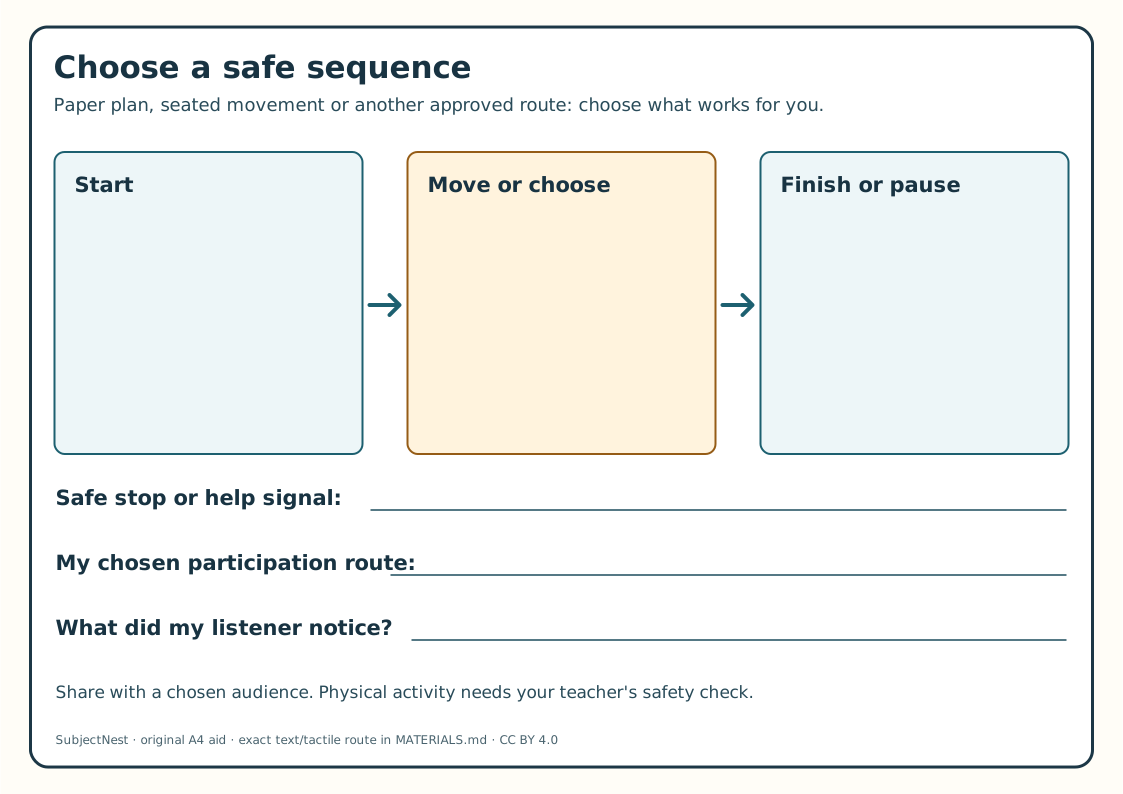
Five 35-minute integrated blocks, Foundation / Queensland Prep · teacher draft. Use English Days 126–130, maths Days 126–130, the original paper-path text, route mat and movement choice mat. The three blank movement boxes support a child-chosen start / move / finish sequence. Physical activity is optional and must follow school safety/access planning; the paper route is full academic participation but not by itself evidence of physical movement or Dance performance.
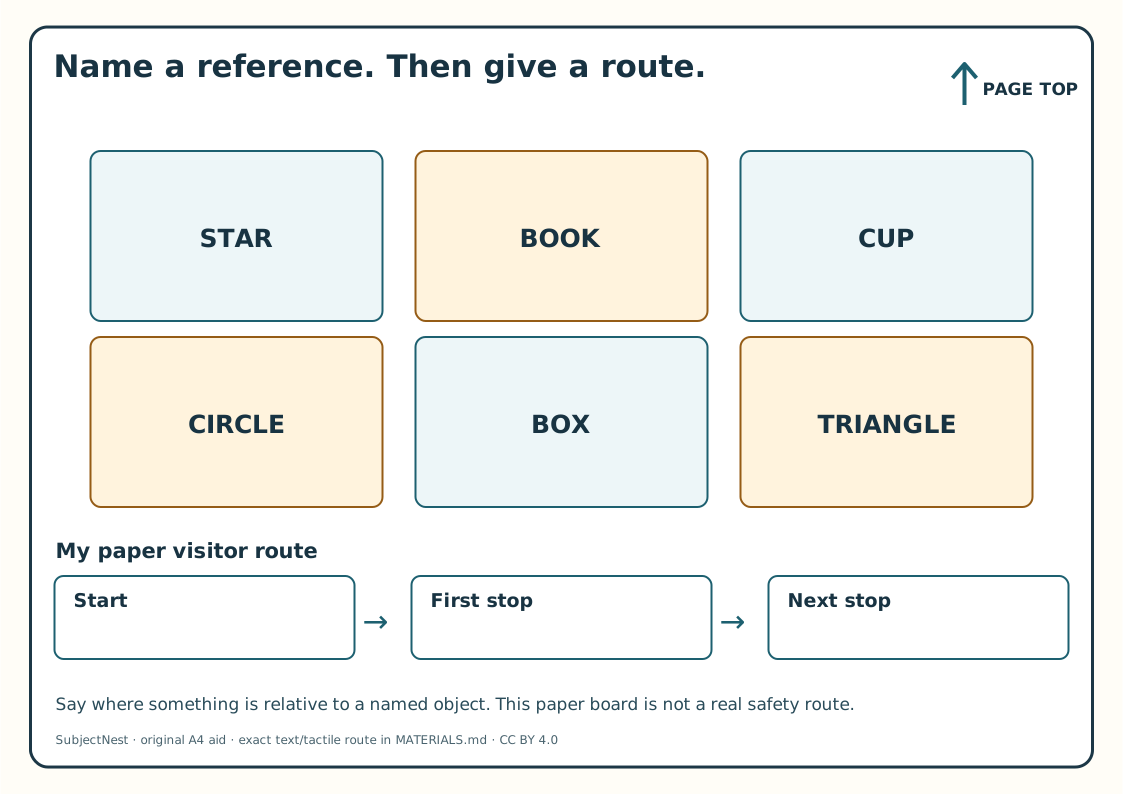
Prepare: large paper visitor and labelled symbols; a bounded, hazard-checked familiar play space only if approved; a child-approved choice of safe gestures/movements; a teacher observer card with rule offered → child response → consequence → revision; and an agreed stop/help signal. Ask each learner which route is accessible without asking for a diagnosis. No copying of an unapproved cultural performance, pressure to stand/balance, timed race, touch or public video. A child may share movement ideas by directing an adult, but record separately whether the learner physically experimented with movement under a relevant arts/HPE code.
Ready-to-run physical option, subject to local checks: place two broad floor targets inside the approved area; use one large soft ball selected under school age and safety requirements. Each willing player takes a turn to roll it toward a chosen target from an accessible seated/standing position; an adult retrieves it after it stops. The rule is one player at a time, a clear start/stop signal and a repeat or alternate response route on request. Practise the object-control skill of aiming and rolling without speed, winning, contact or forced standing. A learner may choose a different safe physical manipulation after educator/specialist advice, or direct a paper visitor instead. Record the actual skill/mode attempted; a directed adult roll is planning/participation, not the learner's own roll. If no approved physical setup is available, use the paper version and mark physical HPE evidence not observed.
One-child observation card: date/setting ; agreed rule and stop signal ; chosen access route ; child's first action/response ; what happened for another player ; child's explanation of fair/safe effect ; revised rule/action ; adult support ; physical movement actually observed yes/no ___. Store under school policy; record the child's words rather than a global “good sport” rating.
| Day | Thirty-five-minute route | Distinct evidence and next teaching action |
|---|---|---|
| 126 · A rule we can try | 5 min discuss safe stop/help signal; 7 min adult reads Tali's invented paper-path game; 8 min compare vague “be fair” with start/turn/repeat rules; 10 min child helps choose one paper-game rule and tells why it can help more players join; 5 min observer tests whether another response mode is permitted. | Save first rule, reason and listener response. The teacher then checks any proposed physical version for actual access/safety. A paper-only fair-rule discussion samples English, not physical movement. |
| 127 · Try and observe an adapted game | 5 min teacher states bounded space and stop signal; 7 min model a gentle large-ball roll toward one broad target plus an individually suitable alternative; 8 min willing children practise one-at-a-time rolls/approved manipulation or direct a paper visitor; 10 min observer logs the actual skill, turn rule and how another child joined; 5 min ask whether the rule caused an exclusion and revise if needed. | Use the ready-to-run setup and card above. Physical HPE AC9HPFM01/02/04 evidence requires the learner's actual safe activity/response, with access adaptations judged locally. Paper-only route remains participation but physical outcome not observed. Never interpret nonparticipation as inability or noncompliance. |
| 128 · Make an original movement sequence | 5 min name that a group can share an idea through movement without using anyone else's cultural dance; 7 min teacher models three neutral actions such as reach/pause/sway, with seated or child-chosen alternatives; 8 min child selects/changes three safe actions or a directed paper movement plan; 10 min child rehearses an original sequence in an appropriate physical/access route and explains the idea it communicates; 5 min ask what a chosen listener might notice. | Record child-controlled choices and, where actual movement occurs, the movement itself. Directing an adult is meaningful arts planning but is not silently scored as the child's physical performance. Ask a specialist for adaptations if needed. No costume/music/cultural motif is assumed. |
| 129 · Share, listen, improve | 5 min revisit the chosen safe rule; 7 min small willing pair/adult follows each other's paper or approved movement route; 8 min one learner shares original three-part sequence with a chosen audience, including private one-to-one; 10 min observer records turn rule, access route, audience feedback and child-directed revision; 5 min child says what made this group version clear or fair. | Keep Arts making/sharing, HPE movement/fair play, mathematics position, and English rule/reason in separate columns. Audience choice avoids forced public performance. A paper map cannot be called a safe real route. |
| 130 · Check a new group's rule | 5 min after separate held-out subject checks, offer a practice paper layout; 7 min child chooses start/first/next and a rule; 8 min willing child tests a locally approved movement or paper route; 10 min observer and child compare intended/actual route, turn access and one reason to keep/revise the rule; 5 min share one bounded reflection with chosen listener. | Preserve first response and revision. Do not preview the Day 130 English/maths assessment map or print. Record physical/dance outcomes only when actually observed. “This movement matters to my group because …” can be a child's bounded perspective, not a universal community claim. |
Three domains and choice routes: original paper-path game, adapted physical minor game, and a child-created neutral movement sequence. A learner may take part through paper, seated/standing/wheeled movement as safe and chosen, tactile/visual directions, AAC/sign/voice or child-directed adult movement. None is a lesser social role. Local safety decisions govern whether any physical route is run. If a child requests help or shows distress, respond under school policy, not as an assessment opportunity.
Curriculum boundary: mathematics AC9MFSP02 asks location of self and objects relative to other people/objects in familiar space; paper symbols sample object relation, and real familiar-space relation must be separately observed. HPE AC9HPFM01, AC9HPFM02 and AC9HPFM04 respectively concern fundamental movement in games, safe movement/manipulation, and fair-play rules in physical activities. Paper-only roleplay does not evidence those physical components. Dance AC9ADAFD01/AC9ADAFC01/AC9ADAFP01 are sampled through original idea-making, a created movement work and sharing with a chosen audience when those actions occur. AC9ADAFE01 asks why arts matter for people and communities; a child's actual shared work and bounded reflection on its meaning to this small group can sample it, but cannot establish another community's meaning. No First Nations performance or cultural expression is invented or reproduced. Exact Foundation descriptions checked in the official ACARA v9 workbook, retrieved 29 September 2026, SHA-256 db446882d2c00cf7c085a03e250e2442fda6c44011fc114680c46c1dc7a822c3. These are partial proposed links, not endorsement or a local syllabus decision.
Original guide and linked authored aids © 2026 NeuroForgeIO Pty Ltd, SubjectNest, CC BY 4.0; credit, link and indicate changes. ACARA retains its terms. Human safety, access, cultural, local syllabus and classroom trial review pending.