Keep this page and the separate public teacher key out of learner cards until the child's first independent response is recorded. Sources here are original, unseen, fictional paper models. Adult reads rich text in the stated order and offers a logged reread on request. Child may respond by private point, sign, AAC, speech, broad tactile cards, drawing or child-directed verbatim scribing. Record exact source access, prompting, first words and adult help before any feedback. A pass is permitted. These checks are small formative samples, not year-end certification.
Day 195 · unseen paper desk-card kit explanation
Fresh source, adult-read exactly: “This is a pretend paper desk board. It has three broad cards: BAG, BOOK and PENCIL, and a wide pocket marked DESK. First put BAG at the left end of a flat mat. Next put BOOK at the right end. Then put PENCIL between them. Name the left and right cards for a new visitor. When finished, return all three cards to the DESK pocket.” No real belongings or student journey is involved.
Neutral visual and nonvisual layout: one long uncoloured mat, a broad BAG rectangle on the left, PENCIL rectangle in the middle and BOOK rectangle on the right; separately show a wide pocket labelled DESK. In a tactile route, use three broad raised rectangles with labels available in the child's form; read “left/middle/right” from the agreed page orientation. The child can direct adult placement. Do not point at the next card when asking for order.
First vague explanation, to read after the source: “Put the things on it, then put them away.” The words leave card names, positions and pocket unspecified. This is authored check text, not a previous learner error.
Ask in order on a blank audience mat:
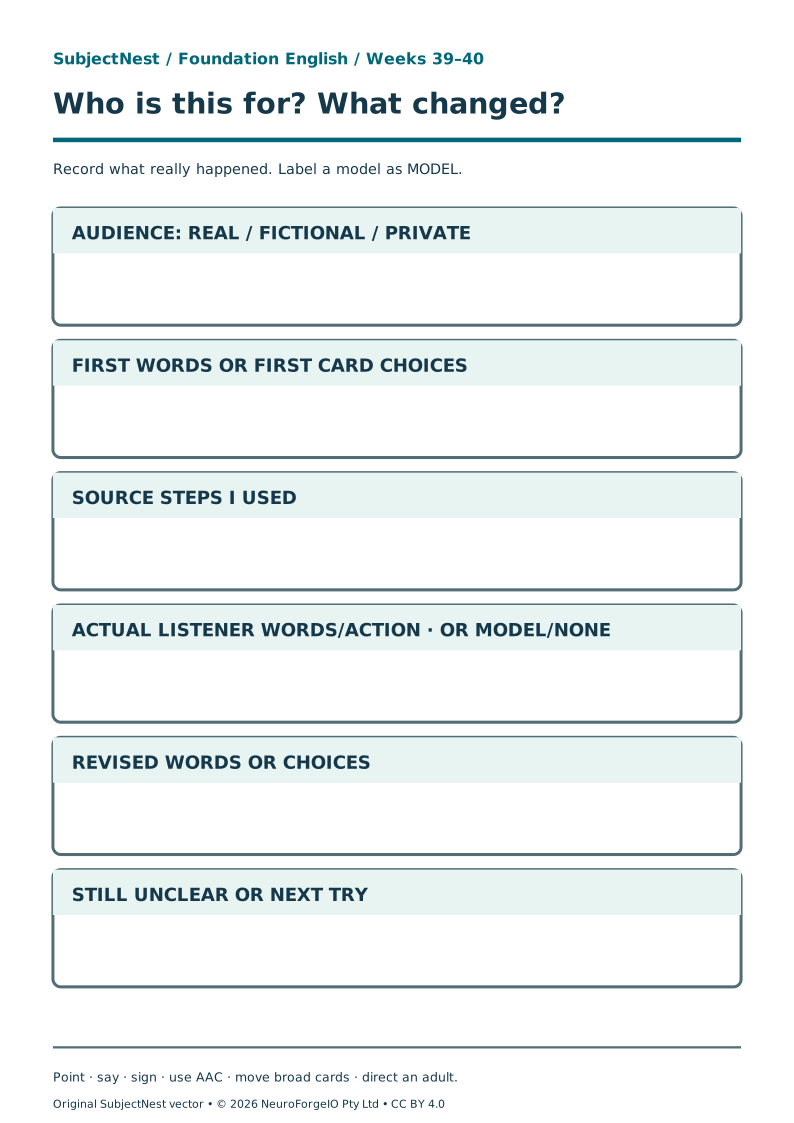
- “Choose a new pretend visitor or consenting real listener. What does the guide help that listener do?” Log which audience was chosen. A private explanation to an imagined visitor is complete for meaning.
- “Explain how to set up the board so your listener could follow it. Name what goes at left, between and right, and where the cards go at the end.” Accept accurate equivalent language/sign/AAC/placements.
- “What would you change in ‘Put the things on it, then put them away’ to help your listener?” Child names or adds a missing card/place/pocket detail.
- “A fictional paper visitor in my model says, ‘Which card is on the left?’ Has an actual listener asked us that, or is this a model? What would you answer from the source?” This checks accurate provenance as well as content. If a real consenting listener responds during a local administration, record their actual words separately; the fictional prompt remains MODEL.
Optional taught-point print, apart from meaning: Plain black rag and dim, no pictures. Offer one word at a time only when every grapheme–sound link is explicitly taught and the item is locally fresh. Ask for one blend, then hide print for a child-selected sound-to-letter attempt. Record exact item, taught links, support and response. Otherwise write NOT ADMINISTERED, and use the time to note source evidence or familiar oral work. No adult-read instruction word is scored as child decoding.
Day 200 · unseen pretend post-desk story and sign
Fresh original fictional story, adult-read: “At a pretend paper post desk, Sol made a broad paper envelope for a drawing. A broad zigzag-mark card slipped under the desk mat. Sol looked beside the paper box, then lifted the mat and found the card. Sol clipped the zigzag-mark card to the envelope and put the drawing inside. The pretend post was ready.” The story does not use a real name or address, real child work or actual mail. The ending is a fictional event.
Fresh original functional sign, adult-read:
PRETEND POST DESK
1. Put one envelope card on the mat.
2. Put one broad zigzag-mark card on top.
3. Put both cards in the wide POST tray.
Do not write a real name or address.
Neutral visual and nonvisual layout: story may be shown as four plain numbered text panels: making envelope; zigzag-mark card hidden under mat; search/find; card clipped and drawing inside. The sign is a separate framed block with its heading and 1–3 sequence. No real name/address, postal logo, outcome tick or picture answer cue appears. Read exactly that order for a child not using the page; broad envelope/mat/card/tray tokens are optional and adult can move them as directed. The sign gives directions for a possible paper activity and is not proof that Sol followed it.
Ask in order:
- “Which text is an invented story, and which helps someone use the paper desk? Give one clue for each.”
- “In the story, what went wrong, what did Sol do, and how did it end?” Retell the source, not a new invented ending yet.
- “Does the sign tell us that Sol actually put cards in the POST tray? What can the sign tell us?” An instruction gives a possible action, not a story event or real result.
- “Choose one thing from your answer that could be a dated work sample. What did you answer yourself? Did an adult read or write any part?” A short source-attributed reflection is enough; do not compare with unseen earlier work or infer a year of growth.
Optional taught-point print, apart from meaning: Plain black nut and cob, no pictures. Same taught-link and local-familiarity checks, one blend then print-hidden child-selected letters; otherwise NOT ADMINISTERED. Oral retell of an adult-read source is not independent reading. A locally unfamiliar word can be replaced with a documented taught-point fresh item; do not quietly change the check after seeing a response.
After the first response: Use the key to choose a next lesson and let the child use after-check routes. Log any actual peer spoken delivery, actual feedback, child writing, child reading and adult model separately. Original SubjectNest fresh checks © 2026 NeuroForgeIO Pty Ltd, CC BY 4.0.