Adult reads original sources A–F and offers one of three same-target choices per day. Each script has 3 + 4 + 5 + 7 + 4 + 2 minutes. Keep actual child actions, adult models, child-selected print, listening and peer-spoken delivery separate in the record. Speech, sign, AAC, point, broad tactile cards, drawing and verbatim adult scribing can all show meaning. A child can choose a private or fictional audience; record actual feedback only after an actual consenting listener responds. Save first independent response before feedback. Hold Days 195/200 checks and key separately.
Week 39 · Day 191 — Who needs this explanation?
Goal: identify the purpose and possible audience of A's ready-to-use guide, then choose a real or fictional audience for a short explanation. Proposed codes: AC9EFLY01, AC9EFLY02, AC9EFLA07. Prepare: A guide and broad cards/linear description, AUDIENCE card, Card 191.
- Oral/print · 3 min. Segment spoken “scene card” into two words; adult reads SCENE and card labels unless taught.
- Read · 4 min. Read A's complete guide in order and show/describe the three broad cards and named pocket.
- Model · 5 min. Say “This guide helps a new visitor use the paper kit.” Choose a fictional paper puppet as audience and explain why it needs the pocket name; label the puppet reply as MODEL.
- Child try · 7 min. Child chooses a pretend visitor, consenting adult or consenting peer on Card 191 and identifies two things that audience needs to know from A; choose mode and whether to share now or later.
- Check · 4 min. Offer “Everyone knows where the cards go.” Child finds A's explicit SCENE pocket return step and explains why a new visitor may need it.
- Exit · 2 min. Record audience as REAL CONSENTING / FICTIONAL MODEL / PRIVATE, without equating these types of evidence.
Week 39 · Day 192 — Put instructions in useful order
Goal: explain A's choose/place/name-or-story/return sequence so an unfamiliar listener can follow it. Proposed codes: AC9EFLA05, AC9EFLY05, AC9EFLY06. Prepare: A/B, four broad order cards, Card 192.
- Oral/print · 3 min. Say “put it back”; child places one broad word token per spoken word. Optional print only at taught point.
- Read · 4 min. Read B's vague first draft and A's complete guide. Ask what action B's “do it” leaves unclear.
- Model · 5 min. Lay CHOOSE / PLACE / NAME OR TELL PRETEND STORY / RETURN in order. Follow once with a broad POND card, narrating each step as teacher model.
- Child try · 7 min. Child chooses a library display, paper museum or puppet desk route on Card 192 and gives the ordered explanation through words, cards, AAC or adult-directed placement.
- Check · 4 min. Rearrange RETURN before PLACE. Child repairs order and gives one source reason: the card must be used before it goes back.
- Exit · 2 min. Save the child's first sequence and any repair; adult modelling is not child independent direction.
Week 39 · Day 193 — Explain it without a hidden cue
Goal: add a precise label, outline or location so a listener using a different access route can follow the same instruction. Proposed codes: AC9EFLA07, AC9EFLY02, AC9EFLY05. Prepare: A, TENT/POND/PATH text/tactile descriptions, B, Card 193.
- Oral/print · 3 min. Orally contrast “there” and “middle of the mat” as phrases; do not turn rich words into untaught print tests.
- Read · 4 min. Read B's first draft. Offer A's outline/label description without relying on colour or pointing alone.
- Model · 5 min. Compare “take the blue one” with “take the POND card, the broad oval.” Show how the second names a card for someone not using colour or the same view.
- Child try · 7 min. Child chooses a paper garden, toy map or story stage route, then revises one vague step to name card, place and return pocket for a chosen audience/access route.
- Check · 4 min. Adult selects PATH after hearing only “the curvy one.” Child checks A's two-curved-lines label and repairs the phrase if needed; no child must touch a card.
- Exit · 2 min. Child identifies one extra word that made the direction clearer; this is clarity evidence, not a claim of actual audience success.
Week 39 · Day 194 — Share, listen if someone actually responds, edit
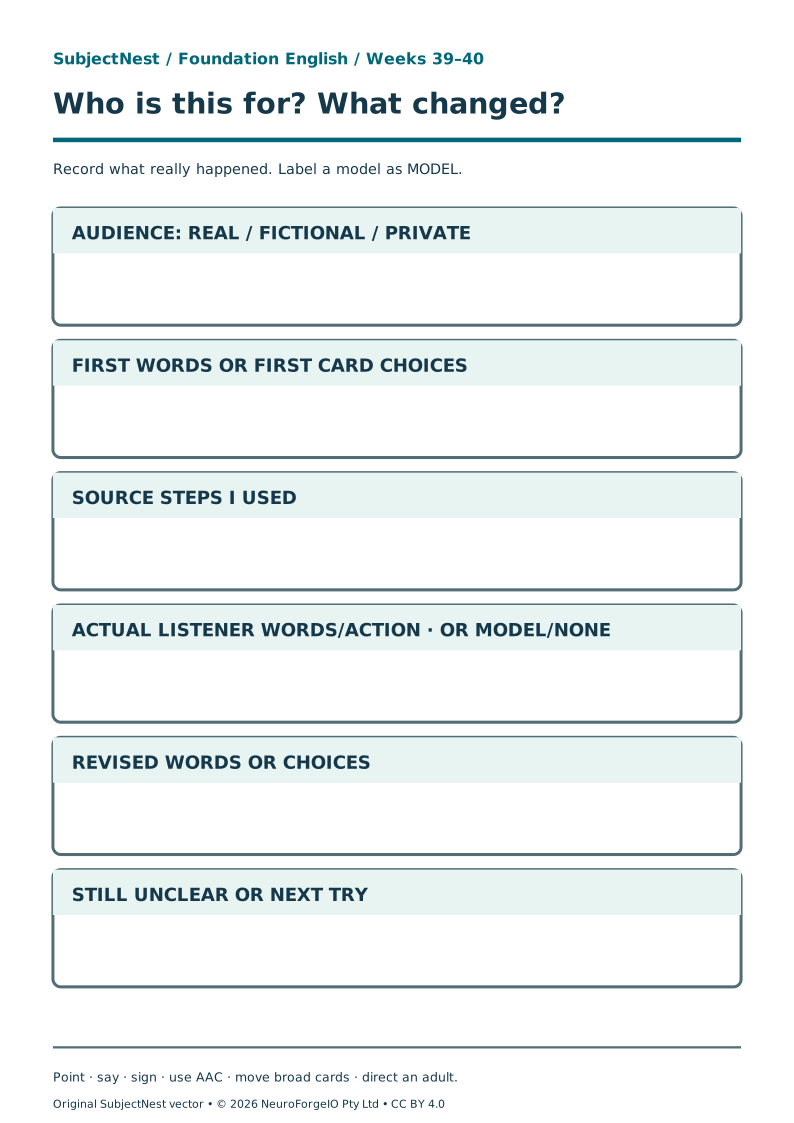
Goal: create and share-edit a short explanation with source steps and accurately label real listener feedback versus a model. Proposed codes: AC9EFLY06, AC9EFLY07, AC9EFLA09, AC9EFLY02. Prepare: A/B, blank audience/feedback mat, consenting listener if available, Card 194.
- Oral/print · 3 min. Offer an already taught CVC blend or oral /m/ /a/ /t/; log child-selected letters separately from adult words.
- Model · 4 min. Dictate “Put the POND card in the middle of the mat.” Point to capital P and stop; underline the named card/place. Label this TEACHER MODEL.
- Plan · 5 min. Child chooses audience and whether to use TENT, POND or PATH. Put intended message on broad cards; adult reads untaught terms.
- Explain · 7 min. Child explains by private speech, sign, AAC, picture or writing to a chosen real consenting listener, or rehearses with an explicitly fictional paper listener. Save exact first words and mode.
- Feedback/edit · 4 min. If an actual listener asks/does something, record their exact question/action and child revision. If none, record NO ACTUAL FEEDBACK; teacher can model a hypothetical “Which pocket?” and child can revise for clarity, but label it MODEL. Actual spoken peer-delivery code only if that event occurred.
- Exit · 2 min. Child says what remains unclear or identifies the precise phrase improved. Day 195 remains unseen.
Week 39 · Day 195 — Fresh explanation transfer
Goal: explain a new paper-kit instruction to a chosen audience, repair one ambiguity and distinguish modelled from actual response. Proposed codes: AC9EFLY01, AC9EFLY05, AC9EFLY06, AC9EFLY12. Prepare: teacher-held Day 195 check, blank audience mat; Card 195 after first record only.
- Welcome · 3 min. Explain that a new invented paper kit is for checking what to teach next; any private communication mode may be used.
- Warm retrieval · 4 min. Ask A's SCENE pocket return step only; do not rehearse the fresh kit, labels or audience prompt.
- Unseen source · 5 min. Adult reads/displays the fresh guide neutrally, with a logged reread on request; no gesture gives step order.
- First independent response · 7 min. Child selects an audience, gives a source-accurate ordered explanation, repairs an unclear phrase and says whether any listener reply was actual or only modelled. Save first words, mode and prompt.
- Optional print · 4 min. Give held plain CVC only if all links taught and item locally fresh, then one blend and print-hidden letter selection. Otherwise mark NOT ADMINISTERED and record meaning evidence or do familiar oral play.
- Close · 2 min. Use separate key for next lesson; release Card 195's different practice only after the first record.
Week 40 · Day 196 — Story, sign and short strip do different jobs
Goal: distinguish C's imaginative story from D's functional sign and E's controlled reading strips by purpose and visible/text clues. Proposed codes: AC9EFLE03, AC9EFLY01, AC9EFLY03, AC9EFLA07. Prepare: C/D/E, STORY / INSTRUCTION / SHORT STRIP cards, Card 196.
- Oral/print · 3 min. Say spoken “paper map” as two words; adult reads the source titles.
- Read · 4 min. Read C's beginning and end plus D's whole sign; show E as a separate short strip without asking for unprepared decoding.
- Model · 5 min. Put C under STORY because Mira has a problem and ending; D under INSTRUCTION because it tells a visitor what to do; E under SHORT PRINT PRACTICE because its controlled sentence does not tell the story or provide full kit directions.
- Child try · 7 min. Child chooses library shelf, paper game or classroom-kit route on Card 196; sorts two or three source samples and cites a word, drawing or structure clue for each.
- Check · 4 min. Offer “The sign tells us what Mira did.” Child corrects: D gives directions, while C tells Mira's fictional events.
- Exit · 2 min. Record actual sample viewed/listened/read and why, not a blanket reading level.
Week 40 · Day 197 — Read at the taught point and check meaning
Goal: read one accessible controlled strip when taught, monitor its meaning, and use an adult-read functional text without confusing the evidence. Proposed codes: AC9EFLY04, AC9EFLY05, AC9EFLY10, AC9EFLY12. Prepare: D/E, chosen strip covered until ready, broad paper mat/cards, Card 197.
- Oral/print · 3 min. Orally blend a familiar single-syllable word; check the child's actual taught correspondences and high-frequency words before choosing E1, E2 or E3.
- Purpose · 4 min. Display D beside the prepared paper kit as a functional instruction and adult-read it; ask what someone could do with it. Record that this class used the sign only if it actually does, and mark adult reading separately from child decoding.
- Model · 5 min. On a different previously taught short word, sound, blend and reread to check meaning. Do not show the chosen E strip with an adjacent picture.
- Child try · 7 min. If ready, child independently reads one selected E strip, uses its words to construct or describe a broad-paper scene, then rereads if meaning seems wrong. Record exact item, decoding, self-correction, prompting and meaning. If links are not taught, adult reads and child discusses meaning; mark independent reading NOT ADMINISTERED.
- Check · 4 min. Ask whether adult-read D and any child-read E provide the same evidence. If D is displayed and the child has a taught familiar sign word/phrase, invite an independent reading attempt without a picture cue and record that exact span only. Otherwise child points to which text they read and teacher records the distinction. A correct scene built from an adult read is comprehension, not decoding.
- Exit · 2 min. Save the exact sentence/attempt as one possible portfolio sample with date and support; no universal reading level is assigned.
Week 40 · Day 198 — Retell, then make one clearly imagined change
Goal: retell C's beginning/problem/action/ending, then adapt one detail while keeping the new version explicitly fictional. Proposed codes: AC9EFLE02, AC9EFLE03, AC9EFLE05, AC9EFLY05. Prepare: C story, four broad scene slots, Card 198.
- Oral/print · 3 min. Clap or mark the spoken parts of “Mira” if locally appropriate; adult handles rich story print.
- Read · 4 min. Read all four C scenes in order and allow a reread on request, noting whether one occurred.
- Model · 5 min. Place map goal, hidden label, Mira's search/replace, and puppet finding tent in four slots. Say what the story actually states versus a child's invented thought about Mira.
- Child try · 7 min. Child chooses puppet theatre, paper map or picture-book route on Card 198; retells all four source events by chosen mode, then changes one element such as the place label or helper in a clearly labelled new story.
- Check · 4 min. Offer “Mira never found the label.” Child locates Scene 3 and repairs the retell. Do not treat a creative adaptation as a source-accurate recall without marking the changed detail.
- Exit · 2 min. Record one child thought about the problem or ending as their thought, not an event in the text; retain retell/adaptation separately.
Week 40 · Day 199 — Choose real samples and name a next step
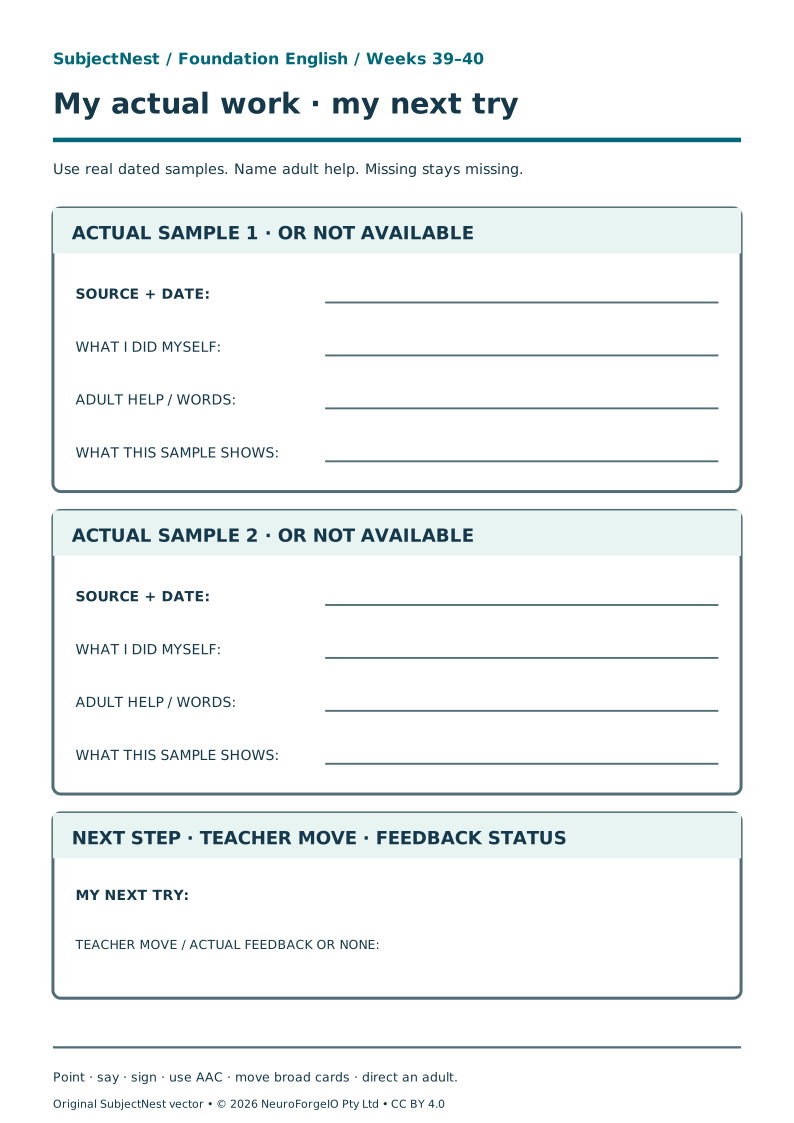
Goal: choose available work evidence from different tasks, attribute adult help and make one practical next-step handover. Proposed codes: AC9EFLY05, AC9EFLY06, AC9EFLY02. Prepare: actual available work from Days 194/197/198 or earlier with permission, blank portfolio mat, Card 199.
- Oral/print · 3 min. Say “my work” as two spoken words; explain a sample can be speech/AAC/point recorded by an adult, not only handwriting.
- Review · 4 min. Show two genuinely available samples, if any, with source/date/support notes. If fewer than two exist, mark a slot NOT AVAILABLE and make a current source response in this lesson.
- Model · 5 min. Use a fictional teacher specimen labelled MODEL to show “I chose this caption; adult wrote my words; next I could add the source.” Do not present it as a real child's progress.
- Child try · 7 min. Child chooses two available samples or one plus a new current response, says what they did themselves and what support was given. Adult scribes verbatim in private school-approved record; no public name/work upload.
- Handover · 4 min. Child picks one small next step; teacher adds a teachable move grounded in actual samples and marks missing evidence as missing. If an actual listener responds now, capture it; otherwise NO ACTUAL FEEDBACK.
- Exit · 2 min. Read the handover back to child for a correction; Day 200 check cannot stand in for the whole year's evidence.
Week 40 · Day 200 — Fresh two-text transfer and next-step check
Goal: distinguish an unseen functional text and fictional story, retell an event, make a source-bounded next-step note and read optional print only at taught point. Proposed codes: AC9EFLE03, AC9EFLY01, AC9EFLY03, AC9EFLY05, AC9EFLY12. Prepare: teacher-held Day 200 check, blank portfolio mat; Card 200 only afterwards.
- Welcome · 3 min. Say this small check informs future teaching; it does not grade the whole year. Offer private and accessible response routes.
- Warm retrieval · 4 min. Ask whether C is a story or D is a sign, using only known sources; keep fresh contexts unseen.
- Unseen sources · 5 min. Adult reads the fresh story and functional text neutrally once, with a logged reread on request and no answer gesture.
- First independent response · 7 min. Child names each purpose with a clue, retells the story's problem/action/ending, and says what a record would and would not show. Save exact first words and mode.
- Optional print · 4 min. Plain held CVC blend and print-hidden letter selection only after taught-point/familiarity check. Otherwise mark NOT ADMINISTERED and document evidence; do not infer independent reading from adult read-aloud.
- Close · 2 min. Use key to choose the next teaching move. Add this check as one dated sample if useful, never as a blanket year-complete certificate.
Boundary: Authentic-purpose model texts are usable in a real classroom but are not proof of actual use. A fictional puppet reply or teacher model is never actual audience feedback. One strip or one final check cannot establish the year's English achievement. Original SubjectNest scripts © 2026 NeuroForgeIO Pty Ltd, CC BY 4.0.