Adult reads rich text unless an individual's taught-point print is available. A, B and D are original ready-to-use functional models: a teacher can use them with broad paper cards in class, but this pack makes no claim that a real class did so. C is an original fictional story. E is a controlled print set, not a natural sign or a nationally fixed phonics sequence. The source of any real child work, listener comment or portfolio evidence must be dated and attributed separately.
A · A paper scene kit for explaining
A4 guide SVG · PDF. Prepare three broad paper scene cards with black outline and adult-read word labels: TENT (a triangular roof above a rectangle), POND (one large oval), PATH (two separate parallel curved lines). Put the cards in a broad pocket labelled SCENE and place a plain broad mat beside it. The teacher can use the printable cards as source/reference or cut three large copies if locally suitable; no small loose parts are required.
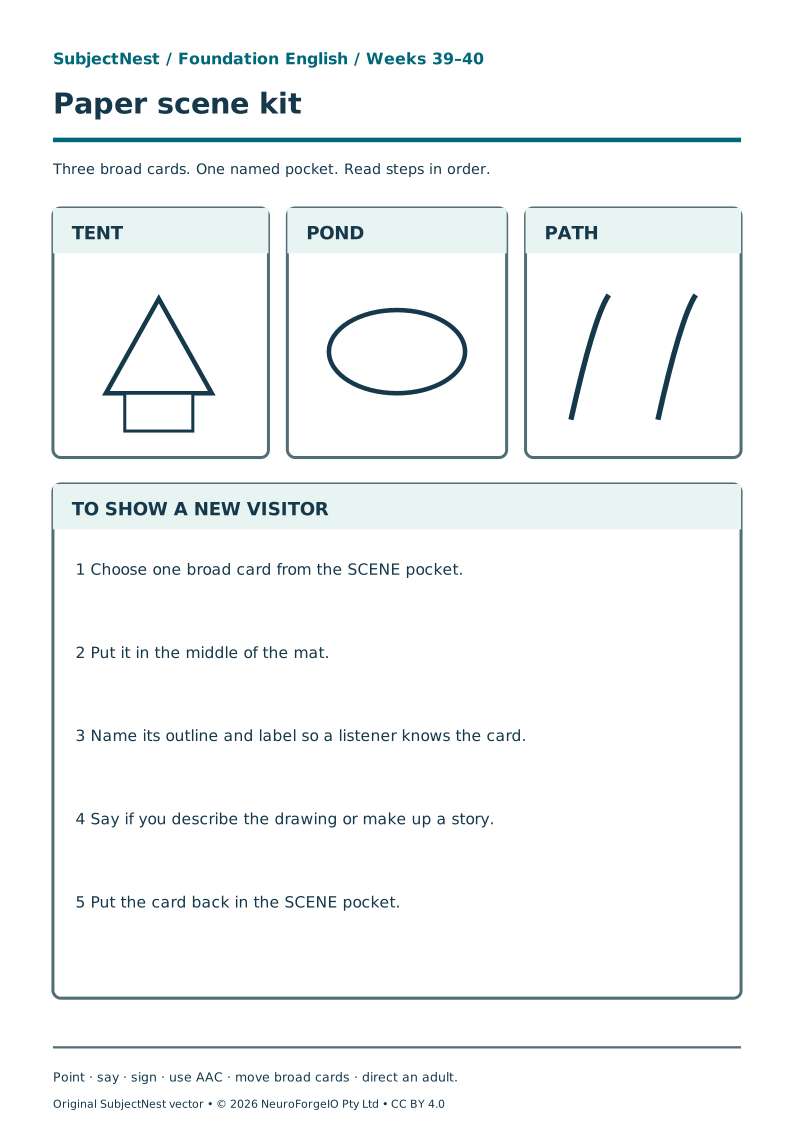
Complete adult-read guide: “Choose one broad card from the SCENE pocket. Put it in the middle of the mat. Name the outline and its label so a listener knows which card you chose. Say whether you are describing the drawing or making up a story about it. When you finish, put the card back in the SCENE pocket.” The steps are an instruction, not a record that a child used the kit. There is no correct favourite card or required personal story.
Exact linear/nonvisual route: “The TENT card has one triangle roof above a rectangle. The POND card has one broad oval. The PATH card has two separate parallel curved lines. Each card has its word label. The pocket says SCENE. The mat is plain.” Adult places or describes one card; child can point, select a label, direct adult movement, sign, use AAC or speak. If tactile cards are useful, make broad raised triangle-plus-rectangle/oval/two-curves, separately labelled in print/Braille as appropriate to the individual. Ask before touch; a spoken route is equal.
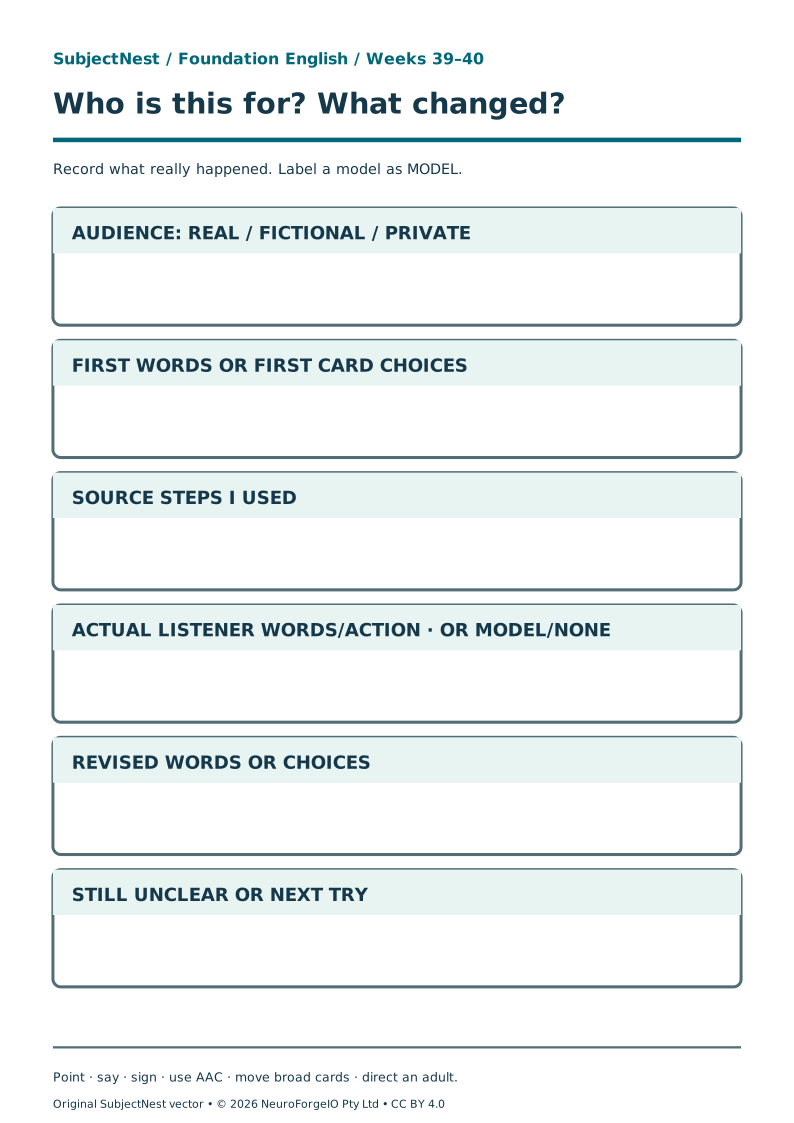
B · First and clearer explanation · model, not real feedback
First draft: “Pick one and do it. Then put it away.” It does not name the card source, where to put it, what to tell a listener or where to return it.
Clearer draft: “Take one broad card from the SCENE pocket. Put it in the middle of the mat. Name its outline and label. Say whether you are describing it or inventing a story. Put it back in the SCENE pocket.” This is a teacher-authored model revision. A fictional paper visitor's question “Which pocket?” may be used to rehearse; it is not evidence that an actual person asked it. For any actual listener, write their exact question or action in the audience/feedback mat with date, consent and mode. If no listener was available, write MODEL / NO ACTUAL FEEDBACK and revise for clarity from source A instead.
C · Mira's map and the tent label · original four-scene fiction
Story SVG · PDF. Adult reads the four scenes in order; all names, places, actions and puppet dialogue are invented.
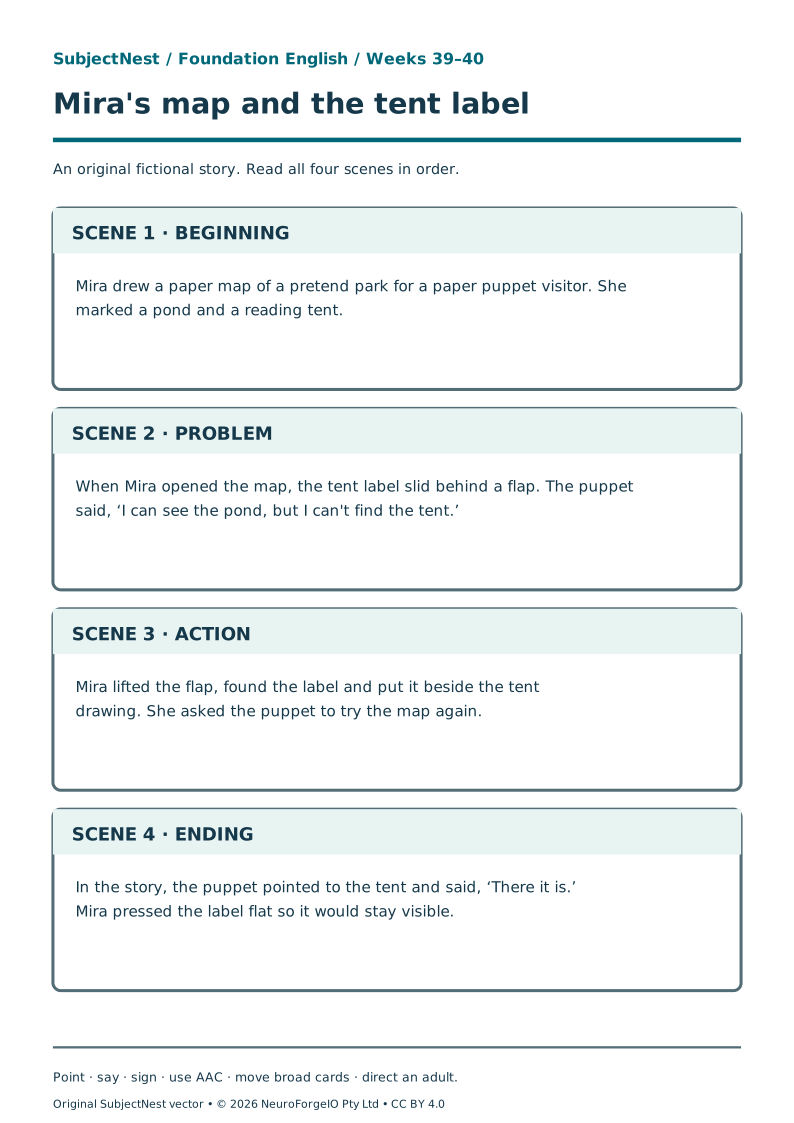
- Beginning: “Mira drew a paper map of a pretend park for a paper puppet visitor. She marked a pond and a reading tent.”
- Problem: “When Mira opened the map, the tent label slid behind a flap. The puppet said, ‘I can see the pond, but I can't find the tent.’”
- Action: “Mira lifted the flap, found the label and put it beside the tent drawing. She asked the puppet to try the map again.”
- Ending: “In the story, the puppet pointed to the tent and said, ‘There it is.’ Mira pressed the label flat so it would stay visible.”
Exact linear/nonvisual description: A paper map is drawn with a pond oval and a tent with triangle roof/rectangle base. A labelled flap can cover the tent's word label in Scene 2; by Scene 4 the TENT label is beside the drawing. There are no photos, colours carrying meaning, real children or actual class-result claims. A retell should keep the beginning/problem/action/ending, though a child may adapt one clearly fictional detail.
D · Ready-to-use functional station sign · original model
On the text-sample page SVG · PDF, the sign reads exactly:
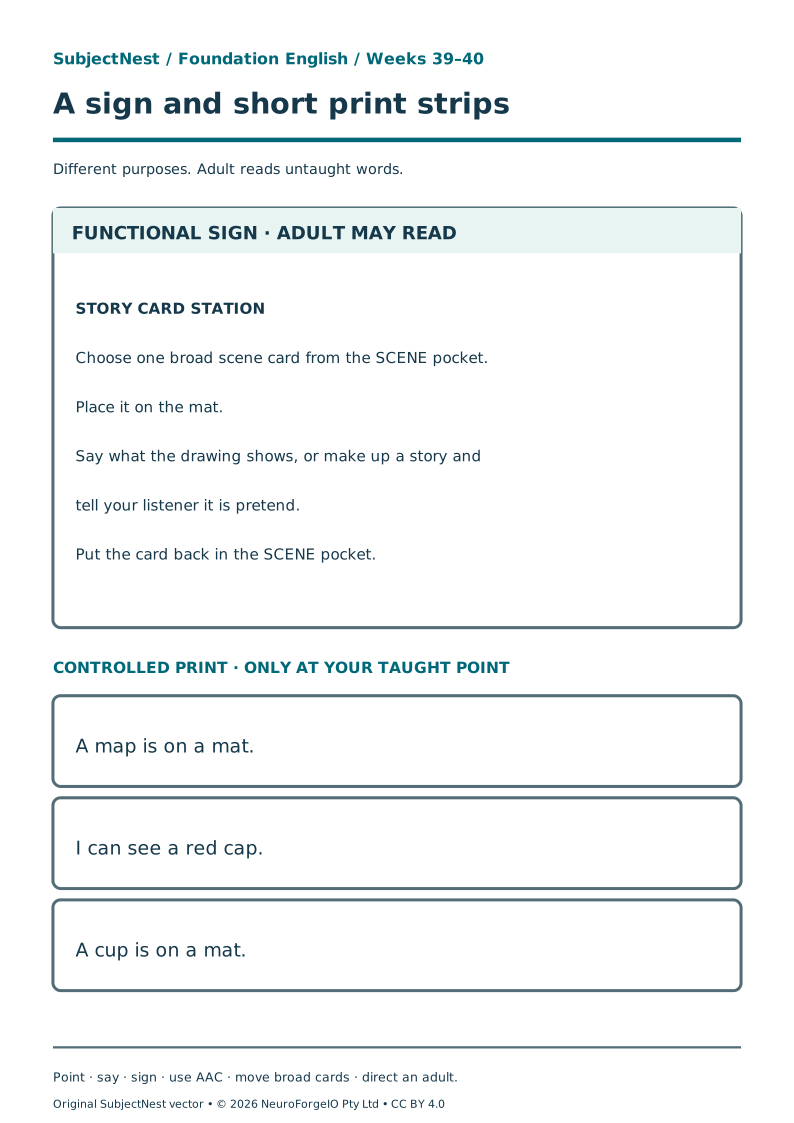
STORY CARD STATION
Choose one broad scene card from the SCENE pocket.
Place it on the mat.
Say what the drawing shows, or make up a story and tell your listener it is pretend.
Put the card back in the SCENE pocket.
This is a functional text a teacher may actually display beside a prepared paper kit. If displayed, record that use locally; the authored page alone does not prove an audience acted on it. The sign gives directions; it does not tell Mira's story. Adult reads rich text. If a child independently reads a taught word or phrase on the displayed sign, record exactly that span and its support, not a claim that they read the whole sign. A paper-described screen version can show the same words in the same order, with no device required.
E · Three controlled print strips · optional taught-point samples
On the same text-sample page, with no picture next to the print strips:
- “A map is on a mat.”
- “I can see a red cap.”
- “A cup is on a mat.”
These short original sentences are separate from rich authentic-purpose source D. A child reads one independently only after explicit local check of its letter–sound correspondences, any digraph (ee in see), familiar high-frequency words (a, I, is, on, can) and prior practice. Select a different taught strip if needed and log it. Hide the drawing while checking print so pictures do not cue guesses. If the child is not at these print points, adult reads and uses the strip for oral meaning; mark independent reading NOT ADMINISTERED rather than guessing a grade-level outcome. A child may correct meaning by rereading and checking the sentence, not by inventing an image cue.
F · Honest portfolio and next-step handover
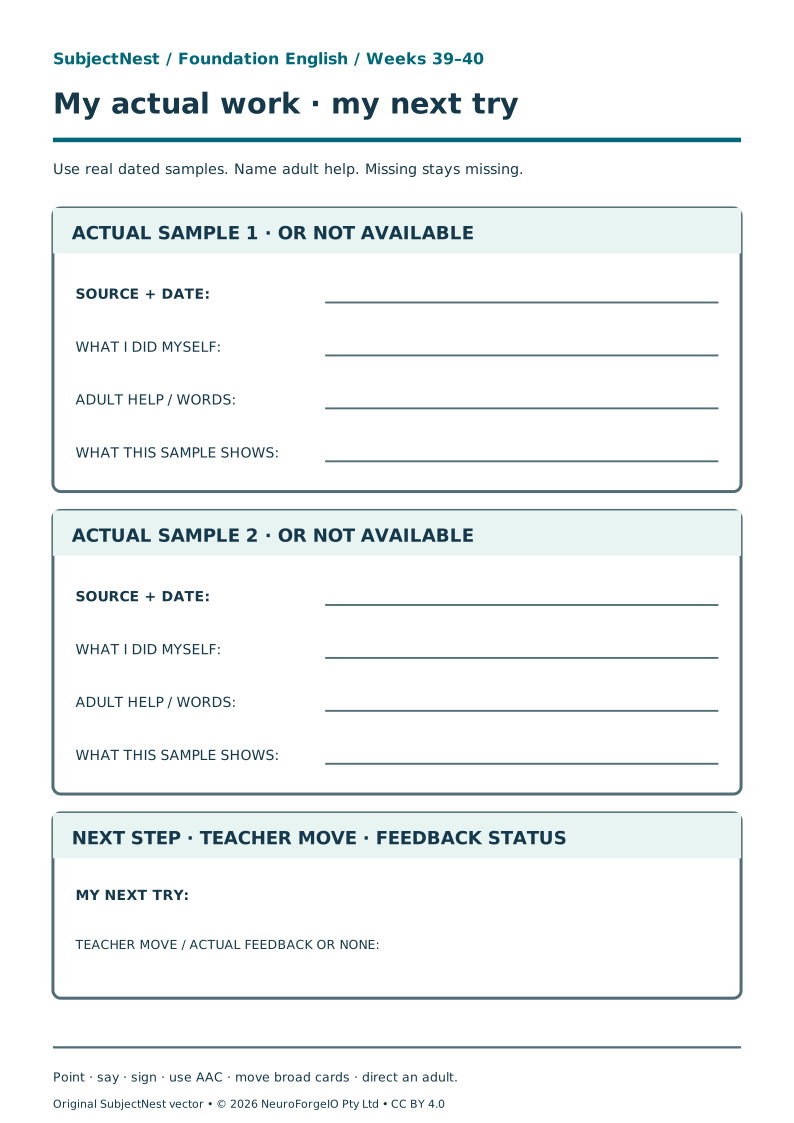
Blank A4 portfolio/handover mat SVG · PDF. Two separate sample slots ask SOURCE AND DATE / WHAT I DID MYSELF / SUPPORT OR ADULT WORDS / WHAT THE SAMPLE SHOWS. Final fields ask MY CHOSEN NEXT STEP / TEACHER'S NEXT TEACHING MOVE / ACTUAL LISTENER FEEDBACK OR NONE. Do not prefill a child profile, growth rating, invented earlier performance or class claim. A child may choose two real available samples from this week (for example, a Day 196 retell and a Day 197 print/meaning record) or earlier with permission. If only one exists, record the other as NOT AVAILABLE and make a current sample today; do not treat sample selection as a comparison of progress over time without matched evidence. Store actual records privately under school rules; this template is public and empty.
Broad access and print boundary
All core tasks work via speech, sign, AAC, pointing, large cards, adult-directed placement or verbatim scribing. Offer quiet/private rehearsal and a pass on touch or peer performance. The prior optional pool is a, an, at, can, cap, cup, i, in, is, it, map, mat, on, red, see, sit, tap, ten, tin; it does not declare a national teaching order. Spoken phoneme work can use familiar /m/ /a/ /t/ without print. Adult-read words such as scene, explanation, listener, source, fictional, instruction, portfolio are never counted as child decoding. Actual peer spoken delivery, child-selected spelling, child reading and adult-scribed content are separate observations.
Original SubjectNest sources, scripts and vector aids © 2026 NeuroForgeIO Pty Ltd, CC BY 4.0.