Teacher copy. Give learner cards one at a time; keep fresh assessment objects and answers hidden until Days 105 and 110. All “rooms” below are imagined paper layouts. A drawn object may suggest a shape but does not establish what every real object is like. A circle can be large or small; a triangle remains a triangle when rotated. A square also has the properties of a rectangle; do not insist that these categories can never overlap.
Shape collection for practice
Make large cards in one neutral colour: a circle, a triangle with three straight sides, a square with four equal straight sides, an oblong rectangle with four straight sides but unequal adjacent sides, a rotated triangle, and a rotated square. The shape sheet shows four labelled practice examples, with a blank clue area. Do not use colour as a sorting rule when shape is the target. Check that a drawn “circle” has a continuous curved boundary; a hand-cut wobble may need the teacher to say “circle-like” rather than claim perfect geometry. Children can name an everyday object with a similar visible outline, but distinguish a 2D picture from a 3D object.
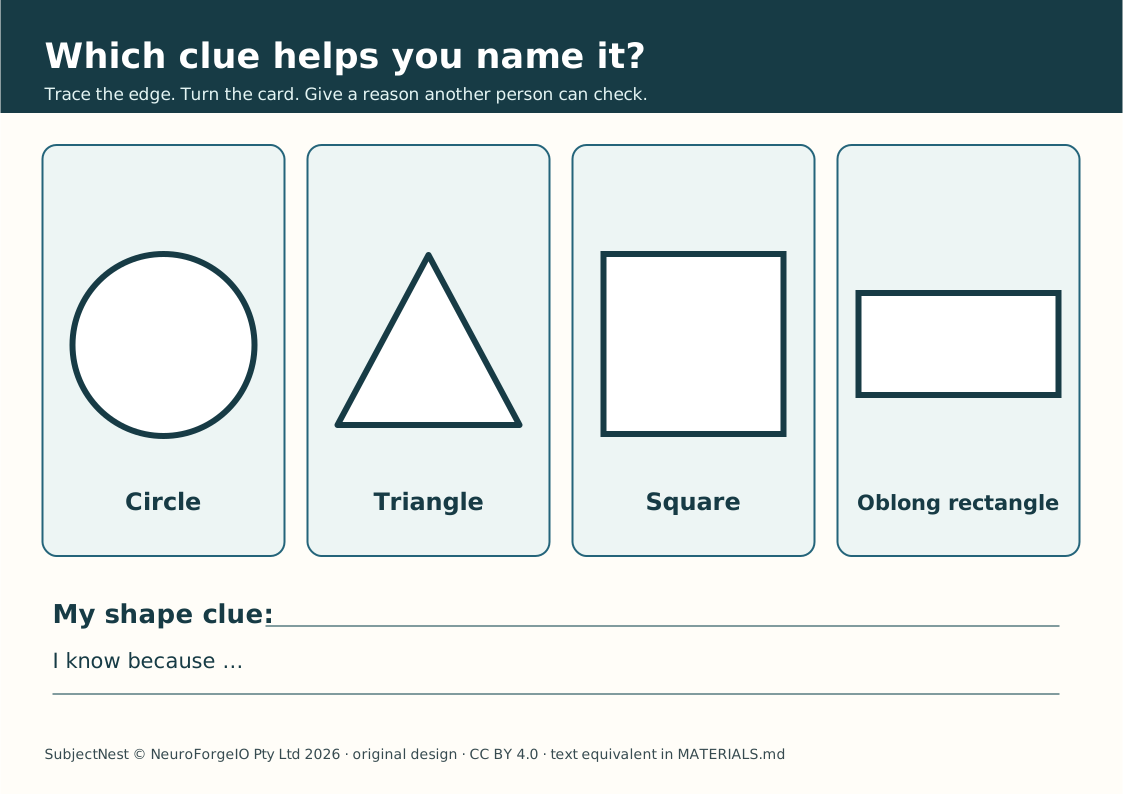
Reason prompts: “What did you notice about the edge?” “How many straight sides or corners can you check?” “Would turning it change those features?” “Where do you see a familiar shape within this original drawing?” Accept an accurately shown physical/tactile/digital reason. Counting corners alone can be insufficient for square versus oblong rectangle; compare equal adjacent side lengths with matched paper strips if helpful.
Practice paper map
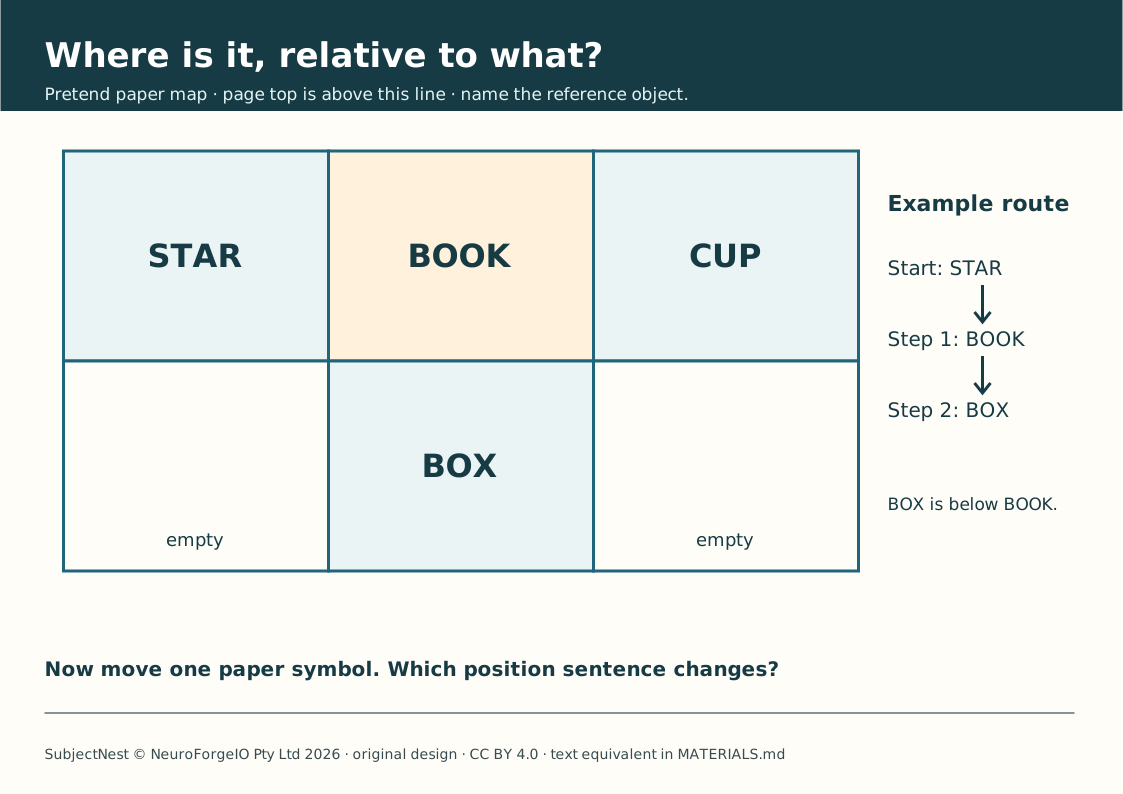
Use the original paper map, or place equivalent large tactile symbols on a mat. In the first row, from left to right, are star, book, cup. A box is directly below the book; the other lower spaces are empty. The visitor begins on the star. A sample two-leg route is star → book → box. From the book, the cup is to the right and the box is below on this page orientation. The box is below the book; “below” is incomplete without the reference. Say which side of the table/page the viewer is using before “left/right”, and allow child/body orientation differences to be discussed.
Text alternative for the shape sheet: A4 landscape. It shows four large outlines labelled Circle, Triangle, Square and Oblong rectangle. Circle has one continuous curved edge and no straight sides/corners. Triangle has three straight sides/corners. Square has four straight sides/corners of equal length. The oblong rectangle has four straight sides/corners, with longer horizontal than vertical sides. Beneath them is a blank line headed “My shape clue: ___ because ___”. This sheet provides practice examples, not the hidden Day 105 shapes; its words should be adult-read where not taught.
Text alternative for the paper map: A4 landscape. It is a two-row by three-column grid. Top row left-to-right: Star, Book, Cup. Bottom row: empty, Box, empty. Arrows outside the grid show a possible example route: Star → Book → Box; the labels also say Step 1 and Step 2. A nonvisual route is three tactile or spoken top-row cards and one box card directly below Book, with a moveable visitor; speak the page orientation and one relation at a time. No colour-only or personal-location data is needed.
Family or educator mini-use: choose a safe large lid, book and mat. Ask “Where is the lid relative to the book?” Move one item and ask again. A child can direct another person's placement. No real home layout needs to be recorded; if a tangible object is unsafe, use paper symbols.
Original setups, examples and exact alternatives © 2026 NeuroForgeIO Pty Ltd, CC BY 4.0. Credit and indicate changes.