Prepare behind a cover. Record each child's first independent move/answer and actual access/prompt before correction. These are formative samples; do not derive a grade, diagnosis, full description attainment, science fact or real opinion from one response. Adult reads labels as needed. If a physical mass setup fails preflight, repair it before the learner sees it and record the change.
Day 135 · fresh length and mass pairs
Length setup: Cut two new broad paper strips R 45 mm and S 68 mm long at actual size. Place R beginning 20 mm farther right than S, so the far ends cannot be compared by eye from different starts. Child must move or direct movement to align the near ends before deciding. Ask “Which is longer in this pair, and how did you check?” A tactile start edge and neutral adult description are available. Keep these exact lengths/positions out of practice.
Mass setup: Use two identical, equal-empty-mass, broad safe trays on a checked equal-arm balance. Put three identical large safe blocks in tray U and six of the same blocks in tray V. Verify before class that empty trays balance and V's loaded side goes down. If not, level/replace equipment and verify again; do not score a predicted answer from an unverified setup. Do not let the visible block count replace direct balance evidence. Ask “Which loaded tray is heavier, and what did you observe?” Allow child-directed adult placement or neutral audible/tactile balance description. Record any support and whether the child actually made a direct comparison.
Exact key for verified set: S is longer than R after alignment; V is heavier than U because its side of the checked balance goes down. Both claims are relative to their named pair. The length setup does not establish mass, material, capacity, strength or usefulness. A child who says “S looks longer” without aligning has not yet shown the direct-comparison method; offer a fresh different pair for recheck after teaching. If the actual balance behaves otherwise, fix it rather than marking a child wrong.
Next move: compares far ends with shifted starts → model common-start alignment on a new equal pair, then fresh unequal pair; length and width confused → name one attribute and use strips with same width; infers mass from apparent size → observe a preflighted balance with a larger empty/smaller loaded pair; balance relation reversed → change tray positions and ask which side moves down, then fresh load; correct results without reason → ask for the physical edge/balance indication rather than an adult preferred phrase; access method blocked → offer tactile/directing route and mark original observation not observed.
Day 140 · fresh fictional image data
Question to state before collection: “Which paper story-board picture tab did these eight invented visitors choose: LEAF, BOOK or STAR?” Prepare eight large image cards from the teacher-only original cut-card sheet: LEAF 4, BOOK 3, STAR 1. Cut, mix in an envelope and never show the intact sheet before sorting. One image card = one invented recorded choice; inventory marks L1–L4/B1–B3/S1 go on backs only. Offer three empty labelled trays; read labels aloud if needed. Nonvisual cards: four leaf-outline, three book-ridge and one star-edge large safe shapes, with adult names read neutrally; one item once.
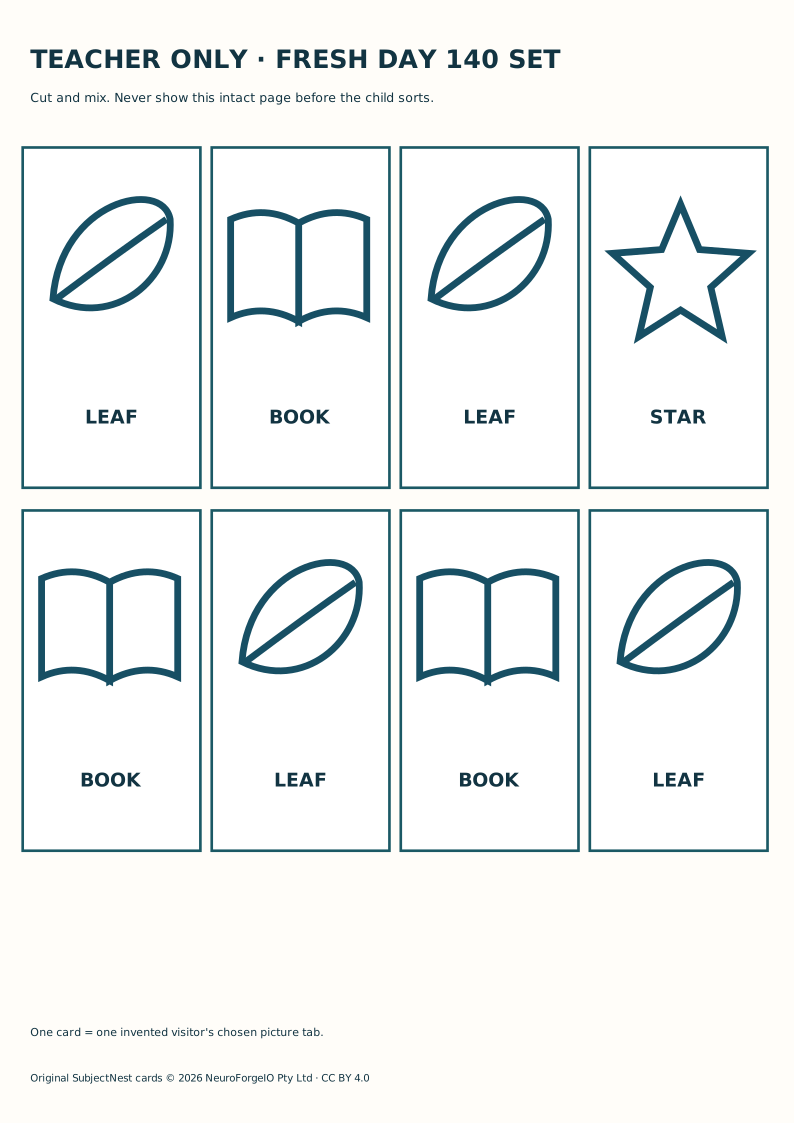
Ask child to collect/sort by pictured tab shape, show one card per response, identify most and fewest, compare BOOK with STAR by pairing/counting, state total if accessible, and say what one card represents. Ask what the set does not say about actual classmates or why the fictional visitors chose shapes. Preserve first group and relation before key feedback.
Exact key: LEAF 4, BOOK 3, STAR 1, total 8; LEAF most, STAR fewest; BOOK has two more cards than STAR (or simply more, if difference number is not the target). Group by picture tab, not card position/colour/back identifier. It is a teacher-made fictional dataset, so it cannot establish a real class choice, any absent respondent's choice or a reason. Accept one-to-one matching, counting, AAC/sign/voice or child-directed placement with prompt level logged.
Next move: wrong feature → contrast two large labelled shapes and sort a new four-card set; card lost/doubled → move each from unsorted pile once, then recount new set; count correct but comparison wrong → align matching pairs in separate rows, then new counts; reason or real-class claim invented → distinguish source of picture data from a respondent explanation and make a different fictional question; nine-card load too high → fresh two-category four/five-card diagnostic, retain Day 140 first attempt unchanged; secure sorting and bounded comparison → invite a different safe data question and display with a new fictional set, not an automatic real survey.
Private record: learner code/date ; first R/S start alignment/result/reason ; verified balance status and first U/V result/reason ; Day 140 first collect/sort/count/compare/source boundary ; adult label reading/access/help ; revision ; next lesson/recheck ___ . Follow school storage policy. No named peer, photograph, voice recording, home object or personal answer is required.
Original checks and keys © 2026 NeuroForgeIO Pty Ltd, CC BY 4.0. Credit, link and indicate changes.