Use the exact practice sets and text/tactile routes, clean learner cards and A4 aid. Keep fresh Days 135/140 checks out of view. Record first child-controlled comparison/sort and evidence before correction. Adult reading of labels and access support is documented, not scored as a maths error. Maths and science/HASS observations remain distinct.
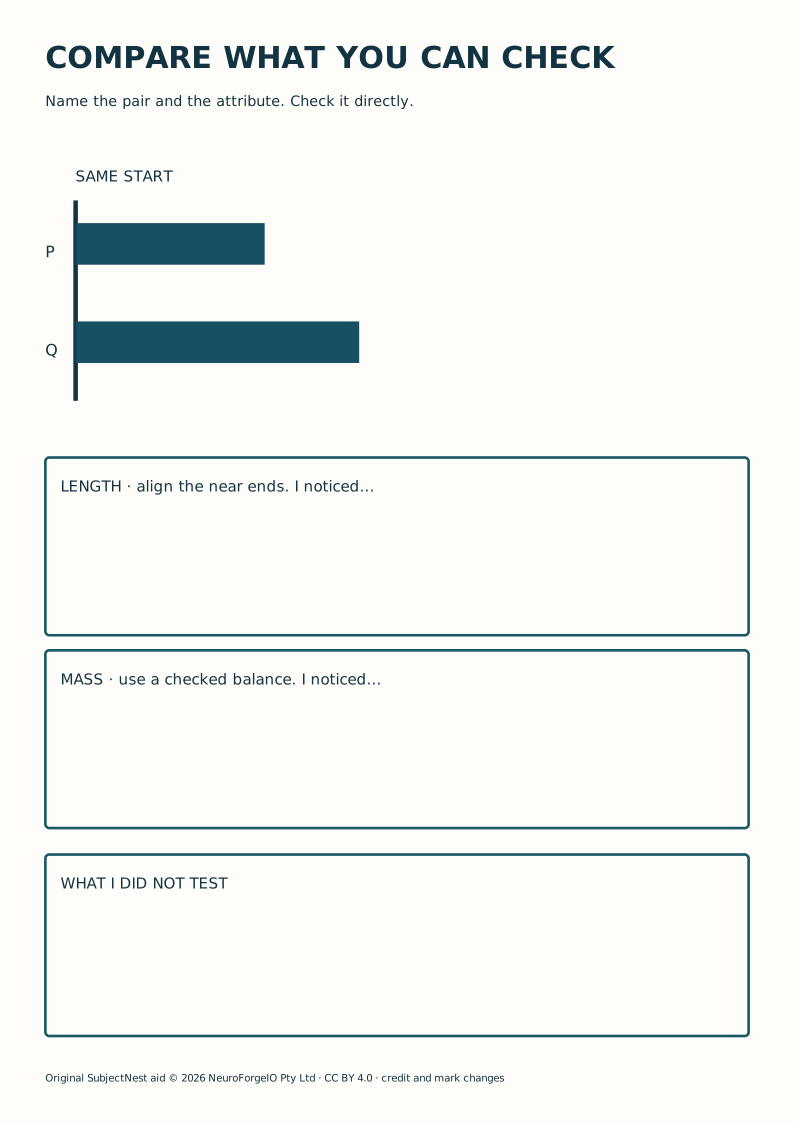
Week 27 · Day 131 — Align to compare length
Goal: directly compare two lengths using a common start. Proposed code: AC9MFM01. Prepare: Card 131 and practice Set L1.
- Name attribute · 3 min. Show two safe broad strips; ask whether the question concerns length, colour or weight. Say “Which reaches farther from the same start?”
- Model · 4 min. Lay P and Q at the printed start line; point along each edge without announcing answer from colour.
- Guide · 5 min. Child/directing partner checks near ends meet; if shifted, reset before deciding. Adult gives neutral touch/description if needed.
- Independent compare · 7 min. Child chooses paper bookmark, model bridge or sign strip route, aligns a pair and states which is longer with the other strip named.
- Check · 4 min. Swap the two strips' vertical order; ask if length changed. Require a direct aligned reason, not “top one.”
- Exit · 2 min. Child shows the start edge used. If ends were misaligned, begin Day 132 with two equal strips.
Week 27 · Day 132 — A shifted end can mislead
Goal: show equal length after correcting misalignment. Proposed code: AC9MFM01. Prepare: Card 132, two identical Set L2 strips.
- Retrieve · 3 min. Ask why yesterday's pair began at the same edge. Child demonstrates or directs alignment.
- Model · 4 min. Lay equal strips with different starting positions and voice a deliberately tentative “this one sticks out.” Then align starts and withdraw the premature claim.
- Guide · 5 min. Children slide/tell adult to slide strips to a shared near end; compare far ends by sight/touch/neutral description.
- Independent compare · 7 min. Child tests a different equal-length pair in maker, story strip or costume display context and records first answer then corrected answer if needed.
- Check · 4 min. Ask whether a wide strip must be longer. Test a wide/short versus narrow/long paper pair; width is another attribute.
- Exit · 2 min. Child says “same length” with aligned-edge evidence. If not, use one tactile start stop tomorrow.
Week 27 · Day 133 — Mass needs a direct test
Goal: compare mass with a checked balance rather than size inference. Proposed code: AC9MFM01. Prepare: Card 133, preflight Set M1 (equal trays, two versus five identical large blocks), approved balance.
- Question · 3 min. Ask “Which tray is heavier?” while both appear the same size. Avoid revealing hidden block count.
- Model · 4 min. Check empty equal trays balance; show how a side going down under the same conditions indicates more mass in that loaded tray.
- Guide · 5 min. Place loaded trays on balance without telling answer. Child watches/feels/hears agreed neutral indication and names what was directly observed.
- Independent compare · 7 min. Child repeats with positions swapped, names heavier tray relative to the other and shows the side/result. Offer child-directed adult handling.
- Check · 4 min. Reveal identical block counts only after first observation; ask whether size of container alone proved weight. Record if the balance malfunctioned and reprepare.
- Exit · 2 min. Child completes “I know because the checked balance ___.” If “looks bigger,” use Set M2 next.
Week 27 · Day 134 — Similar in one way, different in another
Goal: compare specified attributes separately and explain a counterexample. Proposed code: AC9MFM01. Prepare: Card 134, L1/L2 strips and preflight M2 large-empty/small-loaded containers.
- Retrieve · 3 min. Child names length and mass as two different questions; choose one physical tool for each.
- Model · 4 min. Show two strips can be equal length yet different widths. Equal on one attribute is not “the same in every way.”
- Guide · 5 min. Compare L2 length directly, then observe the checked mass of M2; do not infer mass from apparent container size.
- Independent account · 7 min. Child chooses toy bridge, paper sign or maker container and makes two bounded sentences: alike in a tested attribute; different in another tested attribute.
- Counterexample · 4 min. Present bigger empty box and smaller loaded container. Ask what first guess a viewer might make and what the balance actually showed.
- Exit · 2 min. Child identifies which attribute was not tested in a chosen pair. Keep fresh Day 135 setup hidden.
Week 27 · Day 135 — Unseen direct comparison check
Goal: independently align a new length pair and observe a new direct mass comparison. Proposed code: AC9MFM01. Prepare: teacher-held Day 135 sets, private record; Card 135 after check only.
- Welcome · 3 min. Say there are two new object questions, not a speed race or body comparison.
- Attribute choice · 4 min. Ask which tool/action would answer “longer?” and which would answer “heavier?” without using assessment pieces.
- Fresh length · 5 min. Give unseen strips, initially shifted; child aligns and compares with first position/words recorded.
- Fresh mass · 7 min. Present verified equal containers on balance with hidden safe blocks. Child observes, names heavier side relative to other, and explains what counted as evidence.
- Boundary · 4 min. Ask one attribute the setup did not test and whether length proved mass. Save answer before key feedback.
- Close · 2 min. Select exact next move; release Card 135 practice after individual check.
Week 28 · Day 136 — State the question and one-card meaning
Goal: collect fictional image responses for a given familiar display question. Proposed code: AC9MFST01. Prepare: Card 136, cut/mixed six-card practice set, three blank category trays.
- Question · 3 min. Say exact given question from Materials; label source six invented visitors, not our class.
- Model · 4 min. Place one circle card in the circle tray because of its shape; explain one card means one recorded fictional response.
- Guide · 5 min. Child sorts one triangle and one square card by shape, not card position or imagined person's name.
- Independent collect/sort · 7 min. Child collects remaining mixed cards, places each once and describes rule. Record first placement, omissions and help.
- Check · 4 min. Ask what a card cannot tell: why the invented person chose the shape or what real classmates prefer.
- Exit · 2 min. Child shows one card/group link. If categories blur, start with two shapes tomorrow.
Week 28 · Day 137 — Compare the displayed responses
Goal: compare fictional response groups by one-to-one matching or counting. Proposed code: AC9MFST01. Prepare: Card 137, same mixed six-card set, large display spaces.
- Retrieve · 3 min. Child repeats the question and who the cards represent; no real learner vote is presumed.
- Model · 4 min. Line circle and square cards in matched pairs; show any unmatched card is evidence of more in that display.
- Guide · 5 min. Child rebuilds all three groups, one card once, then pairs triangle and circle cards without changing card counts.
- Independent compare · 7 min. Child identifies most/fewest or a true same/different comparison, points to matched/unmatched cards or counts, and states “among these six.”
- Check · 4 min. Spread square card farther away; ask if spacing makes more responses. Restore aligned rows and compare again.
- Exit · 2 min. Child names evidence for one group relation. If spacing governs, use large pair trays tomorrow.
Week 28 · Day 138 — A new dataset can change a result
Goal: re-collect a revised fictional set without rewriting the first record. Proposed code: AC9MFST01. Prepare: Card 138, original set and documented new trial with one triangle replaced by a square.
- Retrieve · 3 min. Rebuild yesterday's unchanged display and describe one comparison from its actual cards.
- Model · 4 min. Announce new trial and swap one card explicitly; keep old display intact for comparison, not as a mistaken past result.
- Guide · 5 min. Child sorts new six-card set, checks each card is once and aligns categories.
- Independent compare · 7 min. Child identifies whether groups now have more/fewer/same, using matching/counting and a named dataset.
- Source check · 4 min. Ask whether the first fictional visitor changed their mind. No; this is a different teacher-made set. Do not claim a real class became evenly split.
- Exit · 2 min. Child points to the exact swapped category and the changed comparison. If old/new blend, use two labelled mats tomorrow.
Week 28 · Day 139 — Ask what the cards can answer
Goal: state a given question, represent responses and reject unsupported reasons. Proposed code: AC9MFST01. Prepare: Card 139, optional fictional bookmark or toy-stage set with exact counts from Materials.
- Question · 3 min. Choose one new fictional domain and state its shape/edge/cue question, categories and source before sorting.
- Model · 4 min. Put one answer token in a matching tray; do not put a name or private reason on it.
- Guide · 5 min. Child sorts two example tokens and names the observed picture feature; teacher checks exact set size.
- Independent display · 7 min. Child completes rest, compares two groups with matching/counting, and says “of these invented answers.”
- Limit check · 4 min. Ask whether display proves why a respondent chose a card or how all real visitors would answer. Child identifies information missing.
- Exit · 2 min. Child gives one supported comparison. Keep Day 140 card inventory hidden.
Week 28 · Day 140 — New fictional data check
Goal: collect, sort and compare a fresh image set for a stated question and source. Proposed code: AC9MFST01. Prepare: teacher-held Day 140 set/key, empty categories, Card 140 after check.
- Welcome · 3 min. Name the source as invented respondents and explain this is to choose next practice; no real vote is collected.
- Question · 4 min. State new exact question and adult-read category labels; do not reveal counts or show intact layout.
- Collect · 5 min. Child receives mixed safe large cards, with tactile/description access documented, and starts grouping.
- Independent sort/compare · 7 min. Child places each card once, names category rule, most/fewest and a pairwise relation with matching/count evidence. Preserve first response.
- Source boundary · 4 min. Ask what one card represents and what the set cannot say about real classmates or reasons.
- Close · 2 min. Choose exact next teaching from key; Card 140 is practice only after check.
Use Week 27 and Week 28 to sample science observation and HASS questioning separately. Maths result does not establish either subject's full description.
Original SubjectNest scripts © 2026 NeuroForgeIO Pty Ltd, CC BY 4.0. Credit, link and indicate changes.