Five 35-minute integrated blocks · Foundation / Queensland Prep teacher draft. Use English Days 131–135, maths Days 131–135, the original adult information sources, fact/question mat, comparison mat and exact safe practice sets. Integrated practice occurs after a subject's independent check on Day 135, never before it. The question is about these objects in this observation; a shared feature does not prove identical material or use.
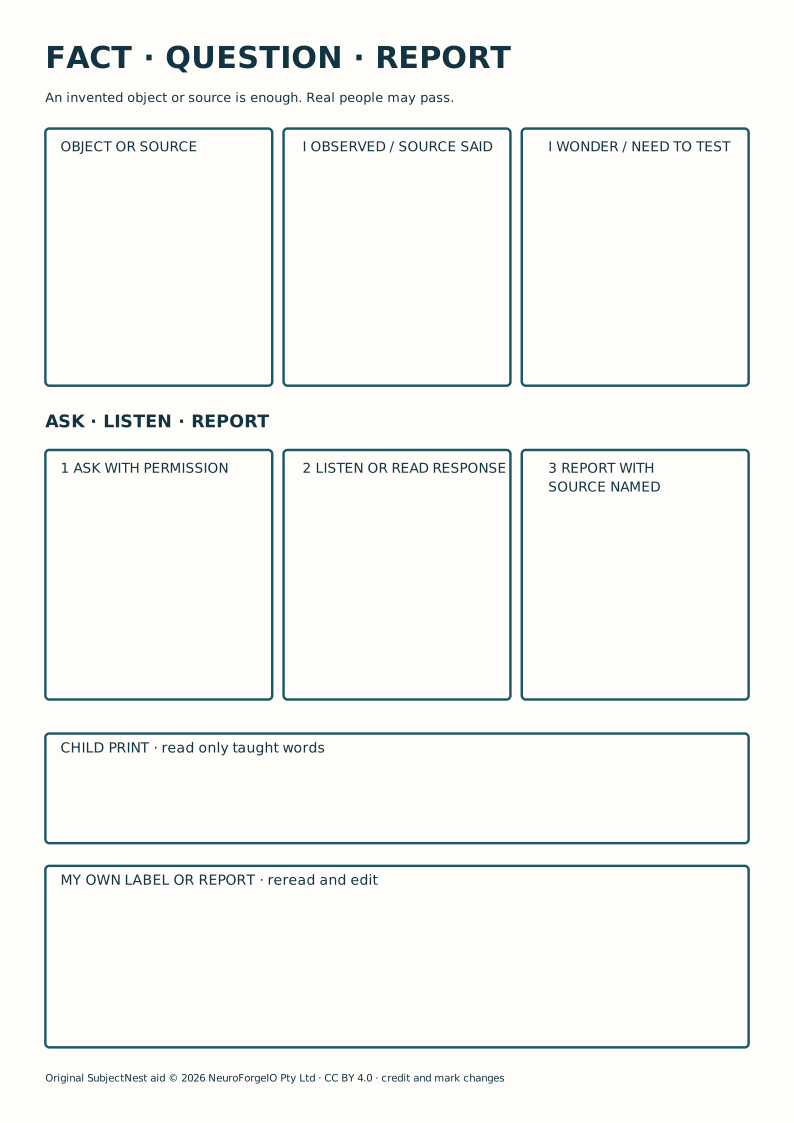
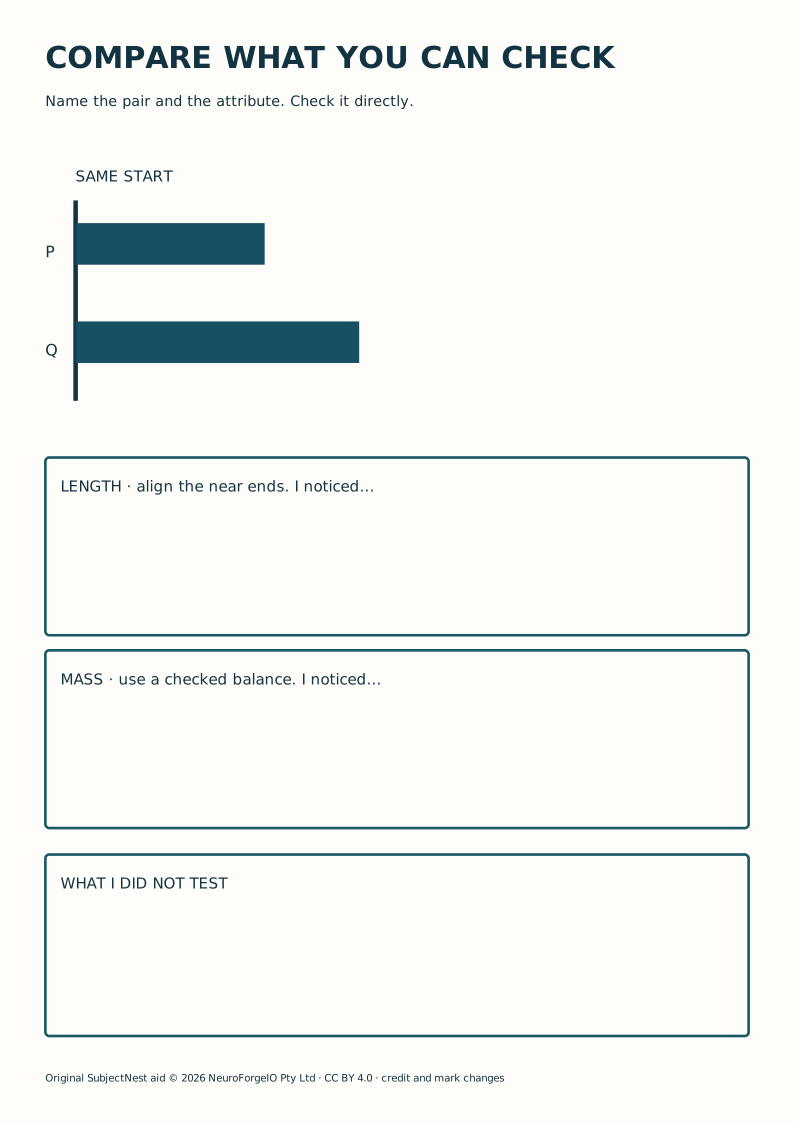
Ready-to-run setup: Place two broad paper strips of different length, two equal strips offset at the start, one smooth paper rectangle and one ribbed fabric square, all large and clean. Prepare a checked equal-arm balance with identical trays and two vs five identical large safe blocks. Preflight strips, empty balance and loaded direction before class. Use paper facsimiles, tactile outlines or neutral verbal descriptions when touching is not preferred. Do not use sharp edges, loose small pieces, unknown allergens, heat, water tests or body comparisons. Keep a blank observation table with columns object pair / attribute actually tested / first prediction / observed result / source or tool / new question. A child's prediction may be wrong; keep it visible and revise after observation. Use a single property per sort and retain any counterexample.
| Day | Thirty-five-minute sequence | What to record, and next move |
|---|---|---|
| 131 · One pair, one visible property | 5 min ask “What could we compare directly?” and offer paper bookmarks, model bridge strips or sign strips; 7 min adult reads the original tray information source; 8 min align near ends of two safe strips and have learners predict/observe longer in this pair; 10 min each child sorts three large objects by one stated observed property, then gives an English label to a chosen listener; 5 min ask what was not tested, such as waterproofing. | Save initial sort rule and a physical edge clue; English label/meaning, maths length reason and science property observation get separate columns. If an item fits two groups, clarify the chosen one-property rule and show the counterexample rather than hiding it. |
| 132 · Same length, different look | 5 min present two equal strips deliberately misaligned; 7 min children direct alignment and identify true equal length; 8 min inspect/describe smooth paper versus ribbed fabric and ask whether shared flexibility proves same material; 10 min sort four safe samples first by bend/texture and then by teacher-verified material label, keeping an item whose property crosses labels; 5 min place one observation and one new test question in different boxes. | Record first and revised length claim; in science, “both bend” is an observation here, whereas “both are paper” is false if material labels differ. If a child generalises all paper/fabric, bring a second approved sample before revisiting. |
| 133 · Heavy is a different question | 5 min ask child to predict whether equal-sized covered trays can differ in mass; 7 min show empty-balance preflight and load checked M1 without a size cue; 8 min child observes which side goes down, perhaps through neutral auditory/tactile description; 10 min compare a larger empty and smaller loaded container with preflight M2, then make an information label saying only what was tested; 5 min ask how the first prediction changed. | Record balance result actually seen, response mode and any equipment failure. Mass cannot be inferred from tray height, label or material alone. If equipment is unverified, stop the keyed demonstration and use a fresh checked pair later. |
| 134 · Test a one-property sort | 5 min choose paper bookmark, fabric collage or toy-stage object pair; 7 min learner predicts one observable property and writes/directs its category rule; 8 min inspect each large safe object, moving it exactly once into matching category; 10 min find or present a counterexample that has the chosen property but a different material/size, then child revises a bounded information label; 5 min invite a listener to repeat the new rule. | Preserve first sort and counterexample; record “same in property X, different in property Y.” If categories overlap, choose a clearer question and retest rather than forcing object into a false exclusive class. |
| 135 · New pair, honest conclusion | 5 min only after separate held-out English/maths checks, offer a different practice pair; 7 min child names an attribute and safe direct test; 8 min child aligns or balances and records observation on blank mat; 10 min child creates one short information label and one question needing another test, with a partner allowed to challenge a generalisation; 5 min compare original prediction to actual result. | Do not rehearse the Day 135 unseen strips/trays or English source beforehand. Record whether math result, source label and science observation each occurred. A paper picture alone is not mass evidence. |
Three varied routes: book/story materials, maker table objects, and toy/paper-stage displays. Each has a visual, tactile/description and AAC/sign/voice route; a child can direct adult placement. A route is selected for access or interest, not assigned from a fixed “learning style.” If a child declines touch, use accessible direct observation of the same setup and log what was actually observed. No personal possession, purchase or real place is required.
Curriculum boundary: partial Foundation links AC9SFU03 (objects made of materials and observable properties), AC9SFI01 (questions/predictions), AC9SFI02 (safe investigation and sense observations), AC9SFI03 (represent observation in provided template), AC9SFI04 (compare prediction and observation with guidance), mathematics AC9MFM01 (direct length/mass comparison and reason), and English AC9EFLA07, AC9EFLY01, AC9EFLY05 and AC9EFLY06 (image/word information, purpose, comprehension, shared edit where actually observed). Science content is sampled only when children inspect the material/property; mass work does not automatically show material identity. Exact codes and Foundation Year source rows checked against the official ACARA v9 workbook, retrieved 29 September 2026, SHA-256 db446882d2c00cf7c085a03e250e2442fda6c44011fc114680c46c1dc7a822c3. These are partial proposals, not full content or authority endorsement.
Original integrated guide and linked authored aids © 2026 NeuroForgeIO Pty Ltd, CC BY 4.0. Credit, link and indicate changes. Human science/safety/access/state mapping and classroom trial review pending.