Adult reads all category labels and questions as needed. Have child make a first direct comparison before a prompt. Keep Days 135/140 sets unseen; learner practice is in clean cards. These are fictional model tasks, never a real survey or claim about an actual community.
Week 27 · compare one attribute at a time
Practice length Set L1: The original A4 comparison mat has two horizontal solid bars, both beginning at x = 20 mm on a printed actual-size page. P is 50 mm long; Q is 75 mm long. Ask which is longer, how aligned starts show it and whether the bars' colours matter (they do not). If print scale changed, do not use claimed millimetres; cut two teacher-made strips with visibly different lengths and align their near ends directly. Key: Q longer than P in this pair.
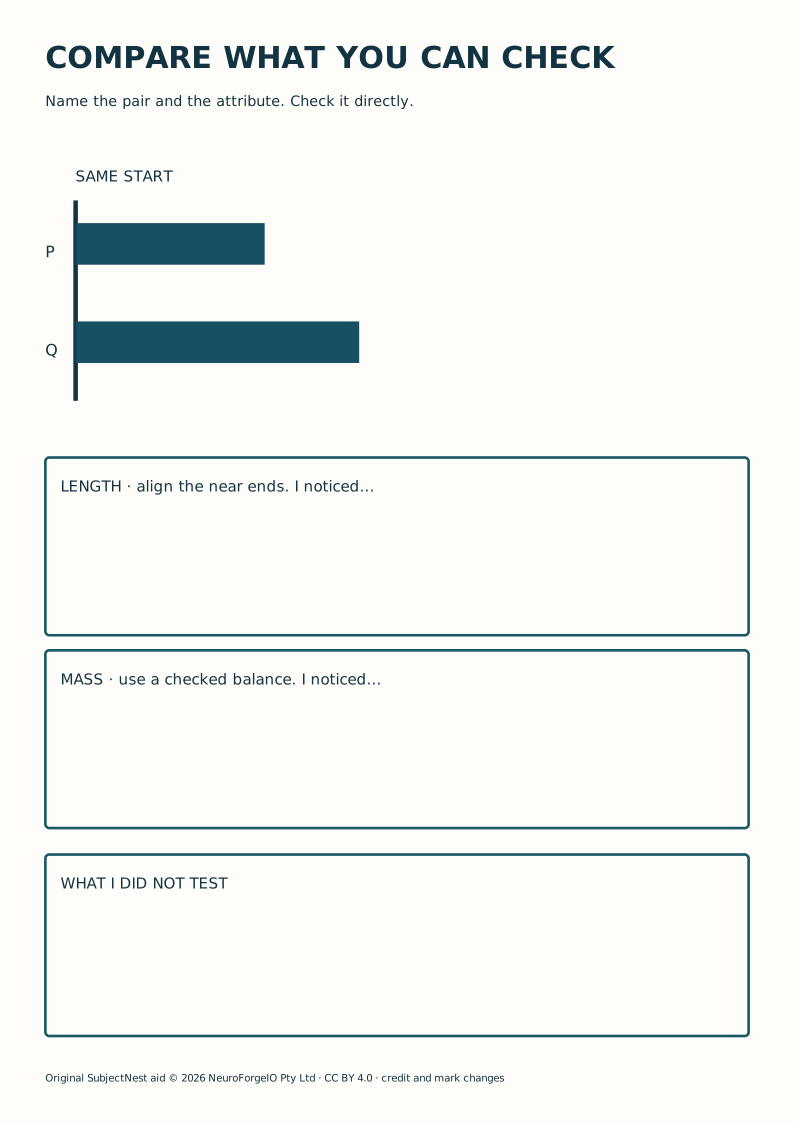
Practice length Set L2: Cut two identical 60 mm broad paper strips. Lay one beginning 15 mm to the right of the other. The one that sticks farther right is not longer; align near ends before comparison. Key: same length after alignment. Keep this separate from L1 so a child cannot rely on one answer pattern. Use raised tape edges or child-directed adult alignment for nonvisual access.
Practice mass Set M1: Prepare two identical, clean, empty, safe broad trays or fabric pouches. Check that empty containers balance on a locally approved equal-arm balance. Put two large identical safe blocks in tray A and five of the same blocks in tray B, out of view if a blind mass comparison is desired. Preflight that B's side goes down; if it does not, level/replace equipment and do not use a predetermined key. Child may observe the balance or choose a safe direct heft route; no child must lift or touch an object. Key for the checked set: B heavier than A. Block count explains why only after mass observation; do not substitute size/colour guesses for direct comparison.
Practice counterexample Set M2: Use one large empty cardboard box and one smaller container with approved large blocks. Make the smaller container heavier in a checked direct balance. The visible larger box is not necessarily heavier. Keep material, capacity and mass words separate. Do not assume the result from construction: preflight and disclose it after child observation. If setup varies, record the actual balance result and adapt the question.
Three life domains: paper story strips/bookmarks (length), maker containers (mass) and toy display/object labels (attribute choice). Children compare safe model objects, not real backpacks, classmates or bodies. For integrated science, use a paper/fabric sample with an observed bend/texture in addition to length/mass; a different material can share one property. See Week 27 guide.
Week 28 · a given question and fictional answers
Given practice question: “Which large paper label shape did these six invented visitors choose for a made-up story board: circle, triangle or square?” Cut the original A4 response cards along outlines and mix before child collection. The intact sheet reveals the counts; do not show it as the task. Each card has one large shape and word. Inventory on reverse only: circle C1/C2, triangle T1/T2/T3, square S1. Key: circle 2, triangle 3, square 1, total 6. Triangle has most; square fewest; circle is one more than square. Exactly one card = one fictional recorded response. Categories are shape, not card colour or serial mark.
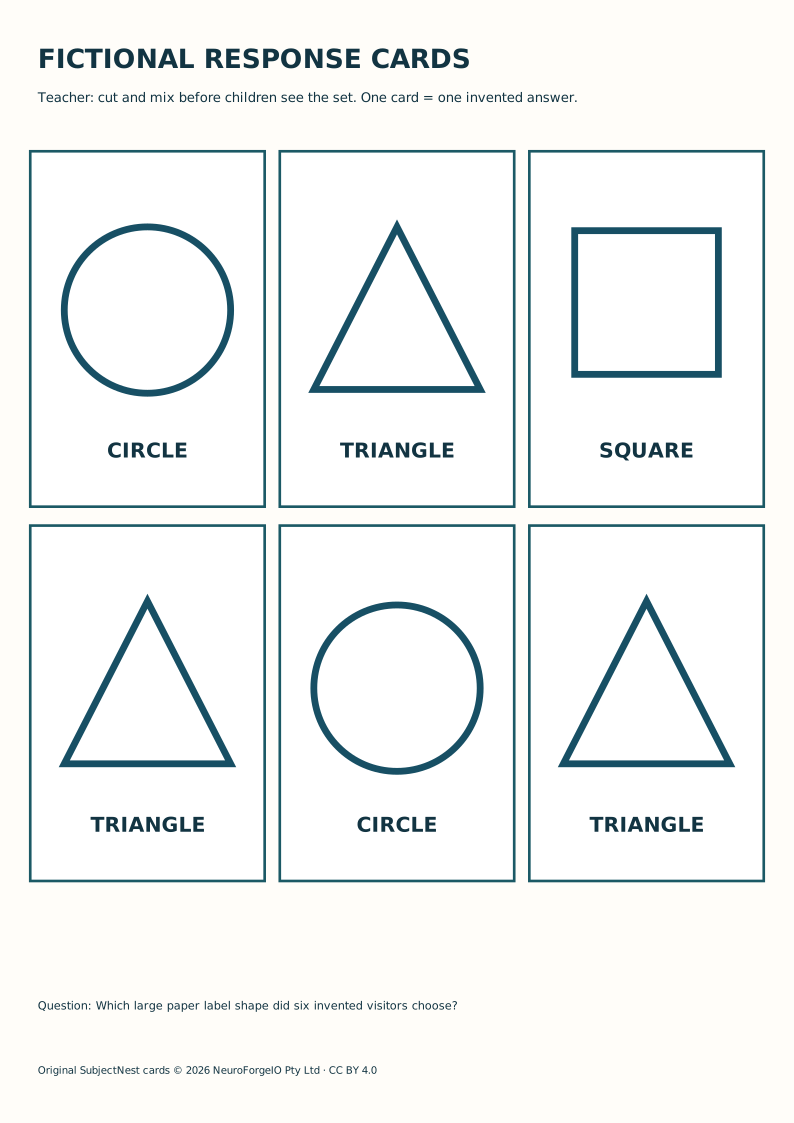
Revised trial Day 138: Print a second card sheet and cut one extra square card, keeping all other duplicate cards out of view. Make a new six-card fictional set by replacing one triangle card with that extra square; keep the first set as earlier evidence. New counts circle 2, triangle 2, square 2. State that the dataset changed, not that a person changed their mind. Ask whether the equal display means every real visitor would choose equally; it does not.
Alternative fictional contexts Day 139: The same mathematical method can answer “Which paper bookmark edge did five invented readers choose?” with smooth S1/S2 and raised R1/R2/R3, or “Which toy stage cue did seven invented performers choose?” with star 2, dot 4, bar 1. Make original safe large image cards and state those exact counts before mixing. These are optional additional data domains, not a claim about accessibility for every reader/performer. A choice reason is known only if the source states it; data cards alone record shape/edge/cue choice.
Actual voluntary class question only if locally approved: obtain consent/opt-out, use a neutral object-only question, collect one anonymous token per willing response, do not gather names, photos, voices, family/culture/health/location or reasons, and use school retention/storage procedures. State “among these responses” rather than “the class prefers.” If permission is unclear, use the complete fictional set above.
Exact print and tactile alternatives
Comparison mat: A4 portrait. Title “Compare what you can check.” Two labelled bars P/Q begin at the same vertical start line; P 50 mm, Q 75 mm on actual-size print. Two blank boxes say “Length: align the near ends; I noticed ” and “Mass: use a checked balance; I noticed .” A final blank row says “What I did not test.” No mass answer is printed. Nonvisual: two raised broad strips cut to lengths 50/75 mm and aligned on a tactile start edge; use a physical approved balance that the learner can safely hear/feel/receive a neutral description of, and separate response trays. Adult describes without naming longer/heavier before first attempt.
Fictional response cards: A4 portrait sheet of six cut rectangles, each at least 52 mm wide, with large outline shape and a word: CIRCLE twice, TRIANGLE three times, SQUARE once. Cut/mix before learner view. Nonvisual: two large round-edged, three three-cornered and one four-cornered sturdy shape cards, each read aloud and placed once. A learner may direct an adult to sort; record any category cue. Use three large labelled trays as a data display and match pairs or count to compare. Colour alone never encodes category.
Observation record: set/question and source ; first child alignment/balance observation or sort ; exact attribute/category named ; direct evidence/matched pair ; help/access route ; unsupported claim noticed ; revised response ; next lesson . Do not present key count/weight before first attempt.
Original sets and descriptions © 2026 NeuroForgeIO Pty Ltd, CC BY 4.0. Credit, link and indicate changes.