Five 35-minute integrated blocks · Foundation / Queensland Prep teacher draft. Use English Days 136–140, maths Days 136–140, the original fictional interview, question/report aid, and cut/mixed fictional response cards. A fictional respondent is the complete default, so this week does not depend on a child's family, classmate identity or a real person's participation. New Day 140 checks stay hidden until the separate subject assessment.
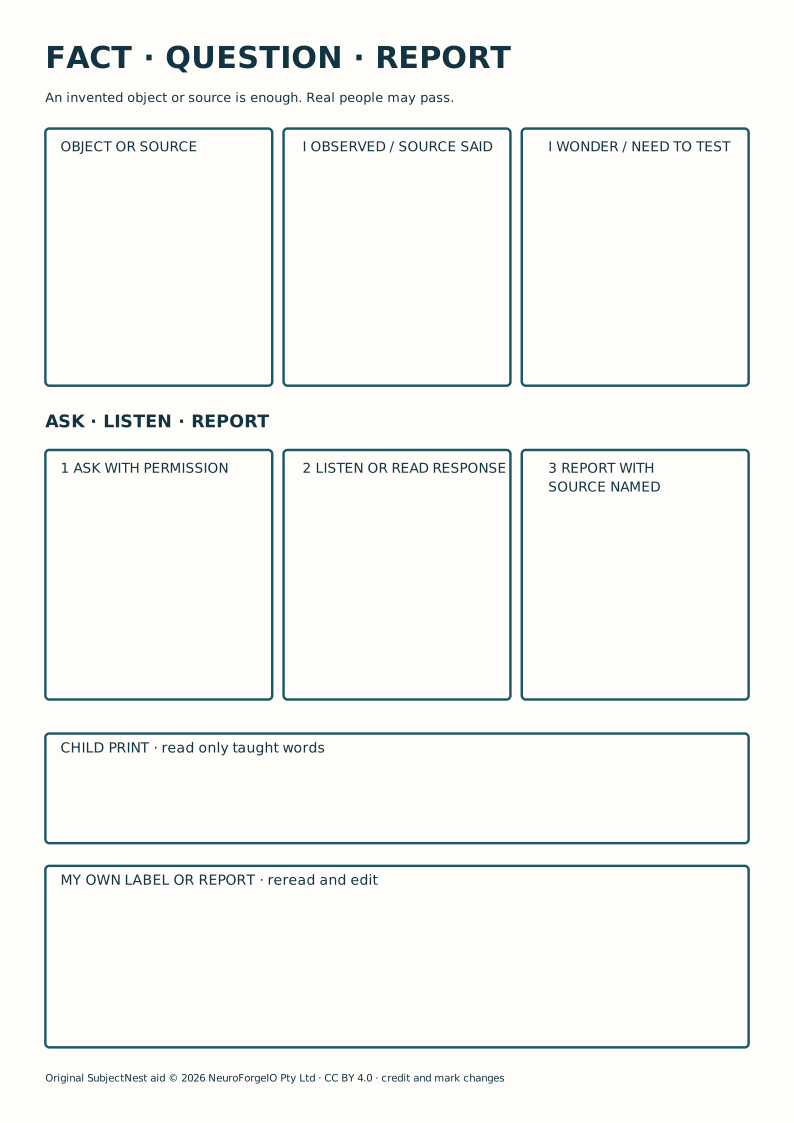
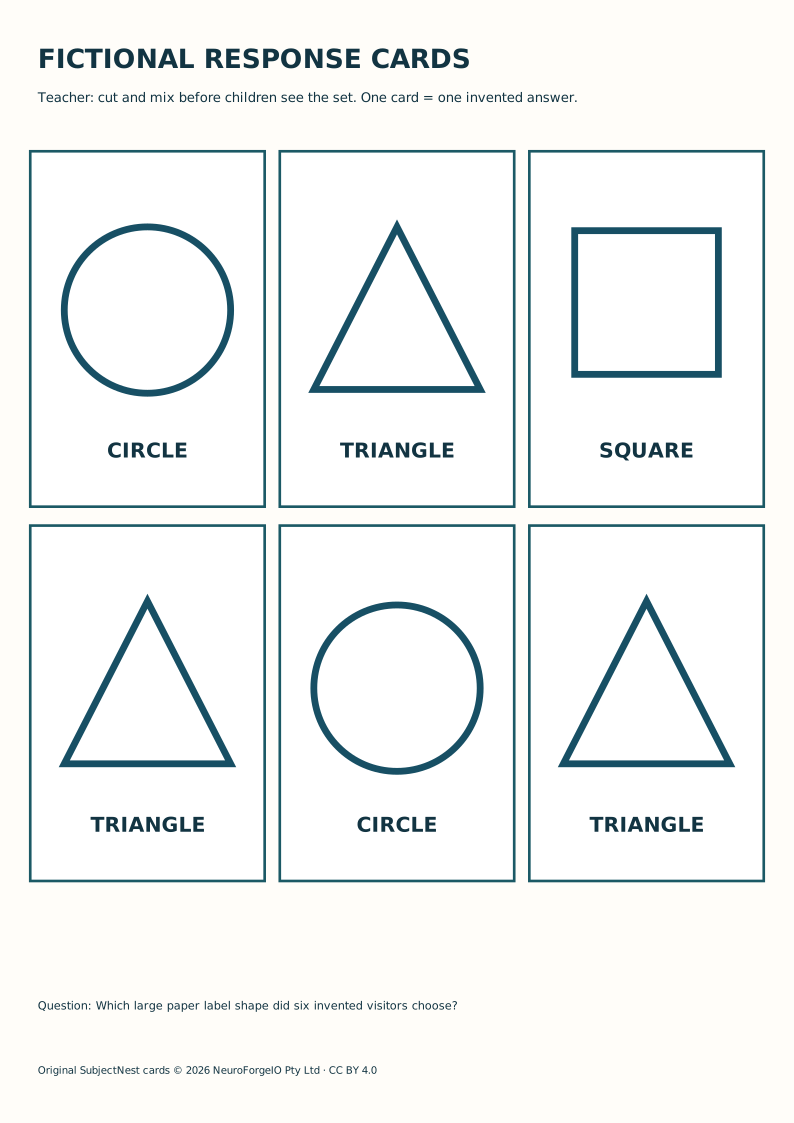
Prepare: two adult paper-role voices (interviewer/respondent), three large answer shapes, “yes / pass / repeat” choice cards, six cut/mixed fictional image responses plus one extra square card cut from a second printed sheet for Day 138, three blank sorting trays, and a private record with source / exact question / first answer / reason if stated / respondent correction / report / data counts / unsupported claim. Explain that permission may be withdrawn; accept a pass without asking why. The optional real interview is only a neutral object/display question to a consenting adult or peer under local policy, with no names, photos, audio, identifiable quote, family/culture/health/location question or public upload. If storage/consent is uncertain, use the fictional route. Anonymous real responses must be reported with their actual denominator and opt-outs; do not pool them with fiction.
| Day | Thirty-five-minute sequence | What to record, and next move |
|---|---|---|
| 136 · Ask and allow a pass | 5 min show “May I ask? / pass / repeat” cards and practise accepting each; 7 min adult performs Iva's invented response about a wide stripe for one paper model; 8 min learners distinguish Iva's exact choice/reason from a different person's possible view; 10 min each child poses an answerable, neutral question to an adult acting a book, maker or toy-display respondent; 5 min learner reports what that fictional source actually answered or that it passed. | Keep source words and child's first report. Asking is HASS/English evidence when actually done; a paper-role answer is not a real class preference. If child pressures a respondent after pass, model stopping and repeat with a willing fictional role. |
| 137 · A perspective has an owner | 5 min revisit Iva, Sol or Ari as three distinct fictional sources; 7 min hear Sol's raised-dot response, including only the reason stated; 8 min compare a faithful “Sol said…” report with “everyone needs dots”; 10 min children choose a source, place source/choice/reason tokens, then offer a spoken/AAC/sign report to a selected listener; 5 min the roleplayed source corrects one deliberately changed detail and child revises. | Save both versions. Sol's statement cannot establish an actual disability, all reader needs or another respondent's view. If reason is absent from a future answer, leave the reason box empty rather than invent it. |
| 138 · A question and a dataset | 5 min state maths given question about six invented visitors' label shapes; 7 min show one fictional response card per answer and mix the set; 8 min children sort by large shape into three trays; 10 min pairs compare groups with one-to-one matching/counting and say “among these six”; 5 min explicitly swap one card for a new teacher-made trial and ask what changed. | Record first sort, category rule, source and matching evidence. Do not report the changed set as the same respondents changing minds. An interview reason and an image tally are different information. |
| 139 · Report without changing meaning | 5 min choose an invented book-marker or toy-stage question; 7 min adult acts a response with one exact choice and optional reason; 8 min child asks/answers a neutral follow-up or passes and checks the source's words; 10 min child makes a short attributed report and a separate image-card display for an independently stated fictional dataset, then listener tests both; 5 min child edits one altered report/detail. | Record English report, maths one-card-per-response display and HASS source/perspective in distinct columns. An invented person's reason is not derivable from tally counts. If a child says “class liked,” restate the fictional population and ask what source could test a real class question. |
| 140 · A new answer, a bounded conclusion | 5 min only after separate unseen English/maths checks, choose a fresh practice fictional response; 7 min child asks permission and a clear object question; 8 min roleplayed respondent answers or passes, child repeats choice/reason for confirmation; 10 min small group builds a new image display from labelled fictional responses and compares two categories; 5 min each learner says one claim supported and one not supported. | Do not preview Nema's held-out dialogue or the eight held-out picture-tab cards. Record observed interaction, report accuracy, data comparison and any opt-out separately. A child who used AAC/private response participated; AC9EFLY07 peer voice is claimed only if it occurred. |
Three domains and choice routes: paper story-board labels, book markers and model maker/toy displays. A child may choose visual, tactile, spoken, signed, AAC, printed-question or child-directed adult routes. No one is required to perform a public interview, speak about their family, reveal identity, upload data or explain a pass. Source fidelity matters: attribute the exact answer to the respondent and keep respondent correction; a fictional answer is never a general accessibility fact.
Curriculum boundary: partial Foundation AC9HSFS01 (pose questions about familiar objects/people/places/events), AC9HSFS03 (share a perspective on information), and AC9HSFS04 (draw a conclusion in response to a question), together with AC9MFST01 (collect/sort/compare image data for a given question) and AC9EFLY02, AC9EFLY05, AC9EFLY06 and AC9EFLY07 (listening interaction, comprehension, shared text edit and peer spoken report only when the specified feature occurs). The HASS description about terms for the past and places is outside this interview task. A private/AAC report is valid participation but is not silently scored as voice volume to peers. Exact Foundation Year descriptions checked against the official ACARA v9 workbook, retrieved 29 September 2026, SHA-256 db446882d2c00cf7c085a03e250e2442fda6c44011fc114680c46c1dc7a822c3. These are partial proposals, not approval or measured learning gains.
Original integrated guide and linked authored aids © 2026 NeuroForgeIO Pty Ltd, CC BY 4.0. Credit, link and indicate changes. Human HASS/privacy/access/state mapping and classroom trial review pending.