Keep this page, the key and teacher-only print sheet from children until use. A child can use speech, AAC, large marks, touchable cards or direct an adult. Provide equivalent ordered information if a sensory route is inaccessible and document it. Record first child-controlled unit/count/comparison, any frame or prompt, and later correction. No one short set certifies the achievement standard.
Day 145 · fresh pattern
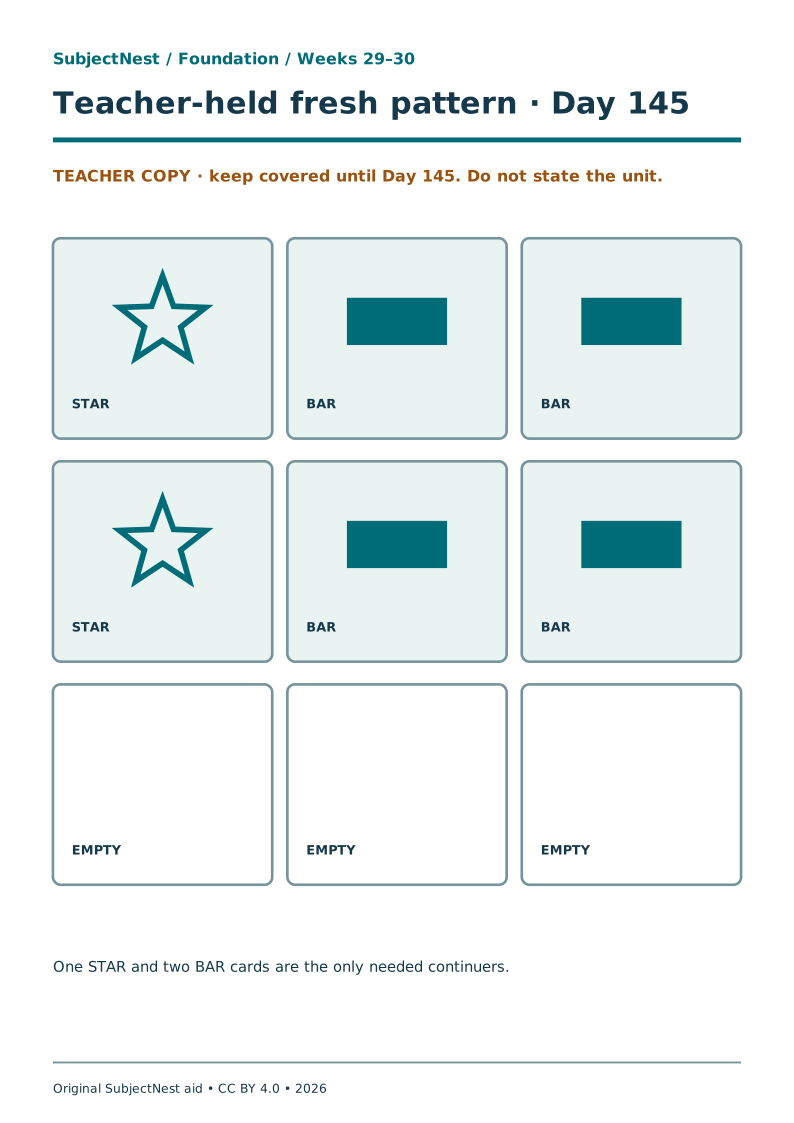
Prepare six broad cards in this exact order, with three blank places after them:
STAR / BAR / BAR / STAR / BAR / BAR / ___ / ___ / ___.
Do not state the unit. Give one STAR and two BAR spare cards, plus an additional distractor DOT. Ask child to:
- Show the shortest part that repeats and point to two complete occurrences.
- Fill three empty places. Save first order before comment.
- Translate that same pattern into a different accessible form, for example one gentle tap and two silent beats, or one tactile dot and two broad lines. A child who cannot/hears no sound uses marks; score order, not performance.
- Explain whether the single DOT distractor belongs next and why.
Keep the A4 teacher-only pattern card or PDF hidden until administration. If a printed symbol is difficult to distinguish, use exact spoken/tactile labels; do not replace the three-position structure.
Day 150 · fresh count and comparison
Precount 17 identical broad tiles for A, scattered, and 14 identical broad tiles for B, in a visually long close row. Check both sets out of children's view. Do not leave numeral or total on the child-facing tray. Ask child to:
- Count A with a tracked path and choose/write its numeral, if numerals are taught.
- Count B independently; determine which has more, using one-to-one matching or reliable count.
- Give a reason tied to counted tiles, not row length, colour or a design guess.
- Show one quantity another way, such as 10-and-some-more in a broad ten frame, marks, tally of one-to-one pairs or another accurate collection.
- Answer: “Does a greater piece count tell us which paper stand will hold a card better? What safe test would tell us?”
If a tile is dropped or hidden, stop and reprepare; do not score faulty materials. Do not physically test a stand during this maths check. The child may pass and try a different day. Use the key only after the first response.
Recording grid
| Component | First exact action/words and mode | Adult prompt or access move | Count/unit evidence | Next teaching date |
|---|---|---|---|---|
| 145 unit and two cycles | ||||
| 145 next three and translation | ||||
| 150 A quantity and representation | ||||
| 150 B quantity and comparison reason | ||||
| 150 claim boundary and safe next test |
Original SubjectNest check and print sheet © 2026 NeuroForgeIO Pty Ltd, CC BY 4.0. Credit, link and indicate changes.