Use exact large practice sets and alternatives, clean choice cards and A4 pattern and count aids. Keep Day 145/150 fresh sets out of view. Record the first child-controlled unit/count/comparison and what support came before it. Oral language, motor action and number reasoning are observed separately. A child may direct an adult, use AAC or work with large/screen-reader labelled virtual pieces.
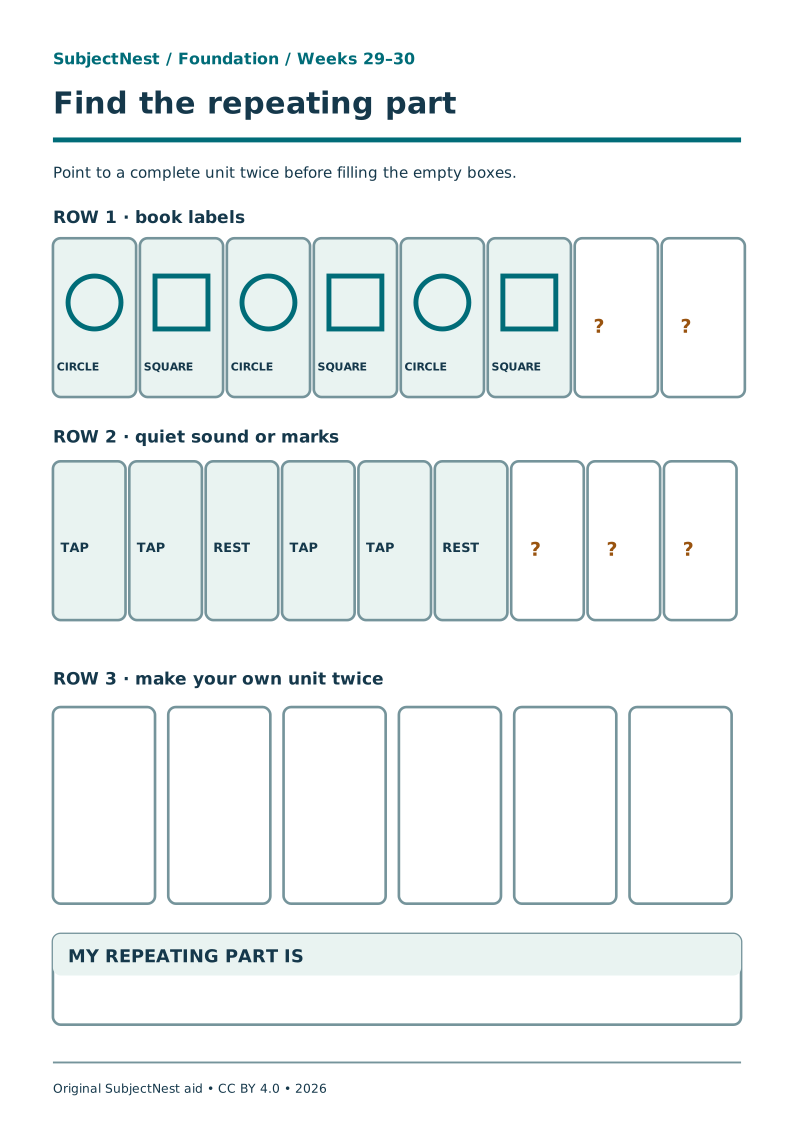
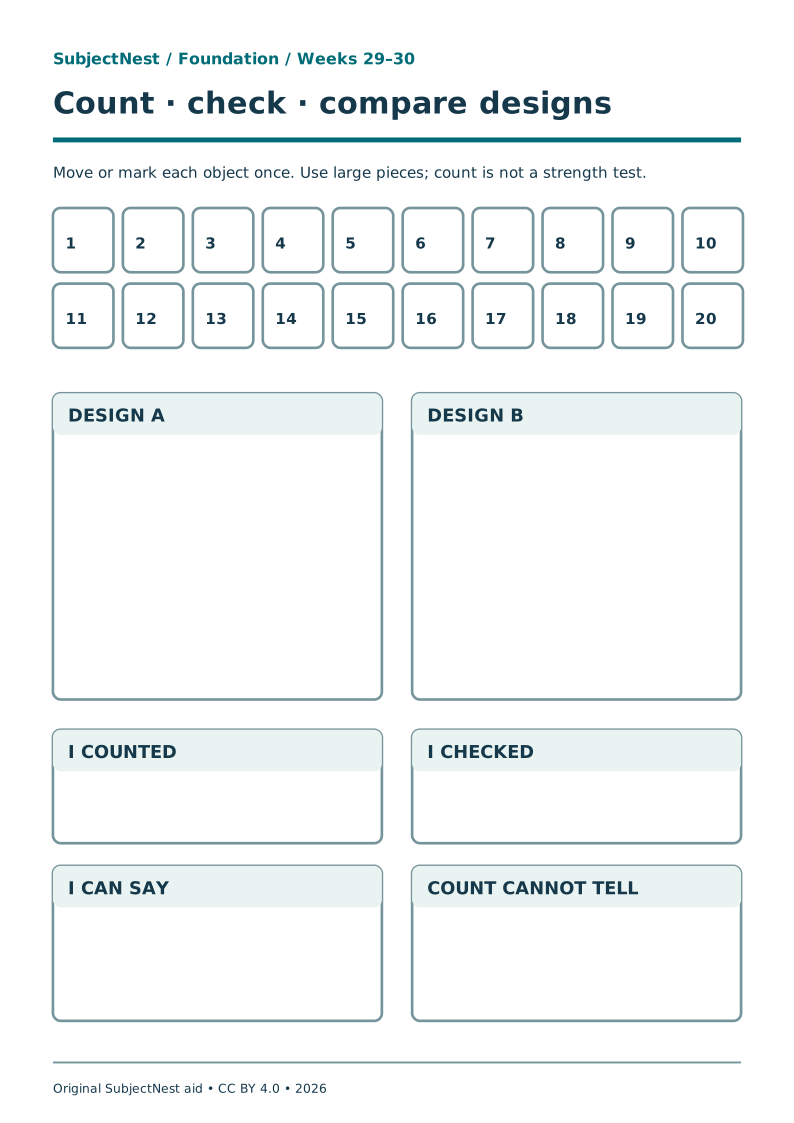
Week 29 · Day 141 — Find what repeats
Goal: copy and continue a two-symbol repeating unit. Proposed code: AC9MFA01. Prepare: P1, Card 141, pattern mat.
- Notice · 3 min. Show P1 without naming the rule; ask what comes again.
- Model · 4 min. Point to first circle–square as one unit and second circle–square as the same unit; slide a two-cell frame.
- Guide · 5 min. Child/directing adult frames the third unit, then predicts first empty cell before touching a card.
- Independent continue · 7 min. Child chooses book labels, paper route signs or toy-stage flags and builds two more symbols in the same order.
- Check · 4 min. Swap the last two cards and ask whether the original unit still repeats; save child's reason, not only answer.
- Exit · 2 min. Child shows one complete repeated part. If “circle only,” begin tomorrow with two separate units.
Week 29 · Day 142 — Catch and repair a break
Goal: identify a break in a stated two-part rule and repair it. Proposed code: AC9MFA01. Prepare: P4, P1, Card 142.
- Retrieve · 3 min. Child builds circle–square twice from mixed cards; adult does not point to the next position.
- Model · 4 min. State P4's intended circle–square rule and place a unit frame over positions 1–2, then 3–4; pause at mismatch.
- Guide · 5 min. Child locates the fourth card and chooses replacement; an adult can move it by child direction.
- Independent try · 7 min. In a bookmark, garden sign or model-fence context, child builds a new two-unit row with one deliberate break for an adult to find.
- Check · 4 min. Ask child to explain why a different later card is not enough to fix the original fourth-position break. Check two full units.
- Exit · 2 min. Child names or points to the repeated pair. If only appearance is copied, reduce to four positions tomorrow.
Week 29 · Day 143 — The same rule can sound or look different
Goal: represent a three-position repeating unit in sound/mark forms. Proposed code: AC9MFA01. Prepare: P2, Card 143; audio optional, never required.
- Listen/see · 3 min. Show or state P2 once: tap, tap, rest, tap, tap, rest. Provide a visual/tactile pulse simultaneously if needed.
- Model · 4 min. Place two TAP tokens and one thick REST bar in a three-cell frame; move frame to next cycle.
- Guide · 5 min. Child aligns first six symbols on the printed row or tactile strip, then marks the next three as a complete unit.
- Independent translate · 7 min. Child chooses quiet drum, desk-free visual flash or paper show, and gives the same order in a second medium without needing to make sound.
- Check · 4 min. Present tap, rest, tap; ask whether it preserves P2's unit and where the mismatch begins.
- Exit · 2 min. Child names all three positions. If rest is omitted, give it a thick tactile/blank-space marker tomorrow.
Week 29 · Day 144 — Make a unit someone else can continue
Goal: create and describe a repeating unit using distinct symbols and test its readability. Proposed code: AC9MFA01. Prepare: P3 and P5, Card 144.
- Retrieve · 3 min. Child tells what follows P3's two cycles; allow the unit frame but not an answer cue.
- Model · 4 min. Make dot–bar–triangle twice, then say “these three repeat.” Contrast three unrelated marks with only one cycle.
- Guide · 5 min. Child chooses two or three accessible symbols/actions and checks they can be distinguished without colour alone.
- Create · 7 min. Child builds at least two full repeats in book trim, maker flag or paper-stage cue, leaving one blank next position for a listener.
- Listener check · 4 min. Listener predicts the next item; child explains unit and may revise a confusing mark. Keep first and revised row.
- Exit · 2 min. Ask whether a listener's guess proves the unit repeats. Child points to two completed cycles as evidence.
Week 29 · Day 145 — New unit and extension check
Goal: independently identify, continue and translate a fresh repeating sequence. Proposed code: AC9MFA01. Prepare: teacher-held unseen Day 145 row, Card 145 only after.
- Welcome · 3 min. Explain a new pattern shows what to practise; no tapping or speed requirement.
- Warm known · 4 min. Briefly revisit P1 with two large cards, not the check row.
- Fresh view · 5 min. Show unseen row with no rule stated; provide equivalent ordered verbal/tactile labels.
- Independent extend · 7 min. Child identifies full unit, adds next three positions and explains how two cycles support the choice. Save first response.
- Transfer · 4 min. Child represents the same unit using different accessible marks/actions without changing order.
- Close · 2 min. Use separate key for next move; release Card 145 only after check.
Week 30 · Day 146 — Count once, show the quantity another way
Goal: count and represent a collection of 13 using a tracked path. Proposed codes: AC9MFN01, AC9MFN03. Prepare: C1, Card 146, count mat.
- Estimate/question · 3 min. Ask how to know how many stand pieces are here; accept a guess but label it a guess.
- Model · 4 min. Move each broad tile to one indexed place, saying one count word per tile through ten; then add three.
- Guide · 5 min. Child tracks all 13 once, points/uses AAC to say last count as total, then checks 10-and-3 arrangement.
- Independent represent · 7 min. Child chooses sign stand, paper garden border or story shelf; shows thirteen by tiles, marks or numeral with materials.
- Check · 4 min. Scatter same tiles and ask whether quantity changed. Child recounts or gives a one-to-one reason; note if tracking was needed.
- Exit · 2 min. Child states total and shows where each object was counted once.
Week 30 · Day 147 — Rearrangement does not add pieces
Goal: quantify the same 15 objects in two arrangements. Proposed codes: AC9MFN01, AC9MFN03. Prepare: C2, Card 147.
- Retrieve · 3 min. Count a known 10 with child-chosen tracking; ask what makes the last word the total.
- Model · 4 min. Lay 10 and 5 broad tiles; deliberately touch one twice, notice the mistake, then recorrect with indexed places.
- Guide · 5 min. Child counts C2 once and directs moving five into a ring, keeping every tile visible.
- Independent check · 7 min. In book repair, maker display or paper show, child tells whether 15 is still 15 after rearrangement, demonstrating with one-to-one matching or recount.
- Check · 4 min. Hide one tile under a blank cup after announcing a change; ask what must be checked before claiming still 15. Return tile and recount.
- Exit · 2 min. Record whether child used tracking, remembered conservation without evidence, or retested.
Week 30 · Day 148 — Which design uses more pieces?
Goal: directly compare 12 and 16 matching tiles and explain the evidence. Proposed codes: AC9MFN01, AC9MFN03. Prepare: C3, Card 148, two design trays.
- Question · 3 min. Show A and B with same large tile size. Ask “Which uses more pieces?” not “Which is stronger?”
- Model · 4 min. Begin one-to-one pairs, one A tile with one B tile; stop before revealing all extras.
- Guide · 5 min. Child completes matching or counts both with tracked path and names any unpaired B tiles.
- Independent compare · 7 min. Child chooses paper stand, model bridge or stage sign and explains which set has more and how they know.
- Boundary · 4 min. Ask if more tiles proves stronger design. Child names a strength/stability test not completed by counting.
- Exit · 2 min. Child represents 12 and 16 with numerals or two rows of marks if taught; record comparison reasoning separately.
Week 30 · Day 149 — Check a misleading layout
Goal: compare 10 and 18 despite different spacing and verify a material count. Proposed codes: AC9MFN01, AC9MFN03. Prepare: C4, optional C5, Card 149.
- Warm · 3 min. Show two rows with different spacing; ask whether row length alone answers how many.
- Model · 4 min. Put widely spaced A tiles into ten indexed places and crowded B tiles into 18 places; name every tile once.
- Guide · 5 min. Child matches or counts to check B has more, then explains why spacing misled a first guess.
- Independent route · 7 min. Child chooses book display, maker holder or paper theatre; records counts in two formats and says what count does not establish about design quality.
- Zero check · 4 min. If ready, use C5 to show 20 used and no spare; count the empty supply as zero, without demanding subtraction notation.
- Exit · 2 min. Child names a strategy for a fresh arrangement tomorrow. Keep Day 150 sets covered.
Week 30 · Day 150 — Fresh quantity and comparison check
Goal: count/represent two unseen collections within 20 and compare them with evidence. Proposed codes: AC9MFN01, AC9MFN03. Prepare: teacher-held fresh Day 150 sets; Card 150 after only.
- Welcome · 3 min. Say new tiles help decide next practice; this is not a race.
- Known warm · 4 min. Count five familiar large items; do not use check tiles or quantities.
- Unseen count · 5 min. Give set A in scattered arrangement; child counts or pairs to indexed places, then chooses its numeral at taught point.
- Unseen compare · 7 min. Give set B in close row; child determines which has more, using matching/recount, and explains one counted-once path. Record first response and adult move.
- Design boundary · 4 min. Ask whether more pieces tells which paper stand would hold a card better; ask what new test is needed.
- Close · 2 min. Select component-specific next move from key and offer Card 150 practice afterwards.
The Week 29 and Week 30 integrated tasks give applications after the separate checks. They are not another independent administration. Original SubjectNest scripts © 2026 NeuroForgeIO Pty Ltd, CC BY 4.0. Credit, link and indicate changes.