Foundation / Queensland Prep · five 35-minute integrated teaching blocks, Days 141–145. Pair with English Days 141–145, maths Days 141–145, the original poem and story, beat/message mat, pattern strip and clean choices. Use the Day 145 integrated block only after both subject checks. Do not call this an independent retest.
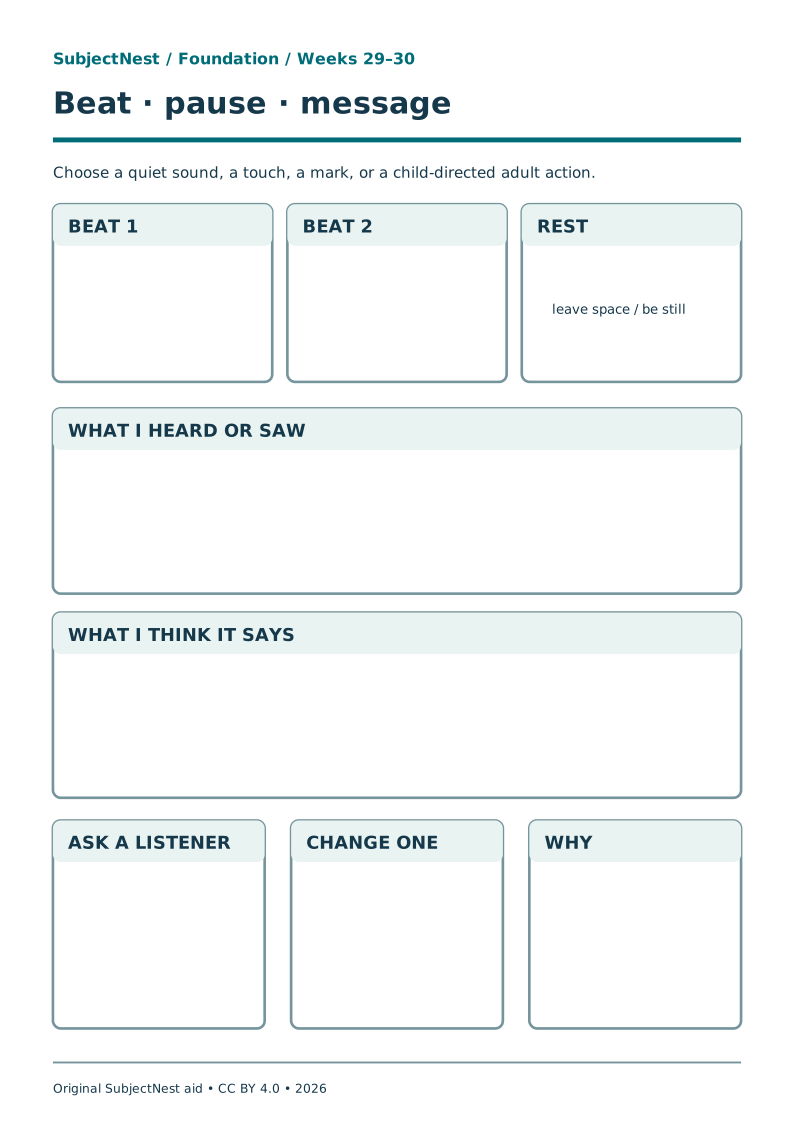
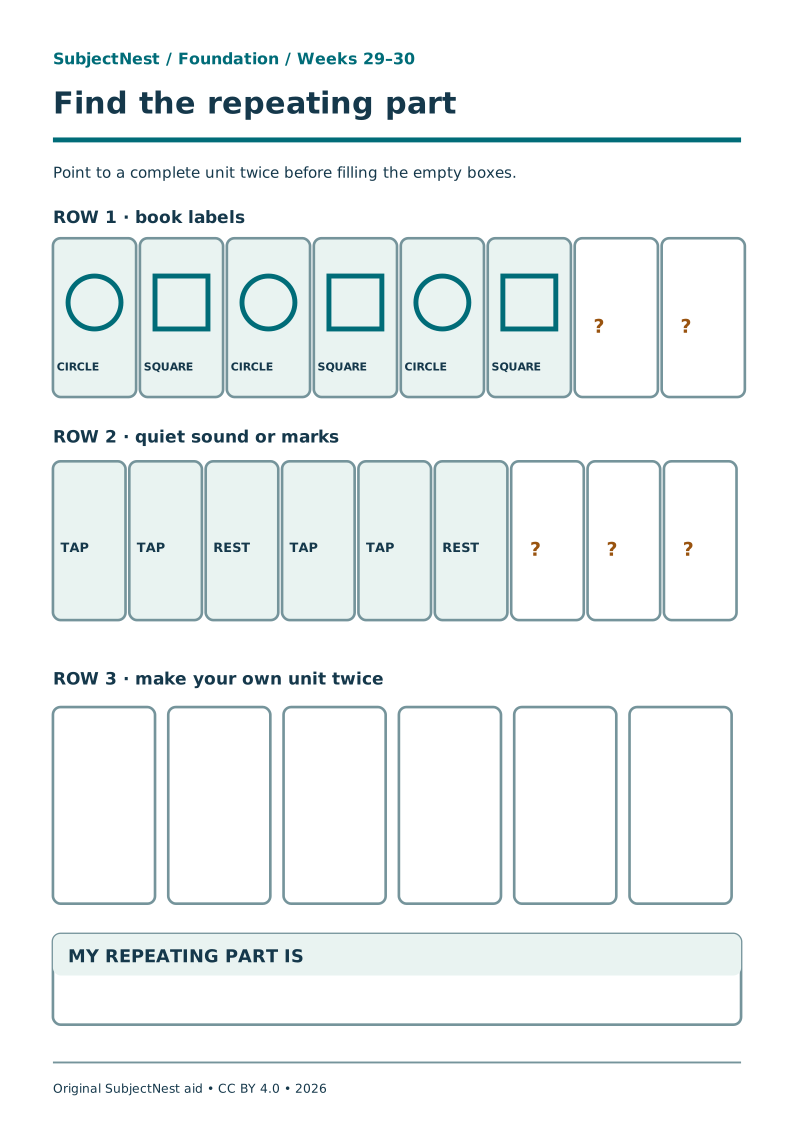
Ready in five minutes: Lay out six large circle/square cards, two large TAP cards and one broad REST bar, blank A4 paper, a thick pencil/marker and a paper pointer. The original beat audio is optional and must be previewed quietly; the written cue tap / tap / wait and tactile cards carry exactly the same order. No child needs to perform, touch a sound-making object or be recorded. If sharing with a person, obtain a yes, offer a pass and let a child choose a small/private audience. Use only student-created marks and school-approved displays; do not upload child images/voices without local consent.
| Day | Thirty-five-minute sequence | Evidence worth keeping and next move |
|---|---|---|
| 141 · A sound has a shape | 5 min adult reads “The book-cart beat” once and asks why a rhythm might help a group gather, without asserting it always does; 7 min child explores two quiet taps and one rest by voice, movement, paper marks or directing an adult; 8 min arrange TAP/TAP/REST twice and ask which three-position unit repeats; 10 min make an original small sound/mark card to suggest “come to the book cart, or watch”, choosing an opt-out invitation; 5 min ask what the card shows and what a listener could miss. | Save first three-position row, child's explanation of the rest, a message card and any group-purpose answer. Music observation: the child explores the effect of a quiet/paused beat, not merely matches maths tokens. If rest vanishes, show a deliberate empty broad box and invite revision. |
| 142 · A picture can leave a question | 5 min compare the poem read aloud with two drawn dots and blank box, asking why a picture might help an audience notice a pause; 7 min child makes two marks and a spacious rest box with large materials; 8 min a partner tries to continue P1 circle/square without colour clues; 10 min child creates a visual-art response to the beat using line, space or texture and says why one choice helps someone notice the pause; 5 min invite a listener to name an unresolved question. | Keep picture first version and child's reason for line/space/texture choice, including any audience-purpose answer. Visual arts requires the child's creative decision, not a completed worksheet; maths requires two full repeating units. If listener misses a pause, child may alter space/texture and explain. |
| 143 · Put an idea in a frame | 5 min read Niko/Jo's fictional story and ask why a group might use paper frames to invite someone; 7 min show the same imagined invitation as a three-frame paper sequence (person notices sign / two beats / pause), with adult explaining each frame's crop; 8 min child places TAP/TAP/REST twice and checks if the frame sequence kept the order; 10 min child creates an original three-frame paper media message for a book, maker or paper-show audience and directs one frame change for clarity; 5 min ask what a frame cannot reveal about someone's feelings. | Keep frames, selected audience and stated reason for frame order and purpose. Media Arts observation needs a deliberate representation for an audience; merely photographing a worksheet is insufficient. No real child image/voice is needed. |
| 144 · Ask a listener, then revise | 5 min children choose music sound/quiet cue, visual art card or three-frame media message; 7 min practise asking “What did you notice?” with a true pass; 8 min child shows original work to consenting listener who reports what was seen/heard, without praise-only feedback; 10 min child makes one child-directed change in beat, line/space or frame sequence, then explains how it may change meaning; 5 min compare first and revised works. | Keep work versions, exact audience comment and child rationale. Sharing is recorded only if it actually happens; a private adult audience is valid art sharing, whereas English peer spoken-delivery code needs a real peer voice observation. If revision copies adult idea, mark support. |
| 145 · New audience, same care | 5 min after separate unseen checks, child selects a different book/maker/stage context; 7 min build a fresh repeating sound-or-mark unit twice and name it; 8 min make a quick visual, music or media version of the idea without using assessment symbols; 10 min offer it to a consenting listener or a paper listener role, ask what they understood, then revise one feature; 5 min child says which medium gave which information and what remains unknown. | Save medium choice, two complete maths units, art decision and listener/revision note separately. Do not promote the Day 145 poem/sequence score from this practice. If art intention is hard to express, offer two candidate meanings and let child select or reject both. |
What each subject can and cannot claim: In Music, attending to and creating a quiet/paused sound work can be proposed against AC9AMUFE01, AC9AMUFD01, AC9AMUFC01 and AC9AMUFP01 only where the explore/create/share actions occur. Visual Arts proposals AC9AVAFE01, AC9AVAFD01, AC9AVAFC01 and AC9AVAFP01 require a visual making decision and an audience opportunity. Media Arts proposals AC9AMAFE01, AC9AMAFD01, AC9AMAFC01 and AC9AMAFP01 require planned framing/representation and sharing, not mere device use. Mathematics AC9MFA01 concerns the repeating unit itself; English AC9EFLE04 and AC9EFLY09 concern literary rhythm/sound awareness, with AC9EFLA07, AC9EFLY02, AC9EFLY05 and AC9EFLY06 only where the specified understanding/interaction/edit appears. A single integrated activity does not complete all of any subject's Foundation achievement standard. Exact descriptions/rows are checked in the crosswalk against the official ACARA v9 downloads, workbook retrieved 29 September 2026, SHA-256 db446882d2c00cf7c085a03e250e2442fda6c44011fc114680c46c1dc7a822c3. Local and access review remain due.
Choice and safety: A child can work silently, seated, standing, with a partner or alone, and may use voice, sign, AAC, pointing, texture or child-directed adult drawing. This is access and interest choice, not a fixed “learning style”. Avoid strobe/light flashes, surprise volume, forced performance, touch requirements or a public share. The original texts, rhythms and vector marks are new SubjectNest creations. © 2026 NeuroForgeIO Pty Ltd, CC BY 4.0. Credit, link and indicate changes; ACARA retains its own terms.