Adult reads every poem, design note and untaught word. This is not a child decoding passage. Read child print only when each child has been explicitly taught its grapheme–sound links; otherwise read it aloud and record comprehension separately. Keep the two fresh checks covered until Days 145 and 150. Nothing here asks a child to tell a private family story or disclose a disability.
A · The book-cart beat · original adult-read poem
By the book cart, Bea made a beat. Tap, tap; wait. Two soft taps beside the seat. Tap, tap; wait.
Adult directions: speak the poem first without gestures. On a second reading, make two quiet hand taps on a broad mat and hold one silent beat after “wait”. “Beat” and “seat” rhyme in this voice; “book” and “beat” begin with the same /b/ sound. The sound pattern can be made with a paper pointer or represented by ● ● | rather than tapping. Never require a child to hear an audio clip as the only route.
What the text says: Bea makes two taps and waits. It does not say everyone likes the sound or that the book cart is in the child's real school. Ask: “Which words help you hear the pattern?” and “Would ● ● | show the waiting beat by itself, or does someone need a key?”
B · Three ways to invite · original adult-read micro-story
Niko wanted a neighbour to see a paper show. He drew two large circles and one empty box on a card. He said, “Two taps, then a rest. You may join or just watch.” At the show, Jo pointed to the empty box and asked, “Is this the quiet part?” Niko said yes and made the box wider so the pause was easier to notice.
The neighbour and show are fictional. The card, spoken invitation and gentle percussion each carry part of Niko's idea; none proves how an audience felt. Use a real pass route for any child asked to join. A child may communicate by pointing, sign, AAC, drawing or voice; record actual spoken peer delivery separately if mapping AC9EFLY07.
C · A paper stand that changed · original adult-read design note
Mina made a folded paper stand for one wide card. At first the card slipped forward. Mina gave the stand a wider base and tried the same card again. This time it stayed upright for a slow count of five. Mina said, “I changed the base because the first stand slipped.”
This is a fictional report, not a guaranteed physical result. In a real test, record what actually happens; a stand may still slip. “Wider base” is one plausible change, not proof of cause from one trial. Use Week 30's integrated guide to test approved paper models safely.
D · The changed sign · original adult-read pair
First sign: “This stand is the best.” Revised sign: “This stand held our paper card for five slow counts in our test.”
Ask what each sign tells a reader and what remains unknown. Do not use “best” as a scored fact. When a child creates their own sentence, save first and edited versions and label adult scribing. A “because” explanation should name a change and the observed reason, not invent a result.
Child print and oral sound routine
The narrow optional print pool is a, an, at, can, cap, cup, i, in, is, it, map, mat, on, red, see, sit, tap, ten, tin. Some schools will have taught different correspondences; substitute only an equivalent already taught item and record the substitution. see uses ee; do not assume it is taught. Adult rich words include beat, pause, rhyme, message, audience, revise, base, test, because.
Daily 3-minute warm-up: say a spoken target first (no letters or picture), ask child to hear/say its first or last sound, then show only a taught written word and blend sound to print. Separate oral rhyme recognition from visual rhyme spelling. For a child who cannot access the sound cue, provide the exact text/rhythm pattern and ask about the represented sequence; record that as a different access route, not an audio perception score. A silent visual/tactile pulse is available for everyone.
Original aids and exact nonvisual equivalents
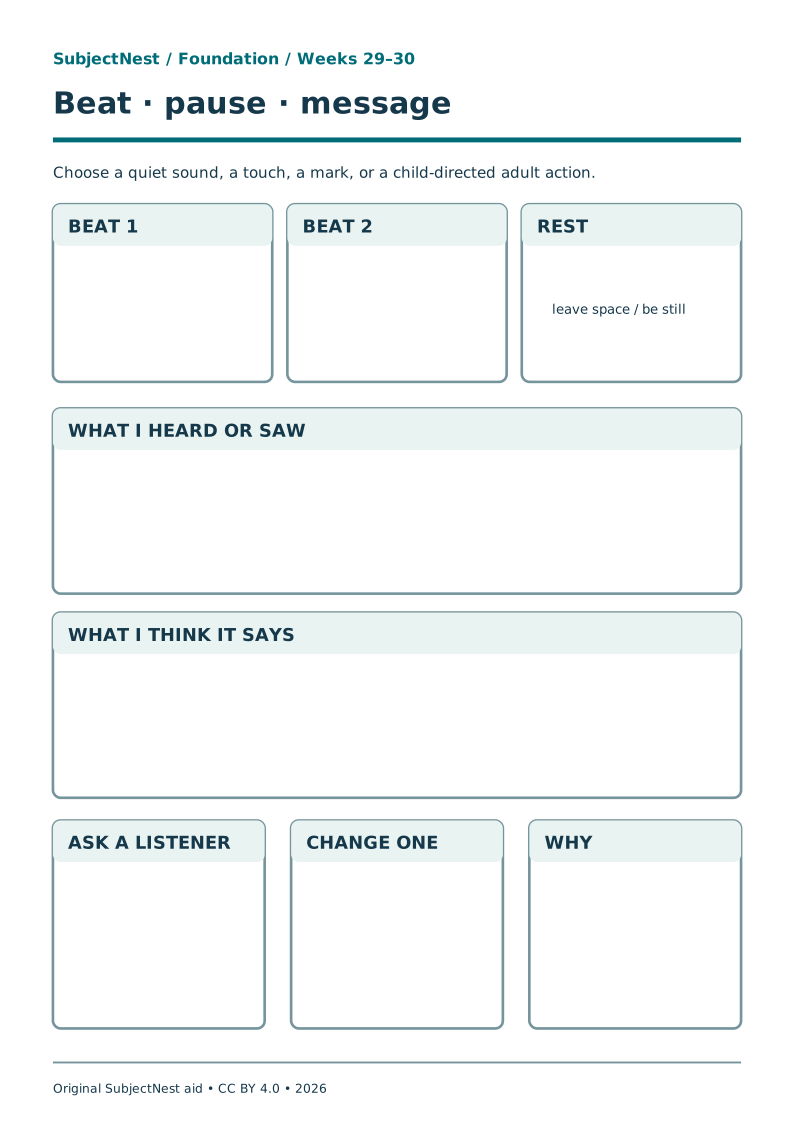
- Beat–pause–message A4 mat, PDF: top row has BEAT 1 / BEAT 2 / REST, each with a blank large box; middle has WHAT I HEARD OR SAW and WHAT I THINK IT SAYS; lower row has ASK A LISTENER / CHANGE ONE / WHY. Thick boxes permit finger tracing or raised tape; an adult can read each heading in that order. No colour carries a category alone.
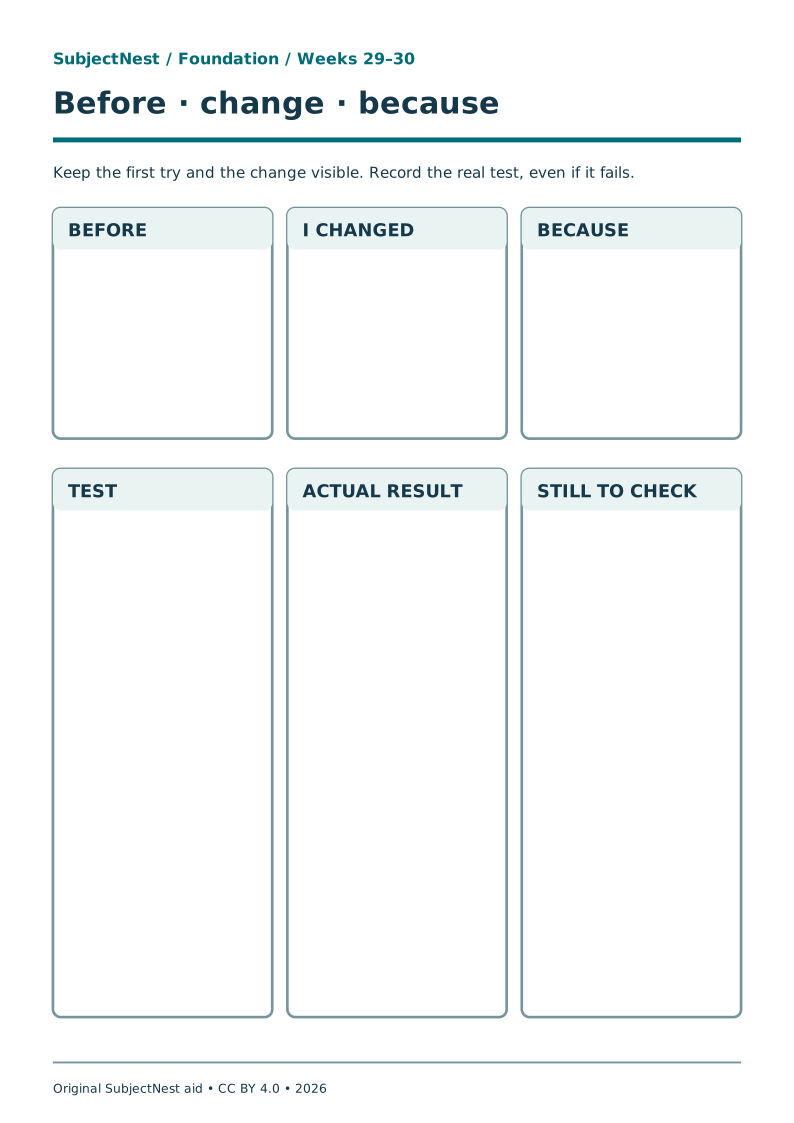
- Before–change–because A4 mat, PDF: three large left-to-right fields BEFORE / I CHANGED / BECAUSE, then TEST / ACTUAL RESULT / STILL TO CHECK. Use six tactile index cards in that order, or speak/record the six fields one at a time. “Because” names the child's evidence; the adult must not supply it during the first independent response.
- Original beat cue is a quiet, computer-synthesised two-tap-one-rest demonstration, generated in this pack from sine/noise, not sampled music or speech. Transcript: “tap, tap, silence; tap, tap, silence; tap, tap, silence.” No listening task depends on the file. Check volume locally, offer no-sound choice, and never surprise-play it.
For a child who uses AAC, preload tap, wait, same, different, I choose, I pass, because, test, and again only with local communication support. Let the child direct the adult rather than counting adult movement as the child's independent response. Enlarge or present one field at a time; use the child's preferred seated/standing/quiet location. Offer book-cart, paper-show, maker and sign contexts without assigning an access route from a fixed “learning style”.
Reuse and source boundary
The four text sources, activity scripts, clean mats and sound cue were created for SubjectNest in this pack. No existing poem, commercial worksheet, recording, logo or child work was adapted. National description wording is referenced only in the exact code crosswalk, with ACARA retaining its own terms. Original SubjectNest materials © 2026 NeuroForgeIO Pty Ltd, CC BY 4.0. Credit the author, link the licence and indicate changes.