Foundation / Queensland Prep · five 35-minute integrated teaching blocks, Days 146–150. Pair with English Days 146–150, maths Days 146–150, original design source, before/change/because mat and count/check mat. The Day 150 block begins after the separate English and maths checks; it uses different practice objects and is not a second check.
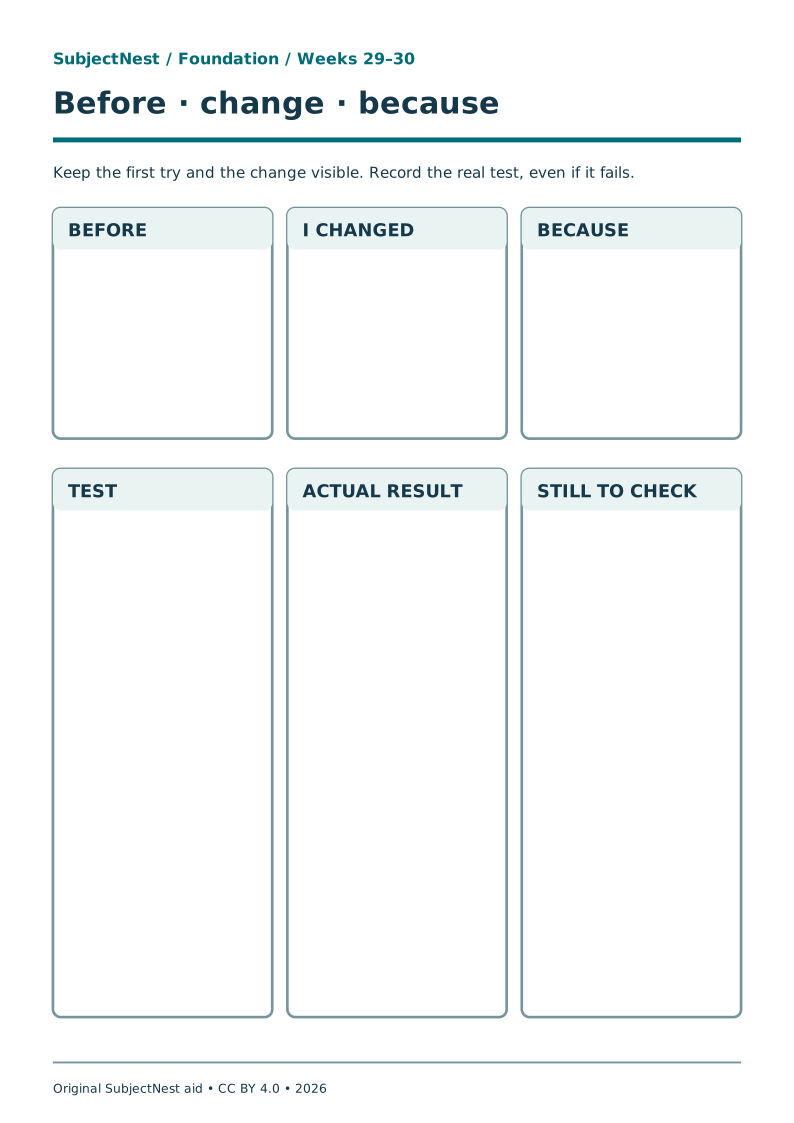
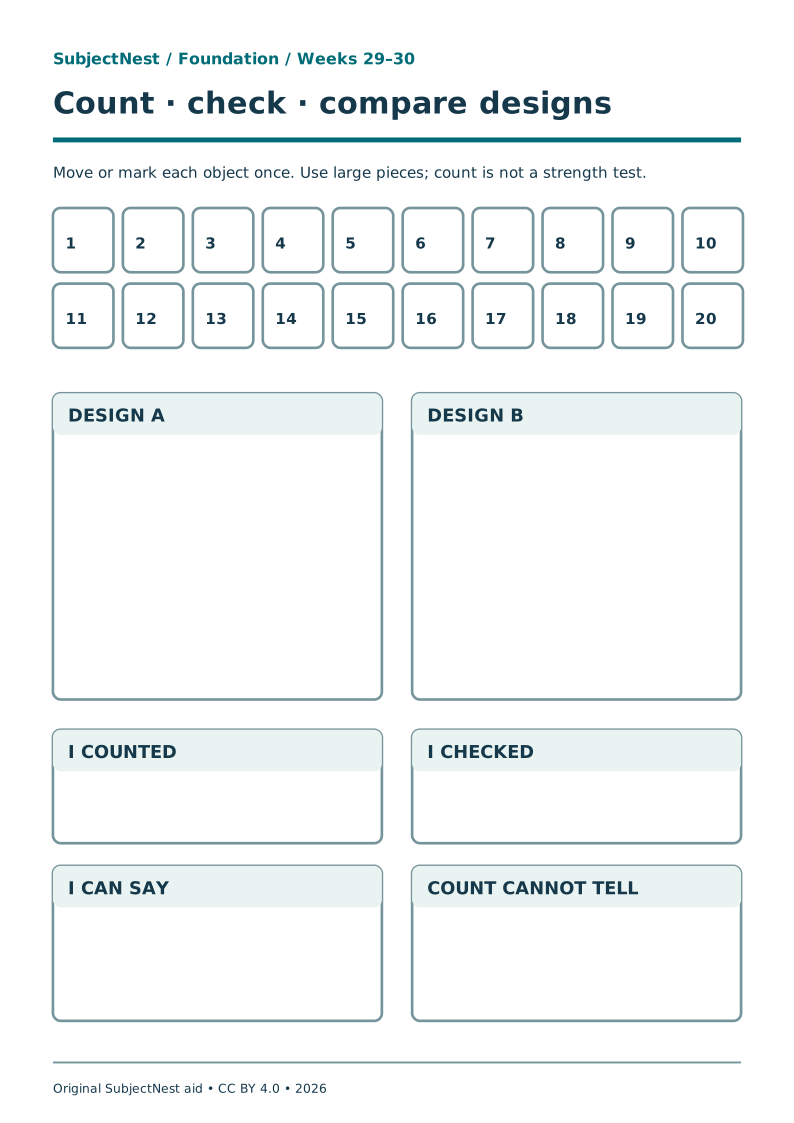
A precise, safe brief: “Make a free-standing folded-paper holder for one broad, light paper card. It should hold the same card upright for five slow counts without an adult's hand. You may choose no-touch paper modelling if building is unsuitable.” First design: a folded card base with one support. Revision constraint: only one additional broad paper fold may be added; no tape, pins, scissors, glue, heat, water or small loose parts. Preflight the exact paper/card combination yourself. Results are not predetermined: if both attempts hold, ask what the new fold changed; if neither holds, record that and propose another safe revision. The fictional Mina story is not evidence for the class test. Keep the same card, place and five-count criterion for a meaningful comparison. Use a table first idea / counted materials / predicted result / actual result / one change / second result / what remains uncertain.
| Day | Thirty-five-minute sequence | Evidence worth keeping and next move |
|---|---|---|
| 146 · Meet a designed thing | 5 min inspect or describe a teacher-made broad folded-paper stand and ask who designed it and for what use; 7 min read Mina's original fictional note and contrast her report with our untested design; 8 min child counts 13 broad paper practice tiles once on ten-plus-three places, then explains how layout can change without changing total; 10 min child draws/models a first holder idea and tells how the paper card should stand, with adult safety check before making; 5 min record prediction and exact five-count test condition. | Keep child purpose, first drawing, 13-object tracking and predicted result. Technology AC9TDEFK01 requires recognising a familiar product/environment as designed by people; a folded paper holder is the accessible model. If a plan needs unsafe tools, redirect to safe paper fold. |
| 147 · Test the first idea honestly | 5 min child/directing adult folds one broad holder from prepared paper; 7 min count 15 practice pieces and rearrange without losing one; 8 min show how to put the same broad card on the holder without steadying it, count five slowly, and note actual success/slip; 10 min child performs or directs a first test and records result in picture/words/AAC, including when it did not work; 5 min choose one change and say why, without changing the card too. | Save design, test conditions and result. If the paper could not be tested safely, mark not tested rather than success. “Fell” is evidence for this model; “all paper stands fail” is not. |
| 148 · One change, same test | 5 min revisit first record and plan one added broad paper fold; 7 min compare 12 versus 16 large practice tiles by pairing, noting that more pieces is only quantity; 8 min add one fold to the child's holder or safe paper proxy, keeping same card/place/five-count rule; 10 min test again and place actual outcome beside first; 5 min child explains what the test supports and whether something else also changed. | Keep first/revised design and side-by-side results. If construction changed more than one feature, note the confound and plan a cleaner comparison; do not claim the fold alone caused improvement. |
| 149 · Tell another maker what happened | 5 min child chooses a book label, maker display or paper-show audience; 7 min compare 10 and 18 spaced practice tiles with one-to-one pairing; 8 min child fills before/change/because and actual-result fields with adult scribing labelled; 10 min share a short accurate report with a consenting listener who checks whether “because” names an observed problem, then child revises one unclear phrase or picture; 5 min child names one further test. | Save counts, first/revised explanation and listener question. English shared editing is observed only if an edit occurred; a private AAC explanation does not silently satisfy spoken-to-peer delivery. |
| 150 · A new constraint | 5 min after separate fresh checks, give a different blank practice holder and a wider-but-equally-light paper card; 7 min child asks a testable question and proposes one safe fold change; 8 min count a fresh practice set, then use that count to plan materials without presuming strength; 10 min make/test the same prepared holder and card twice under the same five-count rule (or direct a safe paper simulation), recording both results; 5 min compare prediction with both observations, ask whether a result repeated, and tell a chosen listener what still needs checking. | Record the new constraint, count, predicted and two actual results, one revision and communication mode. Use different objects and quantities from the held-out subject checks. If the model fails, preserve failure as valid evidence and choose a next change. |
Curriculum and limit: Propose AC9TDEFK01 for recognising a human-designed familiar product and AC9TDEFP01 for generating, communicating/evaluating ideas and safely making a purposeful solution; both require observed actions, not a completed worksheet alone. Science AC9SFU03 can be sampled where a child observes paper's actual bend/rigidity, and AC9SFI01–05 where a child questions, predicts, observes safely, records, compares and shares; science claims need a physical observation, not Mina's fictional account. Mathematics AC9MFN01/N03 concerns accurate number representation and comparison to at least 20, not strength inference. English AC9EFLY05/06 concerns meaning and short text creation/shared editing; AC9EFLY07 needs actual voiced peer delivery. Exact source descriptions and rows are in the crosswalk, verified with the official ACARA v9 download, retrieved 29 September 2026, SHA-256 db446882d2c00cf7c085a03e250e2442fda6c44011fc114680c46c1dc7a822c3. State, safety, accessibility and classroom review remain pending; no test guarantees a “stronger” holder.
Access and choice: Use broad paper, a seated reachable surface, a fixed mat and child-directed adult placement. A child may select one of three everyday contexts, offer a drawing before making, decline touch or public sharing, and use AAC/sign/voice/text to explain. Preserve the child-controlled decision and what the adult actually did. These are universal options that can be individually adjusted, not learner labels. Original SubjectNest design brief, scripts and aids © 2026 NeuroForgeIO Pty Ltd, CC BY 4.0. Credit, link and indicate changes; ACARA retains its own terms.