Adult reads the original texts; child uses the three-choice cards. Say oral sounds before showing taught print. Keep Days 145 and 150 checks unseen, and save the first independent child response before feedback. Use the A4 rhythm mat and revision mat, or the exact text/tactile alternatives. Sound, print, comprehension, art choice and delivery are different observations.
Week 29 · Day 141 — Hear a beat and its wait
Goal: hear/represent a repeated sound sequence and identify one detail of the poem. Proposed codes: AC9EFLE04, AC9EFLY05, AC9EFLY09, AC9EFLY10. Prepare: adult poem A, Card 141, three large beat boxes.
- Oral sounds · 3 min. Say /t/ /a/ /p/ without letters; child blends or listens, then sees
taponly if taught. - First reading · 4 min. Read A with no gesture. Ask what Bea did; accept point, AAC or speech. Do not ask a child to imitate sound.
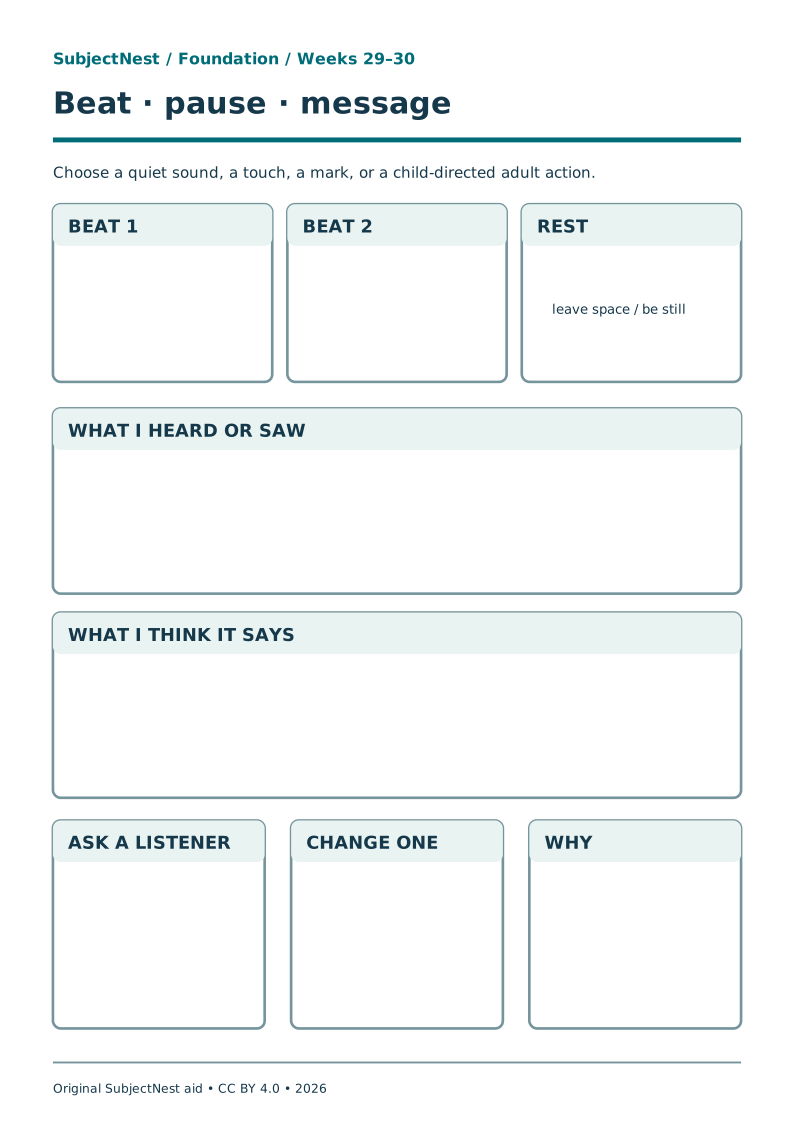
- Model · 5 min. Reread, point to BEAT 1, BEAT 2, REST and show a broad tap/tap/still sequence. Describe each sound and silence exactly.
- Child try · 7 min. Child chooses book-cart, maker-table or paper-show scene; directs two marks/taps and one rest, then names the clue in A. Offer silent visual/tactile pulse.
- Check · 4 min. Change to one tap and two rests. Ask whether it is A's pattern and what changed; record first sequence.
- Exit · 2 min. Ask whether the poem tells us all readers like that beat. If child infers this, reread only the actual line.
Week 29 · Day 142 — Rhyme is heard at the end
Goal: recognise a heard rhyme without relying on matching letters. Proposed codes: AC9EFLE04, AC9EFLY09, AC9EFLY05. Prepare: A, Card 142, adult oral pairs beat/seat, cart/start, tap/map and non-pair beat/book.
- Oral first · 3 min. Say
tap/mapwith print hidden; child decides whether the endings sound alike, then blend taughttapif appropriate. - Listen · 4 min. Read A; invite child to show the two ending words they hear as alike. Adult rereads without stressing the answer.
- Model · 5 min. Say
beat/seat, thenbeat/book; both second words are in A but only one pair rhymes. Show mouth/visual cue if agreed. - Child try · 7 min. With Card 142's three domains, child chooses a two-word pair and marks same ending sound or different by voice, AAC or tokens.
- Check · 4 min. Say
cart/startandcart/bookin mixed order; ask for heard evidence, not spelling or picture shape. Record access mode. - Exit · 2 min. Child names one poem word they want reread. If the rhyme answer depended on printed letters, try a fresh spoken pair tomorrow.
Week 29 · Day 143 — Starting sounds make a different pattern
Goal: distinguish initial-sound alliteration from end-sound rhyme. Proposed codes: AC9EFLY09, AC9EFLY10, AC9EFLE04. Prepare: A, Card 143, no written target visible at first.
- Oral contrast · 3 min. Say
book/beatandbeat/seat; child points start or end for the part that matches. Adult models if needed. - Listen · 4 min. Reread A and ask which two words start like /b/. Read words normally, not with an added schwa.
- Model · 5 min. Put a start marker at
book/beat; put an end marker atbeat/seat. Say why a word pair can be discussed for either kind of sound link. - Child try · 7 min. Child selects sign, story-prop or maker route and creates an oral two-word starting-sound pair from adult-given familiar objects; give an AAC sound/word choice grid if needed.
- Check · 4 min. Adult offers
cup/cartandcup/mapspoken, no pictures. Child selects shared start and explains by sound, not by object use. - Exit · 2 min. Child tells or indicates “start” or “end” for their own pair. Note if oral discrimination needs smaller choice set.
Week 29 · Day 144 — Change a message for a listener
Goal: create a small sound/mark invitation, ask a listener what it communicates and revise one feature. Proposed codes: AC9EFLA07, AC9EFLY02, AC9EFLY06, AC9EFLY07. Prepare: B, Card 144, blank beat mat; arrange a consenting adult or peer audience.
- Print retrieve · 3 min. Blend taught
tap,mat,sitin mixed order with print only at taught point. - Story · 4 min. Read B. Ask what Jo wanted to know and what Niko changed; do not call Jo's question criticism.
- Model · 5 min. Create two marks and a rest box; tell one listener “two taps, then rest; you may watch.” Ask listener where the rest is. Show one possible wider box revision.
- Child create · 7 min. Child chooses book invite, maker display or paper-stage message; creates a three-part sound/mark card and gives it to a chosen listener using any communication mode.
- Feedback/edit · 4 min. Listener states what was noticed, not praise alone. Child directs one change and tells why. Save first and revised versions; log actual voiced peer delivery separately.
- Exit · 2 min. Ask if a picture of two marks proves a listener enjoyed the sound. Keep the Day 145 poem unseen.
Week 29 · Day 145 — Fresh poem and sound check
Goal: hear an unseen pattern, notice rhyme or shared start, and explain one bounded detail. Proposed codes: AC9EFLE04, AC9EFLY05, AC9EFLY09, AC9EFLY12. Prepare: teacher-held Day 145; give Card 145 only afterwards.
- Welcome · 3 min. Say a new tiny poem will show what to practise next; no singing or public performance required.
- Warm oral · 4 min. Use known
cap/matspoken and a taught print review, not any assessment words. - Unseen listen · 5 min. Read teacher-held poem once, with the agreed neutral access transcript if needed; no gesture that gives the pattern.
- Independent response · 7 min. Child represents its beat/rest sequence, identifies a sounded pair, and says one source-supported action. Show fresh print only at the child's taught point; record first answer and support.
- Meaning check · 4 min. Ask whether the new poem tells how everybody felt. Save answer before any explanation.
- Close · 2 min. Choose next teaching from key, then release Card 145 practice.
Week 30 · Day 146 — Say what went wrong, then what changed
Goal: retell a design note in before/change/test order. Proposed codes: AC9EFLY05, AC9EFLA05, AC9EFLY06. Prepare: adult source C, Card 146, six-field revision mat.
- Oral/print · 3 min. Say /m/ /a/ /t/ before showing taught
mat; adult supplies “base” and “stand.” - Listen · 4 min. Read C once. Ask what slipped and what Mina changed; allow reread, noting it as access support.
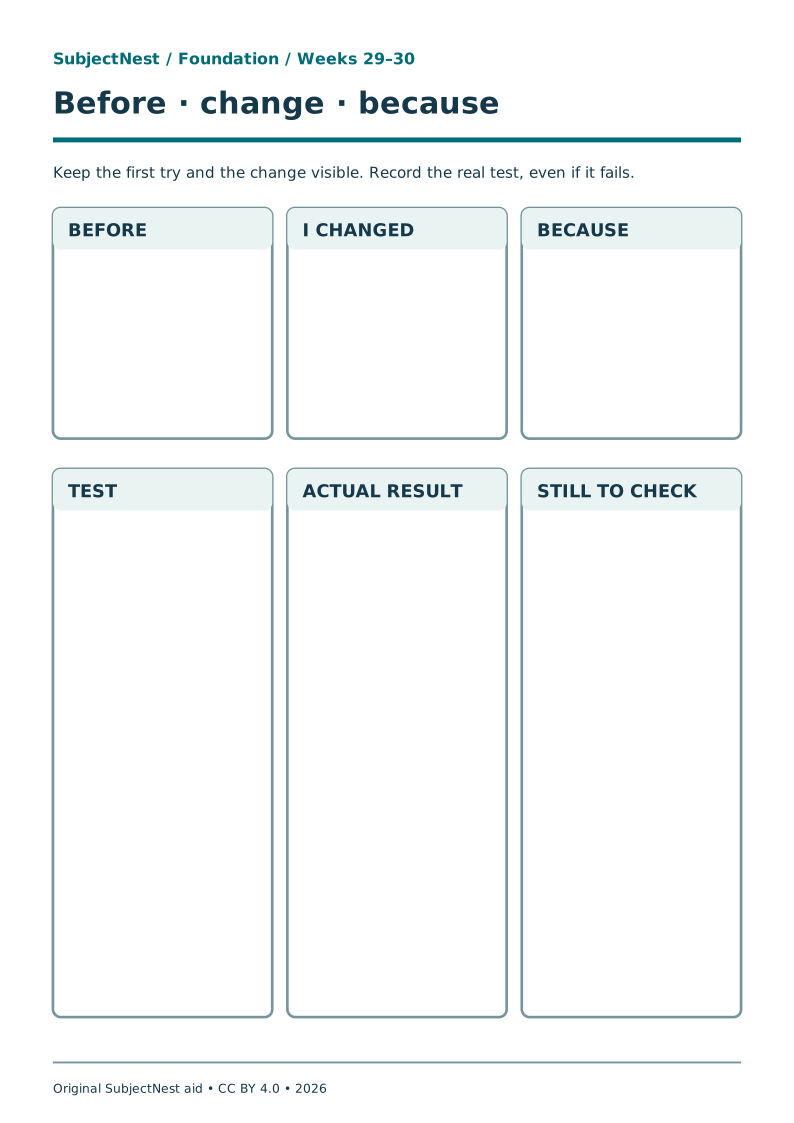
- Model · 5 min. Put a drawing of the first stand in BEFORE, wider base in I CHANGED, actual fictional result in TEST. Say one sentence for the problem and one sentence for the change so each carries a clear idea. Do not treat “best” as a result.
- Child try · 7 min. Child picks a paper sign, book display or toy-stage stand and retells C's first problem and one change in two clear ideas via voice, AAC, drawing or dictated text.
- Check · 4 min. Offer incorrect “Mina changed the card”; child points to words disproving it and directs correction. Keep first response.
- Exit · 2 min. Child names one detail a real stand would need testing for. If sequence blurs, give three movable picture steps tomorrow.
Week 30 · Day 147 — “Because” needs an observed reason
Goal: join a change to its stated reason without inventing a test result. Proposed codes: AC9EFLA06, AC9EFLY05, AC9EFLY06. Prepare: C and D, Card 147, before/change/because mat.
- Retrieve · 3 min. Child orally orders slipped / wider base / stood five counts from source C; adult rereads exact wording.
- Listen · 4 min. Read first and revised signs D. Ask which tells a reader what was actually observed.
- Model · 5 min. Compose “I changed the base because the first stand slipped.” Point out the change and reason as meaningful word groups; no new broad claim.
- Child try · 7 min. Child chooses bookmark holder, paper-stage stand or welcome sign and uses I changed ___ because ___ with one real observed or explicitly fictional source detail. Adult may scribe exactly.
- Check · 4 min. Offer “because it is best” and ask what evidence is missing. Child revises only if a test was actually seen; keep first wording.
- Exit · 2 min. Child points to the source or test behind their reason. If absent, leave reason as a question, not a fact.
Week 30 · Day 148 — Ask what a better design must do
Goal: ask an answerable design question and distinguish a wish from a tested finding. Proposed codes: AC9EFLY02, AC9EFLY05, AC9EFLY06. Prepare: C, Card 148, blank paper design mat; use a fictional case if no safe model.
- Oral/print · 3 min. Child segments spoken
sit; show taught print only after sounds. Adult reads design words. - Listen · 4 min. Reread C and ask what the stand needed to do; show a large paper card, no personal object.
- Model · 5 min. Contrast “Can this stand hold this card for five slow counts?” with “Is this the best stand?” The first names a checkable condition.
- Child try · 7 min. Choose library label, maker display or paper theatre; child asks one neutral, testable question and selects drawing, model or AAC route for a proposed change.
- Check · 4 min. Adult says “I think it will stand” without testing. Child classifies prediction versus observation and suggests a safe next test.
- Exit · 2 min. Child names what would count as passing the stated test. Record question quality, not fluency of speech.
Week 30 · Day 149 — Explain a change to an audience
Goal: make and shared-edit a short before/change/because report for a real or fictional test. Proposed codes: AC9EFLY06, AC9EFLY07, AC9EFLA07, AC9EFLY13. Prepare: Card 149, C/D, mat, a consenting listener.
- Print retrieve · 3 min. Child blends a mixed taught set
cap,tap,tin; mark independent print separately from adult rich vocabulary. - Model · 4 min. Show first sign D and its revision. Point to image and words each adding a different detail; add a sentence stop in a shared model.
- Guide · 5 min. Pairs choose a sample test record and sort BEFORE / CHANGE / ACTUAL RESULT; if no test occurred, write “not tested yet.”
- Create · 7 min. Child picks paper prop, sign or model holder and creates a short one- or two-sentence report using own marks, tiles, AAC or directed scribing; point to where each sentence idea begins and ends. Record independently spelled taught CVC versus supplied words.
- Listener/edit · 4 min. Listener repeats understood reason; child corrects one mismatch and presents revised explanation to chosen audience. Log voice volume to peers only if actually used.
- Exit · 2 min. Ask what further test could change the conclusion. Do not rehearse Day 150's source.
Week 30 · Day 150 — Fresh change-and-reason check
Goal: report an unseen design account accurately, ask a checkable next question and compose a bounded explanation. Proposed codes: AC9EFLY05, AC9EFLY06, AC9EFLY10, AC9EFLY12. Prepare: teacher-held Day 150; Card 150 only after.
- Welcome · 3 min. Explain a new paper story will help choose future practice; an adult may read it, and a child may pass a public share.
- Warm retrieval · 4 min. Orally blend known
mat,tap; no assessment items or design story revealed. - Unseen source · 5 min. Read the new teacher-held design account and show only its neutral diagram; do not supply the change or reason.
- Independent report · 7 min. Child shows before/change/actual result, gives a source-bounded “because”, and poses one testable next question. Save first mode, exact words and prompt level.
- Fresh print · 4 min. Offer unseen CVC items at taught point, one dictated with print hidden; keep oral phonemes, print and meaning separate.
- Close · 2 min. Use key for next move. Release Card 150 only afterwards; the integrated block must not be counted as another independent attempt.
Use Week 29 and Week 30 for ten additional integrated blocks; the separate English check remains private. Original SubjectNest scripts © 2026 NeuroForgeIO Pty Ltd, CC BY 4.0. Credit, link and indicate changes.